Source Abdominal Polymer Ligating Clips for Open, Laparoscopic, Abdominal
Find 27 listings for Abdominal Polymer Ligating Clips suitable for open surgery, laparoscopic procedures, and abdominal applications. Compare specifications, certifications, and pricing from verified manufacturers in China.
Key considerations
Products List


Comprehensive Sourcing Guide
Strategic Sourcing Guide for Abdominal Polymer Ligating Clips
Understanding Product Classification and Core Specifications
When sourcing Abdominal Polymer Ligating Clips, buyers must first distinguish between the device itself and the appliers used to deploy them. The core product, often identified as a hem-o-lok style ligation clip, is a polymer-based device designed for vessel and duct ligation during surgical procedures. These clips are typically classified as Class II medical devices, indicating a moderate to high risk profile that necessitates rigorous regulatory oversight. The material composition is predominantly plastic, specifically engineered to provide the necessary tensile strength and flexibility for secure ligation without causing tissue damage.
The physical specifications of these clips vary significantly based on the intended surgical application. Available model numbers often include designations such as P-JZ-XL, L, ML, and PATX, which correspond to different sizes and locking mechanisms. The size range generally spans from Small (S) to Extra Large (XL), with specific models like HF8081 or PLTX representing distinct product lines. The single package dimensions are frequently standardized at approximately 10x5x5 cm, while the gross weight per unit is minimal, often recorded around 0.004 kg. It is critical for procurement teams to verify that the specific model selected matches the surgical requirements, as the locking mechanism and clip width must align with the diameter of the vessel or duct being ligated.
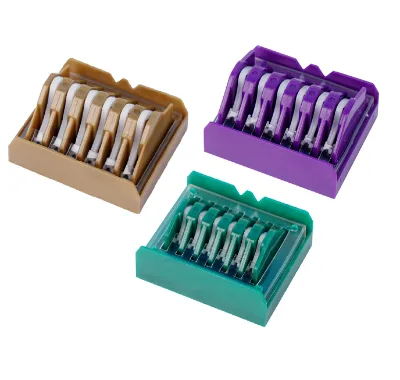
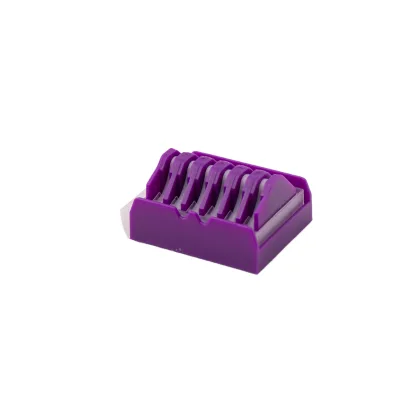
Furthermore, the product attributes indicate that these clips are available in various colors, including golden, purple, and green, which can assist surgeons in distinguishing between different clip sizes intraoperatively. The packaging is typically a blister pack contained within a carton or box, ensuring sterility and protection during transit. Buyers should note that while some listings describe the product as "Reusable," the standard industry practice for polymer ligating clips is that they are single-use, disposable items. This distinction is vital for infection control protocols and must be clarified with the supplier before finalizing any order.
Regulatory Compliance and Certification Verification
Navigating the regulatory landscape is perhaps the most critical aspect of sourcing Class II surgical devices. The supply chain for Abdominal Polymer Ligating Clips is heavily regulated, and buyers must verify that suppliers hold valid quality certifications. The most prominent standard observed in this sector is ISO 13485, which specifies requirements for a quality management system specific to medical devices. Additionally, products often carry CE marking and ISO certifications, indicating compliance with European Union safety and performance standards. Some listings also reference FDA approval, which is essential for accessing the United States market.
However, buyers must exercise caution when interpreting certification claims. While "CE ISO" and "ISOCE" appear in product descriptions, these are often shorthand for a combination of certifications rather than a single standard. It is imperative to request valid, up-to-date certificates directly from the supplier rather than relying solely on marketing materials. The safety standard ISO 13485 is a baseline requirement, but the specific regulatory status in the buyer's target market (e.g., FDA 510(k) clearance for the US or MDR compliance for Europe) must be confirmed.
Sterilization is another non-negotiable compliance factor. The supplied data indicates that these clips are Ethylene Oxide (EO) sterilized, a method chosen for its ability to penetrate packaging and sterilize heat-sensitive polymer materials without degrading them. The shelf life is typically listed as one year, though this can vary based on packaging integrity and storage conditions. Buyers must ensure that the sterilization method and shelf life align with their hospital's inventory management protocols. If a supplier claims a different sterilization method or a significantly longer shelf life without providing supporting validation data, this should be treated as a red flag. The "Ethylene Oxide Sterilization" attribute must be explicitly confirmed in the technical data sheet to ensure the device meets the required sterility assurance level (SAL).
Cost Drivers and Pricing Dynamics
The pricing structure for Abdominal Polymer Ligating Clips is influenced by several distinct factors, primarily driven by the complexity of the manufacturing process, the level of customization, and the regulatory burden. The observed price range for these products in the market spans from 1 to 100 USD, a wide variance that reflects differences in unit costs, packaging configurations, and order volumes. For small-scale purchases, the unit price may be higher due to the fixed costs of sterilization and packaging. Conversely, bulk orders typically benefit from economies of scale, though the specific discount tiers depend on the supplier's internal policies.
Minimum Order Quantity (MOQ) is a significant cost driver in this category. The observed MOQ range is between 1 and 20 units, suggesting that suppliers are flexible for trial orders but may require larger commitments for standard stock. Buyers should be aware that while low MOQs facilitate sampling, they often come with a higher per-unit cost. Additionally, the availability of customization services, such as logo printing or specific packaging requirements, can increase the overall cost. Suppliers offering OEM (Original Equipment Manufacturer) services may charge a premium for the setup and tooling required to produce branded clips.
Other cost factors include the origin of the product and the shipping method. Products originating from manufacturing hubs like Chongqing or Tonglu, Zhejiang, in China, may have different logistics costs compared to those from other regions. The shipping terms, whether expressed as "Customer Demand" or specific express times of 7-15 days, also impact the final landed cost. Buyers should calculate the total cost of ownership, including potential tariffs, insurance, and expedited shipping fees, rather than focusing solely on the base unit price. It is also important to consider the warranty and after-sales support; a product with a one-year warranty and online technical support may justify a slightly higher initial investment compared to a non-warrantied alternative.
Typical Surgical Applications and Usage Scenarios
Abdominal Polymer Ligating Clips are designed for a wide array of surgical applications, with a primary focus on open and laparoscopic procedures. The product attributes explicitly list "Open Surgery" and "Laparoscopic Surgery" as key usage scenarios, indicating the versatility of these devices in modern operative environments. In abdominal surgeries, these clips are frequently employed to ligate blood vessels, ducts, and other tubular structures to prevent bleeding and leakage. The polymer material allows for a secure lock that remains in place without the need for sutures, which can reduce operative time and minimize foreign body reaction.
The specific application within the abdomen often dictates the size and type of clip required. For instance, larger vessels may require XL or ML models, while smaller structures might be secured with S or M sizes. The "Abdominal" application tag suggests that these clips are optimized for the anatomical constraints and tissue types found in the abdominal cavity. However, buyers should verify if the clips are suitable for other anatomical regions if their surgical portfolio extends beyond abdominal procedures. The "Reusable" attribute found in some listings requires careful scrutiny, as the standard clinical practice for polymer clips is single-use to prevent cross-contamination and ensure mechanical integrity. If a supplier markets these as reusable, the buyer must demand evidence of reprocessing protocols and validation data, as this is highly unusual for this specific device class.
The usage also extends to the specific type of operation, such as general surgery, urology, or gynecology. The "Appliers for open operation" standard mentioned in the data suggests that the clips are often paired with specific delivery instruments. Buyers should ensure that the clips they source are compatible with the appliers currently used in their operating rooms. Mismatched clip-applier systems can lead to deployment failures, which pose a direct risk to patient safety. Therefore, the compatibility between the clip model (e.g., PATX, HF8081) and the surgical instrument is a critical factor in the procurement decision.
Supplier Evaluation and Quality Control Protocols
Evaluating suppliers for Abdominal Polymer Ligating Clips requires a multi-faceted approach that goes beyond price comparisons. Buyers should prioritize suppliers who demonstrate a robust quality management system, evidenced by valid ISO 13485 certification. The place of origin, such as Chongqing or Tonglu, Zhejiang, can provide insights into the local manufacturing ecosystem, but it should not be the sole determinant of quality. Instead, buyers should request detailed information about the supplier's production facilities, including their capacity for sterilization and their adherence to cleanroom standards.
Quality control protocols must be transparent and rigorous. Buyers should inquire about the supplier's in-process testing methods, including checks for clip dimensions, locking mechanism integrity, and material consistency. The "Single gross weight" of 0.004 kg is a specific attribute that can serve as a baseline for quality control; significant deviations from this weight could indicate manufacturing defects or material inconsistencies. Additionally, the supplier should provide a Certificate of Analysis (CoA) for each batch, verifying that the product meets the specified standards for material composition and sterility.
The after-sales service capability is another crucial evaluation criterion. The availability of online technical support and a one-year warranty indicates a supplier's confidence in their product and their commitment to customer satisfaction. Buyers should assess the responsiveness of the support team and their ability to resolve issues related to product performance or regulatory documentation. Furthermore, the supplier's ability to handle customization requests, such as logo printing or specific packaging, demonstrates their flexibility and capacity to meet the unique needs of the buyer.
Long-Term Procurement and Supply Chain Stability
Securing a reliable supply of Abdominal Polymer Ligating Clips is essential for maintaining uninterrupted surgical operations. Long-term procurement considerations include the stability of the supply chain, the reliability of the manufacturer, and the potential for future product evolution. Buyers should establish contracts that include clear terms for lead times, which are observed to range from 7 to 15 days for express shipping. However, these timelines can fluctuate based on raw material availability, regulatory changes, or global logistics disruptions.
The shelf life of one year is a critical factor for inventory management. Buyers must implement a first-expiry-first-out (FEFO) strategy to ensure that older stock is used before it expires. This requires accurate tracking of batch numbers and expiration dates, which should be clearly marked on the packaging. The "Standard Export Packing" and "Carton" specifications suggest that the products are designed for international shipping, but buyers should verify that the packaging is robust enough to withstand potential delays or rough handling.
Customization availability is a key differentiator for long-term partnerships. Suppliers that offer OEM services and logo printing can help buyers build a branded inventory, which may be advantageous for hospital procurement strategies. However, buyers should ensure that any customization does not compromise the product's regulatory status or performance. Finally, buyers should maintain open communication with suppliers regarding any changes in product standards or certifications. As regulatory landscapes evolve, suppliers must adapt their products to remain compliant, and buyers should be prepared to validate these changes to ensure continued safety and efficacy.
FAQs
What certifications do Abdominal Polymer Ligating Clips typically hold?
These clips typically hold CE, ISO, and ISO13485 certifications. Some listings also reference FDA approval, but buyers must verify valid certificates directly from the supplier rather than relying on marketing shorthand.
How are Abdominal Polymer Ligating Clips sterilized for surgical use?
The clips are Ethylene Oxide sterilized to ensure sterility without damaging the polymer material. The standard shelf life is one year, though storage conditions and packaging integrity must be confirmed for inventory planning.
Which sizes are available for Abdominal Polymer Ligating Clips?
Available sizes range from Small to Extra Large, including models like S, M, L, ML, and XL. Specific model numbers such as PATX, HF8081, and PLTX correspond to different locking mechanisms and clip widths.
Can Abdominal Polymer Ligating Clips be used in laparoscopic surgery?
Yes, these clips are designed for both open and laparoscopic surgical operations. They are suitable for ligating vessels and ducts in the abdominal cavity, provided the clip size matches the vessel diameter.
What is the minimum order quantity for Abdominal Polymer Ligating Clips?
The observed minimum order quantity ranges from 1 to 20 units. Lower MOQs facilitate sampling but may result in higher per-unit costs compared to bulk orders that benefit from economies of scale.
Where are Abdominal Polymer Ligating Clips manufactured?
Manufacturing origins include Chongqing and Tonglu, Zhejiang in China. Buyers should verify the specific place of origin to assess logistics costs and ensure the supplier meets their regional regulatory requirements.
How long is the warranty period for Abdominal Polymer Ligating Clips?
The standard warranty period is one year with online technical support available. This support helps resolve issues related to product performance or regulatory documentation during the warranty term.