Source Adjustable Non Slip Knee Joint for Amputees, Sprains, and Injuries
Find 30 listings for the Adjustable Non Slip Knee Joint suitable for knee amputees, acute sprains, and ligament injuries. Compare specifications including load capacity, flexion range, and material options from verified suppliers.
Key considerations
Products List

Weight-Activated Brake Knee Joint
$75.00 - $200.00
MOQ: 1 Pieces
Shijiazhuang Wonderfu Rehabilitation Device Technology Co., Ltd.


Knee Joint for Knee Disarticulation No Lock
$85.00 - $95.00
MOQ: 10 Pieces
Shijiazhuang Wonderfu Rehabilitation Device Technology Co., Ltd.

Revolutionary Mobility Enhancing Knee Joint
$3500.00 - $4800.00
MOQ: 1 Pieces
Shijiazhuang Wonderfu Rehabilitation Device Technology Co., Ltd.


Aluminum Light Weight Single Axis Knee Joint
$150.00 - $160.00
MOQ: 1 Pieces
Shijiazhuang Wonderfu Rehabilitation Device Technology Co., Ltd.


Adjustable-Damping Hydraulic Knee Joint for Gait Training and Rehabilitation
$1230.00 - $1330.00
MOQ: 2 Pieces

$410.00 - $430.00
MOQ: 20 Pieces


$22.90 - $26.00
MOQ: 50 Pieces




Comprehensive Sourcing Guide
Strategic Sourcing Guide for Adjustable Non-Slip Knee Joint Components
Procuring specialized orthopedic hardware, specifically an adjustable non-slip knee joint, requires a rigorous approach that balances mechanical performance with regulatory compliance. In the current B2B market, buyers often encounter a fragmented landscape of components ranging from simple mechanical hinges to complex weight-activated systems. The core keyword "adjustable non-slip knee joint" implies a device designed to provide stability while allowing for precise calibration of movement limits. This guide outlines the critical factors for sourcing these components, drawing upon observed product attributes, certification requirements, and technical specifications to ensure a procurement strategy that mitigates risk and ensures product integrity.
Technical Specifications and Mechanical Performance
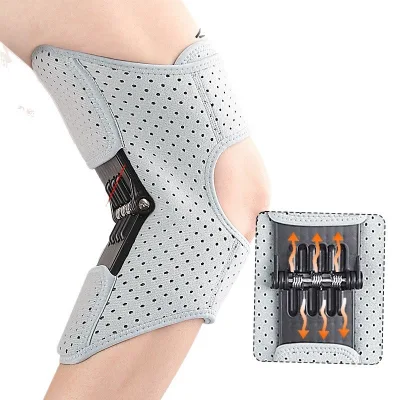
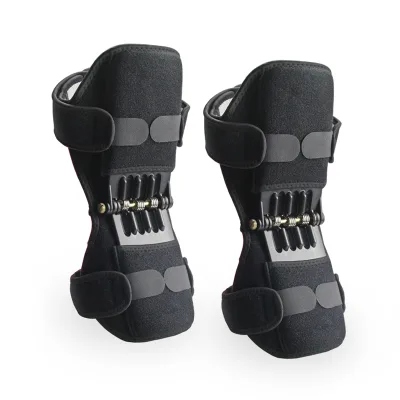
When evaluating potential suppliers for knee joint components, the primary focus must be on the mechanical specifications that define the device's functionality. The market offers distinct variations, such as weight-activated brake systems and adjustable disc mechanisms, each serving different patient needs. A critical specification to verify is the knee flexion range. Observed data indicates that specific models offer a flexion range of 150 degrees, which is essential for high-activity users requiring near-full range of motion. Conversely, other models are designed with a 120-degree flexion range, suitable for patients requiring more restricted movement for rehabilitation or specific injury types.
The load-bearing capacity is another non-negotiable parameter. For adult users, the component must reliably support significant weight. Evidence from the market shows products rated for a load weight of 150kg, ensuring durability for a wide demographic of adult patients. The material composition is equally vital for both longevity and biocompatibility. Suppliers may offer components constructed from aluminum alloy, which provides a favorable strength-to-weight ratio, or stainless steel, which offers superior corrosion resistance and structural rigidity. The choice between these materials often depends on the specific application, such as whether the device is intended for acute knee sprains, ligament injury immobilization, or use by knee amputees.
Furthermore, the adjustability feature, central to the "non-slip" requirement, must be clearly defined. Some units are described as "tilted" or "non-tilted," indicating the presence of specific angular adjustments. Others are categorized as "folding" or "non-folding," which impacts portability and storage. The physical dimensions of the product, such as a size of 404010cm or a compact 12.56.54.5 cm, must align with the intended prosthetic or orthotic design. Buyers should also verify the weight of the component itself, as observed values range from 380g to 1.35kg, influencing the overall comfort and energy expenditure for the end-user.
Compliance and Certification Verification
In the medical device sector, regulatory compliance is not merely a formality but a prerequisite for market entry and liability protection. When sourcing adjustable knee joints, buyers must demand proof of specific certifications. The most frequently observed certifications in the current market include FDA and ISOCE, alongside CE and ISO marks. These certifications indicate that the manufacturer adheres to strict quality management systems and safety standards. For instance, the presence of CE certification suggests compliance with European Union safety, health, and environmental protection standards, while ISO certification often points to adherence to international quality benchmarks.
However, buyers must exercise caution regarding the specific standards cited. While general ISO standards are common, specific medical device standards like ISO13485 are often referenced in background knowledge but require explicit confirmation on the product datasheet. It is crucial to verify that the certification applies to the specific model being purchased, as a manufacturer may hold certifications for one product line but not another. Additionally, the "Customized" status of a product can complicate certification verification. If a product is listed as "Customized," the buyer must ensure that the custom modifications do not void existing certifications or require new regulatory approvals.
The origin of the product is another compliance factor. Many of these components originate from China, a major manufacturing hub for medical hardware. While this does not inherently imply lower quality, it necessitates a thorough review of the supplier's quality assurance protocols. Buyers should request documentation proving that the manufacturing process adheres to the claimed standards, such as the 201010cm or 404010cm packaging standards which may reflect internal quality control measures. Ensuring that the supplier can provide valid, up-to-date certification documents for every batch is essential for maintaining regulatory compliance in the buyer's own market.
Cost Drivers and Pricing Dynamics
The pricing of adjustable non-slip knee joints is influenced by a complex interplay of factors, including material costs, customization levels, and certification overheads. The observed price range in the market is extensive, spanning from $0.89 to $4800. This wide variance suggests that the market includes both low-cost generic components and high-end, specialized medical devices. The lower end of the spectrum may represent basic mechanical parts or components with minimal customization, while the higher end likely encompasses advanced weight-activated systems, biocompatible materials, and fully certified medical-grade assemblies.
Minimum Order Quantity (MOQ) is a significant driver of unit cost. The observed MOQ range varies from 1 to 2000 units. Buyers purchasing small quantities, perhaps for prototyping or small clinics, may face higher per-unit costs but benefit from lower capital outlay. Conversely, large-scale procurement with an MOQ of 2000 units can significantly reduce the unit price, making it a viable strategy for distributors and large healthcare providers. The customization option also impacts pricing. Products listed as "Customized" often carry a premium due to the additional engineering and manufacturing steps required. In contrast, "Non-Customized" or standard models like the 3F15 or POR-YDAK may offer more competitive pricing due to economies of scale.
Packaging and logistics also contribute to the total cost of ownership. Products are typically packed in cartons, with specific packing configurations such as "10 Pieces/Box" or individual carton sizes like 603842cm. These packaging standards affect shipping efficiency and potential damage rates. Buyers should calculate the total landed cost, including shipping, duties, and insurance, rather than focusing solely on the unit price. The weight of the product, ranging from 380g to 1.35kg, directly influences shipping costs, particularly for international orders. Understanding these cost drivers allows buyers to negotiate more effectively and select the procurement strategy that best fits their budget and volume requirements.
Typical Applications and Usage Scenarios
The versatility of adjustable non-slip knee joints is evident in their diverse applications across the medical and rehabilitation sectors. These components are designed to serve a wide range of conditions, from acute injuries to long-term prosthetic needs. One primary application is for acute knee sprains and ligament injuries, where the joint provides necessary immobilization while allowing for controlled movement during the healing process. The ability to adjust the flexion range, whether to 120 degrees or 150 degrees, is critical in tailoring the device to the specific stage of rehabilitation.
For patients requiring long-term mobility solutions, these joints are integral to prosthetic lower limbs. The "Usage" attribute explicitly lists "Knee Amputees" as a target demographic, indicating that the components are engineered to withstand the dynamic loads of walking and standing. In these scenarios, the material choice, such as stainless steel or aluminum alloy, plays a crucial role in ensuring the device can endure daily wear and tear. Additionally, the "Function" attribute, described as "Biological Regulation," suggests that some advanced models may incorporate features that mimic natural joint mechanics, enhancing the user's comfort and gait.
The environment in which the device will be used is another key consideration. Products are often rated for both indoor and outdoor use, making them suitable for various lifestyles. The "Using Site" is generally specified as the "Joint," confirming their anatomical placement. However, the "Tilted" or "Non-Tilted" designation may influence the suitability for specific activities, such as hiking or sports, where angular stability is paramount. Buyers must match the product's application profile with the end-user's lifestyle to ensure optimal performance and safety.
Supplier Evaluation and Quality Control
Selecting the right supplier is as important as selecting the right product. Buyers should evaluate suppliers based on their ability to provide consistent quality, adherence to specifications, and responsiveness to customization requests. The "Customization" attribute is a key differentiator; some suppliers offer fully customized services, while others provide standard, non-customized models. Buyers should assess the supplier's capacity to handle custom orders without compromising on quality or lead times.
Quality control measures must be robust and transparent. Suppliers should be able to demonstrate their quality assurance processes, including material testing, dimensional accuracy checks, and functional performance validation. The "Condition" of the product is typically listed as "New," but buyers should verify that this refers to the manufacturing condition and not just the packaging state. Additionally, the "Power Supply" being "Manual" for these mechanical joints simplifies the quality control process, as there are no electronic components to fail. However, the mechanical precision of the "Adjustable" features must be rigorously tested to ensure they do not slip under load.
Buyers should also consider the supplier's location and logistics capabilities. With products originating from China, understanding the supply chain dynamics is essential. The "Standard" attribute, such as "Can Do Custom Service," indicates a supplier's flexibility, but it should be backed by a proven track record. Requesting samples before placing a large order is a prudent step to verify the product's quality, packaging, and documentation. Furthermore, checking for consistent adherence to the listed standards, such as the specific dimensions and weights, ensures that the supplier maintains high production standards.
Long-Term Procurement Considerations
Sourcing adjustable non-slip knee joints is not a one-time transaction but a long-term partnership that requires ongoing management. Buyers should consider the lifecycle of the product, including maintenance, replacement, and potential upgrades. The "Folded" or "Non-Folding" nature of the product affects its longevity and storage requirements. For products that are folding, the hinge mechanism must be durable enough to withstand repeated folding and unfolding cycles without degradation.
Inventory management is another critical aspect. The "prod_packing" specifications, such as "Cartons" or "10 Pieces/Box," influence how the buyer stores and manages stock. Efficient packaging reduces the risk of damage and optimizes warehouse space. Additionally, the "Age Group" of "Adults" and "Product Name" variations like "Weight-Activated Brake Knee Joint" or "Yellow Disc Adjustable Knee" suggest a need for clear inventory categorization to prevent mix-ups in orders.
Finally, buyers should stay informed about evolving standards and regulations. The medical device landscape is dynamic, with new standards and certifications emerging regularly. Maintaining a relationship with suppliers who are proactive about compliance and innovation ensures that the buyer's product line remains competitive and safe. By focusing on these long-term considerations, buyers can build a resilient supply chain that supports their business growth and, most importantly, the well-being of their end-users.
FAQs
What certifications do adjustable non slip knee joints typically have?
Products typically hold FDA, ISOCE, CE, and ISO certifications. These marks indicate compliance with safety and quality standards, though buyers must verify that specific models like 3F15 or POR-YDAK carry the valid documentation for their intended market.
How much weight can these knee joints support for adult users?
Observed models support a load weight of up to 150kg for adult users. This capacity ensures durability for daily activities, making them suitable for both acute injury immobilization and long-term use by knee amputees requiring stable support.
Which materials are used to construct these knee joint components?
Components are commonly constructed from aluminum alloy or stainless steel. Aluminum offers a favorable strength-to-weight ratio, while stainless steel provides superior corrosion resistance and structural rigidity for demanding applications like prosthetic lower limbs.
Can these knee joints be customized for specific patient needs?
Customization is available for certain models, while others are non-customized. Buyers should confirm if the specific product model allows for custom services, as this may impact certification validity and lead times for the final assembly.
What is the range of flexion angles available for these joints?
Available flexion ranges include 150 degrees for high activity and 120 degrees for restricted movement. The choice depends on the patient's rehabilitation stage, with 150 degrees allowing near-full motion and 120 degrees aiding in specific injury immobilization.
How do pricing and minimum order quantities vary for these products?
Prices range from 0.89 to 4800 USD with MOQs between 1 and 2000 units. Lower costs often apply to standard models, while customized or high-certification items command higher prices and may require larger order volumes for optimal unit economics.