Find Adjustable Professional Vaulting Table for gyms, schools, and training centers
Source 30 Adjustable Professional Vaulting Table units from verified suppliers. Buyers can compare specifications, pricing, and customization options for gymnastics training and educational facilities.
Key considerations
Products List


Wholesale Shaker Table Gold Goncentrator Table Machine Gold Shaker Table
$1700.00 - $2300.00
MOQ: 1 Pieces


Comprehensive Sourcing Guide
Strategic Sourcing Guide for Adjustable Professional Vaulting Tables
Understanding the Product Category and Technical Scope
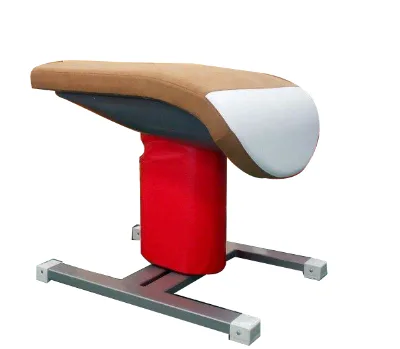
The term "Adjustable Professional Vaulting Table" refers to specialized gymnastics apparatus designed for vaulting events, where athletes perform high-speed jumps over a vaulting table. In the context of B2B procurement, it is critical to distinguish this equipment from unrelated machinery or entertainment products that may appear in broad search results. The supplied product data contains entries for "Gravity Separators," "Gold, Silver, Tin" processing equipment, and "Chess-and-Card Room" entertainment boards. These items belong to entirely different industrial and recreational sectors. A professional vaulting table is a piece of athletic safety equipment, typically constructed from high-density foam, wood, or composite materials, supported by a robust steel frame.
When sourcing this specific item, buyers must verify that the product specifications align with gymnastics standards rather than mineral processing or entertainment metrics. The supplied text lists attributes such as "Gravity Separator," "Coarse Deck," and "Separation 2-0.5mm Mineral Particle," which are irrelevant to vaulting tables. Similarly, attributes like "Usage: Entertainment," "Board Type: Poker," and "Application: Home, Chess-and-Card Room" describe leisure furniture, not professional sports apparatus. A procurement specialist must filter out these non-relevant listings to focus on the actual structural requirements of a vaulting table. The core technical requirement for a vaulting table is its ability to provide a stable, spring-loaded, or rigid surface that allows for safe dismounts. The "adjustable" feature implies a mechanism to change the height or the angle of the table, which is essential for training athletes of varying skill levels.
Buyers should look for specifications regarding the deck material, the locking mechanism for height adjustment, and the stability of the base. Unlike the "Gravity Separator" models listed with specific particle sizes (2-0.022mm), a vaulting table's "effective separating particle size" is not a relevant metric. Instead, the focus must be on the surface area, the load-bearing capacity, and the shock absorption properties. The supplied data mentions "Standard Export Packing" and "Standard Container" for industrial goods; for vaulting tables, packaging must ensure the foam and frame are protected from compression and moisture during transit. The "Weight" attribute for the industrial separators is listed as "<1T," which is a heavy industrial metric. A professional vaulting table is typically lighter but requires a specific weight distribution to prevent tipping during use.
Compliance and Certification Verification
In the realm of professional sports equipment, compliance is not merely a formality but a critical safety imperative. The supplied product data references certifications such as "ISO9001," "SGS," and "CE." While these are standard quality management and safety marks, they must be applied to the correct product context. For a vaulting table, ISO9001 certification indicates that the manufacturer has a quality management system in place, which is a positive indicator of consistent production processes. However, the presence of "ISO9001:Color:Black" or "ISO9001:Color:Blue" in the source data suggests a potential data mixing issue, where certification details are incorrectly paired with color attributes from other product lines.
Buyers must verify that the certification specifically covers gymnastics equipment safety standards, such as EN 13195 (for gymnastics equipment) or ASTM F887 (for playground equipment, if applicable). The supplied text mentions "CE" certification, which is mandatory for products sold in the European Economic Area. However, the context in the source data links "CE" to a product with "Color:Blue," which may be a different item entirely. Procurement teams should request a valid certificate of conformity that explicitly lists the vaulting table model and confirms compliance with the relevant safety standards for gymnastics apparatus.
Furthermore, the source data includes "Gandong" as a brand name and "Gandong" as a product standard. This indicates a specific manufacturer, but without external verification, it is impossible to confirm if this brand produces vaulting tables or if the data is conflated with their industrial separator lines. Buyers should not assume that a brand known for mineral separators automatically meets the rigorous safety requirements for gymnastics equipment. The "After-Service" attribute in the source data mentions "Sent Engineer to Worksite Installation and Guide." While valuable for large industrial machinery, this service model is less common for standard vaulting tables, which are often self-assembled or require local gym installation services. Buyers should clarify if the supplier offers on-site installation specifically for sports equipment, as this is a distinct service offering compared to industrial plant installation.
Cost Drivers and Pricing Structure Analysis
Determining the cost of an Adjustable Professional Vaulting Table requires a clear understanding of the variables that influence pricing. The supplied data shows a wide observed price range of 75 to 10,000 USD. This broad spectrum likely reflects the inclusion of vastly different product categories, from small entertainment boards to heavy industrial separators. For a genuine professional vaulting table, the price will be driven by the complexity of the adjustment mechanism, the quality of the foam padding, the durability of the steel frame, and the brand reputation.
The "MOQ" (Minimum Order Quantity) range of 1-10 in the source data suggests that some suppliers are willing to sell single units, while others may require bulk orders. For a gym or school procurement, an MOQ of 1 is ideal for initial purchases, but buyers should be aware that bulk orders might offer significant discounts. The "Delivery Time" varies between "in Stock," "30 Days," and "30 Days After The Down Payment." This variability indicates that lead times are highly dependent on the supplier's inventory status and production capacity. Buyers should anticipate a lead time of at least 30 days for custom or adjustable models, especially if the adjustment mechanism requires specialized engineering.
Other cost drivers include the "Product Packing" method. The source mentions "Standard Export Packing," "Gallows Package," and "Box." For a vaulting table, the packaging must be robust enough to prevent damage to the foam and frame. "Gallows Package" might refer to a specific crating method for heavy items, which could add to the shipping cost. Additionally, the "Condition" is listed as "New," which is standard for procurement, but buyers should verify if "refurbished" or "used" options are available, as these could significantly lower costs but introduce safety risks. The "Warranty" period is another critical cost factor; the source lists "1 Year" and "2 Years." A longer warranty period often correlates with higher initial costs but provides better long-term value and risk mitigation.
Typical Applications and Operational Requirements
The primary application for an Adjustable Professional Vaulting Table is in competitive gymnastics training and events. It is used to facilitate vaulting exercises where athletes run, jump, and push off the table to perform aerial maneuvers. The "adjustable" nature of the table allows coaches to modify the height to suit different age groups and skill levels, from beginners learning the basics to elite athletes performing complex routines. The supplied data mentions "Application: Gold, Silver, Tin, Columbium, Tantalum, Titanium," which are mineral processing applications and are completely irrelevant to gymnastics. Buyers must ignore these industrial applications and focus on the specific needs of a gymnastics facility.
The operational requirements for a vaulting table include a stable floor surface, adequate clearance around the apparatus, and proper lighting. The "Deck Type" in the source data is described as "Coars Deck, Find Sand Deck or Slime Deck Optional," which refers to mineral separation stages. For a vaulting table, the deck must be a continuous, flat surface with high-density foam. The "Mode" of operation in the source data is "Manual Operation," which is accurate for vaulting tables, as they are adjusted manually by the user or coach. The "Age" group is listed as "Adult," but vaulting tables are used by athletes of all ages, from children to adults. Buyers should ensure the equipment is rated for the specific age and weight groups of their users.
The "Time" attribute in the source data ranges from "0.5-2h," which might refer to the duration of a training session or a specific activity. For vaulting tables, the usage time is continuous during training, so the equipment must be durable enough for repeated use. The "Member" count of "4-10" could refer to the number of users in a group, but vaulting tables are typically used by one athlete at a time. Buyers should verify the maximum load capacity and the number of simultaneous users allowed, which is usually one. The "Feature: Waterproof" attribute is relevant for outdoor or high-humidity environments, as the foam and frame must resist moisture to prevent degradation.
Supplier Evaluation and Selection Criteria
Selecting the right supplier for an Adjustable Professional Vaulting Table requires a rigorous evaluation process. The source data lists "Gandong" as a brand name and "Jiangxi China" as the origin. While this provides a potential starting point, buyers must verify if this supplier actually manufactures gymnastics equipment or if the data is a result of a keyword mismatch with their industrial product lines. The "Testing" attribute in the source data is listed as "Supply," which is vague. Buyers should request specific test reports for the vaulting table, including load testing, stability testing, and material safety reports.
The "After-Service" attribute mentions "Sent Engineer to Worksite Installation and Guide." This is a significant value-add, especially for large or complex adjustable systems. Buyers should confirm if this service is available for their specific location and if the engineers are trained in gymnastics equipment installation. The "Visit: Welcome" attribute suggests that the supplier is open to factory visits, which is a positive sign for transparency. Buyers should consider visiting the factory to inspect the production process, quality control measures, and the range of products offered.
The "Standard" attribute in the source data includes "ISO9001: 2008&SGS" and "Gandong." Buyers should verify the validity of these standards and ensure they apply to the vaulting table product line. The "prod_standard: depent on model" indicates that standards may vary by product, so buyers must specify the exact model they are interested in and request the corresponding standard documentation. The "Customization" attribute is listed as "Available," which is crucial for buyers with specific requirements, such as custom colors, logos, or dimensions. Buyers should inquire about the customization process, lead times, and any additional costs associated with custom orders.
Quality Control and Long-Term Procurement Considerations
Quality control is paramount for sports equipment, as failures can lead to serious injuries. The "Condition: New" attribute is a baseline requirement, but buyers must go further to ensure the equipment meets safety standards. The "Warranty" period of "1 Year" or "2 Years" provides some protection, but buyers should also check the warranty terms for specific components, such as the adjustment mechanism and the foam padding. The "Packaging" method, such as "Standard Container" or "Box," must be sufficient to protect the product during shipping. Buyers should request photos of the packaging to ensure it meets their logistics requirements.
Long-term procurement considerations include the availability of spare parts, the ease of maintenance, and the potential for future upgrades. The "Delivery Time" of "30 Days" or "in Stock" affects the ability to restock or replace equipment quickly. Buyers should establish a relationship with the supplier to ensure a steady supply of spare parts and maintenance services. The "Energy Saving" attribute in the source data is irrelevant for a vaulting table, as it is a passive piece of equipment. However, buyers should consider the energy efficiency of any motorized components if the table has electronic height adjustment.
The "Location" of "Jiangxi China" or "China" indicates the manufacturing origin. Buyers should be aware of potential shipping costs, import duties, and lead times associated with international procurement. The "prod_origin" should be verified to ensure it matches the supplier's claims. The "Standard Export Packing" suggests that the supplier is experienced in international shipping, which is a positive indicator. Buyers should also consider the environmental impact of the materials used, such as the foam and steel, and ensure they meet local environmental regulations.
In conclusion, sourcing an Adjustable Professional Vaulting Table requires a careful filtering of product data to separate relevant gymnastics equipment from unrelated industrial and entertainment items. Buyers must verify certifications, evaluate supplier capabilities, and consider long-term maintenance and safety requirements. By focusing on the specific needs of gymnastics facilities and ignoring the irrelevant attributes in the source data, buyers can make informed decisions that ensure the safety and performance of their equipment.
FAQs
How can I verify the certification of an Adjustable Professional Vaulting Table?
You can verify certification by checking for ISO9001 and SGS marks on the product documentation. While the source data lists these for industrial separators, valid sports equipment must also meet gymnastics safety standards like EN 13195 or ASTM F887 to ensure athlete safety during use.
What is the typical lead time for delivering an Adjustable Professional Vaulting Table?
The typical lead time is approximately 30 days after the down payment is received. Some suppliers may offer in-stock items, but custom adjustable models often require production time similar to the 30-day window observed for specialized machinery in the region.
Which packaging methods are used for shipping adjustable professional vaulting tables?
Standard export packing or standard container shipping is commonly used for industrial goods. For vaulting tables, robust packaging like boxes or gallows packages is essential to protect the foam and steel frame from compression and moisture during transit to the buyer's location.
Can I get after-service installation for an Adjustable Professional Vaulting Table?
Yes, some suppliers offer to send engineers to the worksite for installation and guidance. This service is typical for large industrial machinery but should be explicitly confirmed for sports equipment to ensure the installation team is trained in gymnastics apparatus setup.
What warranty periods are available for adjustable professional vaulting tables?
Warranty periods typically range from one to two years depending on the manufacturer. A longer warranty often indicates higher build quality, but buyers must verify that the coverage specifically applies to the structural integrity and adjustment mechanisms of the vaulting table.
How does the weight of an Adjustable Professional Vaulting Table compare to industrial separators?
Industrial separators are often heavy, with weights under one ton, while vaulting tables are lighter but require specific weight distribution. Buyers should check the load-bearing capacity and stability of the vaulting table rather than relying on industrial weight metrics for safety.