Source Adjustable PVC Barbell and Dumbbell Set for Home, Gym, and Rehabilitation
Explore 30 listings for the Adjustable PVC Barbell and Dumbbell Set, featuring options in steel, rubber, and cast iron. Buyers can compare customization, certifications, and lead times from suppliers in China and Anhui.
Key considerations
Products List


Dumbbell Set Bag Adjustable Weight Coated Plated Dumbbell Barbell and Dumbbell Set
$23.00 - $25.00
MOQ: 100 Sets


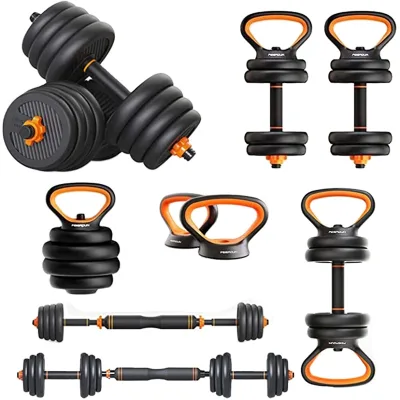


Comprehensive Sourcing Guide
Strategic Sourcing Guide for Adjustable PVC Barbell and Dumbbell Sets
The global fitness equipment market continues to expand, with adjustable resistance training tools remaining a cornerstone of both commercial gym operations and home workout setups. For procurement professionals seeking an "Adjustable PVC Barbell and Dumbbell Set," the sourcing landscape requires a nuanced understanding of material science, manufacturing standards, and supply chain logistics. While the term "PVC" often implies a specific polymer composition, the actual product listings reveal a diverse array of materials including steel, rubber, cast iron, and composite blends of plastic and cement. This guide provides an evidence-based framework for evaluating suppliers, verifying product specifications, and ensuring that the acquired equipment meets rigorous safety and durability requirements without relying on unverified marketing claims.
Material Composition and Structural Integrity
The primary differentiator in adjustable dumbbell and barbell sets is the material used for the weight plates and the handle assembly. Procurement teams must distinguish between the core structural material and the outer coating. The supplied data indicates that products are frequently constructed from Steel, Cast Iron, or Rubber, with some listings specifying a composite of Plastic+Cement. This variation is critical for durability and user safety. Steel and cast iron offer high density and longevity, essential for heavy-duty commercial environments, whereas rubber coatings provide noise reduction and floor protection, a key feature for "Gymnasium" applications.
When evaluating a potential supplier, buyers should verify the specific material composition rather than relying solely on the generic "PVC" descriptor. Some listings indicate a "Plastic+Cement" mix, which may suggest a cost-effective solution for lighter weights but potentially lower durability compared to solid steel or cast iron. The presence of Rubber as a material is often associated with high-end adjustable sets designed to minimize impact noise. Buyers must request material safety data sheets (MSDS) to confirm that the plastic or cement components do not degrade under repeated stress or exposure to sweat and cleaning agents. The "New" condition and "Durable" attributes observed in listings suggest that the manufacturing process aims for high-quality output, but this must be validated through physical inspection of sample units.
Technical Specifications and Weight Configuration
Technical specifications define the usability and versatility of the equipment. The observed product models, such as BS430, DB1010, DB1010R, and dy-db-350, indicate a wide range of customization options available in the market. A critical aspect of adjustable sets is the weight range and the mechanism for adjustment. The data shows standard weight configurations ranging from 10/15/20/25/30/35/40/45/50kg and specific ranges like 12.5-25KG or 16-40kg. Some listings specify a standard of 25KG, while others offer a broad 10-50KG range.
The "Weight Adjustable" attribute is a mandatory feature for this product category. Buyers must verify the adjustment mechanism—whether it is a dial system, a pin-lock, or a selector plate design—to ensure it operates smoothly and securely. The "Adjustable" standard listed in the data suggests that the weight increments are customizable, but the exact increment steps (e.g., 2.5kg vs. 5kg) must be confirmed. Furthermore, the "Product Name: Adjustable Dumbbell Set" and "Type: Dumbbell" confirm the primary function, but the compatibility with barbell bars must be checked if the set is intended for multi-use. The "Color: Black" and "Color" options indicate aesthetic customization, but the primary focus should remain on the mechanical reliability of the weight selection system.
Compliance, Certification, and Safety Standards
In the B2B procurement of fitness equipment, compliance with international safety standards is non-negotiable. The supplied facts highlight several key certifications, including CE, RoHS, and ISO. The presence of CE and RoHS on multiple listings indicates that the products meet European Union safety, health, and environmental protection requirements. The ISO certification, specifically mentioned alongside CE and RoHS, suggests adherence to international quality management systems, which is a strong indicator of a supplier's commitment to consistent manufacturing processes.
However, buyers should not assume that every product in a catalog automatically possesses these certifications. The data lists certifications as attributes of specific listings, implying that they are not universal across all suppliers. Procurement teams must request valid, up-to-date certification documents for the specific batch or model being ordered. The "CE,ISO,RoHS" combination is a robust standard, but the "CE,ISO" or "CE,RoHS" variations suggest that some suppliers may offer different compliance levels. It is essential to verify that the RoHS compliance covers the specific plastic and cement components, ensuring that hazardous substances are within legal limits. Additionally, the "Customized Logo" and "Customized" attributes indicate that branding is possible, but this customization must not compromise the structural integrity or safety markings of the equipment.
Cost Drivers, MOQ, and Lead Time Analysis
Understanding the cost structure is vital for budgeting and negotiation. The observed price range in USD spans from 0.7 to 375, reflecting the vast difference between individual components and complete sets. The MOQ (Minimum Order Quantity) varies significantly, with observed ranges from 1 to 1000 units. Specific listings indicate MOQs of 20sets or 50set, which can influence the unit price and the feasibility of small-batch orders. Buyers should be aware that lower MOQs often result in higher per-unit costs, while larger orders may unlock volume discounts.
Lead time is another critical factor in supply chain planning. The data presents a wide range of lead times, from 5-7 Days to 20-35 Days After Deposit. The variation likely depends on the complexity of the customization, the specific model ordered, and the current production capacity of the supplier. The "20 Days" and "20-35 Days" figures suggest that standard production runs require a significant lead time, likely due to the manufacturing of metal components and the curing of cement or rubber coatings. The "After Deposit" condition is standard practice, but buyers must clarify the exact payment terms and the timeline for the deposit release. The "Platform Guarantee" mentioned in the data offers a layer of financial security, ensuring that funds are protected until the goods are delivered as specified.
Packaging, Logistics, and Origin Verification
Logistics planning requires precise knowledge of packaging and shipping details. The observed packing methods include Polybag and CTN, Carton, Each in Polybag Then in Carton, and Carton Then Wooden Case. The choice of packaging depends on the weight and fragility of the items. For heavy adjustable dumbbells, the Carton Then Wooden Case option provides superior protection during international transit, reducing the risk of damage. The 1set/Carton specification indicates that sets are typically packed together, which simplifies inventory management for the buyer.
The origin of the products is predominantly China, with specific locations noted as Nantong, Anhui China, and shipping ports including Nantong, Shanghai, and Ningbo. Nantong appears frequently as both an origin and a shipping port, suggesting a manufacturing hub in that region. Buyers should verify the specific factory location to assess the logistical efficiency and potential tariffs. The "Shipping Port" options provide flexibility in choosing the most cost-effective route. However, the "Lead Time: 20-35 Days After Deposit" combined with the shipping distance must be factored into the total delivery timeline. The "Polybag and CTN" packing is suitable for domestic or short-distance shipping, while the Wooden Case is recommended for long-haul international freight to prevent crushing or moisture damage.
Supplier Evaluation and Quality Control Protocols
Evaluating suppliers requires a multi-faceted approach that goes beyond price and lead time. The "Brand: Dayu" and "Customized Logo" attributes indicate that some suppliers offer white-label or private-label services. When assessing a supplier, buyers should verify their production capacity, quality control processes, and after-sales support. The "Feature: Durable" attribute is a claim that must be validated through third-party testing or sample inspection. Buyers should request product samples to test the Weight Adjustable mechanism, the stability of the Plastic+Cement or Rubber coating, and the overall build quality.
Quality control should include checks on the prod_packing consistency, ensuring that the Polybag and Carton materials are robust enough to protect the goods. The Condition: New attribute is a baseline requirement, but buyers must ensure that the products are free from manufacturing defects such as cracks in the cement or loose weight plates. The Certification documents should be cross-referenced with the actual product markings to ensure authenticity. Additionally, the Payment: Platform Guarantee offers a secure transaction method, but buyers should still conduct due diligence on the supplier's financial stability and reputation.
Long-Term Procurement and Maintenance Considerations
Long-term procurement involves considering the lifecycle of the equipment and the maintenance requirements. The Application: Indoor and Gymnasium specifications suggest that the equipment is designed for controlled environments. Buyers should evaluate the resistance of the materials to humidity and temperature fluctuations, especially if the equipment will be stored in non-climate-controlled areas. The Adjustable nature of the sets means that moving parts are subject to wear and tear; therefore, suppliers should provide spare parts or maintenance guides.
The Customized Logo and Customized options allow for branding, which can enhance the product's value in a commercial setting. However, the customization process must not interfere with the structural integrity of the equipment. Buyers should also consider the Age: Adult specification, ensuring that the equipment is suitable for the intended user demographic. For commercial gyms, the durability of the Rubber or Steel components is paramount to withstand high-frequency use. Finally, the Standard: adjustable and Standard: 10-50KG specifications should be matched against the specific needs of the target market to ensure the equipment meets the expected performance standards.
Summary of Key Procurement Parameters
To facilitate quick decision-making, the following table summarizes the critical parameters observed in the market for adjustable PVC barbell and dumbbell sets. This comparison highlights the variability in specifications and helps buyers identify the most suitable options for their specific needs.
| Parameter | Observed Range/Options | Verification Requirement |
|---|---|---|
| Material | Steel, Rubber, Cast Iron, Plastic+Cement | Request material safety data sheets and physical samples. |
| Weight Range | 10-50KG, 12.5-25KG, 16-40KG, 25KG | Confirm increment steps and total weight capacity. |
| Certification | CE, RoHS, ISO (varies by listing) | Demand valid, batch-specific certification documents. |
| MOQ | 1 to 1000 units (e.g., 20sets, 50set) | Negotiate based on order volume and budget constraints. |
| Lead Time | 5-7 Days to 20-35 Days After Deposit | Clarify "After Deposit" timeline and production schedule. |
| Packaging | Polybag+CTN, Carton, Wooden Case | Select packaging based on shipping distance and fragility. |
| Origin | Nantong, Anhui China | Verify factory location and shipping port options. |
| Customization | Logo, Color, Model (BS430, DB1010, etc.) | Ensure customization does not compromise safety standards. |
By adhering to these evidence-based guidelines, procurement professionals can navigate the complexities of sourcing adjustable PVC barbell and dumbbell sets, ensuring that the final acquisition meets the highest standards of quality, safety, and value.
FAQs
What certifications do adjustable dumbbell sets typically have?
Many listings show CE, RoHS, and ISO certifications for safety and quality. Buyers must verify these documents for the specific batch ordered, as not every product automatically possesses them. Some suppliers offer CE and ISO, while others provide CE and RoHS, so confirmation is essential.
Which materials are used for adjustable dumbbell weight plates?
Products are constructed from steel, cast iron, rubber, or a plastic and cement composite. Steel and cast iron offer high density for commercial use, while rubber coatings reduce noise. The plastic and cement mix is a cost-effective option for lighter weights but requires durability validation.
How long does production take after deposit payment?
Lead times vary from 5 to 35 days depending on the model and customization. Standard production runs often require 20 to 35 days after deposit, while some suppliers offer faster 5 to 7 day turnaround. The exact timeline depends on the specific factory capacity and order complexity.
What is the minimum order quantity for these dumbbell sets?
MOQs range from 1 to 1000 units across different suppliers. Specific listings indicate minimums of 20 sets or 50 sets for custom orders. Lower MOQs often result in higher per-unit costs, while larger orders may unlock volume discounts depending on the supplier's policy.
Can I customize the logo on the dumbbell sets?
Yes, most suppliers accept customized logos and branding requests. This customization must not compromise the structural integrity or safety markings of the equipment. Buyers should confirm that the branding process aligns with the specific model and material composition before placing an order.
Where are these fitness equipment products manufactured?
Products originate primarily from China, with specific hubs in Nantong and Anhui. Shipping ports include Nantong, Shanghai, and Ningbo, offering logistical flexibility. Buyers should verify the specific factory location to assess shipping efficiency and potential tariffs for their destination.
What packaging options are available for shipping?
Options include polybag and carton, single carton per set, or carton with a wooden case. Heavy adjustable dumbbells often use a carton then wooden case for superior protection during international transit. The choice depends on the weight and fragility of the items to prevent damage.