Source Adjustable Stainless Steel Bracelet for Gifts, Fashion, and Daily Wear
Explore 30 listings for the Adjustable Stainless Steel Bracelet, featuring options in gold, rose gold, and rhodium plating. Compare specifications from Chinese manufacturers offering SGS-certified quality, custom logos, and dropshipping support for formal occasions and daily accessories; compare the available evidence and request quotations based on your requirements.
Key considerations
Products List


Style Simple Beaded Bracelet Elastic Stacked Bracelet Adjustable Bracelets
$1.25 - $2.15
MOQ: 60 Pieces


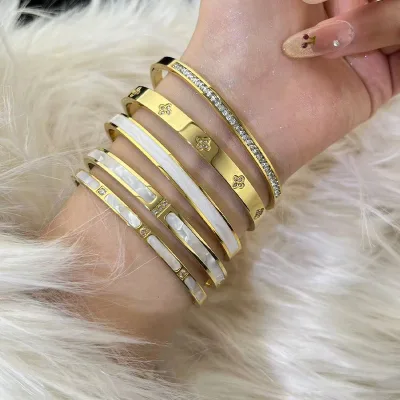


Comprehensive Sourcing Guide
Adjustable Stainless Steel Bracelet Sourcing Guide
Procuring adjustable stainless steel bracelets requires a clear understanding of the specific market signals that distinguish reliable listings from generic inventory. Buyers should prioritize vendors who explicitly list stainless steel as the primary material, as this ensures the durability and corrosion resistance essential for daily wear and formal occasions. The observed product data indicates a strong presence of items designed for decoration and gifting, often featuring fashion-forward styles like flower pendants or round patterns that appeal to female demographics.
When evaluating listings, attention must be paid to the specific plating technologies mentioned, such as PVD or IP plating, which offer superior longevity compared to standard gold plating. The availability of customization options, including logo engraving and OEM services, is a critical signal for buyers seeking branded merchandise. Sourcing strategies should focus on suppliers who provide detailed specifications for adjustable mechanisms, ensuring the final product meets the functional requirements of a secure and comfortable fit for various wrist sizes.
Product Scope and Observed Listing Signals
The current market for adjustable stainless steel bracelets encompasses a diverse range of applications, from daily wear to significant life events like weddings and engagements. Listings frequently highlight the versatility of these items, noting their suitability for formal occasions and their role as premium gifts. The observed product attributes reveal a trend toward simple yet stylish designs, often utilizing quality brass or stainless steel cores with rhodium or rose gold finishes to enhance aesthetic appeal without compromising structural integrity.
Buyers must carefully distinguish between products that are purely decorative and those engineered for health or therapeutic claims, as the latter often lack rigorous scientific backing. The data shows that while some items are marketed for health benefits, the core value proposition remains in their decorative utility and gifting potential. It is essential to verify that the "adjustable" feature is a functional mechanical component rather than a marketing term, ensuring the bracelet can be securely sized to the wearer's preference without slipping or causing discomfort.
Technical Specifications to Verify
Technical verification begins with confirming the exact material composition, specifically distinguishing between stainless steel and other metals like copper or brass that may be used as a base for plating. Buyers should request detailed specifications regarding the plating thickness and type, such as PVD or IP plating, to ensure the finish will resist tarnishing and fading over time. The standard dimensions and length, often cited as 45cm or adjustable ranges, must be validated against the intended wrist size to guarantee a proper fit for the target demographic.
The manufacturing process, including high mirror polishing or hand polishing techniques, significantly impacts the final tactile quality and visual luster of the bracelet. Procurement teams must verify the specific craft details, such as whether the product features a flower pendant shape or a round pattern, as these design elements dictate the tooling and production complexity. Additionally, confirming the packaging method, whether it is an individual OPP bag or a carton, is crucial for logistics planning and ensuring the product arrives in pristine condition for retail display.
Compliance and Safety Documentation
Compliance verification is paramount when sourcing jewelry intended for direct skin contact, requiring suppliers to provide valid SGS or Reach certification documents. These certifications confirm that the materials used, including the plating and base metals, are free from harmful substances like lead, nickel, or cadmium, which are common concerns in the jewelry industry. Buyers should explicitly request these test reports before placing large orders to mitigate the risk of regulatory non-compliance in their target markets.
Beyond material safety, documentation regarding the product's origin and manufacturing standards provides an additional layer of assurance for the supply chain. While some background information may suggest ISO 27001 or BSCI certifications, buyers should rely only on the specific certificates provided by the supplier, such as SGS, to validate their claims. Ensuring that the supplier can produce consistent documentation for every batch helps maintain brand integrity and protects against potential recalls or legal liabilities associated with unsafe jewelry products.
Cost Drivers and Commercial Terms
The commercial landscape for adjustable stainless steel bracelets is influenced by several key cost drivers, including the complexity of the plating process and the extent of customization required. Products featuring advanced PVD plating or intricate hand-polished finishes typically command higher prices than those with standard electroplating. Buyers should analyze the observed price range of 0.38 to 8 USD to understand the correlation between material quality, design complexity, and final unit cost, ensuring their budget aligns with the desired product tier.
Minimum Order Quantities (MOQ) and sample lead times are critical factors in the negotiation process, with observed MOQs ranging from 2 pieces to 600 units depending on the supplier. The sample time, often cited as 3 days for stock items and 15 days for customized orders, directly impacts the speed of product development and time-to-market. Procurement teams must balance the desire for low MOQs with the need for competitive factory prices, negotiating terms that support both initial testing and scalable production runs without incurring excessive per-unit costs.
Supplier Qualification and Quality Control
Supplier qualification should focus on verifying their capacity for OEM and ODM services, as well as their ability to support drop shipping and flexible logistics. The observed data indicates that many suppliers offer drop shipping support and accept custom logo requests, which are essential for brands looking to scale without holding significant inventory. Buyers must assess the supplier's track record in handling custom orders, ensuring they can maintain consistency in quality and design across different production batches.
Quality control protocols must be established to verify that the final product matches the approved samples in terms of finish, weight, and adjustability. Suppliers should demonstrate a clear process for inspecting items for defects such as loose clasps, uneven plating, or incorrect dimensions before shipment. Establishing a rigorous inspection regime, potentially involving third-party verification, ensures that the high-quality standards promised in the product description are consistently met, protecting the buyer's reputation and customer satisfaction.
Long-Term Procurement Checks
Sustaining a successful procurement relationship requires regular audits of the supplier's ability to maintain quality standards and meet evolving market demands. Buyers should periodically review the supplier's certification status and production capabilities to ensure they remain compliant with changing international safety regulations. Continuous communication regarding design updates and material availability helps prevent supply chain disruptions and ensures the product line remains competitive in a dynamic market.
Long-term checks also involve monitoring the supplier's performance against key metrics such as sample turnaround times, defect rates, and adherence to agreed-upon lead times. The ability to adapt to custom requests and maintain a reliable stock of popular items, such as those with flower pendants or specific plating colors, is a strong indicator of a supplier's reliability. By maintaining a proactive approach to supplier management, buyers can secure a stable supply of high-quality adjustable stainless steel bracelets that meet the needs of their customers over the long term.
FAQs
How quickly can a sample of an Adjustable Stainless Steel Bracelet be produced?
Stock samples are typically ready in about 3 days, while customized designs take around 15 days depending on complexity. Sample approval usually precedes bulk production, so plan your timeline accordingly. Shipping is generally arranged via DHL or other express agents, which adds a few transit days depending on your destination and chosen courier service.
What is the minimum order quantity for an Adjustable Stainless Steel Bracelet?
Minimum order quantities vary by listing, with observed MOQs ranging from 1 to 600 pieces. Some suppliers accept as few as 2 pieces per style, which suits small retailers testing demand. Confirm the exact MOQ for your chosen design before ordering, since plating options and customization requirements can affect the minimum quantity.
Can I customize the logo on an Adjustable Stainless Steel Bracelet?
Yes, logo customization is available and OEM or ODM orders are accepted. You can usually provide your logo artwork for engraving, stamping, or printing depending on the bracelet design. Customized samples take around 15 days versus 3 days for stock items, so factor the longer timeline into your launch or gift-season schedule.
What plating options are available for an Adjustable Stainless Steel Bracelet?
Common plating options include rhodium, rose gold, and 18K gold, with PVD and IP plating also used for durability. Gold is the dominant color for formal-occasion styles. PVD plating offers better wear resistance for daily-wear pieces, so discuss the intended use with suppliers when selecting between standard and reinforced plating finishes.
Which packaging options come with an Adjustable Stainless Steel Bracelet order?
Packaging varies by supplier: some ship each piece in an OPP bag, others use OPP bags per pair or piece, and cartons are used for outer packing. Custom packaging with your logo may be possible under customization services. Confirm inner and outer packaging details before production, especially if the bracelets are intended as gifts or retail products.
How should I verify the quality of an Adjustable Stainless Steel Bracelet?
Check whether the supplier holds SGS certification or SGS and REACH documentation, which some listings reference. Review material specifications such as quality brass or stainless steel, and request plating details like PVD or IP coating thickness. Ordering a sample first lets you inspect polish quality, clasp strength, and adjustable mechanism before committing to bulk.
What occasions suit an Adjustable Stainless Steel Bracelet as a gift?
These bracelets fit formal occasions as well as anniversaries, engagements, weddings, and parties, and they work well as decoration or gift items. Gold-tone flower and round designs appeal to female recipients seeking simple or fashion styles. Drop shipping is supported by some suppliers, making them convenient for online sellers fulfilling individual gift orders.
Can adjustable stainless steel bracelets be drop shipped directly to customers?
Yes, drop shipping is supported, so orders can ship directly to your end customers without handling inventory yourself. Express shipping methods such as DHL and other courier agents are commonly used. This suits sellers testing new designs, though you should confirm shipping costs, delivery times, and whether supplier packaging meets your brand presentation needs.