Source Adjustable Stainless Steel Toggle Latch for Cabinets, Machinery, and Doors
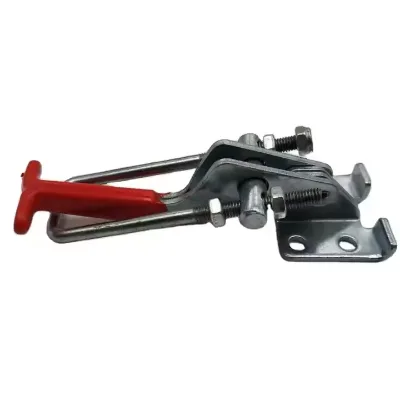
Explore 14 Adjustable Stainless Steel Toggle Latch options featuring materials like SS304 and stainless steel, with locking loads up to 25kgs. Buyers can compare models such as DK084Custom and DK-056, noting variations in surface treatments and packing sizes to find the right fit for heavy-duty applications.
Key considerations
Products List


Comprehensive Sourcing Guide
Strategic Sourcing Guide for Adjustable Stainless Steel Toggle Latches
Navigating the global market for adjustable stainless steel toggle latches requires a disciplined approach that balances technical precision with supply chain reliability. These hardware components are critical for securing enclosures, machinery guards, and industrial panels where vibration resistance and structural integrity are paramount. The following guide synthesizes available product data and industry best practices to assist procurement professionals in identifying, evaluating, and sourcing these specific fastening solutions.
Technical Specifications and Material Integrity
The foundation of a successful procurement strategy for toggle latches lies in a rigorous understanding of technical specifications. The core material for these components is typically stainless steel, with specific grades such as SS304 frequently observed in the market. This material choice is essential for applications requiring corrosion resistance, particularly in environments exposed to moisture or chemical agents. The surface finish is equally critical; polished surfaces are common for general utility, while nickel-plated or zinc-plated treatments offer enhanced protection against oxidation and wear. Buyers must verify the specific surface treatment required for their application environment, as the choice between polishing and plating directly impacts longevity.
Performance metrics vary significantly across different models. For instance, locking load capacities can range from lightweight applications requiring 74 grams of force to heavy-duty industrial clamps capable of withstanding 25 kilograms. Weight specifications also differ, with individual units ranging from approximately 18 grams to 35 grams depending on the model and size. Dimensions are standardized yet variable; observed lengths include measurements around 74.4mm, while widths may be specified at 32mm. Packaging dimensions for bulk orders often reflect the physical footprint of the latches, with standard carton sizes recorded at 322215cm.
When evaluating adjustable models, the locking mechanism's design is a primary consideration. Some units feature a multiple bolt structure, which provides enhanced security and stability compared to single-bolt designs. The locking cylinder style may also vary, with fire-resistant options available for safety-critical applications. Buyers should confirm whether the specific model supports the required locking cylinder level, such as "Super B" or equivalent standards, to ensure the latch meets the security needs of the final assembly.
Compliance, Certification, and Standard Verification
In the realm of industrial hardware, compliance is not merely a formality but a prerequisite for market access and operational safety. While specific certifications like RoHS and ISO9001 are often cited in the broader industry, procurement teams must treat these as verification targets rather than guaranteed attributes of every listed product. The supplied data indicates that standards can be "Standard" or "Nonstandard," suggesting that buyers must explicitly define their compliance requirements before engaging with suppliers.
The origin of the product plays a significant role in compliance expectations. Many high-quality stainless steel toggle latches originate from manufacturing hubs in Shandong, China, a region known for its metalworking capabilities. However, the mere location of origin does not automatically confer compliance with international safety or environmental standards. Buyers should request documentation proving that the stainless steel used meets specific grade requirements and that the manufacturing process adheres to relevant environmental directives.
Furthermore, the distinction between "Standard" and "Nonstandard" products is crucial. Nonstandard items often imply custom dimensions or unique locking mechanisms that may not conform to generic industry norms. When sourcing nonstandard latches, the verification process must be more rigorous, involving detailed engineering reviews to ensure the custom specifications do not compromise the structural integrity of the final product. Buyers should also check for OEM capabilities, as many suppliers accept custom orders, which allows for tailored solutions but requires a higher level of quality assurance oversight.
Cost Drivers and Pricing Dynamics
Understanding the cost structure of adjustable stainless steel toggle latches is essential for budgeting and negotiation. The observed price range in the market spans from $0.10 to $5.50 USD per unit, a wide variance that reflects differences in material quality, manufacturing complexity, and order volume. Several factors drive these costs. The primary driver is the material grade; SS304 stainless steel is generally more expensive than lower-grade metals due to its superior corrosion resistance and durability.
Surface treatment processes also significantly influence pricing. Polished finishes are standard, but specialized treatments like nickel plating or zinc plating add to the production cost. Additionally, the complexity of the locking mechanism, such as the inclusion of fire-resistant features or multiple bolt structures, will increase the unit price. The customization level is another major cost factor; while many suppliers offer customization, the degree of modification required can impact the final price.
Order volume is a critical determinant of the final cost per unit. The minimum order quantity (MOQ) ranges from as low as 1 unit to as high as 5000 units. Buyers purchasing small quantities may face higher per-unit costs due to setup and handling fees, whereas large-volume orders can leverage economies of scale to reduce the price. It is important to note that the observed price range is a market observation and not a fixed rate; actual costs will depend on the specific supplier, the current market price of raw materials, and the negotiated terms.
Typical Applications and Usage Scenarios
Adjustable stainless steel toggle latches are versatile components used across a wide array of industries. Their primary function is to provide a secure, quick-release fastening mechanism for various enclosures and panels. In the heavy-duty sector, these latches are frequently employed in machinery guarding, where they must withstand significant vibration and mechanical stress. The locking load capacity of 25 kilograms makes them suitable for securing heavy access doors on industrial equipment.
In the realm of electrical and control panels, the corrosion resistance of stainless steel is vital. These latches ensure that sensitive electronic components remain protected from dust, moisture, and accidental tampering. The adjustable nature of these latches allows for fine-tuning the tension, ensuring a tight seal even if the panel warps slightly over time. For applications requiring enhanced security, such as server cabinets or secure storage units, latches with fire-resistant locking cylinder styles and multiple bolt structures are preferred.
The packaging and shipping methods also influence the suitability of these latches for specific logistics scenarios. Products are typically packed in cartons, bags, or on pallets, depending on the order size. Shipping options include sea, air, and express delivery, with loading ports often located in major Chinese hubs like Qingdao, Tianjin, Shanghai, and Ningbo. Buyers must consider the lead time, which is typically 7-14 days after payment, when planning their supply chain to ensure timely delivery for production schedules.
Supplier Evaluation and Quality Assurance
Selecting the right supplier is a critical step in the procurement process. While specific supplier names should not be recommended, buyers should look for indicators of reliability in the supplier's profile. Key factors include the supplier's location, with Shandong being a notable hub for metal hardware manufacturing, and their ability to provide OEM services. A supplier that accepts customization and offers a range of models, such as the DK084Custom or DK-016, demonstrates flexibility and technical capability.
Quality assurance should be a central part of the evaluation process. Buyers must verify that the supplier has a robust quality control system in place. This includes checking for adherence to material standards, such as the use of genuine SS304 stainless steel, and ensuring that surface treatments are applied consistently. The condition of the product, typically listed as "New," should be confirmed upon receipt. Additionally, the supplier's ability to provide detailed product specifications, including weight, dimensions, and locking load, is a strong indicator of transparency and professionalism.
Lead time management is another aspect of supplier evaluation. The standard lead time of 7-14 days after payment is a benchmark, but buyers should confirm if this timeline is consistent with the supplier's current production capacity. Delays in lead time can disrupt production schedules, so it is advisable to establish clear communication channels and contingency plans with the supplier.
Long-Term Procurement Considerations
Sourcing adjustable stainless steel toggle latches is not a one-time transaction but a long-term partnership that requires strategic planning. Buyers should consider the scalability of their supply chain, ensuring that the supplier can handle increased order volumes as their business grows. The ability to maintain consistent quality over time is paramount; fluctuations in material quality or surface finish can lead to product failures and increased maintenance costs.
Inventory management is also a key consideration. Given the wide range of MOQs, from 1 to 5000 units, buyers must balance the cost of holding inventory against the risk of stockouts. For critical applications, maintaining a safety stock of essential latches can prevent production delays. The packaging format, whether in PE bags, cartons, or on pallets, should be optimized for storage efficiency and ease of handling in the warehouse.
Finally, buyers should stay informed about market trends and technological advancements in fastening solutions. As industries evolve, the requirements for latches may change, necessitating updates to the product specifications. Maintaining a relationship with a supplier who is responsive to these changes and capable of offering innovative solutions will ensure that the procurement strategy remains effective and competitive in the long run. By focusing on these strategic elements, buyers can secure a reliable supply of high-quality adjustable stainless steel toggle latches that meet their operational needs.
FAQs
What material grades are used for adjustable stainless steel toggle latches?
SS304 stainless steel is the primary material grade observed for these latches. Some suppliers also offer customized material options to meet specific corrosion resistance needs for harsh environments.
How much locking load can these heavy duty clamps support?
Locking loads vary significantly by model, ranging from 74 grams for lighter units up to 25 kilograms for heavy duty industrial clamps. Buyers must select the specific model matching their required force.
Which surface treatments are available for these stainless steel components?
Common surface finishes include polished, nickel-plated, and zinc-plated treatments. Coloring is also available for specific aesthetic or protective requirements depending on the supplier's customization capabilities.
Can suppliers provide customization for these toggle latch models?
Yes, customization is available for many Adjustable Stainless Steel Toggle Latch models. Suppliers accept OEM requests and can produce nonstandard dimensions or specific locking mechanisms like fire-resistant styles.
What is the typical lead time for these metal hardware products?
The standard lead time is 7 to 14 days after payment is received. This duration applies to both standard and customized orders from manufacturers located in Shandong, China.
Which shipping methods are available for exporting these latches?
Products can be shipped via sea, air, or express delivery services. Major loading ports include Qingdao, Tianjin, Shanghai, and Ningbo to facilitate global distribution to various international destinations.