Source AgSnO2 Fixed Silver Electrical Contacts for Relay Switch Breaker
Find 30 listings for AgSnO2 Fixed Silver Electrical Contacts suitable for relays, switches, and circuit breakers. Buyers can compare models like ER28 and ER43, materials including AgSnO2 and Silver Copper Composite, and lead times ranging from 15 to 20 days.
Key considerations
Products List


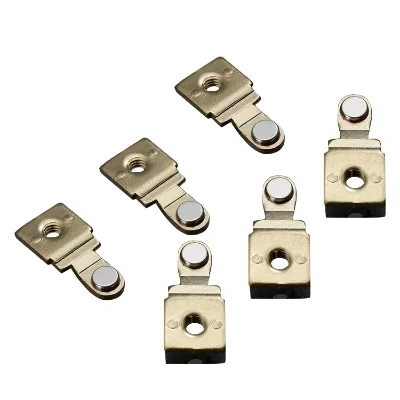


$0.01 - $1.00
MOQ: 1000 Pieces


4000A High Voltage Electrical Silver Contacts T2 Red Copper Fixed Contact
$130.00 - $150.00
MOQ: 1 Pieces


2000A High Voltage Electrical Silver Contacts T2 Red Copper Fixed Contact
$100.00 - $127.00
MOQ: 1 Pieces

3150A High Voltage Electrical Silver Contacts T2 Red Copper Fixed Contact
$100.00 - $127.00
MOQ: 1 Pieces

4000A High Voltage Electrical Silver Contacts T2 Red Copper Fixed Contact
$100.00 - $127.00
MOQ: 1 Pieces

1600A High Voltage Electrical Silver Contacts T2 Red Copper Fixed Contact
$100.00 - $127.00
MOQ: 1 Pieces


High-Conductivity Silver Brass Electrical Contacts for Single Double Control Switches
$0.02 - $0.04
MOQ: 100000 Pieces

Comprehensive Sourcing Guide
Strategic Sourcing Guide for AgSnO2 Fixed Silver Electrical Contacts
Understanding the Technical Profile of AgSnO2 Fixed Contacts
When sourcing electrical components, the specific combination of material composition and contact mechanism defines the operational envelope of the product. For buyers targeting the core keyword "AgSnO2 Fixed Silver Electrical Contacts," the primary technical observation is the use of Silver Tin Oxide (AgSnO2) as the conductive material. This alloy is distinct from pure silver or other silver composites like AgNi or Silver Copper Composite, offering a balance of electrical conductivity and resistance to welding under high-load conditions. The "Fixed Contact" attribute indicates a stationary configuration, which is critical for applications requiring stable electrical pathways without the mechanical wear associated with sliding or rolling mechanisms.
The voltage ratings observed in this category span a broad range from 10V to 380V, suggesting versatility across low-voltage control circuits and higher-voltage industrial distribution systems. However, the specific voltage rating for any individual unit must be verified against the manufacturer's datasheet, as the general range does not imply every product within the category meets the upper limit. The material composition of AgSnO2 is particularly valued for its ability to handle arcing, which is common in switching applications. Unlike the "Sliding and Rolling Contact" mode found in other product listings, the fixed nature of these contacts ensures minimal mechanical friction, making them ideal for relays and contactors where the contact point remains static during operation.
Buyers must also note the existence of alternative material options in the broader market, such as Copper or Silver Copper Composite, which may be listed alongside AgSnO2 products. While these materials offer different cost and performance profiles, the specific requirement for AgSnO2 implies a need for superior arc resistance and durability in switching duties. The terminal types associated with these components often align with standard industrial formats, such as the CJX2 series, which includes ratings for 12, 18, 25, 40, 65, and 80 amperes. This standardization facilitates integration into existing electrical systems but requires careful matching of the contact rating to the load current to prevent overheating or premature failure.
Compliance and Certification Verification Protocols
In the B2B procurement of electrical components, certification is not merely a formality but a critical indicator of manufacturing consistency and safety. The supplied data indicates that products in this category frequently carry ISO and RoHS certifications. Some listings explicitly mention UL certification, while others cite ISO9001, CE, and CQC standards. It is essential for buyers to understand that while these certifications are observed in the market, they are not universally guaranteed for every SKU listed under the general keyword. The presence of "ISO" and "RoHS" suggests adherence to international quality management systems and restrictions on hazardous substances, respectively.
The verification process should begin by requesting specific certificate documents rather than relying on marketing claims. Buyers should confirm whether the ISO certification covers the specific manufacturing facility producing the AgSnO2 contacts, as quality systems can vary between plants. Similarly, RoHS compliance must be validated for the specific alloy composition to ensure the tin oxide content and silver purity meet environmental directives. For applications in North America or regions with strict safety regulations, the UL certification mentioned in some listings becomes a mandatory requirement. However, buyers must distinguish between products that explicitly state UL certification and those that only list ISO or RoHS.
Additionally, the "Standard" attribute in the product data often references "according to drawing" or "custom" specifications. This indicates that while the materials and certifications provide a baseline, the final dimensional and performance standards may be tailored to the buyer's specific engineering drawings. In cases where the standard is listed as "brass" or "custom," it refers to the housing or backing material rather than the contact alloy itself. Buyers should ensure that the certification documents explicitly cover the AgSnO2 contact material and not just the assembly or packaging. The absence of a specific standard number in the general description necessitates a direct inquiry to the supplier to confirm if the product meets IEC or other relevant international standards for electrical contacts.
Cost Drivers and Pricing Structure Analysis
The pricing for AgSnO2 Fixed Silver Electrical Contacts is influenced by several dynamic factors, with the observed market range spanning from $0.01 to $150.00 USD. This wide variance is not indicative of quality differences alone but reflects the diversity in product scale, packaging, and order volume. The lower end of the spectrum typically corresponds to small-scale components, possibly sold in bulk with minimal packaging, while the higher end likely represents specialized units with custom tooling, higher current ratings, or integrated assemblies.
A primary cost driver is the Minimum Order Quantity (MOQ). The data shows an MOQ range from 1 unit to 100,000 units. Buyers purchasing small quantities, such as the 1-unit MOQ observed, will naturally face a higher unit cost compared to those placing orders for 1,000 or 10,000 pieces. The specific listing with an MOQ of 1,000 PCS suggests that economies of scale are a significant factor in pricing strategy. Furthermore, the "Customization" attribute being available implies that custom orders will incur additional tooling or setup costs, which will be reflected in the unit price.
Shipping and packaging also play a role in the total landed cost. While some listings offer "Free" shipping, others specify "Carton Box" or "Pallet" packaging. The choice of packaging affects the weight and volume of the shipment, which can impact freight charges for larger orders. The single gross weight of 20.0 kg for a package measuring 35x35x10 cm provides a baseline for logistics planning, but buyers should verify the weight per unit for their specific order size. Payment terms, such as T/T or L/C, may also influence the final price, as suppliers often adjust pricing based on the risk profile associated with the payment method. Buyers should negotiate based on their volume and payment security to optimize the total cost of ownership.
Typical Applications and Operational Environments
The operational scope of AgSnO2 Fixed Silver Electrical Contacts is defined by their intended usage in high-reliability switching environments. The product data explicitly lists applications including Relays, Switches, Circuit Breakers, and Contactors. These components are integral to the control and protection of electrical circuits, where the ability to interrupt current without welding or excessive erosion is paramount. The AgSnO2 material is particularly suited for these roles because the tin oxide phase helps to disperse heat and prevent the silver from fusing together during arcing events.
In relay applications, the fixed contact ensures a stable connection point that can handle frequent switching cycles. For circuit breakers and contactors, the ability to withstand high inrush currents and maintain integrity under fault conditions is critical. The voltage range of 10-380V covers a wide array of industrial and commercial applications, from control panels in manufacturing facilities to power distribution units in commercial buildings. The specific model numbers, such as ER28, ER43, and EC76, often correspond to specific form factors or current ratings designed for these applications.
The "Electricity Type" is noted as AC in the provided data, which is the most common application for these contacts. However, buyers must verify if the specific product is suitable for DC applications, as the arc characteristics differ significantly between AC and DC. The "Main Circuit Rating Current" of 400A observed in some listings indicates that high-current contactors are available, but the standard ratings for smaller relays may be significantly lower. Understanding the specific load profile, including the frequency of operation and the nature of the load (resistive, inductive, or capacitive), is essential for selecting the correct AgSnO2 contact. The "Bimetallic strip" keyword suggests that some related components may involve thermal protection mechanisms, which should be considered in the overall system design.
Supplier Evaluation and Production Capabilities
Evaluating a supplier for AgSnO2 Fixed Silver Electrical Contacts requires a focus on their manufacturing capabilities, lead times, and customization options. The data indicates a lead time of 15 to 20 days, which is a standard timeframe for custom or semi-custom electrical components. Buyers should verify if this lead time applies to stock items or if it increases for custom orders. The "Customization" attribute being available suggests that suppliers can adapt the product to specific requirements, but this flexibility often comes with a longer lead time and higher MOQ.
The origin of the products is listed as China, specifically Zhejiang, which is a major hub for electrical component manufacturing. This location offers access to a robust supply chain but requires buyers to conduct thorough due diligence on the specific supplier's quality control processes. The "Service" attribute mentioning "Customize ODM OEM" indicates that suppliers are willing to work on original design manufacturing and original equipment manufacturing projects. This is a valuable capability for buyers looking to integrate these contacts into proprietary products.
When evaluating suppliers, buyers should request samples to verify the material composition and contact mode. The "Contact Mode" being "Fixed Contact" must be confirmed visually and mechanically to ensure it matches the design requirements. Additionally, the "Product Name" often includes terms like "Electronic Components OEM Precision Brass Electrical Contacts," which highlights the precision engineering involved. Buyers should assess the supplier's ability to maintain consistency in the AgSnO2 alloy composition, as variations can significantly impact performance. The availability of certifications like ISO9001 and CE should be verified through direct documentation, and the supplier's track record in delivering on time should be checked through references or past performance data.
Quality Control and Long-Term Procurement Strategy
Ensuring the long-term reliability of AgSnO2 Fixed Silver Electrical Contacts requires a robust quality control strategy. The "Standard" attribute often references "according to drawing," which means that the quality criteria are defined by the buyer's specifications rather than a generic industry standard. Buyers should establish clear acceptance criteria for contact resistance, arc resistance, and mechanical durability. The "Single package size" and "Single gross weight" provide logistical data, but the internal quality of the contact assembly is paramount.
For long-term procurement, buyers should consider the lifecycle of the product. The AgSnO2 material is known for its durability, but the actual lifespan depends on the operating conditions. Regular inspection and testing of the contacts in the field can help identify early signs of wear or degradation. The "Payment" terms of T/T or L/C should be structured to include quality holdbacks or performance guarantees where possible. Additionally, the "Leadtime" of 15-20 days should be factored into inventory planning to avoid stockouts, especially for custom orders.
Buyers should also monitor the market for changes in material availability and pricing. The "Material" list includes Ag, AgCdO, AgNi, and AgSnO Cu, indicating that the market offers various silver-based alloys. While AgSnO2 is the target, buyers should remain open to alternative materials if supply chain disruptions occur, provided the performance requirements are met. The "Keyword" of "bimetallic strip" suggests that thermal management is a key consideration, and buyers should ensure that the contacts are compatible with any thermal protection devices in the system. Finally, maintaining a strong relationship with the supplier and establishing clear communication channels for technical support will facilitate smoother procurement cycles and faster resolution of any quality issues.
FAQs
What certifications do AgSnO2 Fixed Silver Electrical Contacts typically have?
Products often carry ISO, RoHS, and UL certifications. Some listings also include ISO9001, CE, and CQC standards. Buyers must verify specific certificate documents for each SKU rather than relying on general claims.
Which materials are used for these fixed silver electrical contacts?
The primary material is AgSnO2, offering high arc resistance. Other observed materials include Silver Copper Composite, AgNi, and Copper. The specific alloy depends on the product model and intended application requirements.
How long is the lead time for custom orders?
Standard lead times range from 15 to 20 days. Customization is available but may extend the timeline. Buyers should confirm if the quoted time applies to stock items or tailored specifications.
Can these contacts be used in circuit breakers and contactors?
Yes, they are suitable for relays, switches, circuit breakers, and contactors. The fixed contact mode ensures stability in these high-reliability switching environments. Verify voltage ratings match your specific system needs.
What is the minimum order quantity for these components?
MOQs vary from 1 unit up to 100,000 units depending on the supplier. Some specific listings require a minimum of 1,000 pieces. Smaller orders typically incur higher unit costs compared to bulk purchases.
Where are these electrical contacts manufactured?
Products originate from China, specifically Zhejiang province. This region is a major hub for electrical component manufacturing. Buyers should verify the specific facility for quality control consistency.
What voltage range do these fixed contacts support?
The observed voltage range spans from 10V to 380V. This covers low-voltage control circuits to higher industrial distribution systems. Always check the datasheet for the specific rating of the selected model.