Source AI Vertical Color Sorter Machine for Grain, Peanut, and Rice
Compare 30 AI Vertical Color Sorter Machine models with sorting accuracy up to 99.9% for grains, peanuts, and rice. These units feature CCD sensors, multi-screw mechanisms, and options for freefall or waterfall structures to meet diverse industrial needs.
Key considerations
Products List

High Accuracy Double Sorting Plastic Color Sorter Machine
$5000.00 - $50000.00
MOQ: 1 Pieces
Anhui Wenyao Intelligent Photoelectronic Technology Co., Ltd.


CCD Multifunction Color Sorter Machine CCD Optical Sorting Machine
$5000.00 - $50000.00
MOQ: 1 Pieces
Anhui Wenyao Intelligent Photoelectronic Technology Co., Ltd.

Ai Deep Learning Hazelnut Color Sorter Machine
$4500.00 - $5500.00
MOQ: 1 Pieces
Anhui Wenyao Intelligent Photoelectronic Technology Co., Ltd.

Ai Newest Chamomile Color Sorter
$5000.00 - $50000.00
MOQ: 1 Pieces
Anhui Wenyao Intelligent Photoelectronic Technology Co., Ltd.

Intelligent Color Sorter Machine Sorter Machine Color Sorter Machine
$11000.00 - $11500.00
MOQ: 1 Pieces


Ai Pepper Color Sorter Pepper Optical Sorter Pepper Color Sorter Machine
$7000.00 - $40000.00
MOQ: 1 Pieces

32 Channels Intelligent Mini Color Sorter Optical Sorter Color Sorting Machine
$5500.00 - $8000.00
MOQ: 1 Pieces


Deep Learning Color Sorter Intelligent Ai Sorting Machine for Peanut, Beans, Peas
$12000.00 - $40000.00
MOQ: 1 Sets


Hot Sale 1800-2000kg/H Automatic Colour Sorter Color Sorting Machine with High Productivity
$5999.00 - $12999.00
MOQ: 1 Pieces
Comprehensive Sourcing Guide
Strategic Sourcing Guide for AI Vertical Color Sorter Machines
Understanding the Core Technology and Operational Architecture
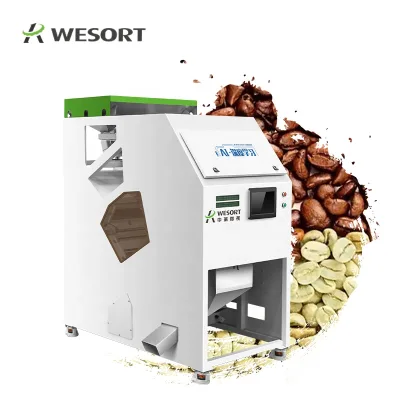
The AI Vertical Color Sorter Machine represents a critical advancement in automated quality control for bulk agricultural and industrial commodities. Unlike traditional optical systems, these units integrate advanced computer vision with high-speed mechanical sorting to achieve precision that manual inspection cannot match. The fundamental architecture relies on a vertical freefall or waterfall chute system where products are gravity-fed through a high-resolution imaging zone. In the context of modern procurement, the observed market data indicates a prevalence of CCD (Charge-Coupled Device) sensor technology, specifically utilizing Japanese Toshiba CCD sensors. These sensors are critical for capturing high-fidelity images of the product stream, ensuring that even minute color deviations or foreign material contaminants are detected in real-time.
The imaging process is supported by powerful LED light sources that provide consistent, flicker-free illumination, essential for maintaining sorting accuracy across varying ambient lighting conditions. The data processing unit, often featuring American FPGA (Field-Programmable Gate Array) chips, handles the complex algorithms required to distinguish between acceptable and rejectable items. This combination of hardware components allows the machine to operate with a reported sorting accuracy of 99.9% or greater, a benchmark that defines the performance ceiling for high-end vertical sorters. The physical structure of these machines typically varies between "Freefall" and "Waterfall" configurations, each optimized for different product densities and flow rates. The vertical design maximizes floor space efficiency, making it an ideal choice for facilities with limited square footage but high throughput requirements.
Technical Specifications and Configuration Variability
When evaluating specific units for procurement, buyers must navigate a wide spectrum of technical configurations. The market presents distinct models tailored to different channel counts and sorting capacities. For instance, high-capacity units may feature up to 448 channels, allowing for the simultaneous sorting of thousands of particles per second, while smaller, more specialized units might operate with significantly fewer channels. The physical dimensions of these machines are substantial, with standard specifications ranging from compact footprints of approximately 460mm in width to larger industrial units exceeding 2900mm in length. The height and depth are equally variable, often designed to accommodate the specific chute geometry required for the product being processed.
Power requirements are a critical specification to verify before installation. Most observed units operate on a standard AC220V / 50Hz supply, though some configurations may require specific voltage adjustments depending on the regional grid. The weight of these machines is significant, with certain models weighing up to 690kg, necessitating robust flooring and careful logistics planning during installation. The sorting mechanism itself relies on metal ejectors to physically remove defective items from the product stream. The precision of these ejectors is directly linked to the resolution of the camera system, which in high-end models can reach 5400 pixels, ensuring that the "eye" of the machine is sharp enough to detect sub-millimeter defects.
| Feature Category | High-End Configuration | Standard Configuration |
|---|---|---|
| Channel Count | Up to 448 Channels | 32 to 192 Channels |
| Sensor Type | Japanese Toshiba CCD | General CCD |
| Sorting Accuracy | ≥99.9% | ≥99.9% |
| Dimensions (LxWxH) | 290515401852mm | 4608951162mm |
| Power Supply | AC220V / 50Hz | AC220V / 50Hz |
| Ejector Type | Metal | Metal |
| Control Panel | 12-Inch Flexem Touch Screen | Standard Interface |
Compliance, Certification, and Safety Standards
In the global B2B marketplace, compliance is not merely a formality but a prerequisite for market access and operational safety. Buyers must verify that the equipment carries recognized international certifications. The observed product data consistently highlights CE marking, which indicates conformity with health, safety, and environmental protection standards for products sold within the European Economic Area. Additionally, ISO9001 certification is frequently cited, suggesting that the manufacturing process adheres to strict quality management principles. While specific safety standards like ISO 12100:2010 or EN 60204-1 are often referenced in the industry as best practices for machinery safety and electrical equipment, buyers should treat these as verification targets rather than assumed defaults. It is the responsibility of the procurement team to request and validate the specific test reports and certification documents for the exact model being purchased.
The electrical safety of the machine is paramount, particularly given the high-speed nature of the sorting process. The control systems often include components from reputable suppliers, such as Japan CKD or SMC for filtration and pneumatic systems, and Taiwan Meanwell for power supplies. These component choices are indicative of a design philosophy that prioritizes reliability and safety. However, the presence of these brand names in the product description does not automatically guarantee the final assembly's compliance with local regulations. Buyers must ensure that the entire system, including the wiring, grounding, and emergency stop mechanisms, meets the specific safety codes of the country where the machine will be installed. The warranty period, typically observed as one year, serves as a baseline for manufacturer confidence but should be supplemented by a clear understanding of the terms regarding spare parts and technical support.
Cost Drivers and Economic Considerations
The pricing of AI vertical color sorter machines is influenced by a complex matrix of factors, primarily driven by channel count, sensor resolution, and the level of automation integrated into the system. The observed price range in the market is vast, spanning from approximately $1,298 to $198,000. This significant variance reflects the difference between entry-level units designed for small-scale operations and industrial-grade systems capable of processing massive volumes with extreme precision. The lower end of the spectrum may correspond to machines with fewer channels and basic sensor capabilities, while the upper end encompasses high-channel-count units with advanced FPGA processing and premium component integration.
Beyond the initial purchase price, buyers must consider the total cost of ownership. This includes the cost of installation, which may require specialized rigging due to the weight and dimensions of the units. Maintenance costs are another critical factor; the use of high-quality components like Toshiba sensors and CKD filters generally implies lower long-term failure rates, but the cost of replacement parts can be substantial. The "Factory Price" attribute often mentioned in product listings suggests a direct-from-manufacturer model, which can reduce initial capital expenditure but requires careful verification of the supplier's legitimacy. Furthermore, the customization availability allows buyers to tailor the machine to specific needs, which can add to the cost but may offer significant operational efficiencies. The MOQ (Minimum Order Quantity) for these machines is typically low, often ranging from 1 to 1 unit, making them accessible for single-facility deployments without the need for bulk purchasing agreements.
Typical Applications and Industry Suitability
The versatility of AI vertical color sorter machines makes them suitable for a broad array of industries, though their primary application remains in the agricultural and food processing sectors. The observed product data explicitly lists applications for a wide range of commodities, including peanuts, rice, wheat, corn, beans, grains, dehydrated vegetables, and tea. The ability to sort these products with high accuracy ensures that the final consumer product meets strict quality standards, reducing waste and enhancing brand reputation. In the industrial sector, these machines are also employed for sorting various industrial products, where color consistency and defect removal are critical for downstream manufacturing processes.
The specific configuration of the machine often dictates its suitability for different applications. For example, the "Waterfall" structure may be preferred for lighter, more fragile products like tea leaves or dehydrated vegetables, where a gentle freefall could cause damage. Conversely, the "Freefall" structure might be better suited for heavier grains like corn or wheat. The channel count is another determinant; high-volume operations processing bulk grains may require the 448-channel configuration to maintain throughput, while smaller operations processing specialty items like tea might find a 32-channel unit sufficient. The ease of operation is a key feature highlighted in the product attributes, suggesting that these machines are designed to be user-friendly, reducing the training burden on operators and minimizing the risk of human error during the sorting process.
Supplier Evaluation and Quality Assurance Protocols
Selecting the right supplier is as critical as selecting the right machine. Buyers should prioritize suppliers who can provide transparent documentation regarding the origin of the machine and its components. The product data indicates origins in Hefei City and other regions in China, which are known manufacturing hubs for this type of equipment. However, the location of the factory should not be the sole determinant of quality. Buyers must evaluate the supplier's track record, their ability to provide after-sales support, and their commitment to quality control. The presence of a one-year warranty is a standard expectation, but the scope of this warranty—whether it covers labor, parts, or both—must be clearly defined in the contract.
Quality control should be an ongoing process, not just a pre-shipment check. Buyers should request detailed test results and performance data for the specific model they intend to purchase. While the observed data mentions a sorting accuracy of 99.9%, this figure should be validated under the buyer's specific operating conditions. The use of standard packaging, such as plywood cases or wooden packages, is common, but the buyer should verify that the packaging is sufficient to protect the machine during transit, especially given the sensitive nature of the electronic components. The customization availability offers an opportunity to ensure that the machine meets specific site requirements, but this should be managed through a rigorous change control process to avoid scope creep and delays.
Long-Term Procurement and Operational Sustainability
Procuring an AI Vertical Color Sorter Machine is a long-term investment that requires careful planning for sustainability and scalability. The "Easy to Operate" feature and the availability of customization suggest that these machines are designed to adapt to changing production needs. However, buyers must consider the long-term availability of spare parts and the potential for firmware updates. The reliance on specific components like Japanese sensors and American FPGA chips means that the supply chain for these parts must be secure. Disruptions in the global supply chain could impact the ability to maintain the machine's performance over time.
Furthermore, the environmental impact of the machine should be considered. The energy efficiency of the LED light sources and the power consumption of the control systems are factors that contribute to the overall sustainability of the operation. Buyers should inquire about the energy efficiency ratings of the machine and whether there are options for optimizing power usage during non-peak hours. The warranty period of one year is a starting point; buyers should explore the possibility of extending the warranty or entering into a maintenance contract to ensure continuous operation. Finally, the scalability of the system should be evaluated; as production volumes grow, the ability to upgrade the machine or add additional units should be seamless, ensuring that the initial investment continues to deliver value over the long term.
FAQs
What sorting accuracy can I expect from this machine?
The machine offers a sorting accuracy of 99.9% or greater. This high precision is achieved using Japanese Toshiba CCD sensors and American FPGA chips to detect defects in real time.
Which certifications does the equipment hold?
The equipment holds CE and ISO9001 certifications. These standards confirm compliance with safety and quality management principles required for international markets and operational safety.
Can the machine handle multiple types of grains?
Yes, it is suitable for rice, wheat, corn, beans, peanuts, tea, and industrial products. The vertical structure supports various commodities including dehydrated vegetables and grains.
How many channels are available for sorting?
Channel counts range from 32 to 448 depending on the specific model. High-capacity units like the 6-6SXZ-448 support 448 channels for massive throughput requirements.
What is the warranty period for the unit?
The standard warranty period is one year. This coverage typically includes parts and labor, though specific terms should be verified with the supplier before purchase.
What is the minimum order quantity for this machine?
The minimum order quantity is one unit. This low MOQ allows single-facility deployments without requiring bulk purchasing agreements or large initial capital outlays.
How is the machine packaged for shipping?
The machine is packed in plywood cases or wooden packages. This sturdy packaging protects sensitive electronic components and ensures safe transit during international logistics.