Source AI Sorting Copper Ore Sorter for Gold, Tungsten, Lead-Zinc
Find 30 AI Sorting Copper Ore Sorter units with varying capacities from 40 to 250 tons per hour. Buyers can compare belt widths, power ratings, and recovery rates to select the right machine for mining applications.
Key considerations
Products List

Ai-Powered Copper Ore Sorter for Metallic Ai Mining Dry Separator
$200000.00 - $500000.00
MOQ: 1 Pieces

Industrial Grade Mine Ore Ai Sorting Machine Mineral Sorter for Copper Barite Bauxite Phosphorite
$150000.00 - $300000.00
MOQ: 1 Pieces

High Accuracy Intelligent Ai Mineral Ore Dry Sorting Machine Metal Ore Sorter
$100000.00 - $300000.00
MOQ: 1 Pieces

Obote X-ray Copper Ore Sorter and Mining Dry Sorting Machine with Ai Process
$200000.00 - $500000.00
MOQ: 1 Pieces

Ai X Ray Ore Sorter Mineral Sorting Machine for Mineral Processing
$200000.00 - $300000.00
MOQ: 1 Pieces

Ai Ore Sorter with Fast Track Large Particle Ore Sorting Machine Mine Dry Separator
$100000.00 - $300000.00
MOQ: 1 Pieces


Ai Intelligent Ore Color Sorter for Sorting Ore Limestone Color Sorter
$28000.00 - $158000.00
MOQ: 1 Sets


Mingder Six Channels High Yield Ai Ore Sorter for Mineral Separating
$120000.00 - $160000.00
MOQ: 1 Sets

Ai Copper Ore Sorting Machine High-Accuracy for Recycling Operations
$52300.00 - $103000.00
MOQ: 1 Sets

Mingde Mineral Ore Sorting Equipment with Intelligent Ai-Powered Sorting System
$81000.00 - $98000.00
MOQ: 1 Sets
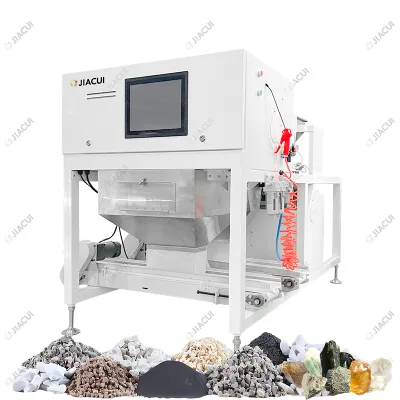
Automatic Intelligent Belt Color Sorter Optical Mineral Ore Separator Shape Sorter Machine
$8500.00 - $12500.00
MOQ: 1 Minimum


Automatic X-ray Ore Sorter with Ai Algorithm for Consistent Sorting Accuracy
$36500.00 - $67700.00
MOQ: 1 Pieces


Comprehensive Sourcing Guide
Strategic Sourcing Guide for AI Sorting Copper Ore Sorters
Understanding the Technical Architecture of AI Sorting Systems
When sourcing an AI Sorting Copper Ore Sorter, buyers must first recognize that these systems are not monolithic units but complex assemblies of mechanical conveyance, sensor arrays, and processing logic. The core functionality relies on the precise identification of valuable ore particles against waste rock using advanced imaging and artificial intelligence algorithms. In the current market, the technical specifications of these machines vary significantly based on the intended ore size and processing throughput. For instance, observed configurations include models designed for specific ore sizes ranging from 20-50mm to larger particles up to 50-300mm. The physical dimensions of the equipment are equally critical for facility planning, with standard footprints observed in the range of approximately 7.9m by 2.3m up to larger industrial units measuring 12.5m by 4.9m.
The power requirements for these systems are substantial, reflecting the energy demands of high-speed sorting mechanisms and sensor operation. Rated power specifications observed in available units range from 7.5kw for smaller capacity models to 45kw for high-volume industrial sorters. Voltage compatibility is a primary technical constraint; while some units operate on standard 220V configurations, others require 380V AC industrial power supplies. Buyers must verify that their facility's electrical infrastructure matches the specific voltage and power rating of the selected model. Furthermore, the belt width is a defining characteristic of the machine's capacity, with observed specifications including 1200mm, 2000mm, and 2400mm widths. This dimension directly correlates with the processing capacity, which can range from 40-50t/H for smaller units to 200-250t/H for the largest industrial configurations.
The material composition of the sorter is another vital technical consideration. The structural integrity of the machine is often built using Carbon Steel, ensuring durability in the harsh environments typical of mining operations. The condition of the equipment is typically listed as "New," indicating that buyers are acquiring fully manufactured units rather than refurbished assets. The sorting accuracy of these AI-driven systems is a key performance metric, with observed capabilities exceeding 99.99% in identification tasks. This high level of precision is essential for maximizing the recovery rate, which is often cited as being greater than or equal to 90%. The ability to increase ore grade while maintaining such high recovery rates is the primary value proposition of integrating AI sorting technology into the mining workflow.
Compliance and Certification Verification Protocols
Navigating the compliance landscape for industrial sorting equipment requires a rigorous verification process. While the market often references international standards, buyers must treat these references as observations of specific product listings rather than universal guarantees for all available units. In the current supply context, certifications such as CE and ISO9001 are frequently associated with these machines. However, the presentation of these certifications varies; some listings indicate "CE, ISO9001" alongside specific color codes or condition descriptors, while others may list ISO9001 in conjunction with specific material features like corrosion resistance.
Buyers should not assume that a listed certification applies to the entire supply chain or every unit within a batch. Instead, the procurement strategy must involve requesting the actual certification documents for the specific model and serial number being purchased. The presence of "Color_White" or "Color_White and Orange" in certification fields suggests that visual identification or specific paint standards may be part of the compliance package, but this requires confirmation. The "Worry-Free Trouble-Shooter" attribute, which promises 7*24 Hours Response & Solution of Remote & on-Site support, is a critical service-level agreement component that often accompanies certified equipment. This support structure is vital for maintaining operational continuity, as downtime in ore sorting can significantly impact overall mine productivity.
Furthermore, the origin of the equipment plays a role in compliance. Products originating from Hefei, China, are common in this sector, but the buyer must ensure that the export compliance and local safety standards of the destination country are met. The "Plywood Case for Sea Transportation" and "Pallet Disassembly & Transportation" specifications indicate that packaging standards are part of the logistical compliance. These packaging methods are designed to protect the machinery during transit, which is a standard requirement for heavy industrial equipment. Buyers should verify that the packaging meets the specific requirements of their shipping route and destination port regulations to avoid delays or damage upon arrival.
Cost Drivers and Financial Considerations in Procurement
The financial landscape of sourcing an AI Sorting Copper Ore Sorter is influenced by several distinct cost drivers. The observed price range for these systems is substantial, spanning from 5000 to 800,000 USD. This wide variance is not arbitrary but is directly tied to the technical specifications, processing capacity, and customization levels of the units. The primary driver of cost is the processing capacity and the associated power rating. A unit with a 200-250t/H capacity and a 45kw rated power will naturally command a higher price point than a 40-50t/H unit with a 7.5kw rating. Similarly, the belt width and the overall physical dimensions of the machine contribute to the material and manufacturing costs.
Customization is another significant factor influencing the final price. The availability of "Customization" and "Customized" options allows buyers to tailor the machine to their specific ore characteristics and site constraints. However, these custom features often incur additional costs. The "Custom Logo" support is a minor customization, but more complex modifications to the mechanical structure or software algorithms can be substantial. The "Energy Saving" attribute is a long-term cost driver; while a more energy-efficient unit may have a higher upfront cost, the reduction in operational electricity expenses over the machine's lifespan can result in significant savings.
The Minimum Order Quantity (MOQ) is a critical financial parameter. In the current market, the observed MOQ is consistently 1, indicating that buyers can purchase single units without needing to commit to large bulk orders. This flexibility is advantageous for pilot projects or smaller mining operations. However, the warranty terms, typically listed as "1 Year," are a crucial component of the financial risk assessment. A longer warranty period or more comprehensive coverage could justify a higher initial investment. Additionally, the "Long Life Span" and "Easy to Operate & Maintain" features are indirect cost drivers; equipment that requires less maintenance and has a longer operational life reduces the total cost of ownership (TCO) over time.
Typical Applications and Operational Scenarios
The application scope of AI sorting copper ore sorters is diverse, extending beyond simple copper ore processing to a wide range of metallic and non-metallic minerals. The primary application scenarios include "Mine Ore Sorting," where the goal is to separate valuable ore from waste rock before further processing. The specific ore types supported by these systems include Copper Ore, Tungsten Ore, Gold Ore, and Lead-Zinc ores. This versatility makes the technology applicable to various mining sectors, not just those focused on copper. The ability to handle different ore sizes, from 20-50mm to 50-300mm, allows the same technology to be adapted for different stages of the mining process, from primary crushing to secondary sorting.
The operational context of these machines is often in environments where high throughput and high accuracy are required. The "Processing Capacity" of 200-250t/H makes these units suitable for large-scale industrial operations, while smaller capacities of 40-50t/H are ideal for smaller mines or specific processing lines. The "Increase Ore Grade" attribute highlights the strategic application of these sorters in improving the quality of the feed material sent to concentrators, thereby reducing the load on downstream processing equipment and improving overall recovery rates. The "Sorting Accuracy" of more than 99.99% ensures that the separation is precise, minimizing the loss of valuable minerals to the waste stream.
Furthermore, the "Features" of these machines, such as "Long Life Span" and "Easy to Operate & Maintain," are designed to meet the demands of continuous industrial operation. The "Worry-Free Trouble-Shooter" support system ensures that any operational issues can be resolved quickly, minimizing downtime. The "Application Scenario" of "Mine Ore Sorting" implies that these machines are integrated into the broader mining value chain, working in conjunction with crushers, screens, and conveyors. The specific "Model No." and "prod_model" designations, such as "Metallic Ore ETDS-2000" or "Non-Metallic ETDS-2400," indicate that the technology is tailored to the specific physical and chemical properties of the ore being processed.
Supplier Evaluation and Selection Criteria
Evaluating suppliers for AI sorting copper ore sorters requires a multi-faceted approach that goes beyond simple price comparison. The "prod_origin" of Hefei, China, is a common location for these manufacturers, but buyers must assess the supplier's overall capability, including their R&D capacity, manufacturing quality control, and after-sales support. The "Worry-Free Trouble-Shooter" attribute, offering 7*24 Hours Response & Solution of Remote & on-Site support, is a critical indicator of a supplier's commitment to customer success. Buyers should verify the actual availability of this support, including the response time and the qualifications of the technical team.
The "Customization" and "Customized" capabilities of the supplier are also key evaluation criteria. A supplier that can offer tailored solutions for specific ore types or site constraints demonstrates a deeper understanding of the customer's needs. The "Custom Logo" support is a minor but indicative feature of a supplier's willingness to engage in branding and partnership. The "Plywood Case for Sea Transportation" and "Pallet Disassembly & Transportation" specifications reflect the supplier's attention to logistical details and the protection of the product during transit.
Buyers should also consider the "Certification" status of the supplier. While "CE" and "ISO9001" are frequently mentioned, the buyer must verify the validity and scope of these certifications. The "Color" and "Condition" attributes in certification fields suggest that the supplier may have specific standards for product appearance and condition, which should be aligned with the buyer's expectations. The "Weight" of the equipment, ranging from 8T to 10T, is another factor to consider, as it impacts the logistics and installation requirements. A supplier that provides clear documentation on the weight and dimensions of the equipment is more likely to be reliable and professional.
Quality Control and Long-Term Procurement Strategies
Ensuring the quality of AI sorting copper ore sorters is paramount for the long-term success of mining operations. The "Condition: New" status is a baseline requirement, but buyers must also verify the manufacturing quality through site visits or third-party inspections. The "Material: Carbon Steel" specification indicates the use of durable materials, but the quality of the steel and the manufacturing processes used to assemble the machine are critical factors. The "Energy Saving" attribute suggests that the machine is designed for efficiency, but the actual energy consumption should be verified through testing or performance data.
Long-term procurement strategies should focus on the total cost of ownership, including maintenance, spare parts, and energy costs. The "1 Year" warranty is a standard offering, but buyers should negotiate for extended warranty periods or comprehensive maintenance packages. The "Long Life Span" and "Easy to Operate & Maintain" features are indicators of a well-designed machine, but the availability of spare parts and the ease of maintenance are equally important. The "Worry-Free Trouble-Shooter" support system is a crucial component of the long-term strategy, ensuring that any issues can be resolved quickly.
Buyers should also consider the scalability of the solution. As mining operations expand, the ability to upgrade or add additional sorting units is essential. The "Customization" capabilities of the supplier can facilitate this scalability, allowing for the integration of new technologies or the modification of existing units. The "Processing Capacity" and "Belt Width" specifications should be aligned with the future growth plans of the mining operation. Finally, the "Sorting Accuracy" and "Recovery Rate" should be monitored over time to ensure that the machine continues to perform at the expected level. Regular maintenance and calibration are necessary to maintain these performance metrics.
Final Procurement Recommendations and Verification Steps
In conclusion, sourcing an AI Sorting Copper Ore Sorter requires a meticulous approach that balances technical specifications, compliance, cost, and supplier reliability. The observed data indicates a wide range of options, from small-scale units with 7.5kw power to large industrial systems with 45kw ratings. Buyers must carefully verify the voltage, belt width, and processing capacity to ensure compatibility with their specific mining operations. The "Customization" and "Customized" options offer flexibility, but they also require clear communication of requirements to the supplier.
The "CE" and "ISO9001" certifications are common, but their validity must be confirmed through documentation. The "Worry-Free Trouble-Shooter" support is a critical service component that should be evaluated for responsiveness and expertise. The "Energy Saving" and "Long Life Span" features are key value drivers that should be weighed against the initial investment. Finally, the "Plywood Case for Sea Transportation" and "Pallet Disassembly & Transportation" specifications highlight the importance of logistics and packaging in the procurement process. By following these guidelines and verifying all claims, buyers can make informed decisions that ensure the successful integration of AI sorting technology into their mining operations.
FAQs
What is the processing capacity of the AI Sorting Copper Ore Sorter?
Processing capacity ranges from 40-50t/H for smaller models up to 200-250t/H for large industrial units. This variation depends on the specific belt width and rated power selected for the mining operation.
Which certifications are available for the AI Sorting Copper Ore Sorter?
Available certifications include CE and ISO9001, often listed alongside specific color or condition descriptors. Buyers should verify these documents for the specific model to ensure compliance with local safety standards.
Can the AI Sorting Copper Ore Sorter handle different ore sizes?
Yes, the system supports ore sizes ranging from 20-50mm to 50-300mm depending on the model configuration. This flexibility allows the sorter to adapt to various stages of the mining process and different mineral types.
How is the AI Sorting Copper Ore Sorter powered and what is the voltage?
Rated power ranges from 7.5kw to 45kw, with voltage options of 220V or 380V AC. Buyers must verify that their facility's electrical infrastructure matches the specific voltage and power rating of the chosen unit.
What is the warranty period for the AI Sorting Copper Ore Sorter?
The standard warranty period is 1 Year for new units. This coverage helps mitigate initial risks, though extended support options like 7*24 hour remote and on-site troubleshooting may be available.
Which material is used to construct the AI Sorting Copper Ore Sorter?
The structural integrity is built using Carbon Steel to ensure durability in harsh mining environments. This material choice supports the long life span and easy maintenance features required for continuous industrial operation.
What is the sorting accuracy of the AI Sorting Copper Ore Sorter?
Sorting accuracy exceeds 99.99% for identification tasks, ensuring precise separation of valuable ore from waste. This high precision contributes to a recovery rate of 90% or greater, maximizing the value of the mined material.