Find Alternator Assembly for Land Use, Standby Units, and Emergency Crew
Explore 30 verified listings for Alternator Assembly suitable for land use, standby units, and emergency crew applications. Buyers can compare specifications like voltage, cooling methods, and excitation modes to select the right component for their diesel generator or engine assembly needs.
Key considerations
Products List


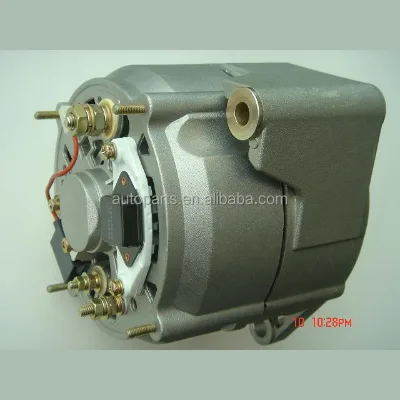


Forklift Spare Part Engine Part Alternator Assy Forklift Alternator Part
$50.00 - $70.00
MOQ: 10 Pieces


$10.00 - $100.00
MOQ: 1 Pieces

Comprehensive Sourcing Guide
Strategic Sourcing Guide for Alternator Assembly Procurement
Navigating the global market for alternator assemblies requires a disciplined approach that balances technical precision with supply chain reliability. For procurement professionals, the core keyword "Alternator Assembly" often serves as a gateway to broader power generation systems, including complete engine assemblies and generator sets. The current market landscape presents a diverse array of options, ranging from standard industrial units to highly customized solutions. Buyers must carefully distinguish between standalone alternator components and integrated power systems to ensure the selected equipment meets specific operational requirements. This guide outlines the critical factors for sourcing these components, focusing on verified attributes, compliance standards, and long-term value assessment based on available market data.
Technical Specifications and Configuration Analysis
The technical architecture of an Alternator Assembly is the primary determinant of its suitability for a specific application. In the current market, specifications vary significantly based on the intended power output and environmental conditions. A critical observation from available product data indicates that many units operate at a standard voltage of 24V, which is common for auxiliary power and specific industrial control systems. However, for main power generation, the output type is frequently AC Three Phase, supporting frequencies of 50Hz or 60Hz to accommodate different regional grid standards.
Speed is another pivotal specification. Data suggests that units are available with rotational speeds of 1500 Rmp or 1800 Rmp, which directly correlates to the number of poles and the required engine speed. The cooling method is equally important; while air cooling is common in smaller units, the observed market includes water-cooled variants, often labeled as "Cold Style: Water-Cooled" or utilizing a "Water Cooling" method. This distinction is vital for high-load applications where thermal management is critical. Furthermore, the excitation mode is typically static, ensuring reliable voltage regulation without the need for complex rotating components.
When evaluating the physical construction, the body material is predominantly iron, providing the necessary durability and magnetic properties for efficient energy conversion. The installation method is often described as portable, allowing for flexibility in deployment, though some units may be designed for fixed installation. Buyers should verify if the specific assembly supports electric start mechanisms, as this is a standard feature in the observed range. The distinction between a standalone alternator and a full "Engine Assembly" or "Diesel Generator Set" must be clear, as the latter includes the prime mover and control systems, whereas the former focuses solely on the electrical generation component.
Compliance, Certification, and Standardization
Ensuring that an Alternator Assembly meets international and regional standards is non-negotiable for B2B procurement. The market data highlights several certification types that buyers should look for, including CE, ISOCOP, and CCC. These certifications indicate that the product has undergone rigorous testing for safety, electromagnetic compatibility, and quality management. The presence of these marks suggests adherence to specific regulatory frameworks, though buyers must verify the validity of these certificates for their specific destination country.
Standardization plays a crucial role in interchangeability and maintenance. Many products are listed under a "STANDARD PACKAGE" or "Standard size" designation, implying compatibility with common mounting frames and connection interfaces. However, the market also offers "Customized" options where the product standard may deviate from the norm to fit unique OEM requirements. The "Standard Component" attribute suggests that internal parts are sourced from established supply chains, which can simplify repairs and replacements.
Buyers must also scrutinize the "Product Standard" field. While some listings mention "STANDARD" or "Standard size," others may reference specific OEM standards. It is essential to confirm that the assembly complies with the electrical codes and safety regulations of the end-user's location. The "Quality" attribute is often listed as "High Level," but this is a qualitative claim that should be backed by the aforementioned certifications and test reports. Without verified documentation, such claims remain unproven assertions rather than guaranteed specifications.
Cost Drivers and Pricing Dynamics
The pricing of alternator assemblies is influenced by a complex matrix of factors, including customization levels, material costs, and supply chain logistics. The observed price range in the market is exceptionally broad, spanning from 1 USD to 100,000 USD. This variance reflects the difference between small, single-phase units and large, three-phase industrial generator sets. Buyers should not rely on a single price point but rather understand the cost structure relative to the specifications.
Key cost drivers include the cooling method, with water-cooled units generally commanding a higher price due to the complexity of the heat exchange system. The material composition, specifically the use of iron for the body, also impacts the base cost. Customization is a significant factor; while "Customization: Available" is a common feature, the extent of this customization directly influences the final price. Units with "Customerized" packing or specific branding may incur additional charges.
The Minimum Order Quantity (MOQ) is another critical cost consideration. The observed MOQ range is 1 to 100,000 units. For small-scale procurement, an MOQ of 1 allows for low-risk testing and initial deployment. However, larger orders may benefit from economies of scale, though the specific discount structure is not publicly defined in the general data. Buyers should also consider the "Supply Ability," which is listed as 10,000 pieces per month for some suppliers, indicating the potential for volume discounts if the order aligns with the supplier's capacity.
Typical Applications and Usage Scenarios
Alternator assemblies are deployed across a wide spectrum of industries, each with unique operational demands. The "Usage" attribute highlights three primary scenarios: Common Units, Standby Units, and Emergency Crew. Common units are designed for continuous operation in industrial settings, while standby units are intended for backup power during grid failures. Emergency crew applications require rapid deployment and high reliability, often necessitating portable and robust designs.
The "Land Use" attribute specifies that these units are designed for land-based applications, distinguishing them from marine or aviation alternatives. The "Landuse Type of Unit" is often categorized as "Ordinary," suggesting suitability for general industrial environments rather than extreme conditions. However, the "Application" field notes a specific focus on Diesel Engines, indicating that these assemblies are frequently paired with diesel prime movers for heavy-duty power generation.
The "Purpose" of the assembly is often to replace or repair existing equipment, making compatibility with legacy systems a key consideration. The "Type" of unit, such as "Micro-Computer Control Automatic Diesel Generator," suggests advanced control systems that automate the startup and shutdown processes, enhancing reliability in critical applications. Buyers should match the specific application requirements, such as frequency and voltage stability, with the technical specifications of the assembly to ensure seamless integration.
Supplier Evaluation and Supply Chain Reliability
Selecting the right supplier is as critical as selecting the right product. The "Location" of the supplier, often listed as China or specifically Fujian, China, provides insight into the manufacturing ecosystem. Fujian is a known hub for machinery and electrical components, offering a mature supply chain for alternator production. However, buyers must verify the specific factory capabilities beyond the general location.
The "Service" attribute, particularly "After-Sale Service," is a vital metric for long-term procurement. A supplier that offers robust after-sales support can mitigate risks associated with equipment failure and maintenance. The "Stock" status, often listed as "in Stock," indicates immediate availability, which is crucial for urgent replacement needs. However, buyers should confirm if this stock is held locally or requires shipping from the origin.
The "Delivery Time" is another key performance indicator. Data suggests a standard delivery time of 7 days for certain configurations, but this may vary based on customization and order volume. The "Packaging Details," such as "Standard Export Carton" or "Polywooden Box," reflect the supplier's attention to logistics and protection during transit. Buyers should evaluate the supplier's ability to handle "OEM Standard" sizes and provide "Customerized" packing if required.
Quality Control and Long-Term Procurement Considerations
Quality control is the backbone of successful procurement, ensuring that the Alternator Assembly performs reliably over its intended lifespan. The "Quality" attribute is frequently described as "High Level," but this must be validated through the supplier's quality management systems and the presence of certifications like CE and CCC. The "Technics" used in manufacturing, such as "Casting," also influence the structural integrity and longevity of the unit.
For long-term procurement, buyers should consider the "Marketing Type," which is often listed as "Ordinary Product." This suggests that the item is a standard commodity rather than a niche, proprietary technology, which can simplify future sourcing and maintenance. The "Brand Name" is frequently listed as "oem," indicating that the product is manufactured for private label or original equipment manufacturer use. This can be advantageous for buyers seeking to integrate the assembly into their own branded products without incurring high branding costs.
Buyers must also assess the "Production Model" and "Product Name" consistency. Variations such as "ED184H" or "Diesel Generator Set" indicate different product lines with varying capabilities. Ensuring that the specific model matches the technical requirements is essential to avoid compatibility issues. Finally, the "Capacity" and "Output Type" must align with the load requirements of the application to prevent overloading or underutilization of the system.
Comparison of Key Product Attributes
To facilitate a clearer understanding of the market landscape, the following table summarizes the key attributes observed in the current supply base. This comparison helps buyers quickly identify the standard features versus the customizable options available.
| Attribute Category | Standard Observation | Customization/Variable Options |
|---|---|---|
| Voltage | 24V | Variable based on application |
| Cooling Method | Water Cooling | Air Cooling (implied by absence) |
| Output Type | AC Three Phase | Single Phase (context dependent) |
| Frequency | 50Hz / 60Hz | Custom frequency (verify) |
| Packing | Wooden Box / Carton Box | Customerized / Polywooden Box |
| Origin | China / Fujian, China | Other regions (verify) |
| Certification | CE, ISOCOP, CCC | Specific regional certs (verify) |
| MOQ | 1 | Up to 100,000 (volume dependent) |
| Delivery Time | 7 Days | Variable based on customization |
This table underscores the importance of verifying specific details against the general market trends. While the standard attributes provide a baseline, the customization options allow for tailored solutions that meet unique operational needs.
Conclusion and Procurement Strategy
Sourcing an Alternator Assembly requires a methodical approach that prioritizes technical alignment, compliance verification, and supplier reliability. The market offers a wide range of options, from standard 24V units to complex, water-cooled diesel generator sets. Buyers must carefully evaluate the technical specifications, ensuring that the voltage, frequency, and cooling methods match the application requirements. Compliance with certifications such as CE and CCC is essential for regulatory adherence, while the supplier's ability to provide after-sales service and maintain stock levels ensures operational continuity.
By focusing on these core elements, procurement professionals can navigate the complexities of the global market and secure high-quality alternator assemblies that deliver value and reliability. The broad price and MOQ ranges observed in the market offer flexibility, but buyers must remain vigilant in verifying claims and ensuring that the selected product meets the specific demands of their operation. Ultimately, a disciplined sourcing strategy that leverages verified data and clear technical requirements will lead to successful procurement outcomes.
FAQs
What voltage do alternator assemblies typically operate at?
Many units operate at a standard voltage of 24V for auxiliary power systems. However, main power generation often requires AC Three Phase output with frequencies of 50Hz or 60Hz depending on regional grid standards.
Can I find water-cooled alternator assemblies for high-load use?
Yes, water-cooled variants are available in the market for applications requiring critical thermal management. These units are often labeled with a cold style of water cooling and are suitable for heavy-duty industrial environments.
Which certifications should I look for in an Alternator Assembly?
Buyers should verify the presence of CE, ISOCOP, and CCC certifications for safety and quality compliance. These marks indicate the product has undergone rigorous testing against specific regulatory frameworks for electromagnetic compatibility.
How fast do these alternator assemblies typically rotate?
Units are commonly available with rotational speeds of 1500 Rmp or 1800 Rmp. This speed directly correlates to the number of poles and the specific engine speed required for the intended power generation application.
What is the minimum order quantity for these assemblies?
The minimum order quantity can range from 1 unit up to 100,000 units depending on the supplier. An MOQ of 1 allows for low-risk testing, while larger orders may benefit from economies of scale.
Where are these alternator assemblies primarily manufactured?
Most products originate from China, with a specific manufacturing hub noted in Fujian. This region offers a mature supply chain for machinery and electrical components essential for alternator production.
How long does delivery typically take for these units?
Standard delivery time is often listed as 7 days for specific configurations. However, this timeline may vary based on the level of customization required and the total order volume placed.