Source Aluminum 12V LED Driver for Indoor, Outdoor, and Commercial Use
Compare 30 verified Aluminum 12V LED Driver options from Chinese manufacturers. Buyers can evaluate specifications like output power, current range, and protection features to find suitable solutions for various lighting projects.
Key considerations
Products List


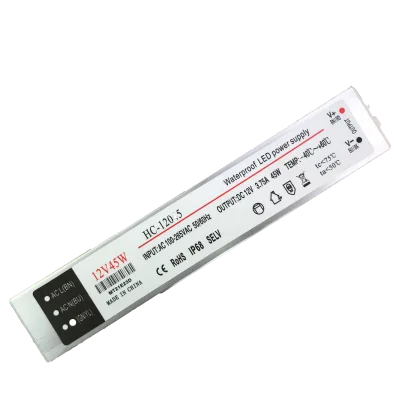


Comprehensive Sourcing Guide
Strategic Sourcing Guide for Aluminum 12V LED Drivers
The global demand for energy-efficient lighting solutions has positioned the Aluminum 12V LED Driver as a critical component in modern illumination systems. Buyers seeking this specific hardware must navigate a complex landscape of technical specifications, regulatory compliance, and supply chain logistics. This guide provides a disciplined, evidence-based approach to sourcing these drivers, focusing on the observable data points from current market listings while applying established industry knowledge to ensure procurement success. The primary objective is to equip procurement professionals with the analytical framework necessary to select the right driver without relying on unverified marketing claims.
Technical Specifications and Performance Parameters
When evaluating aluminum 12V LED drivers, the core technical parameters define the suitability of the product for specific applications. The input voltage is a primary consideration, with observed market data indicating compatibility with standard mains voltages ranging from 100-240VAC at 50/60Hz. This wide input range ensures global applicability, allowing the driver to function reliably in regions with varying grid standards. However, specific applications may require a fixed 120V or 230VAC input, necessitating careful verification of the datasheet before ordering.
The output characteristics are equally critical. The market presents a variety of output voltage ranges, with observed listings showing capabilities from 6-48V and extending up to 6-100V. For a specific "12V" requirement, the driver must be capable of regulating the output voltage precisely within the 12V range while maintaining stability under load. The output current capabilities vary significantly across models, with observed ranges spanning from 100mA to 3000mA. Buyers must match the driver's maximum output current to the total current draw of the LED load to prevent overheating or premature failure.
Power ratings observed in the market range from 6W Max to 36W Max, with some models supporting up to 50W. The physical dimensions also vary, with observed sizes including 823624mm and larger profiles like 1334230mm. These dimensions are vital for integration into aluminum enclosures or heat sinks, which are standard for dissipating the heat generated during operation. The driving method is predominantly LED Constant Current, ensuring that the current remains stable regardless of voltage fluctuations, which is essential for maintaining consistent light output and color temperature.
Compliance and Certification Verification
Navigating the regulatory landscape is a non-negotiable aspect of sourcing electronic components. The supply chain data indicates a robust presence of certifications, including CCC, ISO, RoHS, UL, CE, TUV, and FCC. These certifications are not merely marketing badges but are essential for market access and safety compliance. For instance, the TUV-GS and CB certificates suggest compliance with international safety standards, while RoHS compliance ensures the absence of hazardous substances, a requirement for export to many jurisdictions.
Buyers must verify that the specific model they intend to purchase holds the necessary certifications for their target market. The observed data lists "Ce FCC UL GS Reach RoHS" as a collective certificate set, but it is imperative to confirm that the specific batch or model number carries the valid, up-to-date documentation. The "Withstand Voltage" of 3000V (I/P-O/P) is a critical safety metric observed in the data, indicating the insulation strength between the input and output circuits. This high isolation voltage is standard for Class II devices and is crucial for preventing electric shock hazards.
Furthermore, the presence of Short Circuit Protection (SCP) and Over Current Protection (OCP) is a mandatory safety feature. Observed specifications note SCP protection down to zero voltage and OCP activation between 110%-180% of the rated current. These features protect both the driver and the connected LED array from damage during fault conditions. Procurement teams should request test reports or certification copies to validate these claims, as the presence of a certification label does not always guarantee the specific unit's compliance without proper documentation.
Cost Drivers and Pricing Dynamics
The pricing of aluminum 12V LED drivers is influenced by a complex interplay of factors, including power rating, certification depth, and customization requirements. The observed market price range is broad, spanning from $0.15 to $500. This wide variance reflects the difference between basic, low-power drivers and high-end, fully certified, or custom-engineered units. The minimum order quantity (MOQ) also plays a significant role in the unit cost, with observed ranges from 1 to 2000 units. Buyers purchasing small quantities may face higher per-unit costs but benefit from the flexibility of "Small Orders: Accepted."
Material costs are a primary driver, particularly the use of aluminum for the casing. Aluminum provides superior thermal conductivity compared to plastic, which is essential for maintaining the longevity of the internal components. The observed weight of these drivers varies from 50g to 140g, correlating with the size and the amount of aluminum used. Larger, higher-power drivers naturally require more material and complex internal circuitry, driving up the cost.
Customization is another significant cost factor. The market data confirms that "Customization: Available" is a standard offering. This can include changes to dimensions, output specifications, or packaging. While customization offers tailored solutions, it often increases the unit price and may extend the lead time. Buyers must weigh the benefits of a custom solution against the standard off-the-shelf options, which are generally more cost-effective for high-volume, non-specialized applications.
Typical Applications and Integration Scenarios
The versatility of aluminum 12V LED drivers makes them suitable for a wide array of applications. The observed data highlights "Light" and "LED Lighting" as primary usage categories, with specific mentions of "IP44 LED Driver for Mirror Lights." This indicates a strong presence in bathroom and vanity lighting applications where moisture resistance and safety are paramount. The IP44 rating suggests protection against water splashes, a critical feature for wet environments.
Beyond bathroom mirrors, these drivers are commonly used in commercial and residential lighting systems, including track lighting, under-cabinet lighting, and architectural accent lighting. The constant current driving method ensures that the LEDs operate efficiently without flickering, which is essential for high-quality lighting in offices and retail spaces. The PWM (Pulse Width Modulation) modulation system observed in the specifications allows for dimming capabilities, enabling users to adjust light levels for energy savings or ambiance.
The physical form factor, such as the 1304217mm or 1334230mm dimensions, makes these drivers ideal for integration into slim profiles or recessed fixtures. The aluminum casing not only aids in heat dissipation but also provides a durable enclosure that can withstand the mechanical stresses of installation and operation. Buyers should consider the specific environmental conditions of their application, such as ambient temperature and humidity, when selecting a driver, as these factors can impact the Mean Time Between Failures (MTBF).
Supplier Evaluation and Quality Assurance
Selecting the right supplier is as important as selecting the right product. The observed data points to manufacturers based in China, specifically in Zhejiang, which is a known hub for electronics manufacturing. While the origin is confirmed, buyers should conduct due diligence on the specific factory's capabilities. The presence of "Small Orders: Accepted" suggests a supplier willing to work with diverse order sizes, but this does not guarantee scalability for large projects.
Quality control is paramount. The observed MTBF of 100,000 hours minimum at full load and 25°C ambient temperature is a strong indicator of reliability, but this figure should be verified against independent testing reports. The "Life: 3-5 Years Alternative" claim also requires scrutiny, as actual lifespan depends heavily on operating conditions and thermal management. Buyers should request sample units for rigorous testing before committing to a large order.
Packaging standards are another indicator of supplier professionalism. Observed packing methods include "Inner PE Bag+White Box+Outer Carton" and "100PCS/CTN" configurations. These standardized packaging methods help protect the drivers during transit and facilitate inventory management. However, buyers should verify that the packaging is suitable for their specific logistics requirements, especially if shipping to regions with extreme climate conditions.
Long-Term Procurement Considerations
Sourcing aluminum 12V LED drivers is not a one-time transaction but a long-term relationship that requires strategic planning. The availability of "Customization" allows for future-proofing, but buyers must ensure that the supplier can maintain consistency in quality and specifications over time. The "Life" expectancy of 3-5 years suggests that replacement cycles should be planned accordingly, and inventory management strategies should account for potential obsolescence.
Lead times and supply chain resilience are critical considerations. While specific lead times are not provided in the observed data, the complexity of customization and the volume of orders can impact delivery schedules. Buyers should establish clear communication channels with suppliers to monitor production status and mitigate risks of delays. Additionally, the "Small Orders: Accepted" policy offers flexibility for prototyping and initial market testing, allowing buyers to validate the product before scaling up.
Finally, the regulatory landscape is dynamic. Certifications like UL, CE, and RoHS are subject to updates and changes. Buyers must ensure that their suppliers remain compliant with evolving regulations to avoid supply disruptions. Regular audits and re-verification of certification status are recommended to maintain a robust and compliant supply chain. By focusing on these long-term factors, buyers can secure a reliable source of high-quality aluminum 12V LED drivers that meet their technical and operational needs.
Comparative Analysis of Key Specifications
To assist in the decision-making process, the following table summarizes the key specifications observed in the market data, highlighting the variability in power, dimensions, and current output.
| Parameter | Model A (Observed) | Model B (Observed) | Model C (Observed) |
|---|---|---|---|
| Model Number | QXP-LDZ-24W2000-1 | YSL12 | YSL30M |
| Max Power | 6W | 12W | 36W |
| Output Voltage | 6-48V | 6-48V | 6-100V |
| Output Current | 100-2000mA | 100-2000mA | 200-3000mA |
| Dimensions | 823624mm | 1304217mm | 1334230mm |
| Weight | 50g | N/A | 140g |
| Certifications | CCC, ISO, RoHS, UL, CE, TUV | Ce, FCC, UL, GS, Reach, RoHS | TUV-GS, CB |
| Application | General Light | Mirror Lights | LED Lighting |
| MTBF | 100,000 Hours | N/A | N/A |
| Input Voltage | 100-240VAC | 120V/230VAC | 100-240VAC |
This comparison illustrates the diversity in the market. Model A offers a compact solution with high reliability metrics, suitable for low-power applications. Model B and C provide higher power outputs and wider voltage ranges, catering to more demanding lighting scenarios. Buyers must align these specifications with their specific project requirements to ensure optimal performance and cost-efficiency.
FAQs
What certifications are available for these drivers?
Available certifications include CCC, ISO, RoHS, UL, CE, TUV, and FCC. These ensure compliance with international safety standards and environmental regulations for export markets.
Can I order small quantities of aluminum 12v led drivers?
Yes, small orders are accepted for these products. This flexibility allows buyers to test samples or fulfill low-volume needs without meeting high minimum order requirements.
Which output current ranges are supported by the models?
Supported output currents range from 100mA to 3000mA depending on the specific model. Buyers must match the driver's maximum current to their LED load requirements.
How long is the expected lifespan of these drivers?
The expected lifespan is typically 3 to 5 years under normal operating conditions. Some models offer a minimum MTBF of 100,000 hours at full load and 25 degrees Celsius.
What input voltage ranges do these drivers support?
These drivers support a wide input voltage range of 100-240VAC at 50/60Hz. Some specific models may also be configured for 120V or 230VAC inputs.
Is customization available for the product specifications?
Customization is available for dimensions, output specifications, and packaging. This allows buyers to tailor the driver to specific application needs while maintaining core performance standards.