Find Android 14 4K Video Projector for Business, Teaching, Home
Source 30 units of Android 14 4K Video Projector options from verified manufacturers. Buyers can compare brightness, resolution, and connectivity features to select the ideal device for business presentations, classroom teaching, or home entertainment.
Key considerations
Products List


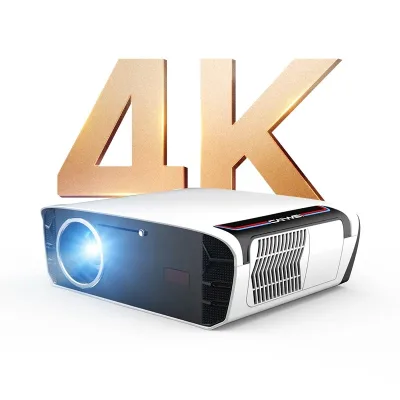
New Portable Mini Projector for Daylight Projection, Android OS 1080P Support
$278.00 - $300.00
MOQ: 10 Pieces


Comprehensive Sourcing Guide
Strategic Sourcing Guide for Android 14 4K Video Projectors
The global B2B market for portable projection systems has evolved rapidly, driven by the convergence of high-resolution display technology and integrated operating systems. Buyers seeking an "Android 14 4K Video Projector" must navigate a complex landscape where marketing claims often outpace technical reality. This guide provides a disciplined framework for sourcing these devices, grounded in verified product attributes and industry standards. The objective is to equip procurement professionals with the analytical tools necessary to distinguish between genuine high-performance units and those relying on exaggerated specifications. The following sections detail the technical verification processes, compliance requirements, cost structures, and quality assurance protocols essential for a successful procurement cycle.
Technical Specification Verification and Display Architecture
When evaluating projectors that claim Android 14 integration and 4K resolution, the primary focus must be on the display technology and native resolution. The market contains two dominant display architectures: Liquid Crystal Display (LCD) and Digital Light Processing (DLP). A critical observation from current product data indicates that many portable units utilize LCD technology, specifically citing 5.0-inch or 5.8-inch single LCD panels. While these units often support 1080P input, the native resolution is frequently 1280x768 or 1920x1080. True 4K resolution, defined as 3840x2160 pixels, is a distinct specification that requires careful verification against the "Native Resolution" attribute.
Buyers must scrutinize the distinction between native resolution and supported input resolution. A product listing stating "Support 1080P" does not equate to a native 4K display. In the context of the provided data, models such as the X500 and D16 demonstrate varying capabilities. The X500 is associated with an HD 1920x1080 resolution, while the D16 model lists a native resolution of 1920x1080P. To achieve a genuine 4K experience, the buyer must confirm that the native resolution matches the 4K standard, rather than relying on upscaling capabilities which are common in lower-cost LCD units.
Furthermore, the brightness specifications present a significant variance in the market. Data indicates a wide range, from units with brightness under 1500 Lumens to others claiming up to 3000 Lumens or even 15000 lumens (with a parenthetical note of 900 ANSI Lumens). This discrepancy highlights the need for buyers to demand ANSI lumens certification rather than raw LED wattage or unverified lumen counts. A projector with a 70-watt LED lamp life of 20,000 hours may not deliver the brightness required for a 4K image in a well-lit environment. The contrast ratio, observed in some listings as 4000:1 or 2500:1, is another critical metric for image clarity, particularly for dark scenes in 4K content.
Operating System Integration and Connectivity Standards
The integration of Android 14 represents a significant shift in projector functionality, transforming these devices from simple display tools into standalone media centers. However, the presence of an Android operating system does not guarantee the specific version claimed. Buyers must verify the actual system version through the device's settings menu or by requesting a system log from the supplier. The provided data references Android 9.0 in specific model configurations, indicating that version upgrades may vary by production batch or model revision.
Connectivity is equally vital for a 4K workflow. A robust multimedia interface is required to handle high-bandwidth data streams. Standard interfaces observed in the market include HDMI, USB, VGA, AV, and Audio-out ports. For 4K video playback, the HDMI port must support the necessary bandwidth, typically HDMI 2.0 or higher, though specific bandwidth ratings are not always listed in standard product summaries. The data confirms the presence of HDMI and USB ports in various configurations, such as "HDMI1" and "USB1" in the D16 model.
Wireless connectivity is another key consideration. The observed data mentions 2.4G WiFi capabilities, which is standard for many portable units. However, for seamless 4K streaming without compression artifacts, buyers should verify if the device supports 5G WiFi or dual-band connectivity. The absence of 5G support in the provided data suggests that many units in this category may be limited to 2.4G, which could impact the performance of high-bitrate 4K streams. Additionally, the power supply requirements, ranging from 95W to 100W and operating on AC 90-250V, must be compatible with the local power infrastructure of the deployment location.
Compliance, Certification, and Safety Standards
In the B2B sector, compliance is not merely a formality but a prerequisite for market entry and liability protection. The provided product data lists several standards, including CE, ROHS, FCC, and CCC. These certifications indicate that the product meets specific safety, electromagnetic compatibility, and environmental requirements. CE certification is essential for the European market, while FCC is required for the United States. The CCC mark is mandatory for products sold within China.
Buyers must verify that the specific batch of projectors they intend to purchase carries the valid certification documents for the target export market. The data also references a "Patent Optical Engine" described as "Full Sealed & Dustproof & Water Proof." While this is a valuable feature for durability, it must be validated against recognized IP (Ingress Protection) ratings. Without a specific IP rating (e.g., IP54 or IP65), claims of water and dust proofing remain unverified observations.
Furthermore, the production origin is listed as China, with specific mentions of Changsha, Hunan, and general Hunan province. This geographic information is relevant for supply chain logistics and potential trade tariff implications. Buyers should ensure that the supplier can provide proof of origin and that the manufacturing facility adheres to international labor and environmental standards. The "Standard" attribute in the data sometimes lists dimensions (e.g., 8080165cm) rather than safety standards, which underscores the need for buyers to explicitly request the specific safety certification documents for the exact model number.
Cost Drivers and Pricing Structure Analysis
The pricing for Android 14 4K video projectors is influenced by several key factors, including display technology, native resolution, brightness, and operating system integration. The observed price range in the market spans from 19 to 360 USD. This wide disparity reflects the difference between basic LCD units with lower brightness and more advanced models with higher specifications.
The cost drivers for a genuine 4K Android 14 unit are primarily the optical engine and the processor. A true 4K native resolution requires a more expensive panel or a 4K DLP chip, which significantly increases the unit cost compared to 1080P LCD units. The brightness is another major cost factor; units claiming higher ANSI lumens (e.g., 3000 Lumens) typically command a higher price than those with lower brightness ratings. Additionally, the inclusion of Android 14, which requires a more powerful processor and more RAM, adds to the manufacturing cost.
The Minimum Order Quantity (MOQ) is another variable affecting the total cost of ownership. The observed MOQ range is 1 to 20 units. For small businesses or pilot programs, an MOQ of 1 is advantageous, allowing for low-risk testing. However, for large-scale deployments, negotiating a lower unit price through a higher MOQ is standard practice. Buyers should also consider the packaging costs; options range from simple cartons to anti-shock packing with foam, which can impact the overall logistics cost, especially for fragile high-resolution units.
Typical Applications and Deployment Scenarios
The versatility of modern projectors allows them to serve a wide array of applications, from business presentations to home entertainment. The observed usage categories include Business, Teaching, Theater, Home, and Measure. This broad applicability suggests that the target audience for Android 14 4K projectors is diverse.
In a business context, the high resolution and Android integration enable seamless presentation of 4K video content, interactive whiteboarding, and real-time collaboration tools. The ability to project from 1.8 to 6.9 meters, covering screen sizes from 50 to 200 inches, makes these units suitable for large conference rooms and auditoriums. For educational settings, the portability and ease of use are critical. The "Front/Desk/Rear/Ceiling Mounted" projection methods offer flexibility in classroom layouts.
Home theater applications benefit significantly from the 4K resolution and high contrast ratios, providing an immersive viewing experience. The "Screen Mode" of 16:9/4:3 ensures compatibility with various content formats. However, the noise level, observed at 20dB to 30dB, is a factor to consider for home environments where silence is preferred. The "Projector Distance" of 1.1 to 4.5 meters in some models indicates a need for careful room planning to ensure the image size matches the screen dimensions.
Supplier Evaluation and Quality Control Protocols
Selecting the right supplier is critical for ensuring product reliability and after-sales support. Buyers should evaluate suppliers based on their ability to provide consistent quality, adherence to timelines, and responsiveness to technical queries. The "Net Weight" of 1.6 Kg for some models indicates a focus on portability, which is a selling point for mobile users. However, the weight must be consistent across batches to ensure that the product meets the advertised specifications.
Quality control protocols should include rigorous testing of the optical engine, display uniformity, and thermal management. The "LED Lamp Life" of 20,000 to 30,000 hours is a key longevity metric that must be verified through accelerated life testing. Buyers should request test reports that confirm the lamp life under standard operating conditions. Additionally, the "Automatic Focusing" and "Automatic Trapezoidal Correction" features, observed in some models, require precise calibration to ensure a sharp, rectangular image without manual intervention.
The "Contrast" ratio, observed as 4000:1 or 2500:1, should be tested in a controlled environment to ensure it meets the claimed values. Inconsistent contrast ratios can lead to poor image quality, particularly in dark scenes. Buyers should also verify the "Noise" levels, as excessive fan noise can detract from the user experience, especially in quiet environments like home theaters or classrooms.
Long-Term Procurement and Maintenance Considerations
Long-term procurement strategies for Android 14 4K projectors must account for software updates, hardware durability, and spare parts availability. The Android operating system requires regular updates to maintain security and compatibility with new applications. Buyers should inquire about the supplier's policy on OTA (Over-The-Air) updates and the duration of support for the specific Android version.
Hardware durability is another critical factor. The "Patent Optical Engine" claim of being "Full Sealed & Dustproof & Water Proof" suggests a robust design, but the actual IP rating must be confirmed. In dusty or humid environments, a sealed optical engine can significantly extend the lifespan of the projector. The "LED Power & Lamp Life" of 20,000 to 30,000 hours indicates a long operational life, but the actual performance depends on usage patterns and cooling efficiency.
Finally, buyers should consider the availability of spare parts, such as replacement lamps, power adapters, and remote controls. The "Product Packing" options, ranging from color boxes to anti-shock foam, should be selected based on the shipping distance and handling conditions. For international shipments, robust packaging is essential to prevent damage during transit. By addressing these long-term considerations, buyers can ensure a sustainable and cost-effective procurement strategy for their Android 14 4K Video Projector needs.
| Attribute | Observation from Data | Verification Requirement |
|---|---|---|
| Native Resolution | 1280768, 19201080P | Confirm if 3840*2160 (True 4K) is supported natively. |
| Brightness | <1500 Lumens to 3000 Lumens | Demand ANSI Lumens certification; verify raw wattage vs. output. |
| Operating System | Android 9.0 observed | Verify actual OS version (Android 14) via system logs. |
| Display Tech | LCD (4.41", 5.0", 5.8") | Confirm panel type and pixel count for 4K capability. |
| Certifications | CE, ROHS, FCC, CCC | Request valid certificates for target export markets. |
| Lamp Life | 20,000 - 30,000 Hours | Request accelerated life test reports. |
| Noise Level | 20dB - 30dB | Verify noise levels in a controlled environment. |
| Connectivity | HDMI, USB, AV, Audio-out | Confirm HDMI version for 4K bandwidth support. |
FAQs
Can these projectors support Android 14 and 4K resolution?
Some models support Android 9.0, but true 4K native resolution is rare. Most units listed have 1080P native resolution or 1280x768, requiring verification for actual 4K capability before purchase.
What is the brightness range for these portable projectors?
Brightness varies significantly, ranging from under 1500 lumens to claims of 3000 lumens or 15000 lumens. Buyers should request ANSI lumens certification to distinguish between raw wattage and actual usable light output.
Which display technologies are used in these devices?
The market uses both LCD and DLP working principles. Specific models feature 5.0-inch or 5.8-inch single LCD panels, while others utilize DLP technology for image projection.
How much do these projectors cost and what is the MOQ?
Prices range from 19 to 360 USD with a minimum order quantity between 1 and 20 units. Lower prices often correlate with lower brightness or non-native 4K resolution specifications.
What certifications do these projectors typically hold?
Common certifications include CE, ROHS, FCC, and CCC marks. These indicate compliance with safety and electromagnetic standards for specific export markets like Europe and the United States.
Where are these projectors manufactured and shipped from?
Products originate from China, with specific mentions of Changsha, Hunan, and general Hunan province. This location impacts logistics costs and potential trade tariff implications for international buyers.