Find anti-reflective aspherical linear lamp lens for Lighting, Medical, and Machine Vision
Source 30 verified options for the anti-reflective aspherical linear lamp lens suitable for diverse optical needs. Buyers can compare specifications like transmittance, coating types, and customization support from suppliers in China.
Key considerations
Products List




Customize Aspheric Lenses High Precision Glass Molding Imaging Aspherical Lens
$1.00 - $100.00
MOQ: 1 Pieces


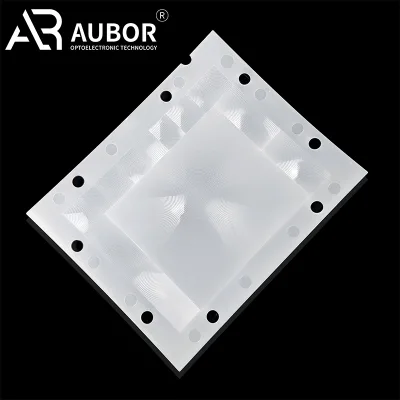
Flashlight Optical Lens, 38mm Diameter Aspheric Glass Lens for Flashlight
$4.00 - $10.00
MOQ: 1 Pieces




Comprehensive Sourcing Guide
Strategic Sourcing Guide for Anti-Reflective Aspherical Linear Lamp Lenses
Understanding Technical Specifications and Material Composition
When sourcing anti-reflective aspherical linear lamp lenses, buyers must first establish a clear understanding of the fundamental material and geometric properties that define performance. The core material for high-quality optical components in this category is typically optical glass, which offers superior clarity and thermal stability compared to plastic alternatives. The observed market data indicates that these lenses are often manufactured using specific growth methods, such as the Ky (Kyropoulos) method, which is critical for ensuring the crystalline purity required for high-transmittance applications. The optical performance is heavily dependent on the transmittance rate; reliable products in this sector often boast transmittance figures exceeding 95%, though some variations may fall within the 90% to 95% range depending on the specific coating and glass grade.
The geometry of the lens is equally critical. The term "aspherical" denotes a surface that is not part of a sphere, a design essential for reducing spherical aberration and improving image quality or light focusing efficiency. In the context of linear lamp applications, the lens shape is frequently described as single-lens or cylindrical, designed to manage light distribution in a specific linear pattern. The surface finish often involves specialized coatings to achieve the anti-reflective (AR) effect. Data points confirm the presence of UV coatings and HMC (High-Performance Multi-Coating) technologies, which are vital for minimizing light loss and preventing glare. The standard optical type can vary from flat lenses to convex lenses, with the specific curvature determined by the intended illumination profile. Buyers should verify that the product model aligns with the specific optical requirement, whether it is designated as a standard aspherical lens, a cylindrical lens, or a specialized model like the FW-Glass or Finewin series.
Compliance, Certification, and Standard Verification
Navigating the compliance landscape for optical components requires rigorous verification of certifications and standards, as these documents validate the safety and quality of the supply chain. While specific certification statuses can vary by batch and manufacturer, the market frequently references standards such as CE, ISO, and RoHS. These certifications indicate that the product meets specific safety, environmental, and electromagnetic compatibility requirements. It is important to note that some suppliers may list certifications as "customized" or "as required," which necessitates a direct request for the specific certificate documentation rather than relying on generic marketing claims.
In terms of manufacturing standards, the industry often adheres to ISO 9001:2015 for quality management systems and ISO 14001:2015 for environmental management, though these should be treated as background expectations rather than guaranteed attributes for every listed unit. Buyers must explicitly request proof of compliance for the specific batch being ordered. The product standards themselves can be highly variable; some listings reference specific dimensions like 26mm or ranges such as 1-300mm, while others simply state "customized" or "as required." This variability underscores the importance of defining the exact standard in the purchase order. Furthermore, the origin of the product, often traced to regions like Jiaozuo City in Henan Province, Changchun, or Fuzhou in Fujian, China, can influence the regulatory framework applied. Buyers should ensure that the supplier can provide a Certificate of Origin and a Declaration of Conformity that aligns with the import regulations of the destination country.
Cost Drivers and Pricing Structure Analysis
The pricing structure for anti-reflective aspherical linear lamp lenses is influenced by a complex interplay of material costs, manufacturing complexity, and order volume. The observed price range in the market is vast, spanning from approximately $0.20 to $299.00 USD. This significant variance is not arbitrary but is driven by several key factors. The primary cost driver is the material grade; optical glass is generally more expensive than alternative substrates, and the specific growth method employed can further increase the unit cost. Additionally, the complexity of the aspherical surface grinding and polishing process adds to the manufacturing expense compared to standard spherical lenses.
Coating technology represents another major cost component. Lenses featuring advanced multi-layer coatings, such as HMC or UV-specific treatments, command higher prices due to the additional processing steps and equipment required. The degree of customization also plays a pivotal role. While standard models may be available at the lower end of the price spectrum, fully customized lenses with unique dimensions, specific coating profiles, or tailored optical curves will incur a premium. The Minimum Order Quantity (MOQ) is a critical financial lever; observed MOQs range from a single unit to 3,000 units. Buyers purchasing small quantities may face a higher per-unit cost, whereas bulk orders often benefit from economies of scale that significantly reduce the price per item. Packaging requirements, such as the use of specialized foam, electrolytic capacitor paper, or custom blister packs, can also add to the final landed cost. Therefore, a total cost of ownership analysis must consider not just the unit price but also the MOQ requirements, packaging fees, and shipping logistics.
Typical Applications and Performance Requirements
Anti-reflective aspherical linear lamp lenses are versatile components utilized across a diverse array of industries, each with distinct performance requirements. The primary application areas identified in the market include optical systems, lighting solutions, photography, medical devices, and machine vision. In the lighting sector, these lenses are essential for directing and shaping light from linear sources, ensuring uniform illumination while minimizing energy loss through reflection. The high transmittance rates, often exceeding 95%, are crucial for maintaining brightness and efficiency in these applications.
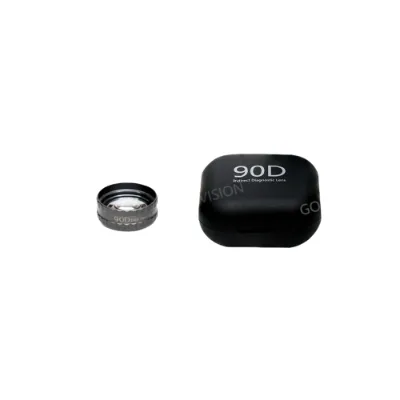
In the realm of machine vision and defense, the precision of the aspherical design is paramount. These lenses are used in laser systems and high-resolution imaging equipment where aberration control is critical for accurate data capture. The ability to customize the lens shape and size allows engineers to tailor the optical path for specific sensor requirements. Medical applications demand even higher standards of clarity and biocompatibility, where the optical glass material and anti-reflective coatings help in producing clear, distortion-free images for diagnostic procedures. The "Single-lens" and "Convex Lens" types are particularly noted for their ability to focus light effectively in compact spaces. Buyers should match the lens specifications, such as the "90D" model or "AOOL-2026-052602" designations, to the specific focal length and field of view required by their application. Understanding the intended use case is the first step in selecting the correct optical component, as a lens optimized for general lighting may not suffice for high-precision machine vision tasks.
Supplier Evaluation and Sourcing Strategy
Evaluating suppliers for optical components requires a focus on their technical capabilities, customization support, and logistical reliability. A key differentiator in this market is the availability of OEM (Original Equipment Manufacturer) support and the ability to provide customized solutions. Many suppliers explicitly state that they offer "customized" products, ranging from specific sizes to unique coating profiles. Buyers should verify the extent of this customization, ensuring the supplier has the engineering capacity to produce non-standard geometries and coatings. The brand name "GOGO VISION" is one example of a supplier identity in this space, but buyers should not limit their search to a single entity. Instead, they should assess multiple vendors based on their technical response to specific inquiries.
Logistics and shipping are also critical factors in supplier selection. The observed shipping methods include major carriers like FedEx, DHL, and UPS, which indicates a capacity for international delivery. However, buyers must confirm lead times and shipping reliability, as these can vary significantly based on the customization level and order volume. The origin of the products, primarily from China, suggests a mature supply chain, but buyers should still conduct due diligence on the specific factory's production capacity and quality control processes. Packaging is another area of evaluation; suppliers offering "Standard Packaging," "Carton," "Blister," or "Customized" packing options provide flexibility. For sensitive optical components, the use of protective materials like foam and specialized paper is essential to prevent damage during transit. A robust supplier evaluation should include a review of their warranty terms, with "1 Year" being a common offering, and their ability to handle returns or replacements for defective units.
Quality Control and Long-Term Procurement Considerations
Ensuring consistent quality in optical lens procurement requires a proactive approach to quality control and long-term relationship management. The manufacturing process involves precise grinding, polishing, and coating, all of which must be monitored to prevent defects such as scratches, bubbles, or coating delamination. Buyers should request detailed test results and inspection reports for each batch, focusing on transmittance measurements, surface quality, and dimensional accuracy. The "Single gross weight" and "Single volume" data points, while sometimes listed as zero or negligible, are useful for logistics planning but do not substitute for physical inspection of the product's optical integrity.
Long-term procurement considerations involve establishing a stable supply chain that can adapt to changing requirements. The "Customized" nature of many orders means that specifications may evolve over time. A supplier with strong OEM support and flexible production lines is better positioned to accommodate these changes without significant delays or cost increases. Buyers should also consider the warranty and after-sales support provided. A standard "1 Year" warranty offers a baseline of protection, but for critical applications, buyers may negotiate extended terms or service level agreements. Furthermore, maintaining a clear communication channel regarding production standards and certification updates is vital. As regulations evolve, suppliers must remain compliant with the latest ISO and environmental standards. By prioritizing suppliers who demonstrate transparency in their quality processes and a commitment to continuous improvement, buyers can mitigate risks and ensure a steady supply of high-performance anti-reflective aspherical linear lamp lenses.
Comparative Analysis of Lens Specifications
To facilitate decision-making, the following table summarizes key specification variations observed in the market for anti-reflective aspherical linear lamp lenses. This comparison highlights the diversity in materials, coatings, and applications, aiding buyers in identifying the most suitable options for their specific needs.
| Feature Category | Specification Option A | Specification Option B | Specification Option C |
|---|---|---|---|
| Material | Optical Glass | Optical Glass | Optical Glass |
| Growth Method | Ky (Kyropoulos) | Standard Optical | Customized |
| Coating Type | UV, HMC | Anti-Reflective | Customized |
| Transmittance | >95% | 90%-95% | As Required |
| Lens Shape | Single-lens, Flat | Convex, Cylindrical | Aspherical |
| Application | Optical, Lighting | Photography, Medical | Laser, Machine Vision |
| Certification | CE, ISO, RoHS | ISOCustomized | As Required |
| Origin | Jiaozuo, China | Changchun, China | Fuzhou, China |
| MOQ | 1 Unit | 1-3000 Units | Customized |
| Warranty | 1 Year | 1 Year | As Agreed |
This table illustrates that while the core material remains consistent, the specific configuration of coatings, shapes, and certifications varies widely. Buyers must carefully cross-reference these attributes with their project requirements to ensure compatibility. The variation in origin locations also suggests that buyers should consider regional supply chain dynamics when selecting a vendor. By understanding these distinctions, procurement teams can make informed decisions that balance technical performance, cost, and reliability.
FAQs
What material is used for anti-reflective aspherical linear lamp lenses?
These lenses are typically made from optical glass to ensure superior clarity and thermal stability. The manufacturing process often utilizes the Ky growth method to achieve the necessary crystalline purity for high transmittance rates exceeding 95%.
Can I get customized sizes and coatings for these optical lenses?
Yes, customized sizes and coatings are available for these optical lenses. Buyers can specify unique dimensions ranging from 1 to 300mm and request specific treatments like UV or HMC coatings to meet precise application needs.
Which certifications are commonly associated with these optical glass products?
Common certifications include CE, ISO, and RoHS to validate safety and environmental compliance. Some listings may also indicate customized certification standards, requiring direct verification of specific batch documentation from the supplier.
How does the minimum order quantity affect the unit price?
The minimum order quantity significantly impacts the unit price, with observed ranges from 1 to 3000 units. Purchasing small quantities often results in higher per-unit costs, while bulk orders benefit from economies of scale.
What are the typical shipping methods for these optical components?
Typical shipping methods include major carriers like FedEx, DHL, and UPS for international delivery. Buyers should confirm specific lead times and packaging options, which may range from standard cartons to specialized foam protection.
Where are these optical lenses primarily manufactured?
These optical lenses are primarily manufactured in China, with origins noted in Jiaozuo City, Changchun, and Fuzhou. Buyers should verify the specific Certificate of Origin and ensure the supplier meets local regulatory requirements.
What warranty terms are typically offered for these optical products?
A standard one-year warranty is commonly offered for these optical products to cover manufacturing defects. Buyers should review specific warranty terms and return policies to ensure adequate protection for critical applications.