Source Rear Tailgate Parts for Trucks, Cars, and Trailers
Explore 30 Rear Tailgate products including steel lifts, rear axles, and carbon fiber spoilers. Compare specifications from Chinese manufacturers for truck and automotive repair needs to find the right parts for your business; compare the available evidence and request quotations based on your requirements.
Key considerations
Products List




$1.00 - $5.00
MOQ: 100 Pieces


$1.00 - $5.00
MOQ: 100 Pieces




Comprehensive Sourcing Guide
Rear Tailgate Sourcing Guide
Procuring Rear Tailgate components requires distinguishing between heavy-duty lifting mechanisms and automotive replacement parts, as the market offers distinct product categories under this keyword. Buyers must first identify whether the requirement involves industrial cantilever lifts with a single lifting weight of 750kg or specific automobile components like tailgate handles and carbon fiber spoilers. The observed product range includes steel and iron structures alongside carbon fiber assemblies, indicating that material selection is the primary differentiator for application suitability.
Verification of the product model and origin is critical before initiating any purchase order, as listings vary significantly from generic industrial units to specific Ford-compatible parts. Some items originate from Zhejiang, China, with delivery times ranging from 3 to 45 days depending on customization needs, while others are standard stock items available for immediate shipment. Understanding these logistical variances ensures that procurement timelines align with operational requirements, preventing delays caused by mismatched expectations regarding production lead times and shipping methods.
Product Scope and Observed Listing Signals
The market for Rear Tailgate solutions presents a wide spectrum of specifications, from heavy industrial lifting equipment to lightweight automotive accessories. Buyers will encounter products labeled as cantilever lifts with specific weight capacities, alongside automobile components such as rear axle assemblies and tailgate handles. It is essential to recognize that a single listing may not satisfy all criteria, as some products are designed for truck applications while others serve as universal replacement parts for specific vehicle models.
Listing signals often include specific packaging details, such as pallets for industrial units or wooden cases for heavy axles, which directly impact shipping costs and handling procedures. The observed data indicates that some items are sold in neutral packaging to accommodate private labeling, while others come with specific branding like ESPEED AUTO. Buyers should carefully review the selling units, which may be listed as sets or individual pieces, to ensure the order quantity matches the actual procurement need without incurring unnecessary surplus inventory.
Technical Specifications to Verify
Technical due diligence must focus on the precise material composition and dimensional constraints of the requested components to ensure compatibility with existing systems. For industrial applications, verifying the material as steel or iron and confirming the single lifting weight of 750kg is mandatory, whereas automotive buyers must check the operating temperature range of 40℃ to +120℃ for electronic or plastic components. The product model numbers, such as SML-TG or LY-N16-035-1, serve as unique identifiers that must be cross-referenced against the intended vehicle or machinery specifications.
Dimensional accuracy is equally critical, as observed package sizes vary from compact 127x28x6 cm units to larger 50x48x36 cm assemblies. Buyers should verify the axle number and certification status, noting that some rear axle listings include ISO certification while others specify TUV and GS standards. Additionally, the color options, ranging from original plating to black finishes, and the compatibility type, whether naturally compatible or custom-made, must be confirmed to avoid installation failures or aesthetic mismatches in the final assembly.
Compliance and Safety Documentation
Ensuring that all procured Rear Tailgate components meet relevant safety and quality standards is a non-negotiable aspect of the sourcing process. While some listings explicitly mention certifications like ISO, TUV, and GS, buyers must request valid documentation to confirm that these standards apply to the specific batch being purchased. The absence of a stated standard in a listing does not imply non-compliance, but it necessitates a direct inquiry to the supplier to obtain proof of adherence to international safety regulations before finalizing the transaction.
Quality control protocols should be verified through the supplier's stated QC measures, such as the "HIGH QUALITY" designation observed in several listings. Buyers should demand test results or inspection reports that validate the structural integrity of steel and iron components, as well as the durability of carbon fiber parts under specified operating conditions. It is also prudent to confirm that the production status is "IN STOCK" or that the lead time of 3-35 days is realistic for the required volume, ensuring that safety certifications are not compromised by rushed manufacturing schedules.
Cost Drivers and Commercial Terms
The final cost of Rear Tailgate components is heavily influenced by material selection, customization levels, and the complexity of the manufacturing process. Industrial units made of steel or iron with high weight capacities generally command different pricing structures compared to lightweight carbon fiber spoilers or specific automotive handles. Buyers must account for the fact that customized options, which are available for many items, often incur additional charges and extended lead times compared to standard, off-the-shelf products.
Commercial terms such as the minimum order quantity (MOQ) and delivery time are pivotal factors in budget planning and inventory management. Observed MOQs range from 10 pieces for automotive parts to 1000 units for industrial equipment, requiring buyers to calculate the total cost of ownership including storage and handling. Delivery times vary significantly from 3 days for stock items to 45 days for custom orders, and these variances must be factored into the overall procurement timeline to avoid production bottlenecks or stockouts in the supply chain.
Supplier Qualification and Quality Control
Supplier qualification begins with verifying the place of origin, as many listings indicate production in Zhejiang, China, a region known for specific manufacturing capabilities. Buyers should assess the supplier's ability to provide consistent quality by reviewing their stated production name and product status, ensuring they have the capacity to maintain "HIGH QUALITY" standards across large batches. The availability of customization services is another key indicator of a supplier's flexibility and technical competence in meeting unique buyer requirements.
Quality control processes must be transparent and documented, with suppliers expected to provide evidence of their inspection protocols before shipment. Buyers should inquire about the specific QC measures employed, such as visual inspections for color consistency or structural tests for lifting weights, to ensure that the delivered goods match the advertised specifications. The presence of a brand name like ESPEED AUTO suggests a level of accountability, but independent verification of the supplier's track record and customer feedback remains essential for mitigating procurement risks.
Long-Term Procurement Checks
Establishing a long-term procurement strategy for Rear Tailgate components requires regular audits of supplier performance and product consistency over time. Buyers should monitor the stability of lead times and the reliability of delivery schedules, as fluctuations from the observed 3-45 day range can disrupt operational workflows. Continuous communication with suppliers regarding updates in material availability, such as steel or carbon fiber, ensures that the supply chain remains resilient against market volatility and raw material shortages.
Periodic re-evaluation of product specifications and compliance documentation is necessary to adapt to evolving industry standards and regulatory requirements. Buyers must verify that the product models and certifications, such as ISO or TUV, remain valid and applicable to the specific use cases of their operations. By maintaining a proactive approach to supplier relationship management and quality assurance, organizations can secure a steady supply of high-performance Rear Tailgate components that meet their long-term strategic goals.
FAQs
What is the single lifting weight capacity for the cantilever lift model?
The single lifting weight capacity is 750kg for the SML-TG cantilever lift. This specification ensures safe handling of heavy loads while maintaining structural integrity. The design supports standard industrial operations, making it suitable for warehouses requiring reliable material handling equipment with verified weight limits.
Can I customize the rear axle specifications for my truck application?
Customization is available for the 4x2 rear axle designed for truck applications. Buyers can request specific configurations to match their vehicle requirements. The product originates from Zhejiang, China, and supports standard normal specifications. This flexibility allows for tailored solutions that integrate seamlessly with existing truck fleets.
What is the operating temperature range for the tailgate rear handle?
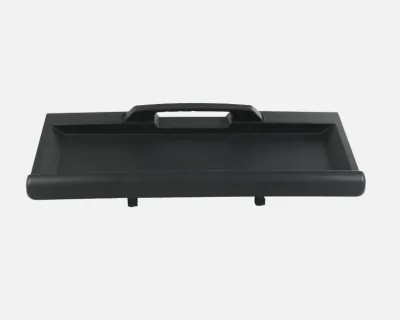
The operating temperature range is 40℃ to +120℃ for the tailgate rear handle. This component is designed to withstand varying environmental conditions during vehicle operation. The black color and neutral packaging ensure durability and ease of installation. It serves as a reliable replacement part for maintaining vehicle functionality.
Which car model is compatible with the OE number 15135441?
The OE number 15135441 is compatible with Ford car models. This part is produced by ESPEED AUTO and is available in stock for immediate replacement or repair. The original color or plating options ensure aesthetic consistency. Buyers can order as few as 10 pieces, making it accessible for various repair needs.
What material is used for the carbon fiber rear spoiler?
The rear spoiler is constructed from carbon fiber material. This lightweight yet strong component is suitable for universal or custom-made car fitments. The single gross weight is 1.4kg, and it is packaged in neutral sets. The acceptable logo option allows for branding customization, enhancing its appeal for automotive enthusiasts.
How long is the delivery time for the Rear Tailgate components?
The delivery time ranges from 3 to 35 days for Rear Tailgate components. This lead time applies to various products, including axles and handles. The production status is in stock, ensuring quick availability. Buyers can expect efficient logistics from Zhejiang, China, with packaging designed to protect items during transit.