Source Card Binder Options for School, Office, and Promotion
Explore 30 Card Binder listings from China, featuring metal clips and PU or PP materials. Compare specifications like pocket counts, sizes, and customization options for school, office, and promotional use. Find suitable suppliers for OEM/ODM needs; compare the available evidence and request quotations based on your requirements.
Key considerations
Products List


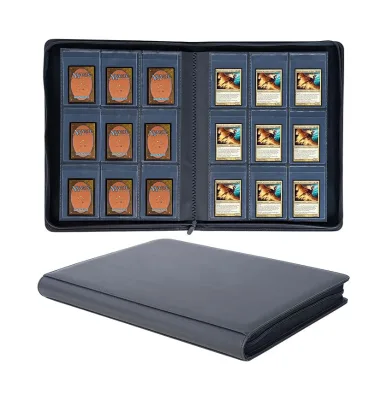
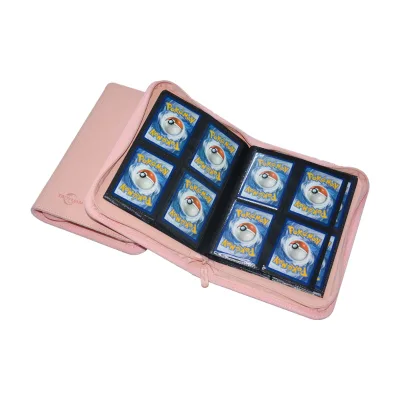
Card Binder 9 Pockets Trading Card Album Folder, 360 Side Loading Pocket Binder
$2.50 - $2.90
MOQ: 500 Pieces

Semi-Rigid Card Saver Collectors Binder Holds 360 Cards 9 Pocket Trading Card Album
$10.00 - $14.50
MOQ: 200 Pieces





Comprehensive Sourcing Guide
Card Binder Sourcing Guide
The Card Binder market presents a diverse range of solutions, from semi-rigid holders to multi-pocket organizers designed for stationery and file management. Buyers observe products ranging from simple metal binder clips to complex PU and PVC document bags with zipper closures. These items serve critical functions in schools, offices, and promotional campaigns, requiring careful selection based on specific storage needs and durability requirements.
Procurement strategies must account for the variability in material composition, including metal, PU, and PP options. While some models feature standardized dimensions like 305*245mm, others offer fully customized sizing to fit unique inventory. Understanding these distinctions is essential for aligning product selection with operational workflows, ensuring that the chosen binders effectively organize cards, documents, or promotional materials without compromising on structural integrity.
Product Scope and Observed Listing Signals
Buyers should verify the specific application context, as listings indicate usage for holding papers in stationery files or organizing cards in semi-rigid holders. The observed product range includes 9-pocket binders, 12-pocket albums, and specialized document bags with transparent or assorted color options. Distinguishing between a standard binder clip and a full card album is crucial, as the latter often includes features like zippers, locks, or specific pocket configurations that dictate their utility.
Listing signals also reveal significant customization capabilities, with many suppliers accepting OEM and ODM requests for logos and dimensions. Some products feature optional black rubber corners or specific surface treatments like bright nickel or golden paint, which can influence the final aesthetic and functional performance. Buyers must scrutinize these signals to ensure the product matches the intended use case, whether it is for high-volume office distribution or specialized promotional giveaways.
Technical Specifications to Verify
Dimensional accuracy is a primary verification point, as specifications vary from standard 1003010mm clips to larger 305*245mm binders. Buyers must confirm the clip length, width, and rivet hole center distance for metal components, while checking pocket counts for fabric or plastic binders. The distinction between 4-pocket, 9-pocket, and 12-pocket models directly impacts storage capacity, requiring precise alignment with the volume of documents or cards the end-user intends to carry.
Material composition and surface treatment standards also demand rigorous verification to ensure longevity and safety. Products may be constructed from metal, PU, PVC, or PP, each offering different levels of flexibility and resistance to wear. Surface treatments such as eco-friendly electroplating or painted finishes must be confirmed against the required durability standards, ensuring the product can withstand daily handling without peeling, rusting, or degrading in quality over time.
Compliance and Safety Documentation
Safety compliance is paramount, particularly regarding surface treatments that must meet eco-friendly electroplating standards. Buyers should request documentation confirming that all metal components and plastic materials adhere to relevant environmental and safety regulations for the target market. This verification ensures that the products do not contain hazardous substances and are safe for use in educational settings, offices, and promotional events where direct contact with users is frequent.
Packaging standards also play a critical role in compliance, with many suppliers utilizing export-standard packing or waterproofing measures to protect goods during transit. The use of neutral packages or individual polybags must be validated to ensure they meet the logistical requirements of the destination country. Additionally, any claims regarding material safety, such as the use of specific PVC or PP grades, should be supported by test reports to mitigate liability risks associated with product failure or non-compliance.
Cost Drivers and Commercial Terms
Pricing structures are heavily influenced by material costs, customization levels, and order volume, with observed ranges spanning from minimal unit costs to higher prices for complex assemblies. Buyers must analyze how factors like surface treatment, zipper inclusion, and pocket configuration drive the final unit price. The presence of optional features, such as black rubber corners or specific logo printing, can significantly alter the cost baseline, requiring a detailed breakdown to understand the true value proposition.
Commercial terms, including Minimum Order Quantities (MOQ) and lead times, vary widely across the supplier base, with some accepting orders as low as 50 units while others require volumes up to 3000. Understanding these thresholds is essential for budgeting and inventory planning, as exceeding MOQs often unlocks better pricing tiers. Buyers should negotiate clear terms regarding payment schedules and shipping responsibilities to avoid unexpected costs that could erode profit margins on large-scale procurement projects.
Supplier Qualification and Quality Control
Supplier qualification requires a thorough assessment of their manufacturing capabilities, particularly their ability to handle customized orders and maintain consistent quality. Buyers should verify the supplier's origin, noting that many operations are based in China or Dongguan, and assess their track record for delivering products that meet specific design and material specifications. The ability to accept OEM and ODM requests indicates a flexible production line capable of adapting to unique buyer requirements.
Quality control processes must be validated through on-site audits or third-party inspections to ensure adherence to stated standards. Buyers should confirm that the supplier implements rigorous checks on dimensions, material integrity, and surface finish consistency before shipment. Given the variability in product models, from simple clips to complex binders, a robust QC protocol is essential to prevent defects such as misaligned pockets, faulty zippers, or inconsistent coloring that could lead to customer dissatisfaction.
Long-Term Procurement Checks
Sustaining a successful procurement relationship involves regular performance reviews to ensure consistent delivery of quality and service. Buyers should establish key performance indicators related to defect rates, on-time delivery, and responsiveness to customization requests. Continuous monitoring helps identify potential supply chain disruptions early, allowing for proactive adjustments to order volumes or supplier selection to maintain operational stability.
Future-proofing the supply chain requires staying informed about material trends and regulatory changes that could impact product specifications. As environmental standards evolve, suppliers must adapt their surface treatments and material sourcing to remain compliant. Buyers should maintain open communication channels with suppliers to anticipate these shifts, ensuring that long-term contracts remain viable and that the product line continues to meet the evolving needs of the market and end-users.
FAQs
What materials are used for card binders?
Card binders are manufactured from metal, PU, PVC, and PP materials. Metal options include bright nickel or golden finishes, while plastic variants use semi-rigid PP for durability. PU binders often feature zippered closures. Buyers can select materials based on desired aesthetics, weight, and specific file protection requirements for office or school use.
Can I customize the logo on card binders?
Yes, customized OEM and ODM logo services are available for card binders. Manufacturers accept personalized branding to meet specific promotional or corporate identity needs. This customization allows businesses to enhance product visibility. Buyers should confirm design files and placement details with suppliers to ensure accurate reproduction on the chosen material surface during the production process.
What is the minimum order quantity for binders?
The minimum order quantity varies by supplier and product type, typically ranging from 50 to 3000 units. Some PU card binders require a minimum of 50 pieces, while bulk metal clips may have higher thresholds. Buyers should verify specific MOQ requirements with individual vendors to align with their inventory needs and budget constraints effectively.
How are card binders packaged for shipping?
Card binders are packaged using export standard methods, including individual polybags, neutral packages, or waterproofing materials. Bulk shipments often utilize cartons with specified quantities per box, such as 50 boxes per carton. Packaging dimensions are standardized to optimize container space. Buyers can request specific packing configurations to protect products during international transit and storage.
What specifications are available for 9-pocket binders?
Nine-pocket binders are available in semi-rigid PP and PU materials, with standard sizes like 305x245mm or customized dimensions. They function as storage card albums and file holders. Options include assorted colors and transparent variants. Buyers can select between different pocket counts, such as four, nine, or twelve pockets, depending on their document organization requirements.
Are metal card binders magnetic?
No, the metal card binders listed are non-magnetic. Although made from metal materials like bright nickel or stainless steel finishes, they do not exhibit magnetic properties. This characteristic is important for buyers who need to store sensitive media or electronic components. The non-magnetic design ensures safe handling of various office and school stationery items.