Source Antique Particleboard Wine Rack for home, event, and retail use
Explore 30 listings for the Antique Particleboard Wine Rack, featuring varied styles and materials. Buyers can compare customization options, dimensions, and lead times from suppliers in China to find the ideal storage solution.
Key considerations
Products List


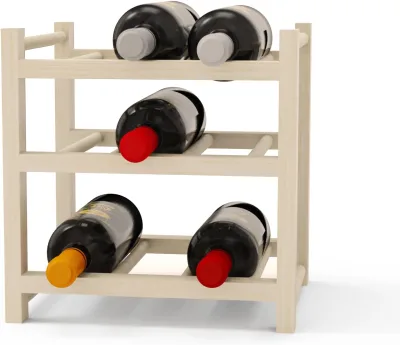
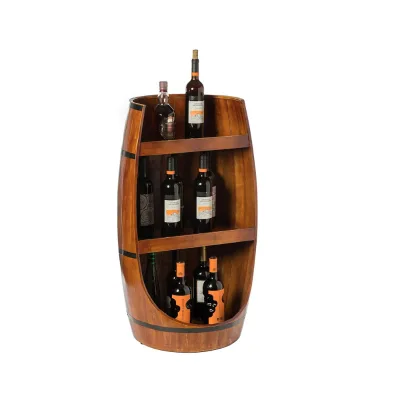
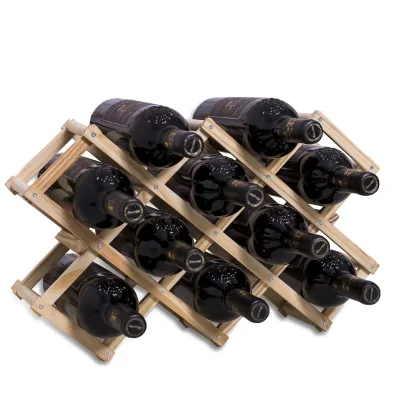

Premium Metal Wine Rack with Glass Holder for Decor
$40.00 - $60.00
MOQ: 3 square feet
Guangdong Wine Decoration Warehouse Cellar Engineering Co., Ltd.

Vintage Handcrafted Wooden Wine Rack for Eco-Friendly Living Spaces
$220.00 - $300.00
MOQ: 5 square meters
Guangdong Wine Decoration Warehouse Cellar Engineering Co., Ltd.


Comprehensive Sourcing Guide
Strategic Sourcing Guide for Antique Particleboard Wine Racks
The global B2B market for specialized storage solutions continues to evolve, with a distinct segment dedicated to antique-finish particleboard wine racks. For procurement professionals, sourcing these items requires a nuanced understanding of material science, aesthetic specifications, and supply chain logistics. The intersection of "antique" styling with "particleboard" construction presents unique challenges regarding durability, environmental compliance, and customization capabilities. This guide synthesizes available market data to provide a disciplined framework for evaluating suppliers and products, ensuring that procurement decisions are grounded in verified facts rather than marketing assertions.
Material Composition and Structural Integrity
The primary material specification for the target product is particleboard, often referred to as engineered wood. Unlike solid wood, particleboard is manufactured from wood chips, sawmill shavings, or even sawdust, which are bound together with a synthetic resin or adhesive under heat and pressure. The sourcing guide must emphasize that while particleboard offers a cost-effective alternative to solid timber, its structural integrity is heavily dependent on the density of the board and the quality of the binding agents.
In the context of wine racks, the material must support significant weight without sagging. The observed product data indicates that panel thickness is a critical variable, with standard options often ranging between 15mm and 18mm, though customization is frequently available. Buyers must verify the specific density and formaldehyde emission levels of the particleboard used. The supply chain data points to the existence of eco-standards such as E0, E1, and E2, which denote the permissible formaldehyde release rates. E0 represents the lowest emission level, followed by E1 and E2. When sourcing antique-finish racks, it is essential to confirm that the particleboard meets the specific E-rating required by the destination market, as regulations vary significantly between regions.
Furthermore, the "antique" aesthetic is often achieved through specific surface treatments, laminates, or veneers applied to the particleboard core. The core material itself remains particleboard, but the finish dictates the visual appeal. Procurement teams should request physical samples to assess the adhesion of the finish and the resistance of the surface to scratches and moisture, as particleboard is susceptible to swelling if exposed to high humidity without proper sealing.
Design Aesthetics and Customization Parameters
The "antique" designation in this context implies a specific design language, often characterized by traditional patterns, distressed finishes, or classic silhouettes. The observed market data reveals a diversity in style attributes, including "Linear Style," "Modern," and "Traditional" designs. For a buyer specifically seeking an antique look, the "Traditional" design style and "Scenic" patterns are the most relevant attributes to prioritize. The shape of the unit, such as "ROUND" configurations, may also be a specific requirement for certain boutique installations.
Customization is a high-confidence attribute in this sector. Suppliers frequently offer options to modify the size, material, and finish to align with specific interior design requirements. The standard models observed, such as those with model numbers like "ymx-wc-45" or "jj21," serve as a baseline, but the ability to customize dimensions is a key differentiator. Buyers should verify the flexibility of the supplier regarding overall size adjustments, as wine collections vary in volume and bottle dimensions.
Color is another critical aesthetic variable. While "White" and "Black" are common standard offerings, the antique finish often requires specific hues like distressed browns, deep mahogany, or off-whites. The data indicates that color can be "As picture show or customized," suggesting a high degree of flexibility. However, buyers must ensure that the customization process includes a proofing stage to verify that the color match meets the antique requirement before mass production begins.
Compliance, Certification, and Environmental Standards
In the B2B procurement of furniture, particularly items made from engineered wood, compliance with environmental and safety standards is non-negotiable. The supply chain data explicitly lists ISO9001 as a certification attribute, indicating that the manufacturing process adheres to international quality management standards. This certification suggests a systematic approach to quality control, which is vital for maintaining consistency in large orders.
Regarding environmental compliance, the presence of E0, E1, and E2 eco-standards is a critical factor. These standards regulate the emission of formaldehyde, a volatile organic compound (VOC) associated with health risks. Buyers must not assume that all particleboard products meet the strictest E0 standard; rather, they must explicitly request documentation verifying the emission levels of the specific batch or model being procured. The "Eco-Standard" attribute serves as a guide for what to ask for, but the actual certification for the specific product must be verified.
Additionally, while some background information mentions CE certification, this should be treated with caution unless explicitly confirmed for the specific product line. CE marking indicates conformity with health, safety, and environmental protection standards for products sold within the European Economic Area. For buyers targeting the European market, verifying that the specific antique wine rack model holds valid CE certification is a mandatory step in the supplier evaluation process.
Cost Drivers and Pricing Dynamics
The pricing for antique particleboard wine racks is influenced by several factors, including material quality, customization complexity, and order volume. The observed price range in the market spans from $2.8 to $1,991 USD. This wide disparity reflects the difference between small, simple units and large, highly customized commercial installations. The lower end of the spectrum likely corresponds to standard, off-the-shelf models with minimal customization, while the higher end represents bespoke solutions with premium finishes and complex engineering.
Minimum Order Quantity (MOQ) is another significant cost driver. The data indicates an MOQ range of 1 to 500 sets, with a specific high-confidence observation of 50 sets for certain product lines. For buyers with smaller volume requirements, the per-unit cost may be higher due to the fixed costs of setup and production. Conversely, larger orders can leverage economies of scale to reduce the unit price. Buyers should negotiate based on their specific volume needs, understanding that the 50-set threshold may be a standard baseline for many suppliers in this category.
Lead time is also a critical component of the total cost of ownership. The observed lead time for production is typically between 25 and 35 days. This duration includes the time required for material sourcing, manufacturing, finishing, and quality inspection. Buyers must factor this lead time into their inventory planning and project schedules. Delays in the supply chain can result in missed deadlines for store openings or interior design projects, making accurate lead time verification essential.
Supplier Evaluation and Operational Capabilities
When evaluating potential suppliers for antique particleboard wine racks, buyers should focus on operational capabilities and reliability. The origin of the products is predominantly listed as Shandong, China, a region known for its manufacturing infrastructure. While this provides a baseline for location, buyers should verify the specific factory capabilities rather than relying solely on the regional reputation.
Key evaluation criteria include the supplier's ability to handle customization requests, their quality control processes, and their packaging standards. The data indicates that products are typically packed in "Shipping Cartons," with specific carton dimensions provided for certain models (e.g., 363940 cm). Proper packaging is crucial to prevent damage during transit, especially for fragile antique finishes. Buyers should request details on the packaging protocol to ensure that the goods will arrive in pristine condition.
Furthermore, the "Convenient Installation" attribute is a valuable feature to verify. If the wine racks are designed for easy assembly, this can significantly reduce labor costs for the buyer. Buyers should inquire about the assembly instructions, the complexity of the joinery, and whether tools are required. The presence of "Three Section Track" drawer guide rails in some models suggests a focus on functional hardware, which should be evaluated for smooth operation and durability.
Quality Control and Long-Term Procurement Considerations
Quality control (QC) is paramount when sourcing particleboard products, as the material is susceptible to variations in density and finish quality. Buyers should implement a rigorous QC plan that includes pre-production sample approval, in-process inspections, and final random inspections before shipment. The ISO9001 certification suggests that suppliers have established procedures, but buyers must ensure these procedures are actively followed for their specific order.
Long-term procurement considerations involve the durability and maintenance of the wine racks. The "Durable" and "Antique" attributes suggest that the product is designed to withstand use while maintaining its aesthetic appeal. However, particleboard requires specific care to prevent moisture damage. Buyers should provide end-users with maintenance guidelines to ensure the longevity of the product. Additionally, the "Fixed" nature of some models indicates that they are not intended to be moved frequently, which should be communicated to the end-user to prevent structural stress.
Finally, the supply chain should be evaluated for its ability to handle repeat orders and potential design changes. The "Customizable" nature of the product standard implies that suppliers should be agile in adapting to new requirements. Buyers should establish a long-term relationship with suppliers who demonstrate flexibility and a commitment to quality, ensuring a steady supply of antique particleboard wine racks that meet evolving market demands.
Comparative Analysis of Product Attributes
To assist in the decision-making process, the following table summarizes key attributes observed in the market for antique particleboard wine racks. This comparison highlights the variability in specifications and helps buyers identify the features most relevant to their specific needs.
| Attribute Category | Observed Standard | Customization Options | Verification Requirement |
|---|---|---|---|
| Material | Particleboard | Customizable Size/Material | Verify density and formaldehyde emission (E0/E1/E2) |
| Style | Antique, Traditional, Modern | Design Style, Pattern | Review physical samples for finish quality |
| Color | White, Black, As Picture | Customized Color | Confirm color match proofing process |
| Dimensions | Standard (e.g., 303334 cm) | Customizable | Verify tolerance levels for custom sizes |
| Certification | ISO9001 | N/A | Request valid ISO9001 certificate for factory |
| Packaging | Shipping Cartons | N/A | Inspect carton strength and internal protection |
| Lead Time | 25-35 Days | N/A | Confirm current production schedule |
| MOQ | 50 Sets (Typical) | 1-500 Sets | Negotiate based on volume requirements |
This table serves as a reference for buyers to structure their inquiries and ensure that all critical aspects of the product are addressed during the supplier evaluation process. By focusing on these verified attributes, buyers can make informed decisions that align with their procurement goals and quality standards.
FAQs
What materials are used for antique particleboard wine racks?
The primary material is particleboard, often referred to as engineered wood. While the core is particleboard, the antique aesthetic is achieved through specific surface treatments, laminates, or veneers applied to the core.
Can I customize the size and material of the wine rack?
Yes, customization is available for size and material specifications. Buyers can request modifications to the panel thickness, which is often customizable between 15mm and 18mm, or request other material options.
What certifications do these particleboard wine racks hold?
High-confidence facts indicate ISO9001 certification for the manufacturing process. This suggests adherence to international quality management standards, though specific environmental ratings like E0, E1, or E2 must be verified per batch.
How long is the lead time for production and delivery?
The typical lead time for production ranges from 25 to 35 days. This duration covers material sourcing, manufacturing, finishing, and quality inspection before the goods are ready for shipping.
What is the minimum order quantity for these wine racks?
The minimum order quantity varies, with observed ranges from 1 to 500 sets. A specific high-confidence observation notes an MOQ of 50 sets for certain product lines, while others may start lower.
Where are these antique wine racks manufactured?
The products originate from Shandong, China, a region known for its manufacturing infrastructure. Buyers should verify specific factory capabilities rather than relying solely on the regional reputation for quality.
Are the wine racks designed for convenient installation?
Yes, convenient installation is a confirmed attribute for these units. Some models feature hardware like three-section track drawer guide rails, and proper packaging in shipping cartons helps prevent damage during transit.