Source Antistatic Electronic PET Blister Tray for Electronics, Toys, Hardware
Compare 30 listings for Antistatic Electronic PET Blister Tray options from verified suppliers. Buyers can evaluate PET and PVC materials, custom sizes, and MOQs ranging from 1 to 50,000 pieces for consumer electronics, toys, and hardware applications; compare the available evidence and request quotations based on your requirements.
Key considerations
Products List
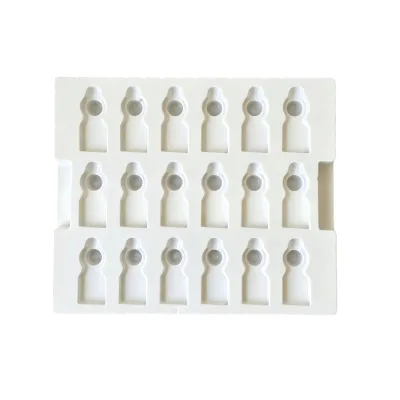
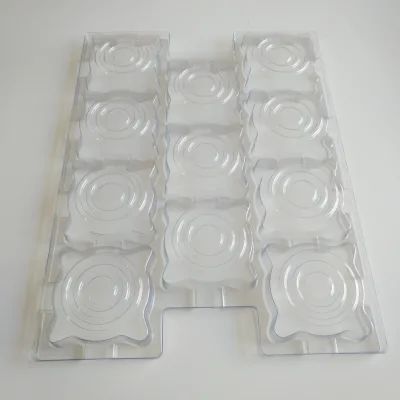


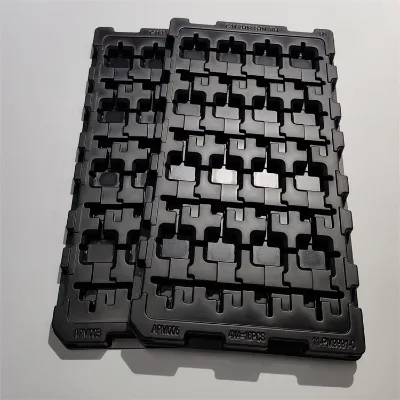

Customize Blister Plastic Tray for Electronic Products Protective Packaging
$0.05 - $0.08
MOQ: 50000 Pieces

Custom Pet Anti-Static Blister Packaging Tray for Electronic Product/Hardware
$0.28 - $0.32
MOQ: 10000 Pieces



Comprehensive Sourcing Guide
Antistatic Electronic PET Blister Tray Sourcing Guide
Procuring antistatic electronic PET blister trays requires distinguishing between standard packaging and specialized electrostatic discharge (ESD) protection. While the observed listings confirm PET and PVC materials with rectangular shapes, buyers must explicitly verify the antistatic properties, as standard PET does not inherently possess ESD shielding without specific additives or surface treatments. The presence of "Electronic Components Packaging" and "Consumer Electronics" usage in the data suggests a market fit, yet the absence of explicit antistatic certification in the provided facts necessitates rigorous supplier questioning to ensure the product meets industry safety standards for sensitive circuitry.
Buyers should also scrutinize the distinction between "Blister" and "Tray" process types listed in the product attributes, as these terms often imply different manufacturing molds and structural rigidities. The observed thickness range of 0.1mm to 0.3mm indicates variability in material density, which directly impacts the tray's ability to cushion components during transit. Sourcing strategies must prioritize suppliers who can demonstrate consistent thickness control and material purity, ensuring the final packaging provides the necessary physical protection while maintaining the critical electrical insulation properties required for electronic assembly lines.
Product Scope and Observed Listing Signals
The observed product listings reveal a diverse range of specifications, including sizes from 15x10x3cm to larger 38.5x29x2.3cm configurations, catering to various electronic component dimensions. The data indicates that suppliers offer customized lengths and shapes, with some listings specifying "Rectangular" forms while others allow for bespoke dimensions. This variability suggests that buyers can source trays tailored to specific product geometries, but the lack of a unified standard size in the listings means that precise dimensional verification is essential before placing bulk orders to prevent fitment issues on automated packaging machinery.
Commercial signals in the data highlight a wide MOQ range from 1 to 50,000 pieces, with a specific high-confidence entry noting an MOQ of 10,000 pieces for certain PET products. This disparity implies that while some suppliers may accommodate small trial runs, the primary market focus appears to be on volume manufacturing. Buyers must carefully align their order quantities with supplier capabilities, noting that the "Freely" sample availability offers a low-risk opportunity to validate material quality and antistatic performance before committing to the higher volume thresholds often required for cost-effective production runs.
Technical Specifications to Verify
Material composition is the primary technical variable, with listings citing both PET and PVC as the base plastic types. Since the core keyword specifies PET, buyers must confirm that the supplier is using polyethylene terephthalate rather than polyvinyl chloride, as the latter may not meet specific environmental or thermal stability requirements for certain electronics. The observed thickness values of 0.1mm to 1mm provide a baseline, but the exact gauge must be verified against the weight of the components being packaged to ensure the tray offers sufficient rigidity without adding unnecessary bulk to the shipping profile.
Dimensional accuracy and structural integrity are critical, particularly given the observed single package sizes ranging from 22x6x2cm to 28x15x5cm. Buyers should request detailed engineering drawings that confirm the internal cavity dimensions match the electronic components precisely, as even minor deviations can lead to component movement and potential damage. Additionally, the "Blister" and "Tray" process types suggest different forming methods; verifying the specific molding technique ensures the final product maintains the required shape retention and surface smoothness necessary for high-speed automated handling in assembly environments.
Compliance and Safety Documentation
While the provided facts mention "Eco-friendly" and "Bio-Degradable" features for some items, these claims require independent verification against recognized environmental standards, as they are not universally applied to all listed products. Buyers must request specific test reports confirming that the antistatic additives used in the PET formulation do not introduce hazardous substances that could contaminate sensitive electronic components. The absence of explicit certification data in the source material means that relying on supplier assertions without third-party validation poses a significant compliance risk for global supply chains.
Safety documentation must also address the electrical properties of the packaging, specifically the surface resistivity values that define its antistatic capability. Although the listings confirm the "Usage" includes electronic products, they do not explicitly state compliance with ESD standards such as ANSI/ESD S20.20. Procurement teams should mandate that suppliers provide evidence of surface resistivity testing to ensure the trays effectively dissipate static charges, preventing electrostatic discharge events that could destroy sensitive microchips during storage or transport.
Cost Drivers and Commercial Terms
Production costs are heavily influenced by the customization level, with listings indicating "Custom Order" acceptance and "Customized Logo" options. The observed production cycle of 15 days and proofing time of one week suggest that lead times will extend significantly for bespoke designs compared to standard stock items. Buyers should anticipate that the cost per unit will fluctuate based on the complexity of the mold required for specific dimensions and the inclusion of custom branding, which adds processing steps and material waste to the manufacturing workflow.
The MOQ of 10,000 pieces for specific PET products represents a significant volume commitment that impacts the overall unit economics. While some listings show an MOQ as low as 1 piece, the high-confidence data points to a volume-driven pricing model where economies of scale are realized only at the 10,000-unit threshold. Buyers must calculate the total landed cost, including the "Carton Packaging" and potential shipping from origins like Hebei or Dong Guan, to determine if the volume discount justifies the inventory holding costs associated with large batch orders.
Supplier Qualification and Quality Control
Geographic origins in the data include Hebei and Dong Guan, regions known for manufacturing but requiring careful vetting for quality consistency. Buyers should verify the supplier's production capacity and quality control protocols, as the "Service" advantage listed is a qualitative claim that must be backed by tangible metrics like defect rates and on-time delivery performance. Establishing a clear communication channel for technical queries is essential, especially when dealing with custom specifications that may deviate from the standard "Specifications By The Custom" approach mentioned in the listings.
Quality control procedures must extend beyond visual inspection to include functional testing of the antistatic properties. Given the variation in material types (PET vs. PVC) and thicknesses observed, suppliers should implement rigorous incoming material checks and in-process monitoring to ensure every batch meets the specified electrical and mechanical standards. Buyers are advised to conduct on-site audits or request third-party inspection reports to validate that the supplier's quality management system effectively prevents the mixing of non-antistatic materials with ESD-safe packaging.
Long-Term Procurement Checks
Sustaining a reliable supply chain for antistatic electronic packaging requires regular re-verification of material specifications and supplier performance. The observed "Production Cycle" of 15 days and "Proofing Time" of one week should be monitored for consistency, as delays in these stages can disrupt downstream assembly schedules. Buyers must establish a schedule for periodic audits to ensure that the supplier continues to meet the required thickness tolerances and antistatic performance levels, especially if raw material prices or supply conditions change over time.
Long-term partnerships should also include a review of the supplier's ability to adapt to evolving industry standards and component sizes. As electronic devices become smaller and more sensitive, the packaging requirements may shift, necessitating updates to the tray dimensions and material formulations. Maintaining a flexible relationship with suppliers who demonstrate the "Customization" capability observed in the listings will ensure that the procurement strategy remains agile and capable of supporting future product launches without the need for a complete supplier overhaul.
FAQs
Can I customize the logo on the PET blister tray?
Yes, customized logos are accepted for these electronic components packaging trays. The product features allow for printed logos, enabling brand visibility on the white or transparent packaging. This customization is available for consumer electronics applications, ensuring your branded packaging meets specific industrial use requirements while maintaining the structural integrity of the PET material.
What is the minimum order quantity for these trays?
The minimum order quantity is 10,000 pieces for this specific electronic packaging solution. This MOQ applies to the rectangular PET blister trays designed for consumer electronics. Buyers should note that while some listings show lower MOQs, the primary high-confidence specification requires this volume, making it suitable for bulk procurement needs in the hardware and toy sectors.
What are the standard dimensions of the packaging tray?
The standard size for this electronic packaging is 15 by 10 by 3 centimeters. The single package size measures 22 by 6 by 2 centimeters, while the gross weight is 0.02 kg. These dimensions are optimized for blister packing applications, ensuring secure containment of small electronic components within the specified PET material structure.
How long does the production cycle take?
The production cycle typically takes 15 days for these PET blister trays. Proofing time is approximately one week, allowing for sample verification before full-scale manufacturing. This timeline supports the customization of logos and specifications, ensuring that the final packaging meets the industrial use requirements for consumer electronics and hardware products.
Is the PET material eco-friendly or biodegradable?
The product features are listed as eco-friendly, and some variants are described as bio-degradable. The material is specified as PET plastic, which is commonly used for its durability in electronic product packaging. Buyers should verify specific material certifications with the supplier to confirm the exact environmental properties, as the primary usage focuses on protecting consumer electronics and hardware items.