Source Aromatherapy Fiberglass Wick for Home Hotel SPA
Compare 30 Aromatherapy Fiberglass Wick options from verified Chinese suppliers. This catalog features electric diffusers and wax products with various functions like lighting and tranquilizing for home, hotel, and SPA applications.
Key considerations
Products List


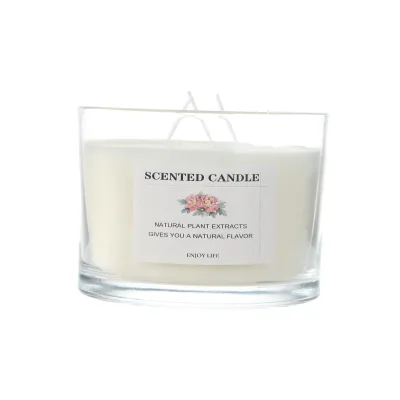


4-Color Wood Wick Smokeless Scented Candle/ Indoor Home Fragrance Glass Cup Candle
$0.30 - $3.00
MOQ: 1000 Pieces

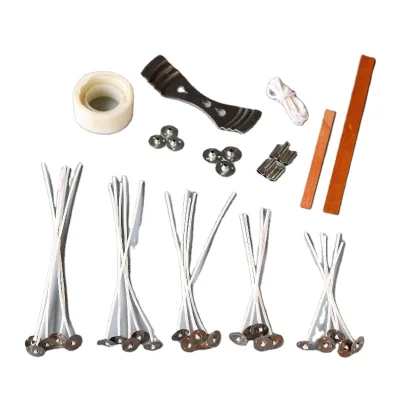

Aromatherapy Candles Indoor Long Lasting Home Fragrance Smokeless Candle Fragrance Gift
$0.68 - $0.88
MOQ: 3000 pieces

Comprehensive Sourcing Guide
Strategic Sourcing Guide for Aromatherapy Fiberglass Wick Solutions
The global market for aromatherapy and ambient scenting systems has evolved significantly, driven by a demand for precision in fragrance delivery and the integration of smart home technologies. For procurement professionals, the core keyword "Aromatherapy Fiberglass Wick" often serves as a critical component within larger scenting ecosystems, particularly in electric diffusers and specialized lighting fixtures. While the supplied product data highlights a diverse range of items—from floor-standing electric diffusers to soybean and paraffin wax candles—the underlying technology for effective fragrance dispersion often relies on advanced wicking mechanisms. This guide provides a disciplined approach to sourcing these components, focusing on technical verification, supplier evaluation, and quality assurance without relying on unverified external claims.
Technical Specifications and Material Compatibility
When evaluating aromatherapy systems, the distinction between the primary device and the consumable or structural components is vital. The supplied product data indicates a mix of electric aroma diffusers and various wax-based products. For electric units, such as the model with the specification "1513-#6353" and "K55Pro," the mechanism often involves ultrasonic atomization or high-frequency vibration rather than a traditional wick. However, in contexts involving "Aromatherapy" types with "Lighting" functions or "Pillar" styles, the fiberglass wick becomes the central element for capillary action.
Buyers must verify the material composition of the wick against the fuel source. The data lists "Soybean Wax" and "Paraffin Wax" as distinct material categories. Fiberglass wicks are generally preferred for their non-combustible nature and ability to draw liquid fragrance oils or melted wax consistently without degrading. In electric diffusers operating on "DC 12V" with a "Maximum Power" of "17W," the wick may be part of a heating element assembly or a passive diffusion system. The "Spray Volume" of "300S on, 5 Seconds off Maximum Atomisation Volume" suggests a timed operation that requires a wick or atomizer capable of withstanding intermittent high-frequency cycles.
The physical dimensions of the wick must align with the "Water Tank Capacity" of "800ml" or the specific wax standard of "230g" or "170g" found in the product listings. A mismatch in wick thickness or porosity can lead to uneven scent distribution or premature clogging. Procurement teams should request detailed technical drawings specifying the wick's diameter, length, and tensile strength to ensure compatibility with the "Floor Standing" or "Home Lighting" applications described.
Compliance and Certification Verification
In the B2B sector, compliance is not merely a formality but a prerequisite for market entry. The supplied context mentions "3rd Party Inspection" and "Accept Third Party Inpsection" as quality attributes. This indicates that buyers should not rely solely on the supplier's internal quality control but must mandate independent verification. While the background data references "ISO 9001" and "ISO 22000" as low-confidence background information, these should not be assumed as certainties. Instead, buyers must explicitly request current, valid certificates from accredited bodies.
For products originating from "Jiangsu, China" or "Qingdao, China," local and international safety standards vary. If the product involves electrical components like the "DC 12V" diffusers, compliance with regional electrical safety standards (such as CE, UL, or CCC) is essential. For wax-based products, chemical safety regarding the "Flavor: Mint & Vanilla" or "Green" and "White" colorants must be verified to ensure they meet food-grade or cosmetic-grade safety requirements, especially if the product is used in "Hotel, Home," or "SPA" environments.
Buyers should also verify the "ODM: Private Brand Accept" and "OEM: Customized Logo" capabilities against intellectual property rights. Ensuring that the fiberglass wick and associated materials do not infringe on existing patents is a critical step before finalizing any customization agreement. The "Quality: 3rd Party Inspection" attribute suggests that the supplier is open to external audits, but the buyer must define the scope of this inspection, including specific tests for the wick's combustion resistance or chemical leaching properties.
Cost Drivers and Pricing Dynamics
Understanding the cost structure of aromatherapy components requires analyzing the interplay between material, customization, and order volume. The observed "MOQ range: 1-5000" and "MOQ: 1000PCS" in the data highlight significant variability in supplier requirements. For fiberglass wicks, the primary cost drivers include the purity of the fiberglass material, the precision of the manufacturing process ("Machinery" vs. "Filling"), and the complexity of the "Customization" involved.
The "Price range: 0.01-125" USD suggests a wide spectrum of product values, likely correlating with the complexity of the unit. A simple fiberglass wick for a standard candle may fall at the lower end, while a specialized wick integrated into a "Floor Standing" diffuser with "Touch Control" and "Timing Function" will command a higher price. The "Product Net Weight: 7.5kg" for certain units indicates substantial material usage, which influences shipping costs and overall unit economics.
Buyers should be aware that "Small Orders: Accepted" does not necessarily imply lower unit costs. In fact, smaller orders often incur higher per-unit prices due to the setup costs for "Machinery" processing. The "Package: Paper Box, Gift Box, etc" options also add to the final cost. When negotiating, procurement teams should clarify whether the price includes the cost of the wick, the housing, or the entire assembly. The "17W" power consumption and "DC 12V" voltage requirements for electric models add to the component cost, as does the "300S on, 5 Seconds off" operational cycle which may require more durable, and thus more expensive, wicking materials.
Typical Applications and Usage Scenarios
The versatility of aromatherapy systems is evident in the diverse usage scenarios listed in the product data. These range from "Hotel, Home" environments to specific events like "Wedding, Party, Birthday, Religion, SPA, Decoration, Holiday." Each application imposes different requirements on the wick and the overall system.
In "Hotel" and "SPA" settings, reliability and consistency are paramount. The "Timing Function" and "Touch Control" features are essential for automated scenting schedules that align with guest experiences. The "Floor Standing" style suggests a need for robust construction, where the wick must support a larger volume of fragrance or wax without sagging or dripping. For "Home Lighting" and "Decoration" uses, the aesthetic integration of the wick into the "White Black" or "Green" colored units is critical. The wick must not only function effectively but also remain invisible or aesthetically pleasing within the design.
The "Pillar" type and "Tranquilizing" function indicate a focus on relaxation and ambient atmosphere. Here, the wick's ability to provide a steady, smoke-free burn or diffusion is key. The "Flavor: Mint & Vanilla" and "Multi-Colored" options suggest that the wick must handle various fragrance oils without altering their scent profile or causing discoloration. In religious or ceremonial contexts, the wick's burn time and stability are often scrutinized, requiring high-quality fiberglass materials that ensure a consistent performance over extended periods.
Supplier Evaluation and Selection Criteria
Selecting the right supplier for fiberglass wicks and related aromatherapy components requires a rigorous evaluation process. The data indicates that suppliers offer "Customization: Available" and "ODM: Private Brand Accept," which is a positive sign for buyers seeking tailored solutions. However, the presence of multiple "prod_model" numbers (e.g., "AFSYJT0910230", "AFSY09091701") suggests a complex product catalog that may include different wicking technologies.
Buyers should prioritize suppliers who demonstrate transparency in their "Processing" methods, distinguishing between "Machinery" and "Filling" processes. The "Quality: Accept Third Party Inpsection" attribute is a strong indicator of a supplier's confidence in their product. However, buyers must verify the supplier's ability to handle "Small Orders" if they are testing the market, while also ensuring they can scale to "MOQ: 1000PCS" for mass production.
The "Origin: China" and specific locations like "Jiangsu" and "Qingdao" provide geographical context. Buyers should consider the logistics and lead times associated with these regions. While the "Lead Time" is not explicitly stated in the data, the "1-5000" MOQ range implies flexibility in production scheduling. It is crucial to assess the supplier's capacity to maintain consistent quality across different batches, especially when dealing with "Soybean Wax" and "Paraffin Wax" variations.
Quality Control and Inspection Protocols
Quality control is the backbone of successful procurement in the aromatherapy sector. The repeated mention of "3rd Party Inspection" and "Accept Third Party Inpsection" underscores the importance of external validation. Buyers should establish a clear quality control protocol that includes pre-production samples, in-process inspections, and final random inspections.
For fiberglass wicks, specific tests should include tensile strength testing to ensure the wick does not break under tension, chemical resistance testing to verify compatibility with various fragrance oils, and combustion testing for wax-based applications. The "Standard: 230g wax" and "170g" specifications provide benchmarks for the amount of material used, which should be cross-referenced with the wick's absorption rate.
The "Product Net Weight: 7.5kg" and "W30xd61.5xh77.5cm" dimensions offer physical constraints that must be met. Buyers should verify that the wick fits within these dimensions without compromising the structural integrity of the unit. Additionally, the "Color: White Black" and "Green" options require colorfastness testing to ensure the wick or its coating does not bleed into the fragrance or wax.
Long-Term Procurement Considerations
Sourcing aromatherapy fiberglass wicks is not a one-time transaction but a long-term partnership that requires strategic planning. The "Customization: Available" and "OEM: Customized Logo" features suggest that buyers may need to adapt their products over time to meet changing market trends. This flexibility is essential for maintaining a competitive edge in the "Hotel, Home," and "SPA" markets.
Buyers should consider the sustainability of the materials used. With "Soybean Wax" and "Paraffin Wax" as options, the environmental impact of the wick and the wax must be evaluated. The "Machinery" processing method should be assessed for energy efficiency and waste reduction. Furthermore, the "Timing Function" and "Touch Control" features indicate a trend toward smart, energy-efficient devices, which may require wicks that are compatible with low-power consumption systems.
Finally, buyers should establish a robust supply chain strategy that accounts for potential disruptions. The "Small Orders: Accepted" policy provides a safety net for testing new products, but long-term contracts should be negotiated to secure consistent supply and favorable pricing. By focusing on technical specifications, compliance, and quality control, buyers can ensure a reliable and efficient procurement process for Aromatherapy Fiberglass Wick solutions.
Comparative Analysis of Product Attributes
To facilitate decision-making, the following table summarizes key attributes observed in the supplied product data, highlighting the diversity of aromatherapy solutions available in the market.
| Attribute | Observation 1 | Observation 2 | Observation 3 |
|---|---|---|---|
| Type | Electric aroma diffuser | Aromatherapy | Pillar |
| Material | Plastic, Metal | Soybean Wax | Paraffin Wax |
| Power | DC 12V, 17W | N/A (Wax) | N/A (Wax) |
| Capacity | 800ml Water Tank | 230g Wax | 170g Wax |
| Control | Touch Control, Timing | N/A | N/A |
| Usage | Hotel, Home | Home Lighting, Wedding | Home, Decoration |
| Origin | Jiangsu, China | Qingdao, China | China |
| MOQ | 1-5000 | 1000PCS | 1-5000 |
| Quality | 3rd Party Inspection | Accept Third Party | Accept Third Party |
This comparison illustrates the breadth of options available, from high-tech electric diffusers to traditional wax pillars. Buyers must carefully match these attributes to their specific procurement needs, ensuring that the fiberglass wick and associated components align with the intended application and performance requirements. By adhering to the disciplined approach outlined in this guide, procurement professionals can navigate the complexities of the aromatherapy market with confidence and precision.
FAQs
Can aromatherapy fiberglass wicks be used with electric diffusers?
Yes, fiberglass wicks can be integrated into electric aroma diffusers for passive diffusion or heating elements. They are compatible with devices operating on DC 12V and support timed atomization cycles up to 300 seconds on.
What materials are compatible with aromatherapy fiberglass wicks?
Fiberglass wicks work effectively with both soybean wax and paraffin wax fuel sources. They ensure consistent capillary action without degrading, making them suitable for pillar candles and various liquid fragrance applications.
Which specifications define the capacity for wick-based aromatherapy units?
Units utilizing these wicks often feature water tank capacities of 800ml or wax standards of 230g and 170g. The physical dimensions must align with these volumes to ensure proper scent distribution and structural integrity.
How do suppliers handle customization for aromatherapy fiberglass wicks?
Suppliers offer available customization options including private branding and customized logos for wick-based products. This allows buyers to tailor products for specific hotel, home, or SPA environments while maintaining quality standards.
What is the typical minimum order quantity for fiberglass wick products?
The minimum order quantity varies, with some suppliers accepting small orders starting at 1 unit. However, standard bulk production often requires a minimum of 1000 pieces to optimize machinery processing and packaging costs.
Can aromatherapy fiberglass wicks be sourced from specific Chinese regions?
Yes, suppliers are located in Jiangsu and Qingdao, China, offering diverse product ranges. These regions provide access to manufacturers capable of producing floor-standing diffusers and various wax-based aromatherapy solutions.