Source Art & Collectible Bottle Holder for Home, Office, Gifts
Compare 30 art collectible bottle holders made from neoprene, pine, and other materials. Buyers can evaluate customization options, cold time retention, and bearing capacity for home decoration, daily use, and promotional gifts.
Key considerations
Products List


Bottle Holder Finger Wine Cabinet Decoration Wine Bottle Shelf Resin Decoration
$2.00 - $5.00
MOQ: 500 Pieces


Hot Sale Waterproof and Rust-Proof Treatment Anti-Slip Design Bottle Holder
$0.12 - $0.35
MOQ: 20 Pieces


Factory Price Lightweight Design Able to Hold Cups of Different Sizes Bottle Holder
$0.12 - $0.35
MOQ: 20 Pieces

New OEM Style Beautiful and Elegant Appearance Easy to Install Bottle Holder
$0.12 - $0.35
MOQ: 20 Pieces

High Quality Factory Direct Sale Adjustable in Multiple Angles Bottle Holder
$0.12 - $0.35
MOQ: 20 Pieces


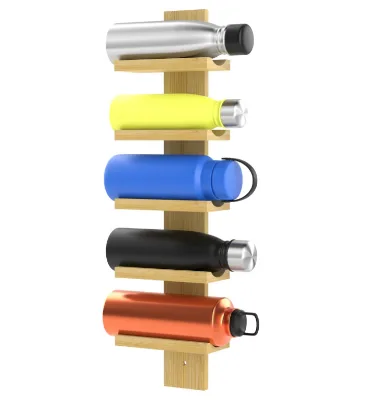
Elegant Metal Bottle Rack Holder for Modern Home Decor
$350.00 - $399.00
MOQ: 1 meters
Guangdong Wine Decoration Warehouse Cellar Engineering Co., Ltd.



Comprehensive Sourcing Guide
Strategic Sourcing Guide for Art Collectible Bottle Holders
Understanding Product Variability and Core Specifications
When sourcing an Art & Collectible Bottle Holder, buyers must first navigate a complex landscape of product definitions that often blur the line between functional utility and decorative art. The market data reveals a significant divergence in product attributes, ranging from heavy-duty neoprene shoulder bags designed for wine transport to delicate pine wood holders intended for home decoration. A critical observation in the current supply base is the existence of multiple distinct models, such as Bottle Holder-073X, Bottle Holder-076N, Bottle Holder-069H, and Bottle Holder-091T, each serving different functional niches. For instance, the Bottle Holder-073X is characterized by a neoprene construction with a "Pink" color option, utilizing a "Laces & Zipper" closure mechanism, and is explicitly categorized as non-disposable. In contrast, other entries in the same dataset list a "Disposable" attribute with a "Lace-up" closed way, indicating a fundamental difference in material durability and intended lifecycle.
The material composition is a primary driver of classification. While neoprene is a standard for portable, insulated holders, the presence of "Pine" as a material suggests a rigid, static object suitable for interior display rather than active transport. This distinction is vital for buyers targeting the "art collectible" segment. A pine holder, processed via painting and finished in a "Natural Color," aligns more closely with the "Simple" style and "Home Decoration" usage, whereas a neoprene bag with a "Multifunctional" feature set targets the "Wine & Drink" utility market. The physical dimensions also vary widely; one specific model lists a size of 13.3x3.5x18cm with a weight of 49g, while another entry notes a gross weight range of 1-1.5 Kg or even greater than 1.5 Kg. Buyers must verify these specifications against their specific use case, as a lightweight 49g item may lack the structural integrity required for a collectible display piece, while a heavier unit might be too cumbersome for portable use.
Technical Attributes and Functional Performance
The technical performance of bottle holders is defined by a set of specific operational parameters that directly impact their suitability for different procurement scenarios. Insulation capability, often referred to as "Cold Time," is a critical metric for holders intended to preserve beverage temperature. The observed data indicates a split in performance, with some units offering a cold retention time of 2-3 hours, while others claim a superior duration of greater than 6 hours. This variance suggests differences in material thickness, insulation lining, or closure efficiency. For a buyer seeking a high-performance product for events or outdoor use, the >6h specification is the preferred benchmark, whereas a 2-3h duration may suffice for short-term indoor gatherings.
Bearing capacity is another essential technical specification that determines the load limits of the product. The supply base shows a clear segmentation here, with some models rated for a capacity of 2-3 Kg, while others are specified for less than 2 Kg. This distinction is particularly relevant when sourcing holders for larger wine bottles or multiple drink containers. A product rated for 2-3 Kg offers greater versatility and safety margin, reducing the risk of structural failure under load. Conversely, the "Bearing Capacity" of <2 Kg indicates a design optimized for lighter, single-bottle applications. Furthermore, the closure mechanism varies significantly between "Laces & Zipper" and "Lace-up" systems. The zipper variant typically offers a more secure, weather-resistant seal, which is advantageous for maintaining the cold time, while the lace-up system may offer a more traditional or aesthetic appeal suitable for decorative pieces.
The structural design also includes considerations for disassembly and condition. Most observed products are listed as "New" and "Undisassembly," implying a fixed, monolithic construction that cannot be taken apart for repair or customization. This is a standard feature for mass-produced items but limits long-term maintenance options. For the "art collectible" niche, the "Shape" is often "Rectangle," providing a stable base for display, while the "Style" ranges from "Modern" to "Simple." Buyers should verify if the "Shape" and "Style" align with the aesthetic requirements of their target market, as a "Simple" style may not meet the expectations of collectors seeking ornate or complex designs.
Compliance, Certification, and Origin Verification
In the realm of B2B procurement, verifying the origin and compliance status of products is paramount, especially when dealing with items that may be subject to varying international trade regulations. The supplied data indicates that the primary production origins are located in China, with specific mentions of Zhejiang and Shandong provinces. Zhejiang is known for a diverse manufacturing base, while Shandong is often associated with heavy industry and specific material processing. The fact that the "prod_origin" is listed as "China" generally implies adherence to Chinese manufacturing standards, but buyers must explicitly verify if the products meet the specific safety and environmental standards of their destination market, such as the EU's REACH regulations or the US's CPSIA.
Regarding certifications, the data notes that the "prod_standard" is "customized," which suggests that there may not be a universal, pre-existing certification for all units in this category. Instead, the standard is likely tailored to the specific order or client requirements. This places the onus on the buyer to define the necessary compliance criteria before placing an order. For instance, if the product involves "Painted" processing, as seen in the pine wood variants, buyers must ensure that the paints used are non-toxic and compliant with lead-free standards, particularly if the item is intended for home decoration or use by children. The "Logo Printing" attribute is listed as "Without Logo Printing" for some models, which implies a generic finish, while others may offer customization. Buyers should clarify if the supplier can provide documentation for the materials used, such as the "Neoprene" or "Pine," to ensure they are free from harmful substances.
The "prod_packing" methods also vary, with options ranging from "Each Packed in a Polybag" to "PP Bag, Tie Card" and "Cartons." The choice of packaging can impact the product's condition upon arrival and its suitability for retail display. For art collectibles, high-quality packaging is often a prerequisite to maintain the item's aesthetic value. Buyers should verify that the packaging is robust enough to protect the item during transit, especially for heavier units with a gross weight exceeding 1.5 Kg. Additionally, the "Condition" is listed as "New," which is a standard expectation, but buyers should confirm that the "New" status implies no prior use or damage, and that the "Undisassembly" nature of the product does not compromise its structural integrity during shipping.
Cost Drivers and Economic Considerations
The economic landscape for sourcing art collectible bottle holders is influenced by a wide range of factors, including material costs, customization levels, and order volume. The observed price range in the market spans from $0.07 to $399, a disparity that reflects the vast difference between a simple, mass-produced plastic or fabric item and a high-end, handcrafted wooden collectible. The Minimum Order Quantity (MOQ) also varies significantly, with observed ranges from 1 to 4800 units. This flexibility allows buyers to test the market with small orders or commit to large-scale production runs, depending on their strategic needs.
Material costs are a primary driver of the final price. Neoprene, a synthetic rubber, is generally more expensive than basic plastics but offers superior insulation and durability. Pine wood, while a natural material, requires processing such as painting and shaping, which adds to the labor cost. The "Customization" attribute is available, which typically incurs additional costs for tooling, design, and setup. For buyers seeking a unique "Art Collectible" item, the cost will likely be higher due to the need for bespoke designs, specialized finishes, and potentially lower production volumes. The "Gross Weight" of the product also impacts shipping costs, with heavier items (e.g., >1.5 Kg) incurring higher freight charges compared to lightweight options (e.g., 49g).
The "Style" and "Feature" set also influence pricing. A "Multifunctional" holder with advanced features like superior cold retention (>6h) and high bearing capacity (2-3 Kg) will command a higher price point than a basic "Simple" holder. Buyers should consider the total cost of ownership, including not just the unit price but also the shipping, packaging, and potential customization fees. The "prod_packing" method, such as "Cartons" versus "Polybag," can also affect the overall cost, as more robust packaging requires more materials and labor. Understanding these cost drivers is essential for budgeting and negotiating effectively with suppliers.
Typical Applications and Market Segmentation
The application of bottle holders varies widely, catering to distinct market segments from functional utility to decorative art. The data highlights several key usage scenarios, including "Wine & Drink," "Home Decoration," "Daily Use," "Collection," "School," "Promotional Gift," and "Office." For the "Wine & Drink" segment, the focus is on functionality, with an emphasis on insulation, durability, and portability. Products in this category often feature neoprene materials, zipper closures, and high cold retention times. They are designed for active use, such as picnics, parties, or outdoor events, where the ability to keep beverages cool is paramount.
In contrast, the "Home Decoration" and "Collection" segments prioritize aesthetics and design. Items in this category, such as the pine wood holders with a "Natural Color" and "Simple" style, are intended to enhance the visual appeal of a living space. These products are often static, with a "Rectangle" shape and "Undisassembly" construction, making them suitable for display on shelves or tables. The "Promotional Gift" and "Office" segments may require a balance of functionality and branding, with options for "Logo Printing" and customizable designs. The "School" segment might favor durable, easy-to-clean materials that can withstand frequent use by students.
The "Style" of the product also plays a crucial role in its application. A "Modern" style with a "Multifunctional" feature set appeals to contemporary consumers who value both form and function. A "Simple" style, on the other hand, may be more appropriate for minimalist interiors or traditional settings. Buyers should align the product's application with their target market's expectations, ensuring that the design, material, and features meet the specific needs of the intended use case.
Supplier Evaluation and Quality Control Protocols
Evaluating suppliers for art collectible bottle holders requires a rigorous approach to ensure quality and reliability. Buyers should assess the supplier's manufacturing capabilities, focusing on their ability to handle the specific materials and processes required, such as "Painted" processing for wood or "Neoprene" fabrication. The "prod_origin" in Zhejiang and Shandong suggests a concentration of manufacturing expertise in these regions, but buyers must verify the specific factory's capacity and quality control measures.
Quality control protocols should be established early in the procurement process. Buyers should request samples to verify the "Cold Time," "Bearing Capacity," and "Gross Weight" specifications. It is essential to test the "Closed Way" mechanism, ensuring that zippers and laces function smoothly and securely. For wooden products, the finish and paint quality should be inspected for consistency and durability. The "prod_packing" should also be evaluated to ensure it protects the product during transit.
Suppliers should be able to provide documentation for their materials and processes, including compliance with relevant safety standards. The "Customization" capability should be confirmed, with clear communication regarding design changes, lead times, and additional costs. Buyers should also verify the supplier's ability to meet the "MOQ" requirements, as some suppliers may have high minimums that could impact the feasibility of small orders.
Long-Term Procurement and Strategic Sourcing
Long-term procurement of art collectible bottle holders requires a strategic approach that balances cost, quality, and supply chain stability. Buyers should consider the lifecycle of the product, including its durability and potential for replacement. For items with a "Non-Disposable" attribute, the focus should be on long-term performance and maintenance. For "Disposable" items, the cost-effectiveness and ease of replacement are key considerations.
Strategic sourcing involves building strong relationships with suppliers who can adapt to changing market demands. This includes the ability to customize designs, adjust production volumes, and maintain consistent quality over time. Buyers should also monitor market trends, such as shifts in material preferences or design styles, to ensure their product offerings remain relevant.
Finally, buyers should consider the environmental impact of their procurement decisions. Sustainable materials and eco-friendly processes are increasingly important to consumers. By selecting suppliers who prioritize sustainability, buyers can enhance their brand reputation and meet the growing demand for environmentally responsible products. This long-term perspective ensures that the procurement strategy remains robust and adaptable in a dynamic market environment.
FAQs
What materials are used for art collectible bottle holders?
Materials include neoprene for portable insulated bags and pine wood for rigid decorative pieces. Neoprene models often feature zipper closures while pine variants are painted and designed for home decoration.
How long can these holders retain cold temperatures?
Cold retention times vary between 2-3 hours and over 6 hours depending on the model. Insulated neoprene designs typically offer longer durations compared to basic decorative wooden units.
Which models support a bearing capacity of 2-3 kg?
Specific neoprene shoulder bag models support a bearing capacity of 2-3 kg for heavier loads. Other variants are rated for less than 2 kg and are suitable for lighter single-bottle applications.
Can buyers request customized logos on these products?
Some models are available without logo printing while others offer customization options. Buyers should verify specific model requirements as the standard is often customized per order rather than pre-certified.
What is the minimum order quantity for these items?
Minimum order quantities range from 1 to 4800 units depending on the supplier and product type. Standard neoprene models often list an MOQ of 500 units for production runs.
Where are these bottle holders primarily manufactured?
Products originate from China with specific manufacturing hubs in Zhejiang and Shandong provinces. Buyers should verify the exact origin for each model to ensure compliance with local trade standards.
How are these products packaged for shipment?
Packaging options include individual polybags, PP bags with tie cards, or standard cartons. The choice depends on the product weight and whether it is intended for retail display or bulk transport.