Source ATEX Certified Multi Gas Detector for Mining, Oil, and Safety
Find and compare 30 ATEX Certified Multi Gas Detector options from verified Chinese manufacturers. Buyers can evaluate portable and fixed models with electrochemical sensors, IP65 protection, and varying certifications like CE and RoHS for industrial safety applications.
Key considerations
Products List


Multiple Function Portable Gas Detector Gas Monitor with Atex Certified
$100.00 - $290.00
MOQ: 2 Pieces


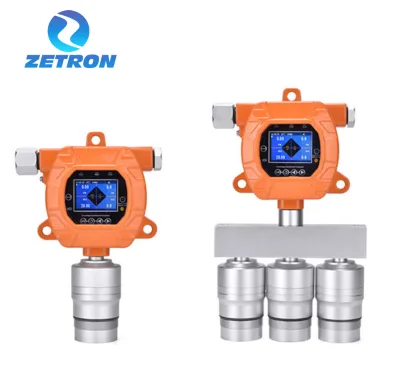
with Iecex ATEX Certified Fixed Multi Gas Detector Noncontact Magnetic Wand Design
$1000.00 - $2000.00
MOQ: 1 Pieces




Comprehensive Sourcing Guide
Strategic Sourcing Guide for ATEX Certified Multi-Gas Detectors
Procuring an ATEX certified multi-gas detector requires a disciplined approach that balances technical performance, regulatory compliance, and supply chain reliability. The market for these devices is characterized by a wide variance in specifications, ranging from portable handheld units to fixed installation systems. Buyers must navigate a complex landscape where product attributes, certifications, and operational environments dictate the final selection. This guide outlines the critical factors for evaluating potential suppliers and selecting equipment that meets rigorous safety standards without relying on unverified claims.
Understanding Technical Specifications and Detection Principles
The foundation of a successful procurement strategy lies in a precise understanding of the technical specifications required for the specific application. Multi-gas detectors generally utilize different detection principles to identify various hazardous gases. The available market data indicates that advanced units often employ a combination of Electrochemical, Infrared (IR), and Photoionization (PID) sensors. Electrochemical sensors are typically used for detecting toxic gases such as carbon monoxide or hydrogen sulfide, while Infrared sensors are preferred for combustible gases like methane due to their stability and resistance to poisoning.
When evaluating a product, buyers must verify the specific sensor configuration. For instance, some units are described as having a "Pump" detection method, which actively draws air into the sensor chamber, making them suitable for confined space entry where the gas may be trapped or at a distance. In contrast, diffusion-based units rely on natural gas movement and are often lighter and more compact. The distinction between "Portable" and "Non-Portable" (fixed) units is equally critical. Portable units, such as those weighing approximately 450g, are designed for personal protection and mobility, whereas fixed systems, often with larger dimensions like 235mm x 160mm x 95mm, are intended for continuous monitoring of specific zones.
The operational environment also dictates the required specifications. The working temperature range is a vital parameter; some units are rated for -20°C to 55°C, while others may have a narrower range of -10°C to 50°C. Similarly, the relative humidity tolerance, often specified as less than 90% with no condensation, must be verified against the site conditions. Battery performance is another key technical aspect, with some devices offering a continuous working time of at least 15 hours on a full charge. The charging temperature range, typically between 0°C and 40°C, must be considered to ensure the device can be safely recharged in the intended environment.
Compliance and Certification Verification
Compliance with international safety standards is non-negotiable when sourcing ATEX certified equipment. The ATEX directive (Atmosphères Explosibles) is the primary regulatory framework for equipment used in explosive atmospheres within the European Union. Buyers must demand proof of valid ATEX certification for the specific model being purchased. While the provided data lists various certifications such as CE, RoHS, and ISO, it is essential to distinguish between general compliance and specific explosion-proof ratings.
The explosion-proof grade is a critical specification that defines the device's ability to contain an internal explosion without igniting the surrounding atmosphere. One observed specification mentions an "Ex Diict6" grade, which implies a specific level of protection. However, buyers should not assume that all listed products possess this rating. The presence of a CE mark indicates conformity with health, safety, and environmental protection standards for products sold within the European Economic Area, but it does not automatically equate to ATEX certification for explosive environments.
Furthermore, the certification status must be verified for the specific component, not just the final assembly. For example, the sensor itself may be an "Advanced Sensor Made in UK," but the housing and the entire system must be certified together. Buyers should request the full certificate of conformity and the specific test reports that validate the explosion-proof rating. It is also important to note that some products may carry certifications like FCC, which relates to electromagnetic compatibility, but this is distinct from the intrinsic safety requirements of ATEX. The absence of a specific ATEX certificate in the product description should be treated as a red flag, requiring immediate clarification from the supplier.
Cost Drivers and Pricing Dynamics
The price of a multi-gas detector is influenced by a complex array of factors, including the type of sensors, the build quality, and the level of certification. The observed price range in the market spans from $3 to $5,000, reflecting the vast difference between basic single-gas detectors and high-end, multi-sensor, ATEX-certified systems. A unit priced at the lower end of the spectrum may be a simple, non-certified device or a sensor module only, whereas a unit at the higher end likely includes a robust housing, multiple sensor types (electrochemical, IR, PID), and full ATEX certification.
The Minimum Order Quantity (MOQ) is another significant cost driver. The market data shows an MOQ range from 1 to 500 units. For buyers requiring a small number of units for pilot testing or specific site deployment, a supplier with a low MOQ is essential to avoid excessive inventory costs. Conversely, large-scale procurement projects may benefit from suppliers offering tiered pricing for orders exceeding 500 units.
Customization is a major factor in pricing. Products marked as "Customized" or offering "Customized" packaging often incur additional costs due to the need for specialized tooling, branding, or specific configuration of sensor arrays. In contrast, "Non-Customized" units with standard packaging and fixed specifications are generally more cost-effective. The material of the shell, such as ABS, PC, or Antistatic TPE, also impacts the price, as does the inclusion of advanced features like anti-theft alarm systems or specific output signal types (e.g., 4-20mA or Digital Type). Buyers must balance the initial purchase price against the long-term value provided by durability and sensor life, which is typically 2 to 3 years for electrochemical sensors.
Typical Applications and Operational Environments
The application of multi-gas detectors varies significantly based on the industry and the specific hazards present. Portable units are predominantly used in confined space entry, such as tanks, silos, and manholes, where workers need to monitor the atmosphere in real-time. The pump-based detection method is particularly advantageous here, allowing for sampling from hard-to-reach areas. These devices are often deployed in the oil and gas sector, chemical processing plants, and wastewater treatment facilities.
Fixed installation systems, characterized by their larger dimensions and IP ratings like IP66 or IP65, are typically used for continuous monitoring in high-risk zones. These systems are installed in areas where gas leaks are most likely to occur, such as near storage tanks, compressor stations, or processing units. The "Embedded Wall" installation type suggests a permanent fixture designed to blend into the infrastructure while providing constant surveillance. The inclusion of an "Active" anti-theft alarm system and "Sound and Light Alarm" features indicates that these units are often deployed in sensitive or high-value areas where physical security is also a concern.
The environmental conditions of the application site must be carefully matched to the device specifications. For example, in outdoor environments subject to extreme temperatures, a unit with a wide operating range of -20°C to 55°C is necessary. In humid environments, the device must be rated for high relative humidity without condensation. The explosion-proof grade is critical in any location where flammable gases or dusts are present, ensuring that the device itself does not become an ignition source.
Supplier Evaluation and Quality Assurance
Evaluating a supplier for ATEX certified equipment requires a rigorous due diligence process. Buyers should prioritize suppliers who can provide transparent documentation regarding their manufacturing processes and quality control measures. The production process, such as "Injection" molding for plastic components, should be consistent and controlled to ensure the integrity of the explosion-proof housing. The origin of the product, whether from Ningxia or Nanjing in China, should be verified, but the location itself is less important than the supplier's track record and adherence to international standards.
Quality assurance extends to the sensors themselves. The "Sensor Life" of 2 to 3 years for electrochemical sensors is a standard metric, but buyers should verify if the supplier offers calibration services or replacement programs. The "Sensitivity" of the device, described as "High" in some listings, must be validated through independent testing. A reliable supplier will provide detailed test results and calibration certificates for each unit.
When comparing suppliers, buyers should look for those who offer both "Standard Packaging" and "Customized" options, indicating flexibility and a customer-centric approach. The ability to provide "Non-conductivity Type" or specific conductivity options may be relevant for certain industrial applications. Additionally, the supplier's response time and support for technical queries are crucial, especially when dealing with complex certification requirements.
Long-Term Procurement Considerations
Sourcing multi-gas detectors is not a one-time transaction but a long-term commitment that involves maintenance, calibration, and eventual replacement. The "Continuous Working Time of Full Charge" of at least 15 hours is a key metric for operational efficiency, but buyers must also consider the battery's lifespan and the availability of replacement batteries. The "Working Voltage" of 15~30VDC for fixed units must be compatible with the site's power infrastructure.
The "Output Signal Type," whether Digital or 4-20mA, determines the integration capability with existing safety systems. Buyers should ensure that the selected device can seamlessly communicate with their central monitoring system to avoid costly retrofitting. The "IP" rating, such as IP66, ensures protection against dust and water ingress, which is vital for long-term reliability in harsh environments.
Finally, buyers should consider the total cost of ownership, which includes the cost of sensors, calibration, and maintenance over the device's lifespan. A device with a longer sensor life or easier calibration process may have a higher upfront cost but lower long-term expenses. The "Standard" dimensions and "Material" specifications should be reviewed to ensure compatibility with existing mounting systems and enclosures. By focusing on these long-term factors, buyers can secure a reliable supply of safety equipment that protects personnel and assets for years to come.
Comparative Analysis of Key Product Attributes
To facilitate decision-making, the following table summarizes the key attributes observed in the market data, highlighting the diversity of options available to buyers.
| Attribute Category | Portable Unit Characteristics | Fixed Unit Characteristics |
|---|---|---|
| Model Example | MST 410P | AGH6100 |
| Detection Method | Pump | Electrochemical & Infrared & PID |
| Weight | About 450g | Not specified (Larger form factor) |
| Dimensions | 161mm x 76mm x 57mm | 235mm x 160mm x 95mm |
| Operating Temp | -20°C ~ 55°C | -10°C ~ 50°C |
| Protection Grade | IP66 (Observed) | IP65 (Observed) |
| Power Source | Battery (≥15h) | 15~30VDC |
| Output Signal | Digital Type | 4-20mA |
| Customization | Available | Non-Customized |
| Certification | RoHS, CE | ISO, CE, FCC |
This comparison illustrates that the choice between portable and fixed units depends heavily on the specific operational needs. Portable units offer mobility and extended battery life, making them ideal for personal monitoring, while fixed units provide continuous, high-sensitivity detection with robust power and signal integration capabilities. Buyers must carefully align these attributes with their site requirements to ensure optimal safety and performance.
FAQs
What detection principles do these multi-gas detectors use?
These units typically combine electrochemical, infrared, and PID detection principles. Electrochemical sensors identify toxic gases while infrared sensors detect combustible gases like methane for stable performance.
Can I find portable units with a pump detection method?
Yes, portable pump multi-gas detectors are available for active air sampling. These devices weigh about 450g and are suitable for confined space entry where gas may be trapped at a distance.
Which certifications are commonly listed for these devices?
Common certifications include CE, RoHS, and ISO for general compliance. Some units also carry FCC marks for electromagnetic compatibility, though specific ATEX ratings require separate verification for explosive environments.
How long does the battery last on a full charge?
The continuous working time is at least 15 hours on a full charge. This ensures reliable operation for extended shifts, provided the charging temperature remains between 0°C and 40°C.
What is the sensor life for electrochemical types?
The sensor life is typically 2 to 3 years for electrochemical sensors. Buyers should plan for periodic replacement or calibration to maintain high sensitivity and accurate gas detection readings.
Can I customize the packaging for bulk orders?
Customized packaging is available for specific procurement needs. Standard packaging includes cartons, while custom options allow for branding or specific configuration of the product dimensions and materials.
What is the minimum order quantity for these detectors?
The minimum order quantity ranges from 1 to 500 units depending on the supplier. This flexibility allows buyers to purchase single units for testing or larger batches for site deployment.