Source Attached Lid Plastic Storage Crate for Warehouse, Garage, Stockroom
Compare 30 Attached Lid Plastic Storage Crate options from verified suppliers. These PP containers feature capacities from 20 to 60 liters, stackable designs, and customizable logos for efficient logistics storage in warehouses, garages, and stockrooms.
Key considerations
Products List




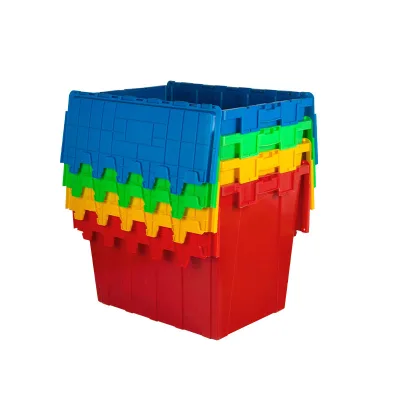
Lockable Storage Stackable Plastic Crate Plastic Lid Nestable Turnover Container
$3.00 - $9.00
MOQ: 1000 Pieces



Comprehensive Sourcing Guide
Strategic Sourcing Guide for Attached Lid Plastic Storage Crates
Understanding Technical Specifications and Design Variants
When sourcing attached lid plastic storage crates, buyers must first distinguish between the specific design configurations available in the market. The core keyword "attached lid" implies a permanent or semi-permanent hinge mechanism that keeps the container sealed during transport, yet allows for easy access without removing a separate lid. Based on observed product attributes, these units are frequently categorized by their structural type, such as "Open" or "Enclosed" styles, and their intended utility, ranging from general "Logistic Storage" to specific "Warehouse, Garage, Stockroom" applications.
A critical technical differentiator is the material composition. The dominant material observed in this category is Polypropylene (PP). This polymer is selected for its balance of durability, chemical resistance, and cost-effectiveness. Buyers should verify that the PP material meets specific grade requirements for the intended load, as the material dictates the crate's ability to withstand repeated stacking and potential impact. The physical dimensions are equally vital. Market observations indicate standard footprint sizes, such as 600mm by 400mm, which align with common pallet systems. However, height varies significantly to accommodate different volume needs. Specific models have been observed with heights of 140mm, 315mm, and 325mm, resulting in capacities ranging from less than 10 liters up to 60 liters.
The following table summarizes the key technical attributes frequently encountered in this product category:
| Attribute Category | Observed Specifications | Sourcing Verification Point |
|---|---|---|
| Material | Polypropylene (PP) | Confirm resin grade and UV stability if used outdoors. |
| Dimensions | 600x400x140mm, 600x400x315mm, 545x335x325mm | Verify exact footprint against pallet racking or shelving. |
| Capacity | <10L, 20-40L, 40-60L | Ensure volume matches inventory density requirements. |
| Lid Type | Attached, Enclosed, Open | Confirm hinge mechanism durability and seal integrity. |
| Weight | Approximately 3.0 kg to 3.5 kg | Calculate total logistics weight including product payload. |
| Color Options | Blue, Orange, Red, Grey, Customized | Check if color coding is required for inventory management. |
Buyers must treat these specifications as observations of available models rather than universal standards. A supplier may offer a 600x400x140mm crate, while another offers a 600x400x315mm variant. The "Other Models" designation suggests that non-standard sizes are often available through customization.
Compliance, Certification, and Safety Standards
In the B2B procurement of plastic storage solutions, verifying compliance is as important as the physical dimensions. The supply chain for these crates often involves rigorous testing to ensure they meet international safety and environmental standards. Observed certification data points to several key standards that buyers should request from suppliers. These include RoHS (Restriction of Hazardous Substances), REACH (Registration, Evaluation, Authorization and Restriction of Chemicals), and ISO 9001:2000. These certifications indicate that the manufacturing process adheres to quality management systems and that the materials used do not contain prohibited hazardous substances.
For applications involving food handling or sensitive goods, the presence of an FDA test report is a significant indicator of material safety. While not all crates in the general storage category require this, it is a critical differentiator for buyers in the food, pharmaceutical, or consumer goods sectors. The "Eco-Friendly" and "Recyclable" features observed in product listings further suggest that the material is designed for sustainability, which may be a requirement for corporate social responsibility (CSR) goals.
When evaluating a supplier, buyers should not rely solely on marketing claims. Instead, they must request valid certificates from the specific manufacturing facility. The standard "ISO 9001:2000" is frequently cited, but buyers should be aware that newer iterations of this standard exist (e.g., ISO 9001:2015). If a supplier cites an older version, it may indicate a lag in their quality management updates, though it does not necessarily invalidate the current production quality. Similarly, the "RoHS" and "REACH" certifications must be current and applicable to the specific batch of PP material used.
Cost Drivers and Pricing Dynamics
The pricing of attached lid plastic storage crates is influenced by a complex interplay of material costs, manufacturing complexity, and order volume. The observed price range in the market spans from $0.15 to $50.00 USD. This wide variance is not indicative of quality differences alone but reflects the vast differences in size, capacity, and customization levels. A small, 140mm high crate will naturally cost significantly less than a large, 315mm high unit with reinforced stacking features.
Material costs are a primary driver. Since Polypropylene (PP) is a petroleum-based product, its price fluctuates with global oil markets. Buyers should understand that a sudden increase in raw material costs may lead to price adjustments in their contracts. Furthermore, the "Attached Lid" mechanism adds complexity to the molding process compared to open crates. The hinge must be molded as part of the unit or attached with precision, which can increase the unit cost.
Order volume is another critical cost factor. The Minimum Order Quantity (MOQ) observed ranges from 1 to 1000 pieces, with specific models showing an MOQ of 300 pieces. Purchasing at the lower end of the MOQ spectrum often results in a higher unit price due to the setup costs for the injection molding machine. Conversely, bulk orders of 1000+ units typically secure a lower per-unit cost. Customization is a significant cost driver; requests for "Customized Color," "Customized Logo," or specific "OEM & ODM" services will incur additional tooling fees and higher unit prices. Buyers should budget for these one-time setup costs separately from the recurring unit price.
Typical Applications and Operational Use Cases
The versatility of attached lid plastic storage crates makes them suitable for a diverse range of industrial and commercial applications. The primary use case identified is "Logistic Storage," where the crates serve as durable containers for moving goods between facilities. The "Strong Loading Capacity" and "Stack Load" capabilities, with observed ratings of 150kg for stacking and 50kg for individual load capacity, make them ideal for warehouse environments where vertical space is optimized.
Specific environments mentioned include "Garage," "Stockroom," and general "Storage" areas. In these settings, the "Enclosed" nature of the attached lid provides protection against dust, moisture, and pests, which is crucial for storing sensitive tools, spare parts, or inventory. The "Stackable & Nestable" features are particularly valuable for logistics efficiency. When empty, nestable crates save significant space in return logistics, while when full, stackable designs maximize vertical storage density.
The "Application" data also highlights "Products Storage, Moving and Transport." This suggests that these crates are often used in supply chains where goods need to be moved from a production line to a distribution center without repackaging. The "Safety Packaging" feature ensures that the crates themselves do not degrade during transit, protecting the contents. For buyers in the automotive or manufacturing sectors, the ability to customize the crate with a "Customer Logo" allows for brand visibility and better inventory tracking.
Supplier Evaluation and Manufacturing Capabilities
Selecting the right supplier requires a deep dive into their manufacturing capabilities and geographic location. The "Place of Origin" for many of these crates is identified as China, with specific mentions of Qingdao, Shandong. This region is a known hub for plastic molding and logistics equipment. However, buyers should not limit their search to a single region; the key is to verify the supplier's actual production capacity.
Buyers should evaluate suppliers based on their ability to handle "OEM & ODM" requests. This indicates whether the supplier has the engineering expertise to modify existing molds or create new ones for custom dimensions and features. The "Customization" attribute being "Available" suggests that many suppliers are flexible, but the buyer must confirm the lead time and cost implications of these customizations.
The "Product Packing" method is another indicator of supplier professionalism. Observations show "Carton" and "Plastic Film" as common packing methods. For international shipping, the packaging must be robust enough to prevent damage during transit. "Safety Packaging" is a specific attribute that implies the supplier takes extra steps to protect the product, such as using corner protectors or shrink wrapping.
When evaluating a supplier, buyers should also consider their quality control processes. The presence of a "Test Report" like FDA or internal quality checks is a positive sign. However, buyers should request a sample before placing a large order to verify the "Stack Load" and "Load Capacity" claims personally. The "Weight" of the crate, observed around 3.0 kg to 3.5 kg, should be consistent across batches to ensure predictable logistics planning.
Quality Control and Long-Term Procurement Strategy
Ensuring long-term value from attached lid plastic storage crates requires a proactive approach to quality control. The "Feature" of being "Recyclable" and "Eco-Friendly" is not just a marketing term; it implies that the material can be processed at the end of its life cycle. Buyers should verify the recyclability claims by asking for the specific resin identification code and the supplier's recycling policy.
For long-term procurement, consistency is key. Buyers should establish a clear specification sheet that includes the exact dimensions (e.g., 600x400x315mm), material grade (PP), and color codes. Relying on generic descriptions can lead to receiving crates that do not fit existing racking systems or pallets. The "Standard Color" of Blue Grey is common, but if a specific color like Red or Orange is required for safety or inventory coding, this must be explicitly stated in the purchase order.
The "MOQ" of 300 pieces for some models suggests that buyers should plan their inventory needs carefully. Ordering too frequently in small batches may increase administrative and shipping costs. Conversely, ordering too much inventory ties up capital. A balanced approach involves forecasting demand and placing orders that align with the supplier's MOQ while maintaining a safety stock.
Finally, buyers should consider the lifecycle of the crate. The "Strong Loading Capacity" and "Stack Load" of 150kg indicate a robust design, but plastic can degrade over time due to UV exposure or repeated stress. Buyers should inquire about the expected lifespan of the crates and whether the supplier offers a warranty or replacement policy for defective units. By focusing on these long-term considerations, buyers can ensure that their investment in attached lid plastic storage crates delivers sustained value and operational efficiency.
FAQs
What material is used for attached lid plastic storage crates?
These crates are primarily made of Polypropylene (PP) for durability. The material offers chemical resistance and cost-effectiveness, suitable for various storage needs including logistics and warehouse applications.
Which dimensions are standard for these plastic storage crates?
Standard footprints often measure 600mm by 400mm with varying heights. Observed models include heights of 140mm, 315mm, and 325mm to accommodate different volume requirements from small to large storage.
Can buyers request customized colors and logos for these crates?
Yes, customization is available for colors like blue, orange, red, and grey. Buyers can also request customized logos and OEM services, though this may affect the minimum order quantity and unit pricing.
What certifications do these plastic storage crates typically hold?
Common certifications include RoHS, REACH, and ISO9001:2000 to ensure safety and quality. Some models also carry FDA test reports, making them suitable for food-related storage and sensitive goods.
How much weight can these attached lid crates support when stacked?
The stack load capacity is observed to be up to 150kg for stable vertical storage. Individual load capacity is typically rated at 50kg, ensuring strong loading for warehouse and transport applications.
What is the typical minimum order quantity for these storage crates?
Minimum order quantities range from 1 to 1000 pieces depending on the model. Specific models often require an MOQ of 300 pieces, while bulk orders can secure lower per-unit costs.
Where are these attached lid plastic storage crates typically manufactured?
The place of origin is frequently identified as China, with specific hubs in Qingdao, Shandong. This region is a known center for plastic molding and logistics equipment manufacturing.