Source Automatic Cow Headlock for Dairy, Beef, and Feedlots
Compare 28 Automatic Cow Headlock options from verified Chinese manufacturers. Buyers can evaluate models like BH-004 and JJ-750, noting features such as galvanized steel construction, manual or animal labor power sources, and customizable dimensions for dairy, beef, and feedlot applications.
Key considerations
Products List


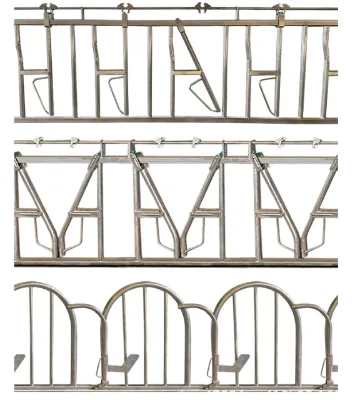


Automatic Cattle Yard Headlock Dairy Cow Yard Headlock From China Manufacture
$30.00 - $50.00
MOQ: 100 Pieces


Cow Headlocks/Cattle Headlocks/Livestock Farm Husbandry Equipment Headlock
$28.00 - $33.00
MOQ: 100 Pieces


Self-Locking Neck Self Locking Headlock Self Locking Headlock for Cow Farm
$31.30 - $31.40
MOQ: 50 Pieces

High Quality Durable Cow Headlock for Farm Equipment and Animal Husbandry
$80.00 - $120.00
MOQ: 10 Pieces
Comprehensive Sourcing Guide
Strategic Sourcing Guide for Automatic Cow Headlocks
Procuring an Automatic Cow Headlock requires a disciplined approach that balances animal welfare, operational efficiency, and rigorous supplier verification. The modern dairy and beef industry relies on these systems to automate feeding routines, reduce labor costs, and ensure consistent animal positioning. However, the market is populated with diverse configurations, ranging from manual labor-assisted units to fully automated systems driven by computerized controls. Buyers must navigate a complex landscape of specifications, certifications, and logistical constraints to secure equipment that meets their specific farm requirements. This guide outlines the critical factors for sourcing these systems, grounded in observed product attributes and industry standards.
Technical Specifications and Structural Configuration
The foundation of a successful procurement decision lies in understanding the technical specifications of the headlock. The structural integrity and dimensions are paramount for both safety and functionality. Observed product data indicates that these units are predominantly constructed from Steel, with specific emphasis on Galvanized Q235 or Integral Hot-DIP Galvanized materials. This material choice is critical for resisting corrosion in the harsh, humid environments typical of livestock housing. The Installation Method is consistently noted as Off ground, suggesting that the units are designed to be mounted or positioned above the floor level, which facilitates easier cleaning and manure management underneath the structure.
Structural design varies, with some models featuring a Connected structure, which may imply modular assembly or integration with existing barn layouts. The Feed Bunk Width is a specific dimension that buyers must verify against their herd size; observed data lists widths of 750mm and 1000mm, indicating that the system must be sized appropriately to accommodate the target animal without causing undue stress or injury. The Neck Width is another precise specification, with observed values around 180±5mm, ensuring a secure fit for the cattle's neck to prevent escape while allowing comfortable movement.
The physical dimensions of the unit also vary. One observed specification lists a size of 6000X1100X60MM, while another notes a Height of 1000mm. Buyers should note that Size is often listed as Customized, meaning that off-the-shelf dimensions may not fit every facility. The prod_model codes observed, such as BH-004, BH-021, JJ-750, and JJ-1000, serve as identifiers for specific configurations. When evaluating a product, the buyer must confirm that the prod_standard aligns with their needs, as some units are standardized (e.g., Ø42mm / Ø48mm / Ø60mm) while others offer fully customized standards.
Compliance, Certification, and Safety Standards
In the agricultural machinery sector, compliance is not merely a formality but a requirement for insurance and operational safety. The observed product data highlights several key certifications that buyers should verify. ISO9001 appears frequently, often listed alongside descriptors like Computerized or Non-Computerized, indicating that the manufacturer adheres to quality management systems regardless of the automation level. Additionally, CE certification is observed, which is essential for equipment intended for the European market or those adhering to international safety norms.
The distinction between Computerized and Non-Computerized systems is a critical compliance and operational factor. Some listings explicitly state Computerized: Non-Computerized, suggesting a hybrid capability or a specific configuration choice. For buyers seeking Automatic key selling points, the presence of computerized controls is a prerequisite. The Power Source for these systems varies; while some units rely on Manual Labour, others are designed for Animal Labour or fully automated electric drives. It is vital to verify the Power Source claim against the actual electrical requirements of the facility.
Safety standards also extend to the manufacturing process. The Welding Method is listed as Robot Welding in some specifications, which implies a higher degree of consistency and structural integrity compared to manual welding. This detail is a strong indicator of quality control. Furthermore, the Condition of the equipment is uniformly listed as New, ensuring that buyers are not purchasing refurbished units unless explicitly stated. The Warranty period is another compliance metric, with observed data suggesting a 3 Years warranty, which provides a baseline for after-sales support expectations.
Cost Drivers and Pricing Dynamics
Understanding the cost drivers for automatic cow headlocks is essential for budgeting and total cost of ownership analysis. The observed listed price range spans from 10.28 to 630 USD. This wide variance suggests that the price is heavily influenced by the level of automation, material thickness, and customization. A unit priced at the lower end may be a basic manual or semi-automatic model, while the higher end likely reflects fully automated, computerized systems with advanced features.
The MOQ (Minimum Order Quantity) is another significant cost driver, with an observed range of 1 to 500. Buyers purchasing a single unit for a small operation may face different pricing tiers compared to those ordering 500 units for a large-scale commercial facility. The Selling Units are often listed as Single item, but bulk purchasing may unlock volume discounts. Additionally, the prod_packing method affects logistics costs. Options include Pallet, Container, or Ocean Shipping. Choosing Container or Ocean Shipping for large orders can reduce per-unit shipping costs but requires coordination with freight forwarders.
Customization is a primary factor influencing price. The Customization attribute is listed as Available, and Customized Support via OEM (Original Equipment Manufacturer) is explicitly mentioned. Customizing the Feed Bunk Width, Height, or Size to fit a specific barn layout will inevitably increase the unit cost and potentially the Lead Time. Buyers must weigh the cost of customization against the operational efficiency gains of a perfectly fitted system. The weight of the unit, observed at 50 (likely kg), also impacts shipping costs, particularly for air freight or smaller vessel shipments.
Typical Applications and Operational Fit
The application of automatic cow headlocks is specific to the Target Animal, which is predominantly Cattle or Cow. The Application field confirms this focus, ensuring that the design parameters are optimized for bovine anatomy. The Animal Feeder Capacity is another critical application metric, with observed values of 5 kg and 5.5 kg. This capacity dictates the frequency of refilling and the suitability of the unit for different herd sizes or feeding schedules.
The Advantage of these systems is often cited as Easy to Use, which is crucial for farm staff who may not have specialized technical training. However, the Power Source dictates the operational workflow. Systems relying on Manual Labour require staff intervention to operate, whereas Automatic systems with Computerized controls can operate independently, reducing labor hours. The Lead Time of 2 Weeks observed in the data suggests that these systems can be deployed relatively quickly, but this may vary based on the level of customization.
Buyers should also consider the prod_origin when evaluating applications. The observed origins include China, Yixian, Baoding, China, Hebei, China, and Shandong, China. While these locations indicate the manufacturing hub, the buyer must ensure that the equipment is suitable for their local climate and regulatory environment. For instance, the Galvanized Steel construction is ideal for humid environments, but the specific galvanization thickness should be verified to ensure longevity in different weather conditions.
Supplier Evaluation and Geographic Considerations
Evaluating suppliers requires a focus on their geographic location and logistical capabilities. The prod_origin data points to several regions in China, including Yixian, Baoding, Hebei, and Shandong. These regions are known for their manufacturing clusters, but buyers must verify the specific place of origin to ensure transparency. The Lead Time of 2 Weeks is a strong indicator of a supplier's responsiveness, but buyers should confirm if this applies to standard models or if customization extends this timeline.
Supplier reliability is often reflected in their Certification portfolio. The presence of ISO9001 and CE marks suggests a commitment to quality and safety. However, buyers should not rely solely on these labels; they must request evidence of these certifications and verify their validity. The Customized Support via OEM indicates that the supplier is willing to collaborate on design changes, which is a positive sign for long-term partnerships.
When comparing suppliers, buyers should look for consistency in prod_packing. Whether the supplier uses Pallets, Container, or Ocean Shipping, the method must align with the buyer's logistics strategy. The Condition of the product being New is a baseline requirement, and buyers should ensure that the supplier has a clear policy on handling and shipping to prevent damage during transit.
Quality Control and Long-Term Procurement Considerations
Quality control is paramount when sourcing agricultural machinery. The Welding Method of Robot Welding is a specific quality indicator that buyers should prioritize, as it ensures uniform welds and structural strength. The Material composition, specifically Integral Hot-DIP Galvanized or Galvanized Steel, must be verified to ensure it meets the required corrosion resistance standards. The prod_standard should be checked against the prod_model to ensure that the dimensions and specifications match the order.
Long-term procurement considerations include the warranty period and after-sales support. An observed 3 Years warranty is a competitive benchmark, but buyers should clarify what is covered under this warranty, such as parts, labor, or shipping. The Customization aspect also plays a role in long-term viability; a supplier that offers OEM support is more likely to provide spare parts and technical assistance years after the initial purchase.
Buyers must also consider the Computerized nature of the system. If the system is Non-Computerized, the risk of electronic failure is lower, but the automation level is reduced. Conversely, Computerized systems offer higher efficiency but require regular maintenance and potential software updates. The Power Source must be compatible with the farm's existing infrastructure. Finally, the prod_packing method should be designed to protect the unit during long-distance shipping, especially for Ocean Shipping from China to international destinations.
Comparative Analysis of Key Specifications
To assist in decision-making, the following table summarizes the key observed specifications and their implications for procurement.
| Specification | Observed Value/Range | Procurement Implication |
|---|---|---|
| Material | Steel, Galvanized Q235, Integral Hot-DIP Galvanized | Ensure corrosion resistance matches local climate; verify galvanization thickness. |
| Feed Bunk Width | 750mm, 1000mm | Select based on target animal size; wider bunks may reduce competition. |
| Neck Width | 180±5mm | Critical for animal safety; must fit the specific breed of cattle. |
| Power Source | Manual Labour, Animal Labour, Automatic | Determine labor requirements; automatic systems reduce long-term labor costs. |
| Certification | ISO9001, CE | Verify validity; essential for insurance and market compliance. |
| Lead Time | 2 Weeks | Plan production schedules accordingly; confirm if customization extends this. |
| Warranty | 3 Years | Benchmark for after-sales support; clarify coverage terms. |
| MOQ | 1 - 500 | Adjust order quantity to optimize unit cost and shipping efficiency. |
| Origin | China (Hebei, Shandong, Yixian, Baoding) | Verify specific factory location for transparency and logistics planning. |
Conclusion
Sourcing an Automatic Cow Headlock is a multifaceted process that demands attention to technical details, regulatory compliance, and supplier reliability. By focusing on the observed specifications such as Galvanized Steel construction, ISO9001 and CE certifications, and the 2 Weeks lead time, buyers can make informed decisions. The wide range of Feed Bunk Widths and Customization options allows for tailored solutions, but buyers must verify these details against their specific operational needs. Ultimately, a successful procurement strategy relies on a clear understanding of the product's Power Source, Warranty terms, and the supplier's ability to deliver New condition equipment that meets the rigorous demands of modern livestock management.
FAQs
What material is used for automatic cow headlocks?
These units are constructed from Steel, specifically Galvanized Q235 or Integral Hot-DIP Galvanized materials. This selection ensures resistance to corrosion in humid livestock environments while maintaining structural integrity for long-term farm use.
How is the installation method configured for these units?
The installation method is consistently designed as Off ground to facilitate easier cleaning and manure management beneath the structure. This mounting style allows for efficient maintenance without requiring complex floor modifications.
Which certifications should buyers verify for safety compliance?
Buyers should verify ISO9001 and CE certifications to ensure adherence to quality management and international safety norms. These marks indicate that the manufacturer meets rigorous standards for both computerized and non-computerized system configurations.
Can the feed bunk width be customized for specific needs?
Yes, customization is available for dimensions such as Feed Bunk Width, which is observed at 750mm or 1000mm. Buyers can request OEM support to tailor the size to their specific barn layout and herd requirements.
What is the typical lead time for delivery of these systems?
The observed lead time for standard models is approximately 2 Weeks from the time of order placement. This duration may vary if the buyer requests significant customization or if the order quantity exceeds standard production capacities.
How does the power source affect the operation of the headlock?
Power sources vary between Manual Labour, Animal Labour, and fully Automatic computerized drives. Buyers must select the option that aligns with their labor strategy, as automatic systems reduce manual intervention while manual units require staff operation.