Source Nitrided Surface Welding Table for Assembly, Fabrication, and Repair
Compare 30 nitrided surface welding tables with customizable dimensions, steel grades, and hole systems from verified Chinese manufacturers. These units support welding and assembly tasks with options for cast iron or carbon steel construction.
Key considerations
Products List


Precision High-Temperature Resistant Welding Table, Nitriding Welding Table
$600.00 - $1000.00
MOQ: 1 Pieces


Industrial Nitriding 3D Welding Table with Fixture Cast Iron Welding Table
$600.00 - $1000.00
MOQ: 1 Pieces


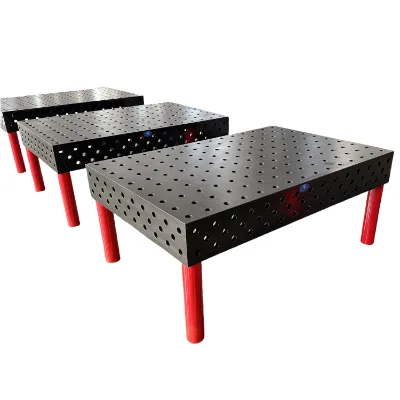


Smooth Surface 3D Welding Table for Protecting Workpiece Surface Quality
$620.00 - $2580.00
MOQ: 1 Pieces


Anti Wear Machined 2D Welding Table for Continuous Welding Application
$620.00 - $2580.00
MOQ: 1 Pieces


Datang Welding Table Turning Table Rotating Table
$1000.00 - $10000.00
MOQ: 1 Set
Wuxi Datang Welding & Cutting Mechanical Equipment Co., Ltd.
Comprehensive Sourcing Guide
Strategic Sourcing Guide for Nitrided Surface Welding Tables
Understanding the Core Technology and Surface Treatment
When sourcing a Nitrided Surface Welding Table, the primary focus must be on the specific metallurgical treatment applied to the table top. Nitriding is a thermochemical process that diffuses nitrogen into the surface of the steel, significantly enhancing hardness, wear resistance, and corrosion protection without requiring the high temperatures associated with quenching. This process is critical for welding fixtures because it prevents the table surface from sticking to molten spatter, a common issue with untreated carbon steel. Based on available product data, the surface finish for these units is explicitly described as "Nitrided" or "Normal/Nitrided," indicating that the treatment is a standard or optional feature depending on the specific model configuration. Buyers should verify that the supplier provides documentation confirming the nitriding depth and hardness levels, as these metrics directly influence the longevity of the fixture in high-volume production environments. The material composition often cited includes Q345, Q355, or general Carbon Steel, which serves as the substrate for this treatment. It is essential to distinguish between tables that offer a standard surface finish and those specifically engineered with a customized nitriding process, as the latter typically commands a different price point and lead time profile.
Technical Specifications and Dimensional Precision
The engineering integrity of a welding table relies heavily on its dimensional tolerances and structural design. For the nitrided surface category, the product attributes indicate a high degree of precision, particularly regarding the hole patterns used for clamping and positioning. The observed hole diameters in the market data include 16mm and 28mm systems, often referred to as the D16 and D28 systems. These holes are not merely perforations; they are precision-machined to specific tolerances, with data suggesting a Hole Tolerance of D10 Grade. This tolerance level is crucial for ensuring that clamping plugs and fixtures fit securely without excessive play, which could compromise the accuracy of the weld. Furthermore, the center distance between adjacent holes is a critical specification, with observed values ranging from 50mm to 100mm, and specific instances noting a tolerance of 100+-0.05mm. Such tight tolerances ensure that the grid system remains consistent across the entire table surface, allowing for repeatable setup times.
The structural dimensions also vary significantly based on application needs. While some models are standardized, others offer customized sizes, with observed standard dimensions including 15003000mm and 24001200*200mm. The thickness of the table top is another vital parameter, with data points showing 12mm and 25mm options. A 25mm thickness generally correlates with the 28mm hole system and higher load-bearing capacities, whereas 12mm may be suitable for lighter assembly tasks. The table height is frequently customizable, though specific examples show a 200mm configuration. The loading weight capacity is equally diverse, with observed ratings of 2t, 3t, and 5t, necessitating a careful selection process based on the maximum weight of the workpieces and fixtures the buyer intends to use. The legs of the table also offer variability, ranging from standard fixed legs to caster wheels and adjustable square legs, which impacts the mobility and stability of the unit in a workshop setting.
Compliance, Certification, and Safety Standards
In the realm of industrial equipment, compliance with international safety and quality standards is non-negotiable. The sourcing data indicates that nitrided surface welding tables often come with certifications, specifically mentioning CE (Conformité Européenne) as a common attribute. This certification suggests that the product meets the essential health, safety, and environmental protection requirements for products sold within the European Economic Area. However, buyers must not assume that every listed product automatically possesses this status; verification is required. The presence of a "Certificate: Have" attribute implies that the supplier can provide proof of compliance, but the specific standard number or the scope of the certificate must be confirmed during the procurement process.
Additionally, the export destinations for these products include major industrial markets such as Russia, Korea, Japan, Canada, the USA, the UK, and France. This global distribution suggests that manufacturers are accustomed to meeting diverse regulatory requirements. When evaluating a supplier, procurement teams should request copies of the CE certificates or equivalent regional certifications to ensure the equipment is legal for operation in their jurisdiction. It is also important to verify if the supplier adheres to any specific industry standards regarding the nitriding process itself, although specific standard numbers were not explicitly detailed in the general product attributes. Buyers should inquire about the testing protocols used to validate the surface hardness and the structural integrity of the table, ensuring that the product aligns with the safety expectations of their specific industry sector.
Cost Drivers and Pricing Dynamics
The pricing for nitrided surface welding tables is influenced by a complex interplay of factors, including material grade, surface treatment depth, dimensional customization, and load capacity. The observed price range in the market spans from 500 to 20,000 USD, a wide spectrum that reflects the diversity of available configurations. At the lower end of this range, buyers might find standard-sized tables with basic nitriding and lower load capacities. Conversely, the upper end of the price spectrum likely corresponds to fully customized units, such as those with 25mm thickness, 5t loading capacity, and specialized D28 hole systems.
The customization factor is a primary cost driver. Attributes such as "Customized" for table height, size, and surface finish indicate that bespoke manufacturing adds to the base cost. The material choice also plays a significant role; while Q345 and Q355 are common, the use of stainless steel or cast iron for specific components can increase the price. Furthermore, the packaging method, noted as "Wooden Package," adds to the overall cost but is essential for protecting the precision-machined surfaces during international shipping. Buyers should be aware that the Minimum Order Quantity (MOQ) is typically 1 set, which allows for flexibility in purchasing but may affect the unit price if bulk discounts are not negotiated. The lead time, observed at approximately 25 days or 20 days depending on the specific listing, also impacts the total cost of ownership, as expedited shipping or rush production fees may apply if the standard delivery window is not met.
Supplier Evaluation and Geographic Considerations
When selecting a supplier for nitrided surface welding tables, geographic origin and manufacturing capability are key evaluation criteria. The product data identifies Wuxi and Jiangsu, China, as primary origins for these units. These regions are known for their robust manufacturing ecosystems, particularly in the production of steel structures and welding fixtures. A supplier located in these areas likely has access to a skilled workforce and established supply chains for raw materials like Q345 and Q355 steel.
However, location alone is insufficient for a comprehensive evaluation. Buyers must assess the supplier's ability to deliver on customization requests. The data shows that attributes like "Customization: Available" and "Customized: Yes" are common, but the extent of this capability varies. A reliable supplier should demonstrate a clear process for handling custom dimensions, hole patterns, and surface treatments. The brand "Lemar" is mentioned in the data, suggesting that established brands exist in this sector, but buyers should not limit their search to a single name. Instead, they should evaluate the supplier's portfolio, asking for case studies of similar projects and references from clients in their own industry. The ability to export to multiple countries, as indicated by the list of destinations, is a positive signal of logistical competence and quality assurance.
Quality Control and Long-Term Procurement Strategy
Ensuring the long-term reliability of a Nitrided Surface Welding Table requires a rigorous quality control (QC) strategy. The QC process should begin with the verification of the nitriding process parameters. Buyers should request test reports that confirm the surface hardness and the depth of the nitrided layer, as these factors determine the table's resistance to wear and spatter adhesion. The hole tolerance of D10 Grade and the precise center distances of 50mm or 100mm must be verified through dimensional inspection reports. Any deviation from these tolerances can lead to misalignment of clamping fixtures and compromised weld quality.
For long-term procurement, buyers should consider the maintenance requirements of the nitrided surface. While nitriding provides excellent protection, it is not immune to damage from heavy impact or improper cleaning agents. Establishing a maintenance protocol with the supplier can extend the life of the table. Additionally, the availability of spare parts, such as replacement clamping plugs or legs, should be confirmed. The "Wooden Package" mentioned in the data suggests that the supplier understands the need for robust protection, but buyers should also inquire about the packaging standards for future re-orders. Finally, the lead time of 25 days should be factored into the procurement timeline. For critical production lines, maintaining a buffer stock or establishing a just-in-time delivery agreement with the supplier can mitigate the risk of production delays. By focusing on these technical and logistical details, buyers can secure a high-quality Nitrided Surface Welding Table that meets their operational needs for years to come.
Comparative Analysis of Key Specifications
To assist in the decision-making process, the following table summarizes the key technical specifications observed in the market for nitrided surface welding tables. This comparison highlights the variability in options available to buyers and underscores the importance of selecting the right configuration for specific applications.
| Specification Category | Common Options Observed | Critical Verification Points |
|---|---|---|
| Hole System | D16 (16mm), D28 (28mm) | Verify hole tolerance (e.g., D10 Grade) and center distance (50mm/100mm). |
| Table Thickness | 12mm, 25mm | Match thickness to load capacity (2t, 3t, 5t) and application intensity. |
| Surface Finish | Nitrided, Normal/Nitrided | Confirm nitriding depth and hardness; check for customization options. |
| Material Grade | Q345, Q355, Cast Iron, Stainless Steel | Ensure material grade matches environmental and load requirements. |
| Dimensions | 15003000mm, 24001200*200mm, Custom | Verify if standard sizes fit the workspace or if custom is required. |
| Certification | CE, General Certificate | Request specific certificate copies and verify scope of coverage. |
| Lead Time | 20 Days, 25 Days | Confirm if lead time includes customization and packaging. |
| Origin | Wuxi, Jiangsu, China | Assess supplier logistics and export experience to target market. |
This structured approach to evaluating specifications ensures that buyers can navigate the complex landscape of welding fixture procurement with confidence, focusing on the technical realities of the product rather than marketing claims. By adhering to these guidelines, organizations can secure reliable, high-performance welding tables that enhance productivity and maintain safety standards in their manufacturing operations.
FAQs
What is the standard hole tolerance for nitrided welding tables?
The standard hole tolerance is D10 Grade for precision clamping. This ensures secure fits for plugs and fixtures without excessive play, maintaining weld accuracy across the table surface.
Which hole diameter systems are available for these tables?
Available systems include 16mm and 28mm hole diameters. These correspond to D16 and D28 configurations, allowing users to select the appropriate grid density for their specific welding and assembly tasks.
Can the table height be customized for specific needs?
Yes, the table height is fully customizable to fit ergonomic requirements. While standard options like 200mm exist, buyers can request bespoke heights to optimize workflow efficiency in their facility.
What is the typical delivery time for these welding fixtures?
The typical delivery time is approximately 25 days from order confirmation. Some listings indicate a duration of 20 days, but lead times may vary based on customization levels and current production schedules.
How much weight can a nitrided welding table support?
Loading capacities range from 2 tons to 5 tons depending on the model. Thicker tables, such as those with 25mm construction, generally support higher loads compared to 12mm variants.
Are CE certifications available for these welding tables?
Yes, CE certification is available for many models to ensure European safety compliance. Buyers should verify specific certificates with suppliers to confirm the product meets required health and environmental standards.