Source Automatic Cryostat Microtome with Digital Display for Pathology, Research, and Clinical Labs
Explore 30 options for the Automatic Cryostat Microtome with Digital Display designed for pathology, research, and clinical laboratory applications. Buyers can compare specifications, pricing, and customization features across verified listings to find the right equipment for their diagnostic needs.
Key considerations
Products List


Biobase Microtome Semi Automatic Rotary Microtome Tissue Freezing Cryostat Microtome
$1998.00 - $2850.00
MOQ: 1 Unit

Biobase Cryostat Microtome Tissue Pathology Medical Equipment Histology Automatic Freezing for Lab
$3000.00 - $10000.00
MOQ: 1 Unit

Biobase Cryostat Microtome Tissue Pathology Medical Equipment for Lab
$3000.00 - $10000.00
MOQ: 1 Unit


SCITEK Fast Cooling Cryostat Microtome 18 pcs Freezing Station Cryostat Microtome
$11290.00 - $11390.00
MOQ: 1 unit
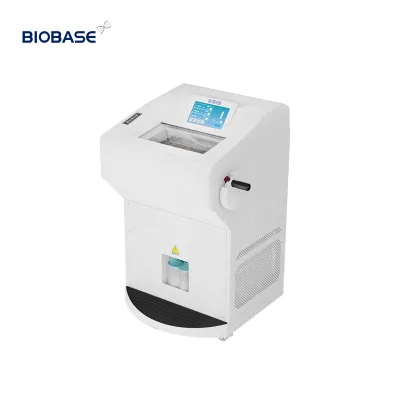

Biobase Auto Cryostat Microtome with Disinfection Function Cryostat Microtome for Pathology Lab
$7590.00 - $9555.00
MOQ: 1 Pieces

Portable Cryostat Microtome Rotary Microtome EL500m with 5.0 Inch Touch Screen
$7888.00 - $9788.00
MOQ: 1 Pieces


New Medical Fully Auto Tissue Cryostat Microtome with Freezing Station
$2999.00 - $9999.00
MOQ: 1 Pieces

New 2022 Medical Fully Auto Tissue Cryostat Microtome with Touch Screen Panel
$599.00 - $4999.00
MOQ: 1 Pieces

Tissue Cryostat Microtome for Pathological Section and Histology Touch Screen Laboratory Equipment
$600.00 - $5000.00
MOQ: 1 Pieces


Advanced Cryostat Microtome for Histopathology with CE Certification
$6700.00 - $7250.00
MOQ: 1 Pieces


OEM Medical Cryostat Microtome for Pathology Histology Frozen Sectioning
$7300.00 - $7500.00
MOQ: 1 Pieces

Biobase Pathology Equipment Cryostat Microtome Cryostat Microtome Use
$1588.00 - $2299.00
MOQ: 1 Pieces

Biobase Medical Automatic High-Precision Microtome Pathology Equipment Cryostat Microtome
$1500.00 - $2200.00
MOQ: 1 Pieces

Biobase Microtome Cryostat Microtome Freezing Tissue Microtome for Lab
$6000.00 - $8100.00
MOQ: 1 Pieces
Comprehensive Sourcing Guide
Strategic Sourcing Guide for Automatic Cryostat Microtomes with Digital Display
Understanding the Technical Landscape of Cryostat Microtomes
The acquisition of an automatic cryostat microtome with a digital display represents a significant investment in laboratory infrastructure, specifically for pathology and biological diagnostics. These instruments are engineered to facilitate the sectioning of frozen tissue samples with high precision, a critical requirement for rapid intraoperative diagnosis and research applications. The core functionality relies on a refrigeration unit that maintains the specimen at sub-zero temperatures, allowing for the cutting of hard or frozen tissues that would otherwise be difficult to section using standard microtomes.
When evaluating the technical specifications of these machines, buyers must focus on the sectioning thickness capabilities, as this directly impacts the quality of the resulting histological slides. The market offers models with varying thickness settings. For instance, specific configurations observed in the supply chain include a section thickness setting range of 0 to 100 micrometers, with a minimum setting capability of 0.5 micrometers. Other models may offer a sectioning thickness range of 0 to 60 micrometers or a range of 1 to 100 micrometers, often accompanied by a trimming thickness range of 10 to 400 micrometers. The precision of these cuts is paramount; observed precision error rates in the market are noted to be within ±5 units, a figure that buyers should verify against their specific quality assurance protocols.
The digital display component is a crucial differentiator in modern cryostats. It provides real-time feedback on section thickness, temperature, and operational status, reducing the reliance on manual dials and minimizing operator error. The design of the specimen holder is equally important. Some units feature a large freezing shelf design and utilize Peltier fast freezing stations to ensure rapid cooling of the tissue block. The specimen disc mechanism often includes color differentiation and zero identification features to streamline the workflow. Furthermore, the physical dimensions of the machine must align with the laboratory's spatial constraints. Observed external sizes for certain models range from approximately 565mm in width to 440mm in depth, while others may have larger footprints, such as 870mm by 1140mm. The maximum specimen size that can be accommodated is another key specification, with some units supporting blocks up to 50mm by 70mm.
Compliance and Certification Verification Protocols
In the medical device sector, compliance with international and regional standards is non-negotiable. When sourcing automatic cryostat microtomes, buyers must rigorously verify the certification status of the equipment. The supply chain data indicates that various models carry certifications such as CE, which is a mandatory conformity mark for products sold within the European Economic Area. Other observations include ISOCE and ISOScale certifications, though the specific scope of these certifications should be confirmed with the manufacturer. It is essential to understand that certification is not a universal attribute; not every listed product satisfies every standard, and buyers must ensure the specific model they intend to purchase holds the necessary approvals for their local regulatory environment.
The classification of the equipment also plays a role in compliance. These devices are often categorized under "Biological Diagnostics" or "Physiological Functions of Diagnosis and Monitoring Equipment." This classification dictates the regulatory pathway for importation and usage. For instance, a unit classified as a "Semi-Automatic Without Intelligent Sensing" device may have different regulatory requirements compared to fully automated systems with advanced sensing capabilities. Buyers should request the Certificate of Conformity and verify that the manufacturer adheres to the relevant standards for medical devices in their jurisdiction.
Standardization of the product dimensions and packaging is another aspect of compliance. Observed product standards include specific dimensional requirements, such as 830mm by 820mm by 1230mm for certain models, or 670mm by 550mm by 480mm for others. These standards often relate to the footprint and the internal working space. Additionally, the packaging standard is critical for ensuring the device arrives without damage. Common packaging methods include plywood crates, wooden crates, or standard cartons. The choice of packaging can influence the shipping costs and the insurance requirements for the transaction.
Cost Drivers and Pricing Dynamics
The pricing of automatic cryostat microtomes is influenced by a complex interplay of factors, including the level of automation, the precision of the sectioning mechanism, and the inclusion of digital interfaces. The observed price range in the market spans from approximately 599 USD to 18,000 USD. This wide variance reflects the diversity of the product offerings, from basic semi-automatic models to advanced fully automatic systems with digital displays and specialized freezing capabilities.
Several key cost drivers contribute to this price spectrum. First, the material composition of the machine affects the cost. High-grade steel is a common material used in the construction of these microtomes, providing durability and stability during the sectioning process. The complexity of the internal mechanics, such as the Peltier fast freezing station or the specific design of the specimen discs, also adds to the manufacturing cost. Second, the level of customization available can significantly impact the price. Products offering customized features, such as specific section thickness ranges or tailored digital interfaces, often command a higher price point.
The packaging and shipping logistics are additional cost factors. Units packaged in wooden crates or plywood boxes may incur higher shipping costs compared to those in standard cartons, depending on the weight and volume. The gross weight of the equipment, which can be around 40kg for certain models, directly influences freight charges. Furthermore, the origin of the product, whether from Liaoning Shenyang, Shandong, or other regions in China, can affect the pricing due to local manufacturing costs and export incentives. Buyers should also consider the total cost of ownership, which includes maintenance, warranty coverage, and the availability of spare parts.
Typical Applications and Operational Requirements
Automatic cryostat microtomes with digital displays are primarily utilized in laboratory settings where rapid and precise tissue sectioning is required. The primary application is in pathology laboratories, where these devices are essential for intraoperative consultations. The ability to quickly freeze and section tissue allows pathologists to provide immediate diagnostic feedback to surgeons, which is critical for determining the extent of tumor resection during surgery.
Beyond pathology, these microtomes are also used in biological diagnostics and research institutions. The classification of these devices as tools for "Physiological Functions of Diagnosis and Monitoring Equipment" highlights their role in understanding and monitoring biological processes. The specific functions of these machines, such as sectioning, trimming, fast forward, and fast backward operations, are designed to enhance the efficiency of the workflow. The digital display facilitates the monitoring of these functions, ensuring that the operator can maintain consistent section thickness and quality.
The operational requirements for these devices include a stable power supply, adequate ventilation for the refrigeration unit, and a clean, controlled environment to prevent contamination of the tissue samples. The specimen horizontal feed and vertical stroke dimensions, such as 28mm and 52mm respectively, dictate the size of the tissue blocks that can be processed. Laboratories must ensure that their workflow is optimized to accommodate these dimensions. Additionally, the time required for trimming, which can range from 10 to 400 micrometers, should be factored into the operational planning. Some models may have specific time requirements for certain operations, such as 60 minutes for a specific trimming range, which buyers should verify to ensure it aligns with their throughput needs.
Supplier Evaluation and Quality Assurance
Selecting the right supplier is a critical step in the procurement process. Buyers should evaluate suppliers based on their ability to provide products that meet the specified technical and compliance requirements. The supply chain data indicates that products originate from various locations in China, including Liaoning Shenyang and Shandong. While the origin is a factor, the reputation and reliability of the supplier are more important. Buyers should request detailed product catalogs, technical datasheets, and certification documents to verify the claims made by the supplier.
Quality assurance is another key consideration. The observed precision error of ±5 units is a benchmark that buyers should use to assess the quality of the equipment. However, this figure should be verified through independent testing or by reviewing the manufacturer's quality control reports. The warranty terms, such as a one-year warranty, are also indicative of the supplier's confidence in their product. Buyers should ensure that the warranty covers both parts and labor and that the supplier has a network of service technicians to provide timely support.
The customization capabilities of the supplier are also worth evaluating. Many suppliers offer customized options, such as specific section thickness ranges or tailored digital interfaces. Buyers should assess the supplier's ability to meet these customization requests without compromising the quality or performance of the device. The packaging standards, such as the use of wooden crates or plywood boxes, should also be verified to ensure that the equipment is protected during transit.
Long-Term Procurement and Lifecycle Management
The procurement of automatic cryostat microtomes is not a one-time transaction but the beginning of a long-term relationship with the supplier. Buyers should consider the lifecycle management of the equipment, including maintenance, calibration, and the availability of spare parts. The digital display and other electronic components may require periodic calibration to maintain accuracy. Buyers should inquire about the availability of calibration services and the cost associated with them.
The lead time for delivery is another important factor in long-term procurement. While the observed MOQ (Minimum Order Quantity) is often one piece, the lead time can vary depending on the supplier's production schedule and the customization requirements. Buyers should establish clear expectations regarding delivery times and ensure that the supplier has a reliable logistics network to meet these timelines.
Finally, buyers should consider the scalability of their procurement strategy. As the laboratory's needs evolve, the ability to upgrade or expand the equipment may be necessary. Buyers should evaluate whether the supplier offers upgrade paths or compatible accessories that can enhance the functionality of the existing microtome. The total cost of ownership, including the cost of consumables and maintenance, should be factored into the long-term financial planning. By taking a holistic approach to procurement, buyers can ensure that their investment in automatic cryostat microtomes delivers value over the long term.
Comparative Analysis of Key Product Attributes
To assist buyers in making informed decisions, the following table summarizes the key attributes of the observed product models. This comparison highlights the variations in specifications, certifications, and packaging that may influence the procurement decision.
| Attribute | Model YSD-CM3100 | Model YSD-6000 | Model BK-3000 | Model BK-2258 | Model BK-2328 |
|---|---|---|---|---|---|
| Product Name | Laboratory Pathology Cryostat Full-Auto Microtome | Rotary Microtome | Biological Diagnostics Equipment | Cryostat Microtome | Cryostat Microtome |
| Certification | CE | ISOCE | ISOCE | ISOScale | ISOScale |
| Section Thickness | 0~100um | 0~60μm | 1-100μm | 1-100μm | 1-100μm |
| Min Thickness | 0.5um | N/A | 1μm | 1μm | 1μm |
| Precision Error | ±5 | N/A | N/A | N/A | N/A |
| Max Specimen Size | 50*70mm | N/A | N/A | N/A | N/A |
| Structure | Portable | N/A | N/A | N/A | Large Freezing Shelf |
| Packing | Plywood | Wooden Crate | Standard Package | Carton or Wooden Box | Wooden/Carton |
| Origin | China | Liaoning Shenyang | China | Shandong, China | Shandong, China |
| Warranty | N/A | N/A | N/A | N/A | One Year |
| MOQ | 1 | 1 | 1 | 1 | One Piece |
This table illustrates the diversity in the market, with variations in section thickness ranges, precision, and packaging. Buyers should use this information as a starting point for further investigation, ensuring that the specific model they select meets their unique operational requirements. The presence of certifications like CE and ISOCE, along with the specific dimensions and material composition, provides a baseline for evaluating the quality and compliance of the equipment. By carefully analyzing these attributes, buyers can make a well-informed decision that aligns with their laboratory's needs and budget.
FAQs
What is the section thickness range for these microtomes?
The section thickness range varies by model, typically spanning 0 to 100 micrometers or 1 to 100 micrometers. Some specific units offer a range of 0 to 60 micrometers with a minimum setting capability of 0.5 micrometers for precise tissue slicing.
Which certifications are available for these laboratory devices?
Available certifications include CE, ISOCE, and ISOScale depending on the specific model. Buyers must verify that the selected unit holds the necessary approvals for their local regulatory environment, as not every listed product satisfies every standard.
Can these microtomes be customized for specific lab needs?
Yes, customization is available for many models to meet specific laboratory requirements. Buyers can request tailored features such as specific section thickness ranges or digital interfaces, though this may influence the final price and lead time.
How is the specimen size limited on these machines?
The maximum specimen size is typically limited to 50 by 70 millimeters for certain models. Other specifications indicate a specimen horizontal feed of 28 millimeters and a vertical stroke of 52 millimeters to accommodate standard tissue blocks.
What is the precision error rate for these instruments?
The observed precision error rate for these instruments is within plus or minus 5 units. This figure serves as a benchmark for quality assurance, though buyers should verify it through independent testing or manufacturer quality control reports.
Which packaging methods are used for shipping these units?
Packaging methods include plywood crates, wooden crates, and standard cartons depending on the model. The choice of packaging influences shipping costs and insurance requirements, with gross weights around 40 kilograms for certain configurations.
What is the minimum order quantity for these microtomes?
The minimum order quantity is one piece for most models in the supply chain. This allows buyers to purchase a single unit for immediate deployment without needing to meet higher volume thresholds.
Where are these automatic microtomes manufactured?
These devices are manufactured in China, with specific origins including Liaoning Shenyang and Shandong. The location of production can affect pricing due to local manufacturing costs and export incentives associated with these regions.