Source Automatic Multi-Colour DTF Printer for T-Shirts, Fabrics, and Films
Compare 30 automatic multi-colour DTF printers with varying print speeds, resolutions, and interface options. Buyers can evaluate models supporting Windows systems, USB connectivity, and pigment inks for diverse textile applications.
Key considerations
Products List


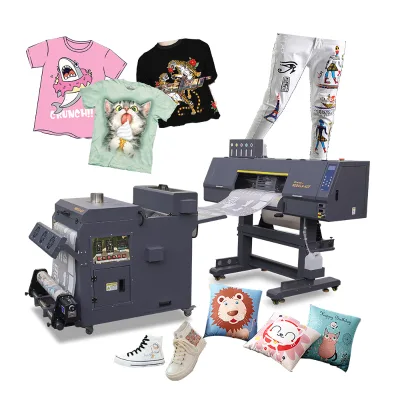

Dtf Printer 60cm Dtf Printer Printing Automatic Machine All in One Dtf Printer
$7746.00 - $7988.00
MOQ: 1 Pieces

Dtf Printer 2023 Dtf Printer Printing Machine A3 Dtf Printer with Oven
$955.00 - $1090.00
MOQ: 1 Pieces


Dtf Printer with White Ink Circulation System Direct to Film Printer
$2000.00 - $7000.00
MOQ: 1 Pieces

Comprehensive Sourcing Guide
Strategic Sourcing Guide for Automatic Multi-Colour DTF Printers
The global demand for Direct-to-Film (DTF) printing technology has surged, driven by the need for versatile, high-quality textile decoration that bridges the gap between traditional screen printing and digital sublimation. For procurement professionals seeking an automatic multi-colour DTF printer, the market presents a complex landscape of specifications, capabilities, and supplier claims. This guide provides a disciplined framework for evaluating potential equipment, grounded in observed product attributes and verified technical parameters. The objective is to equip buyers with the knowledge to distinguish between genuine high-performance machinery and generic listings, ensuring a procurement strategy that aligns with operational efficiency and long-term production goals.
Technical Architecture and Print Head Configuration
The core of any DTF printing system lies in its mechanical architecture and print head selection. Observed market data indicates a divergence in automation levels, with some units classified strictly as Automatic grade while others operate on a Semi-Automatic basis. This distinction is critical for production planning, as fully automatic systems reduce labor intervention and minimize the risk of human error during the printing cycle.
When evaluating the print engine, the specific configuration of the printheads determines the balance between speed, resolution, and cost. The supplied product data highlights several distinct configurations. Some high-end models utilize a single Epson F1080-A1 printhead, which offers a robust balance for specific applications. In contrast, other listings describe systems equipped with Four XP600/I1600/I3200 printheads. The use of multiple heads in an array is a common strategy to increase print width and throughput, particularly for wide-format applications. Buyers must verify the specific head model, as the I3200 series generally offers higher resolution and speed compared to the XP600, though the latter remains a cost-effective option for high-volume, lower-detail work.
Furthermore, the printing interface and structure play a pivotal role in system integration. Observed units feature USB2 or USB3 interfaces, with the latter providing faster data transfer rates essential for high-resolution 720*1440dpi prints. The mechanical structure is predominantly Platen Press, which provides a stable platform for printing on various media types, including Pet Film. The ability to handle Multi-Colour Printing Press capabilities is a standard requirement for DTF, allowing for full-spectrum color reproduction without the need for separate color stations.
Operational Specifications and Performance Metrics
Understanding the performance metrics of a DTF printer is essential for calculating return on investment and production capacity. The supplied data reveals a wide range of operational specifications that buyers must scrutinize. Print speed is a variable metric; some units are rated at 1.2 Square Meter/H, while others advertise speeds of 7.5 CPI (Characters Per Inch) or higher depending on the resolution setting. For a multi-colour workflow, the Print Resolution is a critical factor. High-end configurations support 8 Pass printing at 720*1440dpi, ensuring sharp details and smooth color gradients.
The physical dimensions of the machine are equally important for facility planning. Observed standard dimensions vary significantly, with some models measuring **1865(L)676(W)1840(H)mm and others at 1650mm(L)*730mm(W)*1550mm(H). The Painting Size or print width also varies, with common configurations supporting 330mm (A3 size) up to 60cm (A2 size) and wider formats. Buyers must ensure the selected machine fits within their designated workspace, accounting for the Working Environment requirements, which typically specify a temperature range of 15 to 35°C.
Power consumption is another operational consideration. Data indicates a power rating of 200W for certain compact models, while larger industrial units will naturally consume more. The RIP Software is the brain of the operation; standard configurations often include Riin 10.5, with options for Flexiprint or Maintop. Compatibility with Windows XP, Windows XP 64, Windows 10, and Windows 11 systems must be verified, as older operating systems may pose security risks or compatibility issues with modern drivers. The system must also support standard image formats such as JPG, TIF, and Pdf to ensure seamless workflow integration with design software.
Material Compatibility and Ink Systems
The versatility of a DTF printer is largely defined by its ink system and media compatibility. The supplied facts confirm that these machines utilize Pigment Ink, which is the industry standard for DTF due to its durability, color vibrancy, and adhesion properties on various textiles. The ink system must be compatible with the specific Print Media used, which is predominantly Pet Film. The quality of the film and the ink formulation directly impact the final transfer quality, including wash fastness and hand feel.
The Automatic Cleaning feature is a vital component of the ink system maintenance. Printheads are susceptible to clogging, especially when switching between colors or after periods of inactivity. A robust automatic cleaning cycle ensures consistent print quality and extends the lifespan of the expensive print heads. Buyers should verify the efficiency of the cleaning mechanism and the availability of waste ink management systems, as improper disposal can lead to environmental compliance issues.
Additionally, the Customization availability is a key attribute for many suppliers. This allows for tailored solutions, such as specific ink channel configurations or custom software integrations. The ability to customize the machine to specific production needs can significantly enhance the efficiency of the printing process, particularly for specialized applications.
Compliance, Certification, and Safety Standards
In the realm of industrial machinery, compliance and certification are non-negotiable elements of the procurement process. While the supplied data mentions CE certification as a background fact, buyers must treat this as a verification target rather than a guaranteed attribute for every listed product. The presence of a CE mark indicates conformity with health, safety, and environmental protection standards for products sold within the European Economic Area. However, the absence of explicit certification data in the product listing requires the buyer to request formal documentation from the supplier.
Safety standards also encompass the electrical and mechanical integrity of the machine. The prod_standard field in the data lists various metrics, including volume (1.48CBM) and weight (500kg or 325 KG). These figures are crucial for logistics planning and facility load-bearing assessments. The prod_packing method, described as Wooden, Wooden Box, or Plywood Case, is designed to protect the machine during international shipping, which is a common scenario given that many units originate from China, specifically regions like Zhejiang, Guangdong, and Zhengzhou.
Buyers must also consider the environmental impact of the printing process. The use of pigment inks and the disposal of waste ink and film scraps must align with local environmental regulations. While specific test results are not provided in the source data, buyers should request Material Safety Data Sheets (MSDS) for the inks and waste management guidelines from the supplier to ensure full compliance.
Supplier Evaluation and Geographic Considerations
The geographic origin of the machinery is a significant factor in the procurement strategy. The observed data indicates that the majority of these units originate from China, with specific manufacturing hubs in Zhejiang, Guangdong, and Zhengzhou. Each region may have different clusters of expertise and supply chain efficiencies. For instance, Guangdong is known for its advanced electronics and printing technology, while Zhejiang has a strong presence in textile machinery.
When evaluating suppliers, buyers should look beyond the basic product listing. The Brand name, such as Vigojet, may appear in some listings, but the market is also populated by OEM and ODM manufacturers. It is crucial to verify the supplier's reputation, after-sales support capabilities, and the availability of spare parts. The MOQ (Minimum Order Quantity) observed is 1, indicating that single-unit purchases are feasible, which is beneficial for small to medium enterprises testing the technology.
Lead times and shipping logistics are also critical. The prod_packing specifications, such as 790450460mm or 700500300mm, provide the necessary data for freight cost estimation. Buyers should request a detailed shipping quote that includes insurance and customs clearance, as these costs can significantly impact the total landed cost of the equipment.
Quality Control and Long-Term Procurement Strategy
Implementing a rigorous quality control (QC) process is essential before accepting delivery of the DTF printer. This should include a visual inspection of the Wooden or Plywood packaging for damage, followed by a functional test of the Platen Press structure and the Print Head alignment. Buyers should verify the Print Speed and Resolution against the claimed specifications by running test prints on Pet Film. The RIP Software should be tested for stability and compatibility with the buyer's existing Windows environment.
For long-term procurement, the focus should shift to the total cost of ownership (TCO). This includes not only the initial purchase price but also the cost of consumables, maintenance, and potential downtime. The Automatic Grade of the machine suggests a lower labor cost over time, but the reliability of the Automatic Cleaning system and the availability of replacement Epson F1080-A1 or XP600/I1600/I3200 heads are critical factors. Buyers should negotiate service level agreements (SLAs) that cover technical support, remote troubleshooting, and on-site maintenance.
The System Supported list, ranging from Windows XP to Windows 11, highlights the importance of software longevity. Older operating systems may become unsupported, leading to compatibility issues with future software updates. Therefore, prioritizing machines that support modern operating systems like Windows 10/11 is a prudent long-term strategy.
Cost Drivers and Market Positioning
The price range observed in the market, spanning from 885 to 11348 USD, reflects the vast diversity in machine capabilities, from entry-level desktop units to industrial-grade systems. The weight of the machine, ranging from 325 KG to 500 KG, is a strong indicator of the build quality and the size of the components, which directly influences the price. Higher-end models with Four printheads and advanced RIP Software options will naturally command a higher price point.
Buyers must be wary of prices that seem too good to be true, as they may indicate the use of inferior components or a lack of after-sales support. The Customization availability can also drive costs up, as tailored solutions require additional engineering and testing. However, the flexibility to customize the machine to specific production needs can ultimately reduce operational costs by increasing efficiency and reducing waste.
In conclusion, sourcing an automatic multi-colour DTF printer requires a meticulous approach that balances technical specifications, compliance requirements, and supplier reliability. By focusing on the verified attributes of print head configuration, operational performance, and material compatibility, buyers can make informed decisions that align with their production goals. The diverse range of options available in the market, from A3 to 60cm formats, offers solutions for various business scales, provided that the buyer conducts thorough due diligence and maintains a clear understanding of the total cost of ownership.
FAQs
What print resolution does the automatic multi-colour dtf printer support?
The machine supports a high resolution of 8 Pass at 720*1440dpi for sharp details. This specification ensures smooth color gradients suitable for professional textile decoration on Pet Film media.
Which ink type is used in the automatic multi-colour dtf printer?
These printers utilize Pigment Ink, which is the industry standard for durability and adhesion. This ink system ensures vibrant colors and wash fastness when applied to various textile surfaces.
Can the system run on Windows 11 operating systems?
Yes, the system configuration supports Windows 10 and Windows 11 for modern compatibility. Older models may also support Windows XP, but upgrading ensures better security and driver support for current workflows.
How is the automatic multi-colour dtf printer packed for shipping?
The equipment is secured in Wooden Boxes or Plywood Cases to prevent damage during transit. Specific packing dimensions vary by model, such as 790*450*460mm for compact units or larger crates for industrial sizes.
What is the typical print speed for the automatic multi-colour dtf printer?
Print speeds vary by configuration, with some units achieving 1.2 Square Meter per hour. Other models may advertise speeds like 7.5 CPI depending on the resolution setting and print head configuration used.
Which print heads are commonly used in these automatic multi-colour dtf printers?
Common configurations include single Epson F1080-A1 heads or arrays of four XP600, I1600, or I3200 heads. The choice of head impacts the balance between print speed, resolution, and overall production capacity.
What is the minimum order quantity for the automatic multi-colour dtf printer?
The observed minimum order quantity is 1 unit, allowing for single-unit purchases. This low MOQ makes the technology accessible for small to medium enterprises testing the market or starting new production lines.