Source Automatic UV Flatbed Printer for Leather, Ceramic, and Cards
Find 30 automatic uv flatbed printer models suitable for leather, ceramic, and card applications. Buyers can compare specifications like print speed, ink type, and automation grade to select the right machine for their production needs.
Key considerations
Products List


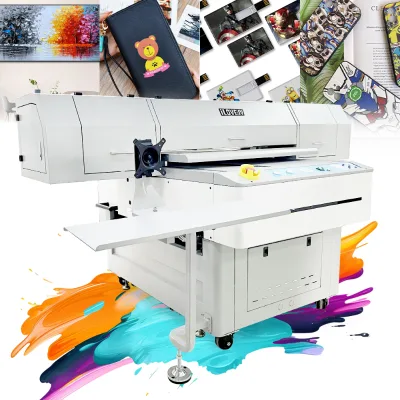
UV Flatbed Printer 60*90cm A1 AB Film UV Flatbed Printer for Souvenirs & Promotional
$1100.00 - $8300.00
MOQ: 1 Minimum
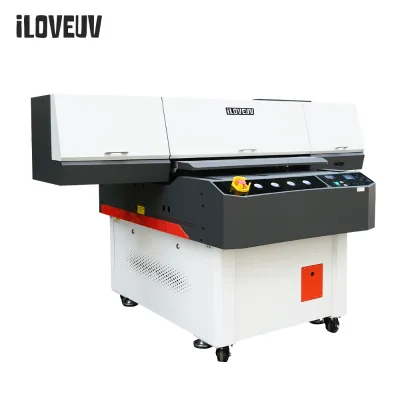
UV Textile Printer 9060 UV Printer Uv Dtf Printer A1 Size Factory Sell Package Bags Acrylic Wood
$1100.00 - $9300.00
MOQ: 1 Minimum
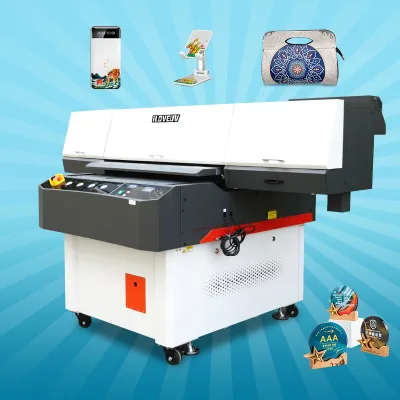


Comprehensive Sourcing Guide
Strategic Sourcing Guide for Automatic UV Flatbed Printers
The global demand for high-quality digital printing on diverse substrates has driven the adoption of automatic UV flatbed printers, particularly for industries requiring durable finishes on materials like leather and ceramic. For procurement professionals, navigating the market requires a disciplined approach that distinguishes between observed product attributes and generalized performance claims. This guide synthesizes available market data to provide a framework for evaluating suppliers, understanding technical specifications, and managing procurement risks without relying on unverified assertions.
Technical Architecture and Printing Capabilities
The core of an automatic UV flatbed printer lies in its mechanical structure and print head configuration. Based on observed market data, the industry utilizes distinct structural designs, primarily the Flat-Bed Cylinder Press and the Platen Press. The Flat-Bed Cylinder Press is often associated with high-volume applications, offering a robust framework for handling rigid substrates. In contrast, the Platen Press structure is frequently observed in semi-automatic configurations, which may offer different operational dynamics for specific material types.
Print head technology is a critical determinant of print quality and speed. The market features a variety of printhead models, including the XP600, I3200, I1600, and CE4m. These heads vary in resolution and throughput capabilities. For instance, specific configurations utilizing the XP600 or I3200-U1 heads are observed to support printing speeds ranging from 7.5 CPI to approximately 3 square meters per hour. When sourcing for leather and ceramic applications, buyers must verify the compatibility of the print head with the specific ink viscosity and substrate absorption rates. The ink type is predominantly LED Environmental UV Ink, which requires immediate curing under UV light to ensure adhesion and durability on non-porous surfaces like ceramic and treated leather.
The printing interface is another vital technical component. Observed data indicates a transition from USB2 to USB3 interfaces, which significantly impacts data transfer rates and the ability to handle large, high-resolution image files without bottlenecks. Furthermore, the maximum printing height is a crucial constraint; observed specifications list a maximum height of 30cm, which defines the thickness of the ceramic tiles or leather goods that can be accommodated within the printing bed. Buyers must ensure their target substrates fall within these physical constraints before proceeding with a purchase.
Substrate Versatility and Operational Specifications
The versatility of these machines is often highlighted by their ability to handle multiple media types. While the core keyword focuses on leather and ceramic, the observed product attributes suggest a broader capability including paper, labels, and cards. The media detector systems, featuring detection and auto-lifting capabilities, are essential for maintaining consistent print quality across varying substrate thicknesses. This automation reduces the need for manual calibration, which is particularly beneficial when switching between different materials in a single production run.
The operation panel is almost universally designed as a Touch Screen, providing an intuitive interface for operators to manage print jobs, adjust ink levels, and monitor system status. The system supported is predominantly Windows XP 64-bit, a legacy standard that buyers must verify against their current IT infrastructure. If a facility has migrated to newer operating systems, compatibility checks are mandatory to ensure seamless integration.
In terms of power and environmental requirements, the standard voltage is observed at 220V, with power supply options including AC 220V/50Hz/60Hz. This flexibility is crucial for international procurement, as it allows the equipment to operate in regions with different grid standards. The ink capacity is noted to be approximately 5 liters per color, a figure that influences the frequency of refilling and the overall cost of ownership. For high-volume production of ceramic tiles or leather accessories, understanding the ink consumption rate relative to the print speed is essential for inventory planning.
Compliance, Certification, and Safety Standards
In the B2B procurement of industrial machinery, compliance is non-negotiable. The observed market data includes the CE certification, which indicates that the product meets the health, safety, and environmental protection standards for products sold within the European Economic Area. Buyers should request valid certification documents to verify that the specific unit being purchased adheres to these standards. It is important to note that while CE is a common observation, it should not be assumed to be present on every unit without explicit verification from the supplier.
Safety standards extend beyond electrical certification. The use of LED Environmental UV Ink implies specific handling protocols regarding UV exposure and chemical safety. The machinery must be equipped with appropriate shielding to prevent UV radiation leakage, which can be hazardous to operators. Additionally, the ink type being "environmental" suggests compliance with certain VOC (Volatile Organic Compounds) regulations, though buyers must confirm the specific chemical composition and safety data sheets (SDS) for the ink being used.
Cost Drivers and Pricing Dynamics
The pricing for automatic UV flatbed printers in the observed market ranges from 1,100 to 50,000 USD. This wide disparity is driven by several factors, including the print head model, the complexity of the mechanical structure, and the level of automation. A machine with a single-pass configuration and advanced I3200 heads will command a higher price point compared to a semi-automatic unit with an XP600 head.
Other cost drivers include the customization options available. The market data confirms that customization is available, which can significantly impact the final price. Customizations might involve specific software integrations, modified bed sizes, or specialized ink systems tailored for unique substrate requirements. The packing method, observed as Plywood, Professional Wood Crafcase, or Wooden Frame with Waterproof Film, also contributes to the cost, as robust packaging is necessary to protect the delicate print heads and optical components during international shipping.
Supplier Evaluation and Origin Verification
When evaluating potential suppliers, the origin of the product is a key data point. The observed data lists origins in Ningbo, Wuhan, and a general "China" designation. These locations are known manufacturing hubs, but buyers should verify the specific factory location to assess logistical capabilities and potential supply chain risks. The production standard dimensions observed vary, with some units listed at 600x900mm and others at 1.7x0.75x1.5m. These dimensions refer to the machine footprint or the standard working area, which must be reconciled with the buyer's available floor space.
Supplier reliability is further indicated by the Minimum Order Quantity (MOQ) and delivery timelines. The observed MOQ ranges from 1 to 3 units, suggesting a market that accommodates both pilot testing and bulk procurement. Delivery times are observed to be around 30 days, a standard lead time that buyers should incorporate into their production planning. However, this timeline can fluctuate based on the level of customization and the current global supply chain status. Buyers should treat these figures as benchmarks rather than guarantees and request written confirmation of lead times in the purchase agreement.
Quality Control and Long-Term Procurement Considerations
Quality control in the procurement of UV flatbed printers extends beyond the initial inspection of the machine. It involves verifying the condition of the equipment, which is listed as "New" in the observed data. Buyers must ensure that the machine is indeed new and not refurbished, as this affects the warranty and expected lifespan. The weight of the machines varies, with observations ranging from 30kg to 80kg, indicating differences in build quality and stability. Heavier units often provide better vibration damping, which is critical for high-resolution printing on rigid substrates like ceramic.
Long-term procurement considerations include the availability of spare parts and technical support. The specific print head models (XP600, I3200, etc.) are industry-standard components, but buyers should confirm the supplier's ability to source replacements quickly. The ink system, with its 5L capacity per color, requires a steady supply of compatible inks. Buyers should negotiate supply agreements for consumables to avoid production stoppages.
Furthermore, the condition of the machine upon arrival must be verified against the packing standards. Whether the unit is shipped in a Plywood case, a Professional Wood Crafcase, or a Wooden Frame with Waterproof Film, the packaging must be inspected for damage. Any compromise in packaging could indicate potential internal damage to the sensitive print heads or the flat-bed structure.
Comparative Analysis of Observed Specifications
To facilitate decision-making, the following table summarizes the key technical and logistical attributes observed in the market for automatic UV flatbed printers. This comparison highlights the variability in specifications that buyers must navigate.
| Attribute | Observation 1 | Observation 2 | Observation 3 | Observation 4 |
|---|---|---|---|---|
| Structure | Flat-Bed Cylinder Press | Platen Press | Flat-Bed Cylinder Press | Customized |
| Automatic Grade | Automatic | Semi-Automatic | Automatic | Automatic |
| Print Head | XP600/I3200/I1600/CE4m | XP600 | I3200-U1 | Single Pass |
| Interface | USB3 | USB2 | USB3 | USB3 |
| Printing Speed | 7.5 CPI | 7.5 CPI | 3m²/H | Variable |
| Max Printing Height | 30cm | N/A | N/A | N/A |
| System Supported | Windows XP 64 | Windows XP | Windows XP | N/A |
| Ink Type | LED Environmental UV Ink | LED Environmental UV Ink | LED Environmental UV Ink | LED Environmental UV Ink |
| Origin | Ningbo | Wuhan China | China | N/A |
| Certification | CE | N/A | N/A | N/A |
| MOQ | 1 | 1 | 1 | 1 |
| Delivery Time | 30 Days | N/A | N/A | N/A |
| Packing | Plywood | Professional Wood Crafcase | Wooden Box | Wooden Frame + Film |
This table underscores the importance of detailed specification matching. A buyer seeking a high-speed, fully automatic solution for ceramic tiles might prioritize Observation 1 or 4, while a buyer focusing on leather with a lower budget might consider Observation 2. The variation in system support (Windows XP) suggests that legacy compatibility is a common constraint, requiring careful IT planning.
Conclusion
Sourcing an Automatic UV Flatbed Printer for Leather and Ceramic applications requires a meticulous review of technical specifications, compliance documentation, and supplier capabilities. The market offers a diverse range of options, from semi-automatic platen presses to fully automatic flat-bed cylinder presses, each with distinct advantages and limitations. By focusing on verified attributes such as print head models, interface standards, and certification status, buyers can mitigate risks and ensure the selected equipment meets their production needs. The wide price range and variable lead times necessitate a thorough evaluation of the total cost of ownership, including consumables and maintenance. Ultimately, successful procurement depends on aligning the observed product capabilities with the specific operational requirements of the buyer's facility, ensuring a seamless integration of advanced digital printing technology into their workflow.
FAQs
What printing structures are available for automatic UV flatbed printers?
The available structures include Flat-Bed Cylinder Press and Platen Press configurations. Flat-Bed Cylinder Press units are often automatic, while Platen Press models may be semi-automatic, allowing buyers to select based on their specific substrate handling needs.
Which print head models are commonly used in these printers?
Commonly observed print head models include XP600, I3200, I1600, and CE4m. Specific configurations may utilize XP600 or I3200-U1 heads, which support varying print speeds and resolutions suitable for leather and ceramic applications.
Can these printers operate on standard electrical power supplies?
Yes, the standard voltage is 220V with power supply options including AC 220V/50Hz/60Hz. This flexibility allows the equipment to operate in regions with different grid standards without requiring additional transformers.
What is the maximum printing height supported by these machines?
The maximum printing height is observed to be 30cm. This constraint defines the thickness of ceramic tiles or leather goods that can be accommodated within the printing bed during operation.
Are customization options available for these printing machines?
Customization is available for these machines, allowing for tailored specifications. Buyers can request modifications to software integrations, bed sizes, or specialized ink systems to meet unique substrate requirements.
What certification standards do these printers typically meet?
Some observed units carry CE certification, indicating compliance with health and safety standards for the European Economic Area. Buyers should verify valid certification documents for specific units before purchase.
How long is the typical delivery time for these printers?
The typical delivery time is observed to be around 30 days. This timeline serves as a benchmark for production planning, though it may fluctuate based on customization levels and supply chain status.