Source Automobile Traffic Reflective Triangle for Cars, Trucks, and Parking Lots
Browse 30 listings for the Automobile Traffic Reflective Triangle and compare foldable ABS designs, reflective visibility, CE and EMARK certifications, model numbers, packing sizes, and MOQ ranges. Find suitable warning triangles for cars, buses, trucks, highways, and parking lot safety use.
Updated
Key considerations
Products List

Reflective Red Traffic Warning Triangle Sign Car Safety Warning Triangle
$0.95 - $1.10
MOQ: 1000 Pieces


Traffic Road Safety Sign Reflective Warning Triangle for Truck Car Meet
$1.00 - $2.00
MOQ: 1000 Pieces

Roadway Reflector Emergency Warning Sign Triangle for Traffic Safety Car
$1.00 - $2.00
MOQ: 1000 Pieces


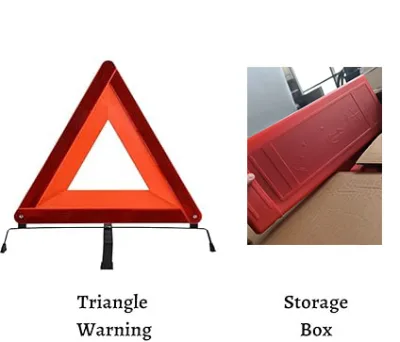
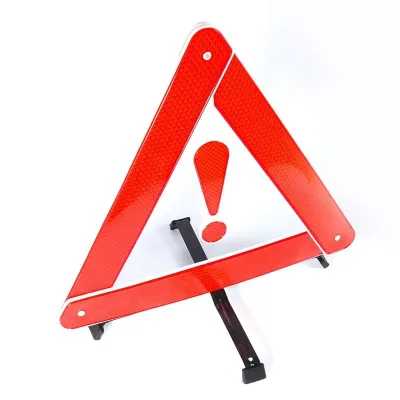
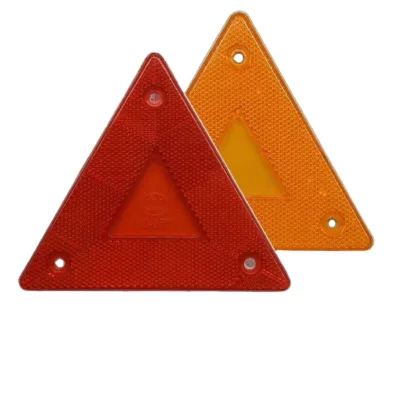
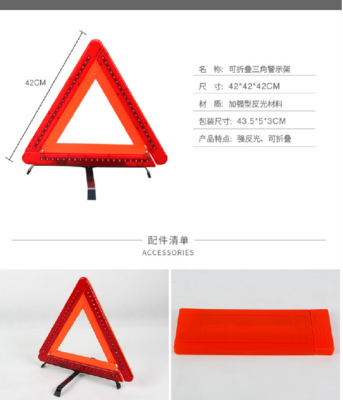


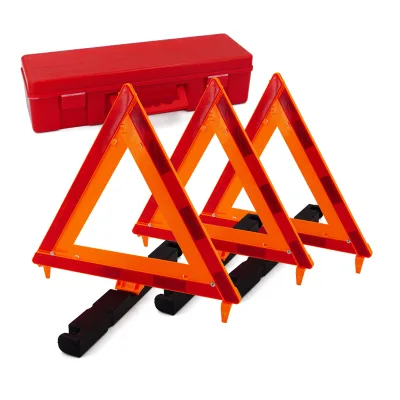

Road Traffic Emergency Reflective Foldable Car Safety Warning Caution Triangle
$1.00 - $2.20
MOQ: 300 Pieces


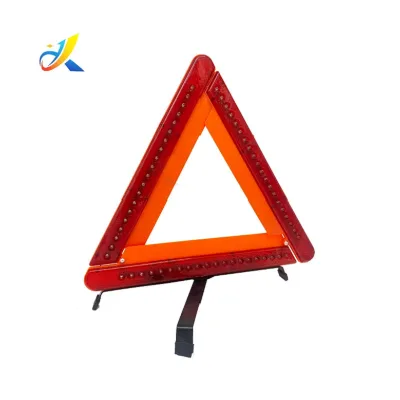
Comprehensive Sourcing Guide
Automobile Traffic Reflective Triangle Sourcing Guide
The Automobile Traffic Reflective Triangle remains one of the most frequently reordered safety accessories in the automotive aftermarket, serving as a mandatory emergency warning device for passenger vehicles, buses, and trucks. For B2B buyers, the category offers relatively low unit costs, compact packaging, and steady replacement demand driven by vehicle registration requirements and fleet safety programs. This guide consolidates the observable signals from current product listings into a practical procurement framework, covering scope, technical verification, documentation, and supplier qualification.
The listings observed for this category cluster around folding warning triangles in the 42–43 cm class, made primarily from ABS with PMMA reflective faces, originating in Zhejiang, China. Price observations span roughly $0.40 to $10 per unit with minimum orders between 100 and 1,000 pieces, which gives buyers meaningful room to position products at different quality tiers. Use the following sections to translate those signals into a defensible sourcing decision rather than relying on listing claims alone.
Product Scope and Observed Listing Signals
The observed product scope centers on foldable warning traffic signs designed for roadside emergency use, with listings explicitly naming applications on highways and in parking lots and usage across automobiles, buses, and trucks. Model identifiers in the listings include RT007, RT806, RT807, S-1623, S-1624, S-1626, S-1627, XY8001, XY-1002B, and TWT90017, indicating a market of multiple competing molds and configurations rather than a single standardized design. Buyers should treat the model number as the anchor for all technical discussions, since attributes such as size, weight, and packaging vary between models even within one supplier's range.
Several consistent listing attributes deserve attention. Foldability appears as a standard feature, supporting compact storage inside a vehicle. Reflective performance is highlighted through claims such as view distance exceeding 800 meters, though this is a supplier-stated observation rather than a verified figure. Custom logo acceptance is explicitly noted in some listings, which matters for buyers building private-label programs. Packing formats are typically box or carton, with one listing specifying 40 pieces per carton and carton dimensions of 46.5×33×20 cm — data that directly affects container loading calculations.
Technical Specifications to Verify
Size is the most consequential specification to pin down before ordering. The observed listings describe the common folded or assembled class at 42×42×42, 42.5×42.5×42.5, and 43×43×43 cm, with side lengths of 420 mm and overall product lengths around 420 mm, plus a smaller 15×15×15 cm triangle in the set. Confirm the assembled dimensions against the requirements of your destination market, because a triangle that measures below the legal minimum in a target country can be rejected at vehicle inspection, effectively unsellable stock. Request dimensioned drawings for each model rather than relying on rounded catalog figures.
Weight and material composition drive both durability and shipping cost. Observed unit weights range from 325 g to 350 g, and materials span plain ABS to an ABS + PMMA + iron bracket combination. Ask specifically how the reflective face is attached, whether the iron bracket is coated against corrosion, and how the hinge mechanism performs after repeated folding cycles. Since listings state "no power required" and rely on retroreflection, verify the reflective film type and grade in writing, and request samples so your team can compare brightness and hinge strength across candidate models before committing to a carton-level order.
Compliance and Safety Documentation
Certification is well represented in the observed listings but inconsistent across models, which is the single most important gap to close before placing an order. Observed claims include EMARK, CE, and a combined CE + EMARK designation on some models, while one listing cites TS/ISO16949, E-Mark, and CCC. Because certification status is attached to specific models rather than to the category as a whole, ask the supplier to state which certifications apply to the exact model number you intend to purchase, and to provide certificate copies showing the model designation, issuing body, and validity period.
Beyond product certificates, verify that the reflective performance claimed in listings — such as view distance greater than 800 meters — is backed by test documentation from a recognized laboratory rather than supplier assertions. If you resell into markets with mandatory roadside warning triangle regulations, confirm whether the destination market requires a specific approval mark and whether the supplied certificate matches it. Also request the supplier's quality management documentation, such as ISO-type system certificates, to understand whether production is audited. Buyers should never accept a listing-level certification badge as a substitute for model-specific, dated documentation.
Cost Drivers and Commercial Terms
The observed price band of $0.40 to $10 within a single keyword reflects real differentiation in this category: material composition (plain ABS versus ABS with PMMA reflective sheeting and an iron bracket), certification overhead, reflective film grade, and packaging all move the unit price. Buyers should construct a comparison on total landed cost rather than unit price alone. One listing specifies a single gross weight of 18 kg per package with a single-item selling unit and a single package size of 128×22×22 cm for one model, while another specifies 40 pieces per carton at 46.5×33×20 cm — figures that change freight economics significantly between models.
Commercial terms to confirm in writing include the minimum order quantity, which spans 100 to 1,000 pieces in the observed range, packing format (box versus carton, and pieces per carton), the stated export standard for packing, and customization charges for logos or private-label artwork. Origin is consistently listed as Zhejiang, China, so factor inland consolidation and export documentation into your landed cost model. Request a formal quotation that separates unit price, packaging, and printing costs so later customization requests do not trigger unpriced changes.
Supplier Qualification and Quality Control
Supplier qualification for this category should start with the intersection of location and specialization. The observed listings point to Zhejiang Province — with one listing naming Sanmen as the place of origin — which is a known cluster for traffic safety products. Shortlisted suppliers should be asked for their business license scope, years manufacturing warning triangles specifically (not just general plastics), and brand identification; one listing names "XY" as the brand, which shows that some manufacturers sell under their own marks and may be open to parallel private-label production. Ask for factory photos or audit reports covering injection molding, reflective film application, and assembly lines.
Quality control planning should be built around the failure modes specific to folding warning triangles: hinge breakage, reflective film delamination, leg stability on uneven road surfaces, and dimensional drift below legal minimums. Define an inspection protocol covering assembled dimensions against the 420–430 mm class specifications, unit weight against the 325–350 g observed range, retroreflective brightness against the certified standard, and a folding-cycle endurance test. Pre-shipment inspection with a defined AQL, plus retain samples from each production lot, gives you a documented basis for claims if field failures emerge after distribution.
Long-Term Procurement Checks
Sustained value in this category comes from treating the initial order as the start of a managed supply relationship rather than a one-off transaction. Reconfirm certification validity annually, since approvals such as EMARK and CE carry expiry and revision cycles, and a lapsed certificate can strand inventory at customs or with retail compliance teams. Track mold condition with your supplier — hinges and reflective faces degrade across production runs — and request first-article inspection whenever a new production batch starts, especially if the supplier introduces alternate material sources for ABS or PMMA.
Operationally, maintain a model-level specification sheet for every SKU you carry, recording dimensions, weight, material composition, packing configuration, and certificate numbers, so replacement quotes can be compared line by line. Monitor packaging consistency against stated export standards and carton dimensions, because silent changes in carton size disrupt container plans. Finally, review the market periodically: the breadth of model numbers and price points in current listings suggests active competition and frequent new mold introductions, so an annual re-quote across your approved supplier base protects margin and keeps your assortment aligned with prevailing regulatory requirements in each destination market.
FAQs
What certifications do these automobile traffic reflective triangles carry?
Listed products show CE and EMARK certification, with some listings referencing E-Mark, CCC, and TS/ISO16949 certificates. Certification coverage varies by model, so buyers should confirm the exact certificate status for the specific model number before ordering. Requesting certificate copies alongside the quotation is a practical way to verify compliance for automotive aftermarket or OEM requirements.
What materials are used in the reflective triangle construction?
The triangles are primarily made of ABS plastic, with some models combining ABS, PMMA, and an iron bracket for the stand. One smaller triangle sign variant uses PVC. The backplane is plastic, and the reflective surface provides high-visibility reflection. Confirm the material composition per model, since durability and weight differ between ABS-only and ABS with metal bracket versions.
How visible is the warning triangle at night or in poor conditions?
Listed warning triangles are reflective with a stated view distance of more than 800 meters, so drivers can see them from a long distance on highways or in parking lots. Actual visibility depends on headlight intensity, weather, and placement angle. Position the triangle at the recommended distance behind the vehicle to maximize the reflective return to approaching traffic.
Can I customize the traffic warning triangles with my own logo?
Yes, customization is available and custom logo printing is accepted on listed models. Buyers typically provide artwork files and confirm logo size, color, and placement before production. Custom orders may affect unit price and lead time, so discuss artwork requirements and sample approval with the supplier. Minimum order quantities for customized versions should also be confirmed in advance.
What are the packing and carton details for these warning triangles?
Products are packed in boxes and cartons, with export standard packing. Observed carton configurations include 40 pieces per carton with carton dimensions of 46.5X33X20cm, and another specification of 43X43X43cm. A single package size example is 128X22X22 cm with a single gross weight of 18 kg. Confirm packing configuration per model since carton quantities and dimensions vary.
What is the size and weight range of the reflective warning triangles?
Full-size warning triangles measure around 42 to 43 cm per side, with listed options of 42*42*42, 42.5*42.5*42.5, and 43*43*43cm, plus a length of 420mm. Weights include 325g and 350g depending on the model, while a smaller triangle sign measures 15cm per side. The triangles are foldable for compact storage in vehicles.
Which vehicles can use these reflective warning triangles?
They are suitable for automobiles, buses, and trucks, and are applied on highways and in parking lots. The triangles require no power supply, so they work anywhere without batteries or wiring. When selecting a model, check the size and certification requirements for the target vehicle type, as commercial vehicles in regulated markets often require EMARK-certified triangles.
How should I fold and assemble the warning triangle for use?
The triangles are foldable and designed to be easily handled and assembled. Typically you unfold the bracket legs until they lock into position, then stand the triangle upright facing oncoming traffic. Practice assembly before an emergency so setup takes seconds. After use, fold the legs flat for compact storage in the vehicle's trunk or roadside kit.