Find Automotive Repair Fuel Injector for Diesel Trucks, Cars, and Machinery
Source Automotive Repair Fuel Injector listings covering diesel passenger cars, trucks, and construction equipment. Compare OEM-standard sizes, metal body materials, flow rate options, warranty terms, MOQ from 1 to 100 units, customization services, and observed prices from $0.01 to $1,650 across 30 products before requesting supplier quotes.
Updated
Key considerations
Products List


$150.00 - $650.00
MOQ: 1 Pieces







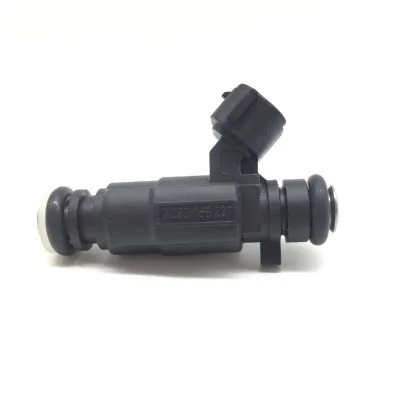

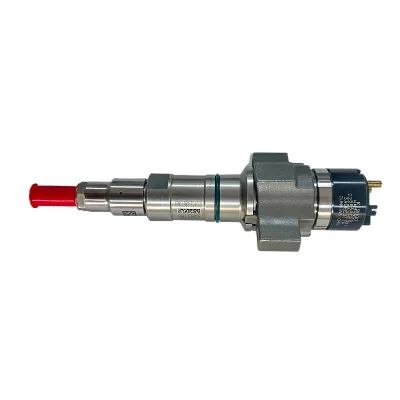
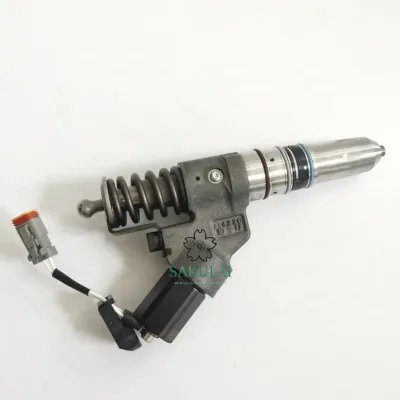
Comprehensive Sourcing Guide
Automotive Repair Fuel Injector Sourcing Guide
Sourcing automotive repair fuel injectors for replacement and repair programs requires balancing technical fit, commercial flexibility, and quality assurance across a fragmented supplier base. This guide distills the observed signals from current product listings into practical procurement steps, covering what to verify before ordering, which documentation to request, and how to structure long-term supply relationships. Because fuel injectors sit at the intersection of engine performance and emissions compliance, buyers should treat each listing attribute as an observation to confirm rather than a guaranteed specification. The listings reviewed include both new and remanufactured condition options, diesel-focused components, and customization services, which shapes the qualification approach described in the sections below. Whether you procure single units for workshop distribution or bulk orders for regional parts networks, the same disciplined verification sequence applies.
The scope of this guide is deliberately anchored to the supplied product-page facts: injector models such as 4903472, 4061851, 4903475, 4903319, and 295050-1200; OE references including SFOBW21236 and 0 445 110 146; origin regions of Shandong and Zhengzhou, China; and packing formats ranging from standard export cartons to wooden boxes. Where a listing does not state a value, the guidance directs buyers to request it explicitly from the supplier rather than assume an industry default.
Product Scope and Observed Listing Signals
The observed listings describe fuel injectors positioned primarily for replace and repair purposes, with diesel as the stated fuel type for key items and multi-cylinder, four-stroke engine configurations referenced. Several listings flag universal fitment and note compatibility with Chinese car models, which signals a mixed portfolio of direct-replacement and adaptable parts. Buyers should map each model number to the intended engine application before committing, because "universal fitment" claims still require confirmation against the target vehicle's injector body, connector, and mounting geometry. Condition varies across listings—some items are offered strictly as new, while others state "New/Remaufacture"—so the condition attribute must be locked down line by line in the purchase order rather than at the catalog level.
Commercial signals are equally varied. Observed minimum order quantities range from single-item sales to MOQs of 6 and 6PCS per listing, with observed price points spanning from nominal sample-level figures up to roughly $1,650 across the broader listing set. Customization is explicitly available on multiple listings, extending to logo, outer packaging, and pattern services. Shipping methods noted include DHL, FedEx, and EMS, and estimated delivery windows range from 3–7 work days to 7–15 work days. These ranges are observations from listings, not commitments; each supplier must confirm current terms in writing.
Technical Specifications to Verify
Begin verification with the identity chain: model number, OE number, and engine code. The listings provide concrete anchors—model 4903472 paired with engine code 298526, model SFOBW21236 doubling as the OE number, and codes such as 0 445 110 146 and 0 445 120 297—that should match the part you are replacing exactly. Request dimensional confirmation as well; observed package standards include 26X13X6 Cm and 45.00cm × 45.00cm × 50.00cm, but packaging dimensions are not injector dimensions, so ask for the component's own OEM-standard measurements. Material matters for durability: listings cite metal construction and steel body material, which the buyer should confirm down to the nozzle and internal component grades.
Performance-related attributes in the listings require the closest scrutiny. One listing states a custom flow rate, and another reports a current value of 0—both are red flags for ambiguity. Buyers should request the flow specification, spray pattern characteristics, and electrical resistance or drive compatibility for the intended engine, and insist that remanufactured items be tested before dispatch. Stroke (four-stroke) and cylinder configuration should be cross-checked against the vehicle application sheet the supplier provides, not inferred from photographs alone.
Compliance and Safety Documentation
Certification claims appear inconsistently across the observed listings: one cites ISO 9001-2015, another lists "ISOTSComponent:Fuel Injection Device," and others omit certification entirely. Treat these as claims to verify with current certificates, not as established status. Ask each supplier for the valid, dated certificate document and confirm the certification scope actually covers fuel injection components rather than a broader factory registration. For safety-relevant parts like injectors, buyers should also request material declarations confirming the steel body composition and any fuel-contact material compliance the supplier can support, without assuming a standard applies unless documentation is produced.
Remanufactured condition introduces additional documentation obligations. Listings that state "New/Remaufacture" should be paired with a supplier explanation of the remanufacturing process—disassembly, cleaning, replacement of wear components, and test procedures—even though the listings do not describe these steps. Warranty terms offer a partial proxy for supplier confidence: observed terms range from a flat 3 (months) to "3months-1year," so clarify exactly what the warranty covers, the claim process, and whether it differs between new and remanufactured units. Record the agreed warranty duration on the invoice, not only the listing page.
Cost Drivers and Commercial Terms
Price dispersion in the observed set is extreme, from nominal figures to approximately $1,650, which tells buyers that listings are not price-comparable without specification alignment. The main cost drivers to probe are condition (new versus remanufactured), flow-rate customization, packaging choice (carton versus wooden box), and order quantity relative to the stated MOQ of 1 to 6 units depending on the listing. Customization services—logo, outer packaging, and pattern—typically affect unit cost and should be quoted separately from the base part price. Always request a quotation that breaks out product cost, packaging, and shipping to the destination rather than accepting a single blended figure.
Commercial terms to lock in writing include the MOQ, the selling unit (one listing specifies single-item sales), the production or dispatch window (observed Etd ranges of 3–7 and 7–15 work days), and the carrier selection among DHL, FedEx, EMS, or equivalents. Packing format should be tied to transit risk: observed options include Standard Export Packaging, Carton, Carton Packaging, Wooden Box, and one listing's "Vovt" packing, which should be defined precisely before payment. Payment terms, incoterms, and liability for transit damage are not stated in the listings and must be negotiated explicitly.
Supplier Qualification and Quality Control
Supplier geography in the observed set concentrates in Shandong and Zhengzhou, China, but location alone is not a qualification signal. A practical vetting sequence starts with document review—business license, the ISO 9001-2015 certificate where claimed, and product-specific certification—followed by a request for photographs of actual production or stock rather than catalog renders. For high-volume or safety-critical programs, an on-site or third-party factory audit should confirm the supplier actually manufactures or properly remanufactures injectors rather than trading them. Cross-check the stated model numbers and OE references against an independent parts catalog to detect mislabeled or copied listings.
Quality control should be enforced contractually, not assumed. Require pre-shipment inspection for each batch, with a defined sampling plan and photographic or video evidence of the test bench results for injectors in the shipment. For remanufactured units, demand test documentation per unit or per lot. Incoming inspection at the buyer's warehouse should verify packaging integrity against the agreed format, label accuracy against the model and OE numbers, and a functional sample check before full inventory acceptance. Establish a defect-reporting channel and a corrective-action expectation before the first order, so that quality issues have a predefined resolution path instead of ad hoc negotiation.
Long-Term Procurement Checks
Long-term supply stability depends on monitoring signals that listings alone cannot provide. Track on-time delivery performance against the observed Etd windows (3–7 and 7–15 work days) as a baseline, and requalify suppliers whose actual lead times drift persistently. Maintain a specification sheet for each injector model in your assortment—including OE number, engine code, material, flow specification, and agreed packaging—so that any supplier change is validated against a fixed internal standard rather than a new listing's claims. Review warranty claim rates quarterly; a rising claim rate on remanufactured units is an early indicator of process drift at the supplier.
Renewal and compliance checks should be calendarized. Certificates such as ISO 9001-2015 expire, so record the certificate expiry dates of qualified suppliers and request updated documents ahead of renewal rather than after. Reconfirm pricing and MOQ at each reorder cycle, because listed terms (MOQ 1 to 6, customization availability) can change without notice. Finally, keep a documented audit trail—quotations, certificates, inspection reports, and correspondence—for each supplier, enabling objective annual reviews and defensible sourcing decisions if product liability questions arise from downstream repairs.
FAQs
How do I choose the right fuel injector for repair purposes?
Match the injector to your vehicle's engine code and OE number first. This listing references engine code 298526 and OE number SFOBW21236, so verify those against your original part. Confirm the fuel type, which here is diesel, and check whether universal fitment applies. When in doubt, compare your removed injector's markings before ordering.
What fuel types and engine configurations do these injectors support?
These fuel injectors are designed for diesel engines with 4-stroke cycles and multi-cylinder configurations. The listed condition can be new or remanufactured depending on the item. Before purchasing, confirm the model number, such as 4903472, 4903475, or 0 445 110 146, matches your engine's requirements to ensure compatibility and proper spray performance.
Can I order fuel injectors with custom flow rates or branding?
Yes, customization is available. Buyers can request custom flow rates, and customized services cover logo, outer packaging, and pattern changes. This suits distributors wanting private-label Automotive Repair Fuel Injector stock. Discuss customization requirements with the supplier before ordering, since customized orders may affect minimum order quantities and delivery time compared with standard catalog items.
What is the minimum order quantity for these injectors?
Minimum order quantities vary by listing, with observed MOQs ranging from 1 to 100 units, and some listings specify 6 pieces. Selling units are typically single items, so small trial orders are possible. Confirm the exact MOQ for the specific model number you need before placing a purchase order, as it differs between products.
How are the injectors packed and shipped?
Packing options include standard export packaging, carton packaging, wooden boxes, and Vovt packing, depending on the listing. Shipping is available through couriers such as DHL, FedEx, and EMS. Wooden box packing is generally used for heavier items. Confirm the packing method for your chosen model and request shipping costs based on your destination and order volume.
What warranty and certification coverage do these products carry?
Warranty terms range from 3 months to 1 year depending on the listing, with some items showing a 3-month or 3-year figure. Certification references include ISO 9001-2015 and an ISO/TS component designation for fuel injection devices. Always confirm the warranty duration and certification documentation for the specific model before ordering, since terms differ by product.
How long does delivery take after placing an order?
Estimated delivery times listed range from 3-7 work days to 7-15 work days, depending on the product and order details. Customized orders or larger quantities may extend the lead time. Confirm the estimated delivery date for your specific model and quantity before payment, and factor in courier transit time for destinations outside China.
Where are these fuel injectors produced and what is the packaging size?
The place of origin is China, with one listing specifying Shandong and another Zhengzhou. Package dimensions in the listings include 26X13X6 cm and 45.00cm by 45.00cm by 50.00cm, with one model sized to OEM standard. Knowing origin and package size helps you estimate freight costs and plan warehouse receiving for bulk repair-shop orders.