Source Automotive Steering System Hydraulic Rack and Pinion for Toyota, Hyundai, Honda
Find and compare 30 Automotive Steering System Hydraulic Rack and Pinion units sourced from Guangzhou, China. These OEM-standard components, available in aluminum and steel, are designed for Toyota Corolla, Hyundai Pony, and Honda Civic applications. All parts are new, 100% tested, and customizable.
Key considerations
Products List


Auto Parts Steering Rack for Toyota Corolla Auris Steering Gear Rack and Pinion
$35.00 - $40.00
MOQ: 10 Pieces

Auto Parts Steering Rack for Hyundai Pony Excel Rack and Pinion Steering Gear
$25.00 - $30.00
MOQ: 10 Pieces


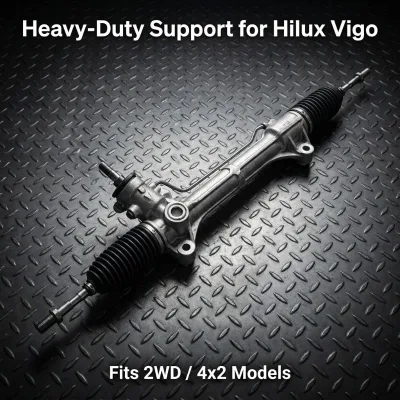
Power Hydraulic Steering Rack for Toyota Auto Parts Hilux Steering Gear
$56.00 - $62.00
MOQ: 10 Pieces

High Quality Auto Parts Wholesale Car Hydraulic Power Steering Rack for Honda Civic
$48.00 - $60.00
MOQ: 10 Pieces

Auto Parts Steering Rack and Pinion System for Mercedes Benz 2044600901
$120.00 - $130.00
MOQ: 50 Pieces


Auto Electric Hydraulic Power Steering Rack Steering Gears for FIAT Palio Siena
$46.50 - $50.00
MOQ: 30 Pieces


Auto Hydraulic Power Steering for Toyota Power Steering Rack & Pinion for 44200-60223
$30.00 - $80.00
MOQ: 1 Pieces

Automotive Hydraulic Power Steering Rack and Pinion Rack 44200-Bz120 for Daihatsu
$10.00 - $29.00
MOQ: 10 Pieces

Auto Steering Systems Rack & Pinion Steering 709402387 for Commander 800 & 1000
$20.00 - $40.00
MOQ: 1 Pieces

Hydraulic Power Steering Rack and Pinion for Toyota 45500-02130 45510-02141 45510-02142
$20.00 - $90.00
MOQ: 10 Pieces

Auto Steering Systems Rack and Pinion Steering Rack E9l2-3504-Hcrm for Ford
$20.00 - $55.00
MOQ: 10 Pieces


Hydraulic Power Rack and Pinion Assembly for Toyota Camry Power Steering Rack
$60.00 - $120.00
MOQ: 10 Pieces

Power Steering Rack and Pinion for KIA Sportage Hyundai Tucson 57700-1f000
$30.00 - $200.00
MOQ: 50 Pieces


Comprehensive Sourcing Guide
Automotive Steering System Hydraulic Rack and Pinion Sourcing Guide
Sourcing hydraulic rack and pinion assemblies requires a disciplined approach to verifying mechanical compatibility and material integrity. The automotive steering system is a critical safety component, and buyers must prioritize precision engineering over cost alone. This guide outlines the essential verification steps for procurement professionals seeking reliable hydraulic steering racks for various vehicle platforms.
The following sections detail the technical specifications, compliance requirements, and commercial terms necessary for successful procurement. By focusing on observable listing signals and rigorous quality control, buyers can mitigate the risks associated with aftermarket automotive parts. This structured approach ensures that the selected components meet the exacting standards required for vehicle safety and performance.
Product Scope and Observed Listing Signals
The market for hydraulic steering racks includes a diverse range of models designed for specific vehicle applications. Observed listings indicate compatibility with major brands such as Toyota, Hyundai, Honda, and others. For instance, specific models are identified for the Toyota Corolla, Sienna, and Hilux, while Hyundai applications include the Pony and Accent. Honda Civic platforms are also represented in the available inventory. Buyers must cross-reference these application notes with their specific vehicle chassis and model years to ensure fitment.
Material composition is a key differentiator in product quality, with aluminum and steel being the primary materials observed in current listings. The condition of these parts is consistently listed as new, indicating that buyers are sourcing fresh manufacturing output rather than refurbished units. Packaging varies from standard export cartons to neutral or customized options, which can impact logistics and branding strategies. Understanding these material and packaging variations helps buyers align their procurement with their assembly or distribution needs.
Technical Specifications to Verify
Precision in part numbering is critical when sourcing steering racks, as minor variations can lead to incompatibility. Buyers should verify the original equipment (OE) numbers against the supplier’s provided model codes. For example, the Toyota Corolla application references OE numbers such as 45510-12390 and 45510-12391, while the Hyundai Pony uses 56500-24110 and 56510-22000. Similarly, the Toyota Sienna application lists multiple OE numbers including 4425008030 and 4425008040. These identifiers serve as the primary verification tool for ensuring the correct part is ordered.
Dimensional accuracy and standard compliance are equally important for proper installation. Listings often specify that the product standard is "Real Size" or "OEM Standard Size," which implies adherence to original manufacturing dimensions. The presence of automatic features and specific types like steering gears or shafts further defines the mechanical configuration. Buyers must confirm that the physical dimensions and mechanical type match their vehicle’s steering column and linkage requirements to avoid installation failures.
Compliance and Safety Documentation
Certification status is a fundamental requirement for automotive components, particularly those related to steering systems. Observed listings frequently mention ISO certification, with some products also holding CE certification. These certifications indicate that the manufacturing process adheres to recognized quality management and safety standards. Buyers should request valid certification documents to verify that the supplier’s quality systems are currently active and compliant with international norms.
Quality assurance processes, such as 100% testing, are critical for ensuring the reliability of each unit. The observation that products are "100% Tested" suggests a rigorous inspection protocol before shipment. This step is vital for identifying potential defects in the hydraulic seals, gear teeth, or shaft alignment. Buyers should inquire about the specific testing procedures used to validate the performance of the steering rack under load, ensuring that the component meets safety expectations before deployment.
Cost Drivers and Commercial Terms
Pricing in the automotive parts market is influenced by material costs, manufacturing complexity, and order volume. Observed price ranges vary significantly, reflecting differences in material quality and brand positioning. Buyers should note that some listings offer "Factory Price," which may indicate direct sourcing from the manufacturer. However, the final cost will depend on the specific model, material (aluminum vs. steel), and the quantity ordered. Understanding these cost drivers helps buyers negotiate better terms and budget accurately for their procurement needs.
Minimum Order Quantities (MOQ) and packaging options also impact the total cost of ownership. MOQs can range from small quantities for sample testing to larger volumes for bulk procurement, with observed ranges extending up to 2000 pieces. Packaging choices, such as neutral, color box, or customized packaging, can affect shipping efficiency and storage requirements. Buyers should evaluate the trade-off between lower unit prices at higher volumes and the flexibility of smaller orders to manage inventory risk effectively.
Supplier Qualification and Quality Control
Supplier qualification involves verifying the origin and production capabilities of the manufacturer. Many observed listings indicate that products originate from Guangzhou, China, a major hub for automotive parts manufacturing. Buyers should assess the supplier’s ability to provide consistent quality and timely delivery. The availability of samples, if in stock, allows buyers to physically inspect the product before committing to a larger order. This step is crucial for validating the build quality and fitment of the steering rack.
Quality control measures, such as professional service and strong export packing, are essential for protecting the product during transit. The observation of "Strong Export Packing" suggests that the supplier takes precautions to prevent damage during shipping. Buyers should also verify the supplier’s ability to provide customized packaging if required for their distribution channels. Ensuring that the supplier has robust quality control processes in place helps minimize the risk of receiving defective or damaged goods.
Long-Term Procurement Checks
Establishing a long-term procurement strategy requires ongoing monitoring of supplier performance and product consistency. Buyers should track the reliability of the supplier in meeting delivery schedules and maintaining quality standards over time. The availability of related OEM numbers, such as 56500-1W100 for Hyundai applications, indicates the supplier’s breadth of inventory. This breadth can be advantageous for sourcing replacement parts or expanding the product range in the future.
Continuous verification of product specifications and certifications is necessary to ensure ongoing compliance. Buyers should periodically review the supplier’s certification status and quality control reports to ensure they remain valid. Additionally, monitoring changes in material composition or manufacturing processes can help identify potential quality issues early. By maintaining a proactive approach to supplier management, buyers can ensure a stable supply of high-quality hydraulic steering racks for their automotive needs.
FAQs
What certifications do the steering gears hold?
The products hold ISO and CE certifications. These standards ensure the steering gears meet international quality and safety requirements for automotive applications.
Can I request customization for these parts?
Yes, customization is available for these steering gears. Buyers can request specific modifications to meet unique vehicle requirements or branding needs.
What is the minimum order quantity for purchase?
The minimum order quantity ranges from 1 to 2000 pieces depending on the specific model. Some items like the F-HU-085 may have different thresholds.
Where are these steering systems manufactured?
These steering systems originate from Guangzhou in China. The products are manufactured locally and shipped using standard export carton packaging.
Are the products tested before shipping?
Yes, all products are 100% tested before shipping. This ensures that every steering gear meets the required quality standards for performance and safety.
What materials are used in construction?
The steering gears are constructed from aluminum and steel materials. These durable materials ensure longevity and reliable performance in various driving conditions.