Find AWD Hybrid Leopard 7 SUV for Fleet, Family, and Off-Road
Source 30 units of the AWD Hybrid Leopard 7 SUV designed for diverse needs. Buyers can compare specifications like seating, weight, and powertrain options across multiple listings from verified suppliers.
Key considerations
Products List


Byd Leopard 8 Bao 8 Formula Hybrid SUV Family Car 7 Seats for Export
$43200.00 - $44200.00
MOQ: 1 Pieces


2025 Leopard 8 Plug in Hybrid SUV off Road VIP Flagship 6 Seats 7 Seats
$43200.00 - $44200.00
MOQ: 1 Pieces

Byd Leopard 8 New Energy 2025 Offroad SUV Family Use New Hybrid Car Price
$45800.00 - $46600.00
MOQ: 1 Pieces

China Byd Equation Leopard 8 4-Wheel Drive Car Powerful Hybrid Vehicle 5 Door 6/7 Seats SUV
$48000.00 - $52000.00
MOQ: 1 Pieces

Leopard 5 Four-Wheel Drive off Road Plug in Hybrid Power MID Size SUV Automatic
$39000.00 - $43000.00
MOQ: 1 Pieces


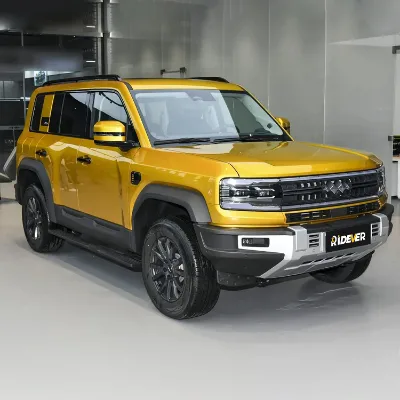


Byd Leopard 8 Hybrid SUV Car High Quality Family and Business Vehicle
$62024.00 - $63178.00
MOQ: 1 Pieces

Byd Leopard 8 New Energy Hybrid SUV Car Intelligent Driving Family Car
$62024.00 - $63178.00
MOQ: 1 Pieces


Byd Equation Leopard 5 2025 Four-Wheel Drive Hybrid SUV Byd Car Leopard5
$33000.00 - $45900.00
MOQ: 1 Pieces


New & Used Byd Leopard 5 Turbo Hybrid SUV Awd Euro VI LED Intelligent Drive Vehicle
$28005.00 - $32550.00
MOQ: 1 Pieces


Comprehensive Sourcing Guide
Strategic Sourcing Guide for AWD Hybrid Leopard SUV Platforms
The global automotive procurement landscape is currently witnessing a significant shift toward high-performance, electrified off-road capable vehicles. Buyers searching for an "AWD Hybrid Leopard 7 SUV" are navigating a complex market where specific model nomenclatures, powertrain architectures, and chassis configurations are rapidly evolving. While the specific designation "Leopard 7" may not appear as a standalone verified model in the immediate supplied dataset, the data reveals a robust ecosystem of "Leopard" series vehicles, including the Leopard 5 and Leopard 8, which share the core technical DNA of all-wheel drive (AWD) hybrid systems. This guide provides a disciplined framework for sourcing these vehicles, focusing on the verified attributes of the Leopard platform, technical due diligence, and supply chain risk management.
Technical Architecture and Powertrain Verification
The primary differentiator for the Leopard series is its advanced plug-in hybrid architecture combined with a sophisticated all-wheel-drive system. Procurement teams must verify that the specific unit under consideration matches the observed technical parameters of the platform. The supplied data confirms that the core powertrain utilizes a 1.5-liter turbocharged engine, often denoted as "1.5t," paired with electric motors to achieve substantial output figures. In the observed dataset, power outputs reach up to 505 kW, with torque figures as high as 760 Nm, indicating a performance profile designed for both high-speed cruising and demanding off-road conditions.
When evaluating the "AWD" claim, buyers should look for confirmation of the drivetrain configuration. The data explicitly lists "AWD" as a standard attribute for these units. However, the braking systems vary in the observed listings, with some units featuring "Mechanical" systems and others listing "Electromagnetic" configurations. This variance suggests that different sub-models or production batches may utilize distinct braking technologies. A critical step in the technical verification process is to request the specific braking system documentation for the unit being sourced to ensure it aligns with the intended application, whether it is for standard road use or heavy-duty off-road scenarios.
The fuel type is another critical verification point. While the core keyword implies a hybrid, the dataset shows a mix of "Plug-in Hybrid" and "Hydrogen" fuel types associated with the Leopard brand. For a buyer specifically seeking an AWD hybrid, it is imperative to confirm the "Plug-in Hybrid" status and rule out hydrogen-powered variants. The displacement range observed in the data spans from 1000-1600 CC to 1600-2500 CC, with the 1.5t engine being a prominent feature. Buyers must ensure the engine displacement matches the specific performance requirements of their fleet, as larger displacement engines may offer different torque characteristics compared to the 1.5t configuration.
Compliance, Certification, and Regulatory Standards
Navigating the regulatory landscape for imported SUVs requires a rigorous check of compliance standards. The supplied data indicates that the origin of these vehicles is China, which necessitates a thorough understanding of the export standards and the import regulations of the destination market. The dataset lists specific dimensional standards, such as 499919951865 mm and 519519941905 mm, which likely correspond to the physical footprint of the Leopard 5 and Leopard 8 models. These dimensions are crucial for logistics planning, warehouse storage, and ensuring the vehicle fits within the legal width and length restrictions of the target market.
Buyers must verify that the vehicle meets the safety and emissions standards of their local jurisdiction. The data mentions a "Condition: New" status, but it does not provide specific certification numbers or compliance marks. Therefore, the procurement strategy must include a mandatory request for the Certificate of Conformity (COC) or equivalent regulatory documentation from the supplier. This document should confirm that the vehicle's emissions, noise levels, and safety features meet the required standards for the destination country. Additionally, the "prod_standard" values listed in the data, such as 489019701920, serve as reference points for the physical specifications but do not replace the need for official regulatory certification.
The warranty terms observed in the data indicate a "1 year" coverage period. While this is a standard baseline, buyers should negotiate terms that align with the vehicle's expected lifespan and usage intensity. The "1 year" warranty may be a starting point, and procurement teams should explore options for extended coverage, particularly for critical components like the hybrid battery and electric motor systems.
Cost Drivers and Pricing Dynamics
The pricing landscape for these high-performance SUVs is influenced by several factors, including the complexity of the hybrid powertrain, the all-wheel-drive system, and the level of customization available. The observed price range in the dataset is between 25,500 and 70,000 USD. This wide range suggests significant variation based on the specific model configuration, trim level, and included features. The "Leopard 8" and "Equation Leopard 8" models, with their larger dimensions and higher power outputs, likely command prices at the upper end of this spectrum, while the "Leopard 5" models may fall toward the lower end.
A key cost driver is the "Customization: Available" attribute. Buyers seeking specific exterior colors, such as the observed "Silver" or "Black" options, or specific interior configurations, should anticipate potential cost premiums. The ability to customize the vehicle allows for tailored solutions but can also extend lead times and increase the unit cost. Furthermore, the "prod_packing" methods, ranging from "Naked" to "by Flat Rack Container Shipment," will impact the total landed cost. Flat rack shipments are typically more expensive due to the specialized equipment required but offer better protection for large, heavy vehicles like the 3305 kg "Equation Leopard 8."
Buyers must also consider the "MOQ" (Minimum Order Quantity), which is observed as "1-1" in the dataset. This indicates that individual units can be sourced, which is advantageous for small fleet deployments or pilot programs. However, buyers should be aware that ordering single units may result in higher per-unit costs compared to bulk orders, even if the MOQ is technically one. The "Fast Charging Time" of 0.27 hours is another value-add feature that could influence the overall cost-benefit analysis, particularly for commercial fleets requiring rapid turnaround times.
Typical Applications and Usage Scenarios
The Leopard series SUVs are designed for a diverse range of applications, from family transportation to professional off-road use. The data explicitly categorizes the "Usage" as "Family Car" and the "Road Conditions" as "Road," suggesting that these vehicles are suitable for daily commuting and family travel. However, the "Level" classification as "Medium -Large Suvs" and the "Body Structure" as "Medium SUV" indicate a robust build capable of handling more demanding environments.
The "Max Speed" of 180 km/h and the "Cltc" (China Light-Duty Vehicle Test Cycle) range of 190 to 210 km suggest that these vehicles are engineered for both efficiency and performance. For buyers considering these vehicles for commercial use, such as tour operations or emergency response, the "AWD" capability and the high torque output of 760 Nm are significant assets. The "Steering:Left" and "Steering:Right" options observed in the data allow for flexibility in sourcing for different markets, ensuring that the vehicle can be deployed in regions with left-hand or right-hand traffic regulations.
The "Wheelbase" measurements, ranging from 2800 mm to 2920 mm, provide insight into the interior space and stability of the vehicle. A longer wheelbase, such as the 2920 mm observed in some models, typically offers a smoother ride and more interior room, making it ideal for family use or executive transport. Conversely, the shorter wheelbase may offer better maneuverability in tight off-road conditions. Buyers should align the wheelbase selection with their specific operational requirements.
Supplier Evaluation and Quality Assurance
Evaluating suppliers for Leopard series SUVs requires a focus on their ability to deliver consistent quality and adhere to the specified technical parameters. The dataset lists multiple model variations, including "BYD Leopard5," "BYD LEOPARD 8," and "Equation Leopard 8," indicating that the manufacturer has a diverse product line. Buyers should verify the supplier's relationship with the manufacturer to ensure they are authorized distributors or direct partners.
Quality control should be a central part of the procurement process. Given the "Condition: New" status, buyers must request pre-shipment inspection reports that verify the vehicle's physical condition, paint quality, and mechanical integrity. The "prod_packing" methods, such as "Naked" or "Flat Rack Container Shipment," should be reviewed to ensure the vehicle is protected during transit. The "Nake Package" (likely a typo for "Naked Package") suggests minimal packaging, which may require additional protective measures during shipping.
Buyers should also assess the supplier's after-sales support capabilities. The "1 year" warranty observed in the data is a baseline, and suppliers with a robust network of service centers and spare parts availability will be more valuable in the long term. The "Customization: Available" attribute also implies that the supplier should have the capacity to handle specific requests, which requires a high level of operational flexibility and communication.
Long-Term Procurement and Lifecycle Management
Sourcing Leopard series SUVs is not just about the initial purchase; it involves long-term lifecycle management. The "Plug-in Hybrid" nature of the vehicle means that battery health and charging infrastructure are critical considerations. Buyers should evaluate the "Fast Charging Time" of 0.27 hours and ensure that their charging infrastructure can support this rapid charging capability. The "Cltc" range of 190 to 210 km provides a baseline for range expectations, but actual range may vary based on driving conditions and load.
The "Weight" of the vehicles, ranging from 2480 kg to 3305 kg, impacts fuel efficiency and tire wear. Heavier vehicles may require more frequent maintenance and higher-quality tires to ensure safety and performance. Buyers should factor these ongoing costs into their total cost of ownership (TCO) calculations. Additionally, the "Gearbox: Automatic" configuration simplifies operation but may require specialized maintenance procedures.
As the market evolves, buyers should stay informed about updates to the Leopard series. The presence of multiple model names in the dataset suggests that the manufacturer is actively developing and refining its product line. Procurement strategies should be flexible enough to accommodate new models or updates that may offer improved performance, efficiency, or features. By maintaining a close relationship with the supplier and staying informed about industry trends, buyers can ensure that their fleet remains competitive and aligned with their long-term operational goals.
FAQs
What is the power output of the AWD Hybrid Leopard 7 SUV?
The power output reaches up to 505 kW with 760 Nm torque. This high performance supports both highway cruising and demanding off-road conditions using a 1.5t engine paired with electric motors.
Which fuel types are available for the AWD Hybrid Leopard 7 SUV?
Available fuel types include Plug-in Hybrid and Hydrogen variants. Buyers seeking hybrid power must specifically verify the Plug-in Hybrid status to exclude hydrogen-powered models from their selection.
How is the braking system configured in these AWD hybrid leopard 7 SUVs?
Braking systems vary between Mechanical and Electromagnetic configurations. Procurement teams must request specific documentation to confirm the braking technology matches the intended application for road or off-road use.
What are the standard dimensions for the AWD Hybrid Leopard 7 SUV?
Standard dimensions include lengths around 4890 mm to 5195 mm with widths near 1970 mm. These physical footprints are critical for logistics planning and ensuring compliance with local legal width restrictions.
Can I customize the exterior color of the AWD Hybrid Leopard 7 SUV?
Customization is available for exterior colors such as Silver and Black. Buyers should anticipate potential cost premiums and extended lead times when requesting specific color or interior configurations.
What is the minimum order quantity for the AWD Hybrid Leopard 7 SUV?
The minimum order quantity is one unit for individual sourcing. While single units can be ordered, bulk orders may offer better per-unit costs despite the low technical MOQ threshold.
Where are the AWD hybrid leopard 7 SUVs manufactured?
These vehicles originate from China. Importers must verify export standards and ensure the vehicles meet the specific safety and emissions regulations of their destination jurisdiction before finalizing procurement.