Source Back Connection Boiling Thermometer for Industrial, Petroleum, and Pharmacy Fields
Compare 30 available Back Connection Boiling Thermometer options featuring bimetallic sensing elements and stainless steel construction. Buyers can evaluate varying accuracy classes, temperature ranges, and connection sizes for industrial, petroleum, and household applications.
Key considerations
Products List


Back Connection with 1.5" (50.5mm) Tri-Clamp Thermometer Brand Qualitywell
$10.40 - $12.48
MOQ: 100 Pieces


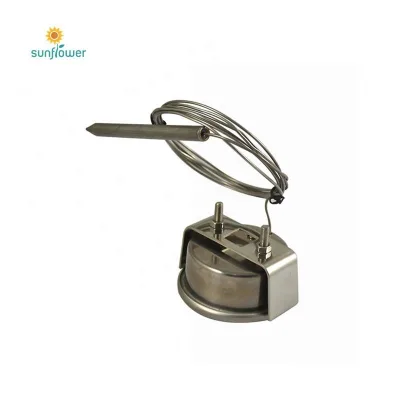
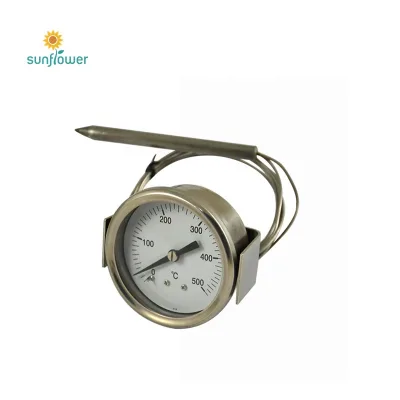


Easy Maintenance Thermocouple Thermometer with Cost Effective for Factory
$25.00 - $200.00
MOQ: 1 Pieces


High Quality Forehead Thermometer
$29.00 - $30.00
MOQ: 500 Pieces
Sainty International Group Jiangsu Yangzhou Sumex Imp. & Exp. Co., Ltd.


Comprehensive Sourcing Guide
Strategic Sourcing Guide for Back Connection Boiling Thermometers
Selecting the right instrumentation for high-temperature industrial processes requires a rigorous understanding of technical specifications, material compatibility, and supply chain reliability. For buyers specifically investigating back connection boiling thermometers, the procurement landscape involves navigating a complex array of bimetallic sensing elements, connection standards, and environmental certifications. This guide synthesizes available product data and industry knowledge to provide a structured approach for evaluating potential suppliers and ensuring the selected instruments meet operational demands without compromising safety or accuracy.
Technical Specifications and Material Composition
The core functionality of a Back Connection Boiling Thermometer relies heavily on its sensing element and the materials used to construct the probe and enclosure. In the observed market data, the dominant sensing technology is the coiled bimetal sensing element. This mechanism converts thermal expansion into mechanical movement, driving a pointer across a calibrated dial. The material composition is critical for durability in boiling applications. The observed specifications indicate a preference for 304 Stainless Steel for the case and bezel, providing a robust outer shell that resists corrosion and physical impact.
For the probe and bulb sensor, which is directly exposed to the boiling medium, 316 Stainless Steel is frequently cited. This grade offers superior resistance to chlorides and harsh chemicals compared to standard 304, making it essential for applications involving aggressive fluids or high-purity requirements. The connection interface itself is also constructed from 316 Stainless Steel, available in sliding or fixed welding configurations. This ensures that the point of entry into the process vessel maintains integrity under pressure and thermal cycling.
The dial face and window materials are equally significant for readability and safety. Options include plain instrument glass or tempered glass, with the latter offering enhanced protection against shattering in high-vibration environments. The dial plating is often aluminum in a bowl cupped type, which aids in light reflection and readability. Buyers must verify that the specific model selected matches the required temperature range, as observed data suggests a span from -40°C to +600°C. This wide range accommodates various boiling points, but the specific application must be matched to the instrument's calibrated scale, which is typically marked in Celsius, Fahrenheit, or both.
Compliance, Standards, and Certification Verification
In the industrial sector, compliance with international standards is not merely a formality but a prerequisite for safety and operational consistency. When sourcing back connection thermometers, buyers should prioritize instruments that adhere to recognized standards such as ASTM and ASME B40.200. The ASME B40.200 standard specifically governs the requirements for pressure gauges and thermometers, ensuring that the device meets rigorous performance criteria for accuracy and construction. Additionally, the EN 13190 standard is relevant for industrial thermometers, providing guidelines for dimensions and performance.
Certification status serves as a third-party validation of a supplier's quality management systems. Observed data indicates that suppliers may hold ISO and KS certifications. While these certifications suggest a commitment to quality, buyers must verify the current validity of these certificates and ensure they cover the specific manufacturing site of the thermometer. It is also important to note that while some background data mentions RoHS, this should not be assumed as a universal attribute without explicit confirmation from the supplier for the specific model.
Accuracy is a quantifiable metric that must be clearly defined. The market data points to accuracy classes of 1% and 1.6%, with a specific accuracy of 1°C noted for certain models. For boiling applications where precise temperature control is vital, a 1% accuracy class is generally preferred. Buyers should request test reports or calibration certificates that explicitly state the accuracy class and the traceability of the calibration to national standards. The standard temperature scale is typically Celsius or Fahrenheit, and the instrument must be calibrated to the specific scale required by the process.
Cost Drivers and Pricing Dynamics
Understanding the cost structure of industrial thermometers is essential for budgeting and negotiation. The observed price range in the market spans from $0 to $200 USD, though this broad range likely reflects a mix of basic models, specialized high-temperature variants, and bulk pricing tiers. Several factors drive the final cost of a Back Connection Boiling Thermometer. The primary driver is the material grade; 316 Stainless Steel components are more expensive than 304 or carbon steel alternatives due to their superior corrosion resistance.
The complexity of the connection type also influences pricing. Fixed welding connections may require more precise machining than sliding connections, potentially affecting the unit cost. Additionally, the filling of the instrument case plays a role. While dry instruments are standard, fillable options or those filled with glycerine to dampen vibration and protect the movement from moisture command a premium. The presence of custom packaging, such as wooden cases or specialized export cartons, adds to the logistics cost but is often necessary for protecting delicate instruments during international shipping.
Minimum Order Quantity (MOQ) is another significant cost driver. The observed MOQ ranges from 1 to 10,000 units. Small orders may incur higher per-unit costs due to setup fees and lack of economies of scale. Conversely, large volume orders can significantly reduce the unit price. Buyers should also consider the lead time, which varies from 7 to 45 days depending on order quantity. Rush orders or custom modifications, such as specific dial calibrations or unique stem lengths, will likely increase the total cost and extend the delivery schedule.
Typical Applications and Operational Environments
Back connection boiling thermometers are designed for specific industrial environments where direct immersion and high temperatures are common. The observed usage data highlights applications in the petroleum field, general industry, and household settings, though the industrial context is the primary focus for this guide. In the petroleum industry, these thermometers monitor temperatures in distillation columns, storage tanks, and processing vessels where boiling points are critical for separation processes.
The pharmaceutical and food industries also represent significant application areas. In these sectors, hygiene and material purity are paramount. The use of 316 Stainless Steel for the probe and connection ensures that the instrument does not contaminate the product. The IP65 enclosure rating observed in some models indicates protection against dust and low-pressure water jets, making these instruments suitable for wash-down environments common in food processing plants.
Furthermore, the versatility of the back connection design allows for easy installation and maintenance. The mounting configuration, typically a back connection, simplifies the integration into existing piping systems or vessel walls. The installation process is described as easy, which reduces downtime during replacement or calibration. Buyers should ensure that the selected thermometer is compatible with the specific industry standards of their sector, such as the ASME or EN standards mentioned earlier, to guarantee regulatory compliance.
Supplier Evaluation and Quality Control
Evaluating a supplier for industrial instrumentation requires a multi-faceted approach that goes beyond price comparison. Buyers should assess the supplier's ability to provide OEM and ODM services, as customization is often necessary for specific process requirements. The observed data confirms that OEM services are accepted, allowing buyers to request custom branding, specific dial markings, or unique stem lengths. The ability to offer customized packaging and shipping is also a valuable indicator of a supplier's flexibility and logistical capability.
Quality control is the cornerstone of a reliable supply chain. Buyers must verify that the supplier has a robust quality management system in place, ideally backed by ISO certification. The production origin, noted as China or specifically Anhui in some records, suggests a concentration of manufacturing capabilities in this region. While this offers competitive pricing, buyers must implement strict incoming quality control measures. This includes verifying the material certificates for the 304 and 316 Stainless Steel components and checking the calibration records for the bimetallic sensing elements.
The warranty period is another critical factor in supplier evaluation. A standard one-year warranty is observed in the market, which provides a baseline for product reliability. However, buyers should negotiate terms that cover potential defects in materials or workmanship. The supplier's response time and technical support capabilities are also important, especially for troubleshooting installation issues or calibration discrepancies. A supplier that offers detailed installation guides and responsive technical support adds significant value to the procurement process.
Long-Term Procurement and Maintenance Considerations
Sourcing a Back Connection Boiling Thermometer is not a one-time transaction but the beginning of a long-term relationship that impacts operational efficiency. Buyers should consider the long-term maintenance requirements of the instrument. The observed specifications indicate that the thermometers are easily installed and maintained, but regular calibration is essential to maintain the 1% or 1.6% accuracy class over time. The filling of the case with glycerine or other fluids can extend the life of the instrument by protecting the internal mechanism from vibration and corrosion, but this fluid may need to be replaced or the instrument serviced after extended periods of use.
Inventory management is another consideration. With an MOQ range extending up to 10,000 units, buyers must balance the need for stock availability with the cost of holding inventory. For critical applications, maintaining a buffer stock of spare thermometers can prevent production downtime. The lead time of 7 to 45 days suggests that planning for replacements should be done well in advance, especially for custom models that may require longer production cycles.
Finally, buyers should stay informed about updates to industry standards and regulations. As environmental and safety standards evolve, the requirements for instrumentation may change. Suppliers who are proactive in updating their product lines to meet new standards, such as updated ASME or EN specifications, will be better positioned to support buyers in the long term. By focusing on technical specifications, compliance, and supplier reliability, buyers can secure a supply chain that ensures the safety and efficiency of their boiling processes.
FAQs
How is the accuracy of back connection boiling thermometers defined?
Accuracy is typically defined as 1°C or within 1% and 1.6% accuracy classes. This precision depends on the specific model selected, such as those with bimetallic sensing elements, and requires verification against calibration certificates for industrial use.
What materials are used for the probe and case construction?
The case and bezel are constructed from 304 Stainless Steel, while the probe and bulb sensor use 316 Stainless Steel. These materials ensure corrosion resistance and durability, with connections also available in 316 Stainless Steel for fixed or sliding welding.
Which temperature ranges are available for these industrial thermometers?
Available temperature ranges span from -40°C to +600°C. The dial is calibrated in Celsius, Fahrenheit, or both, allowing users to select the appropriate scale for specific boiling applications in petroleum or food industries.
Can suppliers provide customized packaging and shipping options?
Yes, suppliers offer customized packaging including individual bubble bags, export cartons, and wooden cases. This flexibility supports safe international shipping and meets specific client requirements for bulk orders or single-unit protection.
What certifications do manufacturers of these thermometers typically hold?
Manufacturers often hold ISO and KS certifications to validate their quality management systems. These certifications ensure the products meet international standards like ASTM and ASME B40.200, though specific model validity should always be confirmed with the supplier.
How long is the delivery lead time for these instruments?
Delivery lead times range from 7 to 45 days depending on the order quantity. Larger orders or custom modifications may extend the schedule, so buyers should plan procurement well in advance to avoid production delays.
What is the minimum order quantity for purchasing these thermometers?
Minimum order quantities vary from 50 pieces up to 10,000 units based on the supplier. Small orders may have higher per-unit costs, while bulk purchases often benefit from economies of scale and more flexible pricing terms.