Source Baby White Muslin Fabric for Baby Wraps, Nursing Covers, and Gifts
Find 30 listings for Baby White Muslin Fabric suitable for baby wraps, nursing covers, and gifts. Compare options featuring 100% cotton, custom printing, and various sizes to identify the right supplier for your needs; compare the available evidence and request quotations based on your requirements.
Key considerations
Products List


100% Cotton Double Layer Soft Baby Children Crinkle Gauze Muslin Crepe Fabric
$0.90 - $1.45
MOQ: 3000 Meters

Breathable 100% Double Gauze Cotton Crepe Woven Muslin Fabric for Baby Clothing
$1.00 - $1.51
MOQ: 3000 Meters


Organic Custom Printing Baby Muslin Custom Printed Fabric for Baby's Clothes
$0.90 - $1.20
MOQ: 4800 Meters


Super Quality 2 Layer Cotton Muslin Crinkle Fabric for Baby Blanket Clothing
$0.90 - $1.20
MOQ: 4800 Meters

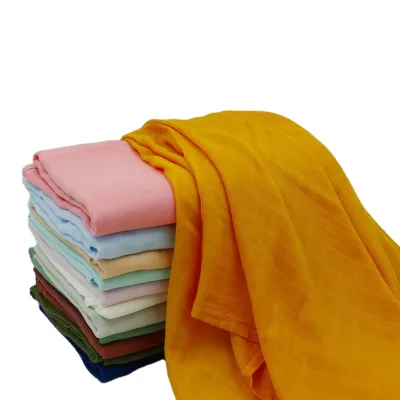


Custom Wholesale Roll Baby Swaddle Blanket Double Gauze Cotton Muslin Fabric
$1.75 - $1.85
MOQ: 1000 Meters

Comprehensive Sourcing Guide
Baby White Muslin Fabric Sourcing Guide
Procuring Baby White Muslin Fabric requires distinguishing between general textile listings and items specifically engineered for infant care. The available market data indicates a clear segment of 100% cotton muslin designed for babies, featuring customizable designs such as white, dye, or printed patterns. Buyers must verify that the specific listing explicitly states the material composition as 100% cotton to ensure the softness and breathability required for delicate skin, rather than generic blends that may cause irritation.
Commercial listings for this category often present varying minimum order quantities, ranging from 3,000 to 5,000 pieces depending on the supplier's capacity and customization requirements. While some vendors offer standard roll packing, others provide specific polybag configurations like six pieces per bag. Sourcing teams should prioritize suppliers who explicitly accept OEM requests and offer logo embroidery, as these capabilities are critical for brands looking to establish a distinct identity in the competitive baby care market.
Product Scope and Observed Listing Signals
The observed product scope for Baby White Muslin Fabric centers on non-disposable textiles intended for gifts and home use, with a specific emphasis on the baby age group. Listings frequently highlight features such as quick-drying capabilities and specific knitting methods like machine weaving, which contribute to the fabric's durability and texture. Buyers should look for explicit mentions of the fabric's intended function for babies to ensure the product meets safety and comfort standards, avoiding generic textile descriptions that lack this specific application context.
Visual and design signals in the market include options for plain styles, printing patterns, and customized dyeing processes. The standard size offerings often appear as 35x35cm or 60x60cm, with many suppliers allowing for fully customized dimensions to fit specific product needs. When evaluating listings, procurement specialists must confirm that the "white" designation is accurate, as some products may be listed as customizable colors, requiring a specific request for the unbleached or white variant to maintain the traditional aesthetic expected in baby products.
Technical Specifications to Verify
Technical verification begins with confirming the grammage, as observed listings for similar cotton muslin products often specify a weight range of 300-400GSM. This density is crucial for ensuring the fabric provides adequate coverage and absorbency without being too heavy for a baby's comfort. Buyers should request physical samples to validate the GSM claim, as variations in weaving tension can significantly alter the final weight and hand feel, directly impacting the perceived quality of the finished garment or swaddle.
Dimensional stability and packing specifications are equally critical for logistics and inventory management. While some listings indicate standard sizes like 35x35cm, others offer fully customizable dimensions, requiring precise communication of requirements to avoid production errors. Additionally, the packing method, whether it is six pieces per polybag or roll packing in plastic, must be agreed upon to prevent damage during transit. Verifying the knitting method as machine-weaved ensures consistency in the fabric structure, which is essential for mass production of baby items.
Compliance and Safety Documentation
Safety documentation for baby textiles must address the specific needs of infant products, where chemical residues and physical hazards are strictly regulated. Although general market data mentions the availability of certificates, buyers must explicitly request documentation proving compliance with relevant safety standards for baby wear. The presence of a "Certificate Available" flag in listings is a positive signal, but it does not guarantee that the specific batch of fabric meets the rigorous testing requirements for direct skin contact with newborns.
Procurement teams should verify that the supplier can provide test reports for harmful substances, ensuring the fabric is free from allergens and toxic dyes. While some background knowledge suggests standards like Oeko-Tex or GOTS, these should not be assumed without direct confirmation from the supplier. The buyer must ensure that the specific product listing includes the necessary safety certifications for the intended market, as the absence of these documents can lead to customs delays or product recalls in regions with strict textile safety laws.
Cost Drivers and Commercial Terms
Cost drivers for Baby White Muslin Fabric are heavily influenced by the level of customization and the volume of the order. Listings show a wide range of minimum order quantities, from 50 to 5,000 pieces, with higher customization levels like logo embroidery or specific dyeing often requiring larger volumes to be economically viable. Buyers should anticipate that the price per unit will decrease as the order quantity increases, but the initial setup costs for custom designs may offset these savings for smaller batches.
Commercial terms regarding payment and lead times must be clearly defined before placing an order, as these vary significantly between suppliers. The observed MOQ ranges suggest that smaller buyers may face higher per-unit costs or may need to consolidate orders with other products to meet minimum thresholds. Additionally, the origin of the product, often listed as China or Jiangsu, can impact shipping costs and lead times, making it essential to factor in logistics expenses when calculating the total landed cost of the fabric.
Supplier Qualification and Quality Control
Supplier qualification for baby textiles requires a rigorous assessment of their production capabilities and quality control systems. Buyers should verify that the supplier has a proven track record in producing cotton muslin for the baby market, as this niche requires specific expertise in handling delicate materials. The ability to accept OEM requests and provide logo customization is a strong indicator of a supplier's flexibility and commitment to meeting brand-specific requirements, which are essential for maintaining product consistency.
Quality control measures must be established to ensure that the fabric meets the specified GSM and dimensional standards before shipment. Buyers should implement a pre-shipment inspection protocol that includes checking for defects in the weaving, color consistency, and packing integrity. Given the sensitivity of baby products, it is advisable to request third-party inspection reports or to conduct on-site audits to verify that the supplier's quality control processes align with international safety and quality expectations for infant textiles.
Long-Term Procurement Checks
Long-term procurement success depends on establishing a reliable supply chain that can adapt to changing market demands and regulatory updates. Buyers should maintain regular communication with suppliers to monitor any changes in material sourcing or production processes that could affect the quality of the Baby White Muslin Fabric. Building a relationship with a supplier who offers consistent customization options and reliable lead times will help mitigate risks associated with supply chain disruptions.
Continuous monitoring of supplier performance is essential to ensure that the fabric continues to meet safety and quality standards over time. Buyers should periodically review test reports and certification documents to confirm ongoing compliance with relevant regulations. Additionally, maintaining a diverse supplier base can provide a safety net against potential shortages or price fluctuations, ensuring that the procurement of Baby White Muslin Fabric remains stable and cost-effective in the long run.
FAQs
What is the material composition of the Baby White Muslin Fabric?
The fabric is made from 100% cotton, ensuring softness and breathability for sensitive baby skin. This natural material provides comfort and durability for daily use. It is suitable for various applications including baby care products. The cotton construction supports gentle handling and long-term wear for infant needs.
Can the Baby White Muslin Fabric be customized with logos or patterns?
Yes, customization is available for logos, patterns, and designs. Buyers can request specific printing or embroidery options to meet brand requirements. The fabric supports customized colors and designs to align with marketing goals. This flexibility allows for unique product development while maintaining quality standards for baby items.
What is the minimum order quantity for the cotton muslin fabric?
The minimum order quantity varies by product type, typically ranging from 1000 to 5000 pieces. Specific items like baby nursing covers have an MOQ of 1000 pieces, while other muslin fabrics may require 3000 or 5000 pieces. Buyers should check specific product listings for exact MOQ requirements to plan their procurement effectively.
How is the Baby White Muslin Fabric packaged for shipping?
The fabric is packaged in polybags, with quantities such as 6 pieces per polybag for muslin items. Larger rolls may be packed in plastic bags with standard dimensions. This packaging protects the fabric during transit and storage. Buyers can also request customized packing solutions to suit their logistical needs and handling preferences.
Is the Baby White Muslin Fabric suitable for newborns and babies?
Yes, the fabric is specifically designed for babies and newborns. It features soft cotton material that is gentle on sensitive skin. The product is non-disposable and durable for repeated use. Its design and material properties make it ideal for baby care products, ensuring safety and comfort for infants during daily activities.
What certifications are available for the cotton muslin fabric?
Certifications are available for the fabric, ensuring compliance with quality and safety standards. Buyers can request specific certificates to verify product attributes. This documentation supports trust and reliability in sourcing decisions. The availability of certifications helps buyers meet regulatory requirements and ensures the fabric meets industry standards for baby products.