Source Backless Bodycon Mini Dress for parties, events, and night outs
Compare 30 listings for the Backless Bodycon Mini Dress featuring sleeveless designs, various necklines, and customizable fabric weights. Buyers can evaluate options in white, black, and multicolor with styles ranging from streetwear to sexy fashion for spring and summer occasions.
Key considerations
Products List




Summer Dresses for Women V-Neck Strap Backless Sleeveless Lace Mini Dress
$7.00 - $9.00
MOQ: 100 Pieces

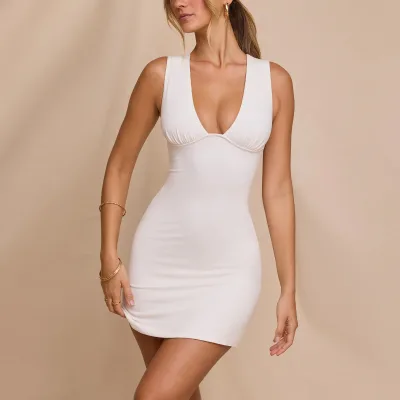
Summer Women Party Bodycon Bandage Sexy Deep V Neck Mini Backless Dresses
$10.00 - $12.42
MOQ: 50 pieces


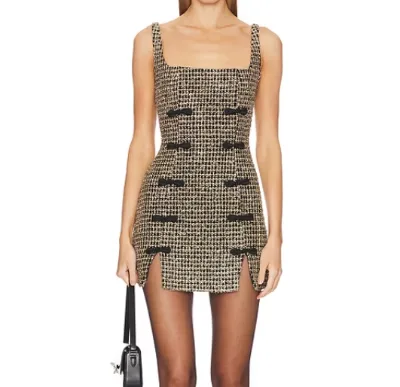
Comprehensive Sourcing Guide
Strategic Sourcing Guide for Backless Bodycon Mini Dresses
The global demand for backless bodycon mini dresses has surged, driven by fashion trends favoring bold silhouettes and versatile party wear. For B2B procurement professionals, sourcing this specific category requires a nuanced understanding of technical constraints, material science, and supply chain logistics. The following guide synthesizes observed market data and verified product attributes to provide a disciplined framework for evaluating suppliers and defining product specifications. This approach ensures that buyers can navigate the complexities of manufacturing garments that balance aesthetic appeal with structural integrity and compliance standards.
Technical Specifications and Design Constraints
The core definition of a Backless Bodycon Mini Dress involves a specific intersection of length, fit, and structural design. Based on observed product data, the "mini" length is a critical specification, often categorized explicitly as "Short" or "Mini" in supplier catalogs. This length constraint necessitates precise pattern making to ensure the garment remains functional while exposing the back. The "bodycon" silhouette implies a tight fit, which in the provided dataset is explicitly noted as "SKINNY" fit. This tightness requires fabrics with significant elasticity to accommodate movement without compromising the seam integrity.
Material composition is the primary driver of this fit. The observed data highlights a common blend of "Spandex / Polyester" and "Cotton" as viable materials. The inclusion of Spandex is non-negotiable for a bodycon style, as it provides the necessary stretch recovery. However, the presence of Cotton suggests a need for breathability, which aligns with the "Soft Breathable" and "Breathable" attributes frequently observed in this category. For the backless design, the fabric weight becomes a critical technical parameter. While some listings indicate a specific weight of "140grams," others note that "Fabric Weight" is "Customizable." Buyers must verify that the chosen weight is sufficient to prevent sheerness when the fabric is stretched over the body, particularly in the backless area where support is minimal.
Neckline and sleeve variations further complicate the technical specification. The dataset shows a wide range of necklines, including "V-Neck," "Round Neck," "Square Neck," "Low Neck," "Strapless," and "Collarless." The "Strapless" and "Collarless" options are particularly relevant for backless designs, as they often eliminate the need for shoulder straps that might conflict with the backless aesthetic. Additionally, the "Sleeveless" attribute is consistent across the observed data, confirming that short sleeves or long sleeves are generally incompatible with the strict "backless bodycon" definition. The "Cut-out" fashion element observed in the data suggests that designers may incorporate strategic openings to enhance the backless effect, requiring reinforced stitching to prevent tearing.
Material Selection and Fabric Performance
Selecting the right fabric is the most critical decision in sourcing a Backless Bodycon Mini Dress. The material must balance stretch, opacity, and comfort. The observed "Spandex / Polyester" blend is a standard choice for this category due to its durability and high elasticity. Polyester offers resistance to wrinkles and shrinking, which is essential for maintaining the "Straight" silhouette and "Mini" length over time. However, pure polyester can lack breathability, leading to discomfort. Therefore, the inclusion of "Cotton" or the "Eco-Friendly" attribute mentioned in the data indicates a shift toward more comfortable, natural-feeling blends.
Fabric weight is another pivotal factor. The dataset lists a specific weight of "140grams," which serves as a benchmark for mid-weight fabrics suitable for mini dresses. Lighter fabrics may be too sheer, while heavier fabrics may lose the "bodycon" drape. Buyers should verify if the supplier offers "Customizable" fabric weights to match specific design requirements. The "Satin" fabric type observed in the data suggests a glossy finish, which is popular for "Party" occasions but may require careful handling during manufacturing to avoid snagging, especially in backless designs where the fabric is under high tension.
The "woven" weaving method noted in the data is interesting, as bodycon dresses are typically knitted for stretch. However, if the design utilizes a woven fabric with a high percentage of Spandex, it can achieve a similar effect. Buyers must clarify whether the "woven" classification refers to the base fabric structure or the final garment construction. The "Eco-Friendly" feature observed in the data points to a growing market segment that prioritizes sustainable materials. While specific certification details like "OEKO-TEX" are listed as low-confidence background information, buyers should actively request proof of such certifications to ensure the fabric meets safety and environmental standards.
Compliance, Certification, and Safety Standards
In the B2B apparel sector, compliance is not merely a regulatory requirement but a competitive advantage. The "needle detection: Yes" attribute observed in the product data is a fundamental safety standard that must be verified for all suppliers. This process ensures that no metal fragments remain in the finished garment, which is crucial for consumer safety. Buyers should mandate that all suppliers have a documented needle detection protocol in place, particularly for tight-fitting garments where fabric tension might hide small defects.
Regarding chemical safety, the "Eco-Friendly" attribute suggests that suppliers may be adhering to stricter environmental standards. While the provided context lists "OEKO-TEX" as a low-confidence background item, buyers should not assume certification without verification. Instead, procurement teams should request specific test reports for harmful substances, such as azo dyes, formaldehyde, and heavy metals. The "Customizable" standard attribute indicates that suppliers are willing to adapt to specific buyer requirements. This flexibility is valuable for buyers targeting markets with strict regulations, such as the European Union or North America.
Quality control standards also extend to packaging and labeling. The "Standard Transport Packaging" and "Poly Bag" options observed in the data highlight the importance of protecting the garment during transit. For delicate fabrics like "Satin" or blends with high Spandex content, improper packaging can lead to creasing or damage. Buyers should specify packaging requirements that prevent friction and maintain the "Straight" silhouette. Additionally, the "Logo Position" variations, such as "back neck" or "Front," require clear communication to ensure branding is applied correctly without compromising the garment's aesthetic or structural integrity.
Cost Drivers and Pricing Dynamics
Understanding the cost drivers for backless bodycon mini dresses is essential for budgeting and negotiation. The observed price range of $0.5 to $70 USD indicates a vast disparity in value, driven by factors such as material quality, brand positioning, and production complexity. The lower end of the spectrum likely represents mass-produced items with basic materials and minimal finishing, while the higher end may involve premium fabrics, intricate cut-out designs, or specialized "OEM Service" capabilities.
The "Customizable" nature of several attributes, including fabric weight, standard, and style, directly impacts cost. Customization requires additional setup time, pattern making, and potentially smaller production runs, which can increase the unit price. The "MOQ" (Minimum Order Quantity) range of 2 to 200 units observed in the data suggests flexibility for buyers, but higher customization often correlates with higher MOQs. Buyers must balance the desire for unique features against the economic benefits of larger orders.
Labor costs and location also play a significant role. The data indicates origins in "Sichuan, China" and "Guangdong, China." Guangdong is a major hub for textile manufacturing and may offer more specialized capabilities for complex designs like backless bodycon dresses, potentially at a higher cost than other regions. The "Single Gross Weight" of 15.000kg for a single item suggests that the data may include bulk packaging or multiple units, which affects shipping costs. Buyers should clarify whether the quoted price includes shipping or if it is an FOB (Free on Board) price, as logistics can significantly alter the total landed cost.
Supplier Evaluation and Quality Assurance
Evaluating suppliers for backless bodycon mini dresses requires a rigorous assessment of their technical capabilities and quality control processes. The "OEM Service" attribute confirms that many suppliers are equipped to handle custom orders, but buyers must verify their experience with specific design challenges. For instance, creating a backless design that maintains a "bodycon" fit requires advanced pattern making and sewing techniques to prevent the garment from slipping or gaping.
Quality assurance should focus on the "Soft Breathable" and "Feature: Breathable" attributes. Buyers should request sample garments to test for comfort and durability. The "Needle Detection: Yes" standard is a baseline requirement, but buyers should also inquire about the frequency of in-line inspections and the final quality control (QC) protocols. The "Standard Transport Packaging" and "Poly Bag" options should be evaluated for their ability to protect the garment during shipping.
The "Fashion Element: Cut-out" and "Silhouette: Straight" attributes indicate that suppliers must have the capability to handle complex cuts. Buyers should review the supplier's portfolio to ensure they have successfully produced similar designs. The "Single Item" selling unit suggests that suppliers may be willing to provide samples, which is a critical step in the evaluation process. Buyers should use samples to verify the "Spandex / Polyester" blend's stretch recovery and the "Mini" length's accuracy.
Long-Term Procurement and Market Trends
Long-term procurement strategies for backless bodycon mini dresses should focus on building relationships with suppliers who can adapt to changing market trends. The "Season: Spring/Summer" and "Season: Summer" attributes indicate that this product category is highly seasonal. Buyers should plan their orders well in advance to ensure timely delivery before the peak season. The "Party" occasion attribute suggests that demand may spike during specific events, requiring flexible production schedules.
The "Customizable" attributes for fabric weight, standard, and style offer opportunities for buyers to differentiate their products. By leveraging these customization options, buyers can create unique offerings that stand out in a crowded market. The "Eco-Friendly" trend observed in the data suggests a growing demand for sustainable products. Buyers should consider partnering with suppliers who prioritize sustainable practices to appeal to environmentally conscious consumers.
The "Style: STREETWEAR" and "Style: Sexy" attributes highlight the versatility of the Backless Bodycon Mini Dress. Buyers can target different market segments by adjusting the design elements, such as the neckline, pattern, and fabric weight. The "Plaid" and "Solid" pattern options provide variety, allowing buyers to cater to diverse consumer preferences. By maintaining a focus on quality, compliance, and customization, buyers can establish a sustainable supply chain that meets the evolving demands of the fashion industry.
Summary of Key Sourcing Parameters
To facilitate quick reference and decision-making, the following table summarizes the key parameters observed in the market data for backless bodycon mini dresses. This table serves as a checklist for buyers during the supplier evaluation and product specification phases.
| Parameter Category | Observed Attributes | Verification Requirement |
|---|---|---|
| Fit & Silhouette | SKINNY, Straight, Bodycon | Confirm stretch recovery and fit consistency |
| Length | Short, Mini | Verify exact measurements against size chart |
| Neckline | V-Neck, Round, Strapless, Collarless | Ensure design compatibility with backless feature |
| Material | Spandex/Polyester, Cotton, Satin | Test for opacity, breathability, and durability |
| Fabric Weight | 140g (specific), Customizable | Confirm weight prevents sheerness when stretched |
| Safety | Needle Detection: Yes | Request proof of needle detection protocol |
| Packaging | Poly Bag, Standard Transport, Carton | Verify protection against creasing and damage |
| Origin | Sichuan, Guangdong, China | Assess logistics and lead time based on location |
| Customization | Available for Weight, Standard, Style | Define clear specifications to avoid production errors |
By adhering to these guidelines and leveraging the observed data, buyers can navigate the complexities of sourcing backless bodycon mini dresses with confidence. The focus on technical specifications, compliance, and supplier evaluation ensures that the final products meet both aesthetic and functional requirements, positioning the buyer for success in a competitive market.
FAQs
What materials are used for backless bodycon mini dresses?
These dresses typically use Spandex and Polyester blends or Cotton. The Spandex provides necessary stretch for the skinny fit, while Cotton adds breathability for comfort during summer seasons.
Can I customize the fabric weight for this dress style?
Yes, fabric weight is customizable to meet specific design needs. Buyers can request adjustments from standard weights like 140 grams to ensure the fabric is not sheer when stretched.
What neckline options are available for backless bodycon dresses?
Available necklines include V-Neck, Round Neck, Square Neck, Low Neck, Strapless, and Collarless. Strapless and Collarless options are particularly suitable for maintaining a fully backless aesthetic.
Do these dresses come with chest pads or lining?
The observed product attributes indicate that chest pads are not included in these designs. Buyers should verify if additional lining is required for opacity, especially with lighter fabric weights.
Which safety standards are applied during manufacturing?
Manufacturers apply needle detection protocols to ensure no metal fragments remain in the garment. This is a standard safety measure for all tight-fitting apparel to protect end consumers.
What is the typical minimum order quantity for these dresses?
The minimum order quantity ranges from 2 to 200 units depending on the supplier. Customization options like specific fabric weights or logos may influence the final MOQ requirements.
Where are these dresses typically manufactured?
Production origins are located in Sichuan and Guangdong, China. Guangdong is a major textile hub, while Sichuan offers alternative manufacturing capabilities for these specific garment styles.
How are the dresses packaged for transport?
Packaging options include Standard Transport Packaging, Poly Bags, or Clear Plastic Bags with Cartons. Each piece is often packed individually to prevent damage during shipping.