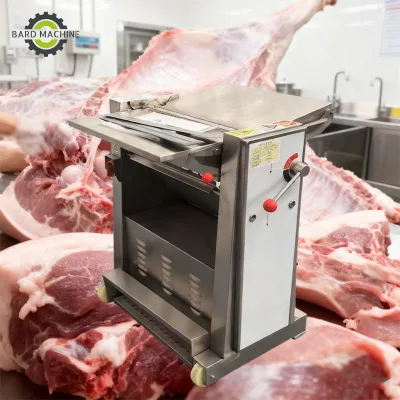
Source Beef Tongue Peeling Machine for pork, beef, and pig processing
Find 30 Beef Tongue Peeling Machine options from Henan and China suppliers. Compare automatic models with stainless steel construction, varying speeds, and customized features for efficient pork and beef production lines.
Key considerations
Products List

Fresh Beef Fascia Remove Machine Beef Tongue Peeling Machine Lamb Chop Peeling Machine
$3800.00 - $3900.00
MOQ: 1 Sets


Automatic Pork Meat Skin Removing Machine Beef Remover Peeling Machine
$2000.00 - $4500.00
MOQ: 1 Pieces


Pig Sheep Beef Meat Peeling Pork Meat Skin Removing Skinning Peeler Machine
$2000.00 - $3500.00
MOQ: 1 Pieces

Goat Skin Peeler Remover Pig Meat Skinner Beef Meat Skin Peeling Machine
$2000.00 - $3500.00
MOQ: 1 Pieces

Pork Skinner Cattle Skin Peeling Machine Pig Skin Peeler Sheep Skinning Machine
$1000.00 - $1600.00
MOQ: 1 Pieces



Comprehensive Sourcing Guide
Beef Tongue Peeling Machine Sourcing Guide
Selecting the right equipment for beef tongue processing requires a clear understanding of the mechanical differences between general meat slicers and specialized peeling lines. While many suppliers list generic meat slicers, the specific task of removing the tough outer membrane and skin from beef tongues demands machinery designed for high-adhesion surface treatment rather than simple slicing. Buyers must distinguish between machines that merely slice meat and those engineered to peel, as the latter often involve rotating drums, abrasive surfaces, or specialized blade configurations that handle the unique texture of tongue tissue. This distinction is critical for maintaining product integrity and ensuring consistent yield in high-volume production environments.
The procurement landscape for this equipment is diverse, with listings ranging from compact, single-unit slicers to full-scale automated production lines. Observed market data indicates a wide variance in capabilities, with some units operating at speeds up to 37 meters per minute while others are configured for slower, more precise peeling operations. Understanding these operational differences allows procurement teams to align their purchasing decisions with their actual throughput requirements. It is essential to evaluate whether the machinery supports the specific geometry of beef tongues or if it is better suited for other meat products, as misalignment can lead to significant operational inefficiencies and increased labor costs.
Product Scope and Observed Listing Signals
The current market offers a variety of equipment that may be marketed under broad terms such as "meat slicer" or "pork production line," yet many of these units are adaptable or specifically designed for tongue processing. Listings frequently highlight customization options, allowing buyers to tailor the machine to specific tongue sizes and processing speeds. For instance, some observed models feature a cutting width of 445mm or 500mm, which directly impacts the throughput capacity and the size of tongues that can be processed in a single pass. Buyers should scrutinize these dimensional specifications to ensure the machine accommodates the largest tongues in their supply chain without requiring excessive manual repositioning.
Voltage and power specifications vary significantly across available models, reflecting the diverse electrical infrastructure found in different global markets. Some units are designed for 220V single-phase power, making them suitable for smaller facilities or regions with limited electrical capacity, while others require 380V three-phase power for higher torque and sustained operation. Power ratings observed in the market range from 0.75kw to 1.1kw, indicating that energy consumption and motor strength are key differentiators. Procurement teams must verify the electrical requirements of their facility before ordering to avoid costly retrofitting or the need for additional transformers, ensuring that the selected machine integrates seamlessly into existing utility systems.
Technical Specifications to Verify
Material construction is a paramount consideration for any food processing equipment, particularly when dealing with products that require frequent cleaning and sanitization. High-quality beef tongue peeling machines are typically constructed from SUS304 stainless steel, a grade known for its corrosion resistance and ease of maintenance. This material choice is not merely aesthetic but functional, as it prevents rust and bacterial buildup in the moist, high-acid environment of meat processing. Buyers should verify that all contact surfaces, including blades, drums, and conveyor belts, are made from this specific grade of stainless steel to ensure compliance with food safety standards and to extend the lifespan of the equipment.
Speed and cutting precision are critical technical parameters that define the efficiency of the peeling process. Observed specifications indicate that some machines operate at speeds of 18 meters per minute, while others may reach up to 37 meters per minute, depending on the configuration and application. Additionally, cutting thickness capabilities often range from 0.6mm to 6mm, allowing for fine-tuning to remove only the outer membrane while preserving the tender meat underneath. Buyers must assess whether the machine offers adjustable settings for thickness and speed, as this flexibility is essential for handling different grades of beef tongues and minimizing waste. The weight of the machine, ranging from 160kg to 180kg for certain models, also indicates the stability and robustness of the unit, which is crucial for maintaining consistent performance during high-speed operation.
Compliance and Safety Documentation
Food safety compliance is non-negotiable in the meat processing industry, and buyers must ensure that the Beef Tongue Peeling Machine meets all relevant local and international regulations. This includes verifying that the machine’s design facilitates easy cleaning and prevents cross-contamination, which is often achieved through smooth, seamless surfaces and accessible components. Documentation should confirm that the materials used are food-grade and that the machine does not introduce any harmful substances into the product. Buyers should request detailed material certificates and hygiene design reports from suppliers to validate these claims, ensuring that the equipment aligns with strict sanitary standards.
Electrical safety is another critical area that requires thorough verification. Machines operating at 220V or 380V must comply with regional electrical safety codes, including proper grounding, insulation, and protection against short circuits. Buyers should ensure that the supplier provides comprehensive electrical schematics and safety certifications, such as CE or UL marks, depending on the destination market. These certifications indicate that the machine has undergone rigorous testing for electrical hazards and operational safety. Additionally, buyers should verify that the machine includes necessary safety features, such as emergency stop buttons and protective guards, to prevent accidents during operation and maintenance.
Cost Drivers and Commercial Terms
The price of beef tongue peeling machines varies widely, with observed listings ranging from $600 to $22,000, reflecting differences in complexity, automation level, and material quality. Lower-priced units may be basic slicers with limited peeling capabilities, while higher-priced models often feature advanced automation, precise cutting controls, and robust stainless steel construction. Buyers should analyze the cost structure to understand what features are included in the price, such as installation support, training, and warranty coverage. It is important to avoid selecting a machine based solely on the lowest price, as this may result in higher operational costs due to inefficiencies or frequent maintenance needs.
Commercial terms, including lead time and packaging, also play a significant role in the total cost of ownership. Observed lead times for these machines typically range from 2 to 7 days, depending on the customization requirements and production schedule. Buyers should confirm these timelines to ensure that the equipment arrives in time for their production needs, avoiding delays that could impact supply chain continuity. Packaging is another critical factor, with options including plywood cases, wooden boxes, and export-grade packaging. Proper packaging is essential to protect the machine from damage during transit, especially for heavy units weighing up to 180kg. Buyers should verify that the packaging meets international shipping standards to minimize the risk of transit damage and associated replacement costs.
Supplier Qualification and Quality Control
Supplier qualification is a vital step in the procurement process, as the reliability of the manufacturer directly impacts the performance and longevity of the Beef Tongue Peeling Machine. Buyers should prioritize suppliers who specialize in meat processing equipment and have a proven track record of delivering high-quality machinery. Verification of the supplier’s manufacturing capabilities, including their production facilities and quality control processes, is essential to ensure that the machine meets the specified technical requirements. Buyers should request detailed information about the supplier’s experience with similar products and their ability to provide customization services, as this indicates their flexibility and expertise in meeting specific buyer needs.
Quality control measures should be implemented throughout the production and delivery process to ensure that the machine arrives in perfect condition. Buyers should establish clear quality acceptance criteria, including visual inspections, functional tests, and material verification, before approving the final shipment. It is advisable to conduct pre-shipment inspections or hire third-party inspection services to verify that the machine conforms to the agreed-upon specifications. Additionally, buyers should ensure that the supplier provides comprehensive documentation, including user manuals, maintenance guides, and warranty terms, to support ongoing operation and troubleshooting. This proactive approach to quality control helps mitigate risks and ensures that the investment yields the expected performance and durability.
Long-Term Procurement Checks
Long-term procurement success depends on the availability of spare parts and the supplier’s ability to provide ongoing technical support. Buyers should verify that the supplier maintains a stock of critical spare parts, such as blades, motors, and control components, to minimize downtime in the event of a breakdown. A reliable supplier should also offer responsive technical support, including remote troubleshooting and on-site service options, to address any issues that arise during operation. Establishing a clear service agreement with the supplier can help ensure that maintenance and repair needs are met promptly, preserving the efficiency and reliability of the Beef Tongue Peeling Machine over its lifespan.
Regular maintenance and performance monitoring are essential for extending the life of the equipment and maintaining consistent product quality. Buyers should develop a preventive maintenance schedule that includes regular cleaning, lubrication, and inspection of key components. Monitoring performance metrics, such as peeling speed, cutting thickness accuracy, and energy consumption, can help identify potential issues before they lead to costly failures. By implementing a robust maintenance program and maintaining a strong relationship with the supplier, buyers can ensure that their Beef Tongue Peeling Machine continues to operate efficiently and effectively, supporting long-term production goals and profitability.
FAQs
What is the cutting width of the Beef Tongue Peeling Machine?
The cutting width is 445mm for the WE-JM460 model and 500mm for the TC-JM series. These dimensions accommodate standard beef tongue sizes for efficient processing. The machine operates at a speed of 37 meters per minute for the WE-JM460 and 18 meters per minute for the TC-JM series. This ensures consistent peeling performance across different production volumes.
Can the Beef Tongue Peeling Machine be customized?
Yes, customization is available for these automatic meat slicers and production lines. The machines are built with SUS304 stainless steel for durability and hygiene. Buyers can specify requirements for the production cycle, which typically takes two days. The equipment is brand-new and designed for mild processing of pork and beef products.
What is the lead time for ordering a Beef Tongue Peeling Machine?
The standard lead time is 5-7 days for most models. Some production lines have a shorter production cycle of just two days. The machines are shipped in plywood cases or wooden box packaging to ensure safe transit. This quick turnaround supports efficient supply chain planning for food processing facilities.
What voltage options are available for the Beef Tongue Peeling Machine?
The machines support both 220V and 380V electrical inputs. This flexibility allows installation in various industrial settings with different power infrastructure. The power consumption ranges from 0.75kw to 1.1kw depending on the specific model. Electric power sources ensure stable and reliable operation during continuous peeling tasks.
Which models are suitable for beef tongue peeling production?
Suitable models include WE-JM460, JHYQ series, and TC-JM series. These automatic machines are designed for peeling pork and beef products. The JHYQ series includes models like JHYQ-24, JHYQ-60, and JHYQ-169. The TC-JM series features models such as TC-JM-800 and TC-JM-804. Each model offers specific cutting thickness and width capabilities.
What is the weight of the Beef Tongue Peeling Machine?
The machine weight varies by model, with some weighing 160kg and others 180kg. These weights reflect the robust stainless steel construction and automatic components. The compact standard dimensions, such as 710*720*1000mm or 850*600*980mm, facilitate easy placement in processing plants. The sturdy build ensures stability during high-speed peeling operations.