Source Biodegradable Bagasse Food Tray for Catering, Events, and Takeout
Find 30 listings for Biodegradable Bagasse Food Tray options including round and rectangular shapes. Compare specifications like capacity, certifications, and packaging details from suppliers in Xiamen to select the right eco-friendly solution.
Key considerations
Products List


Biodegradable Compostable Sugarcane Paper Food Bagasse Tray with PLA Coating
$0.01 - $0.02
MOQ: 20000 Pieces

Biodegradable Sugarcane Sushi Plate Bagasse Disposable Food Takeaway Tray with Tranparent Lid
$0.02 - $0.04
MOQ: 50000 pieces


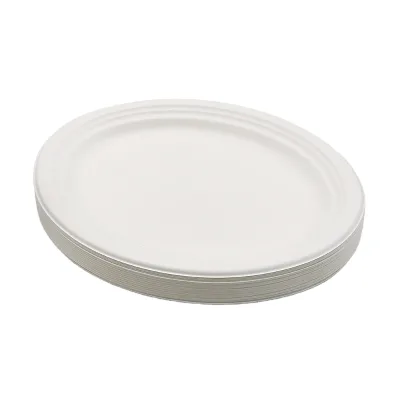


Biodegradable Tableware Food Packaging Container Disposable Paper Plate
$0.02 - $0.05
MOQ: 10000 Pieces


Comprehensive Sourcing Guide
Strategic Sourcing Guide for Biodegradable Bagasse Food Trays
Understanding the Material and Production Process
The core of sourcing biodegradable bagasse food trays lies in understanding the raw material and the specific manufacturing process that transforms it. Bagasse is the fibrous residue left after sugarcane is crushed to extract its juice. This material is distinct from other plant-based fibers because it is naturally strong, heat-resistant, and fully compostable. The primary production method observed in the market for these items is pulp moulding. This process involves mixing the bagasse fibers with water to create a slurry, which is then pressed into molds under high heat and pressure to form the final tray shape. This technique eliminates the need for chemical binders or synthetic plastics, ensuring the final product remains entirely natural.
Buyers should verify that the supplier utilizes a genuine pulp moulding process rather than a simple paper coating or a composite that includes plastic liners. The physical characteristics of the trays are often defined by their weight and dimensions. Observed specifications in the current market include weights around 28 grams and various dimensional standards such as 234x172x35mm, 265x215x25mm, and 318x255x22mm. The shape of the trays is not uniform; while round shapes are common, rectangular options are also widely available to suit different food presentation needs. The color of the product is typically natural, reflecting the unbleached state of the sugarcane fiber, though white variants are also produced. Understanding these physical attributes is the first step in defining the technical requirements for a procurement order.
Technical Specifications and Customization Options
When defining the technical scope of a purchase, buyers must look beyond the generic term "food tray" to specific model numbers and capacity metrics. The market offers a range of models, including identifiers such as TC, TC01PLATE, and TC01TP012. These models often correlate with specific capacities, with some units rated for 600ml volumes. The sizing standards vary significantly, with options ranging from 6 to 10 inches in diameter for round trays, or specific inch-based measurements like 12x10 inches for rectangular formats. The standard dimensions provided in supplier catalogs, such as 234x172x35mm, serve as a baseline, but buyers should be aware that dimensions can also be defined "according to the gram," indicating that weight is a primary driver for size consistency in certain production lines.
Customization is a critical factor for many B2B buyers looking to differentiate their brand. The sourcing data indicates that customization is available for these products. This can include the acceptance of customized logos, allowing businesses to print their branding directly onto the tray surface. The production of customized items often requires a sample time of approximately 3 days, with a broader sample window of 3 to 7 days noted in some contexts. The lead time for full production runs is substantial, with observed delivery times extending up to 45 days. This timeline is crucial for supply chain planning, particularly for seasonal events or large-scale distribution needs. Additionally, the packaging specifications are a key technical detail; trays are typically packed in poly bags containing 50 pieces, which are then grouped into cartons of 500 pieces. However, some suppliers may offer alternative packing methods such as simple carton packages or poly bags with paper boxes, depending on the specific order requirements.
Compliance, Certification, and Regulatory Standards
Navigating the regulatory landscape is essential for importing biodegradable food trays, especially when targeting markets in Europe and North America. The supply chain data highlights several critical certifications that buyers should verify. The most frequently observed certifications include FDA (Food and Drug Administration) approval, which is mandatory for food contact materials in the United States. Additionally, CE/EU certification is prevalent, indicating compliance with European safety and health standards. Some suppliers also list CIQ (China Inspection and Quarantine) and SGS (Société Générale de Surveillance) certifications, which provide third-party validation of quality and safety.
While the background knowledge mentions standards like EN13432 and ASTM D6400, these are general industry standards for biodegradability and compostability. Buyers should not assume a product automatically meets these specific standards unless explicitly stated in the product documentation. Instead, the procurement strategy should focus on verifying that the supplier holds the specific certifications listed in their product attributes, such as FDA and CE/EU. The presence of these certifications ensures that the bagasse trays are safe for direct food contact and meet the legal requirements for importation. It is also important to note that the product is classified as disposable, which implies that the regulatory framework focuses on single-use waste management and food safety rather than durability or reusability. Buyers must ensure that the specific batch they order carries the valid certification marks to avoid customs delays or regulatory penalties in the destination market.
Cost Drivers and Economic Considerations
The economics of sourcing biodegradable bagasse trays are influenced by several variables, including raw material costs, order volume, and logistical expenses. The observed price range in the market is quite low, ranging from 0 to 0.56 USD per unit. However, this pricing is highly dependent on the Minimum Order Quantity (MOQ). The data reveals a significant disparity in MOQ requirements, ranging from 1,000 units to as high as 100,000 units. Specific listings indicate MOQs of 50,000 pieces or 100,000 pieces, suggesting that economies of scale are a dominant factor in pricing. Smaller orders may incur higher per-unit costs or may not be feasible depending on the supplier's production capacity.
The cost structure is also affected by the customization level. Orders requiring customized logos or specific dimensions may carry a premium compared to standard "natural" or "white" trays. The production process, being pulp moulding, is energy-intensive due to the heat and pressure required, which can influence the base cost. Furthermore, the origin of the product, primarily identified as Xiamen, China, impacts shipping costs. Buyers must factor in the lead time of 45 days, which ties up capital and requires precise inventory planning. The "competitive price with good quality" advantage noted in supplier attributes suggests that while the unit cost is low, the value proposition relies on maintaining high quality standards to justify the bulk purchase. Buyers should request detailed quotes that break down the cost per unit at different volume tiers to understand the true cost drivers and negotiate effectively based on projected annual consumption.
Typical Applications and Usage Scenarios
The versatility of biodegradable bagasse trays makes them suitable for a wide array of applications, primarily driven by their food-safe and eco-friendly nature. The primary usage category is for food service, including restaurants, catering services, and food delivery platforms. The trays are designed to hold various types of food, making them ideal for serving main courses, snacks, or side dishes. The specific usage attributes also include suitability for beverages, indicating that these trays can double as drink holders or coasters in certain configurations.
The shape and size of the trays dictate their specific application. Round trays are often used for serving desserts, pizzas, or whole meals, while rectangular trays are better suited for sandwiches, appetizers, or buffet-style service. The "Food Container" and "Dinnerware Type: Boxes" classifications suggest that these products are often used in takeout scenarios where the tray serves as both the serving vessel and the disposal container. The eco-friendly feature is a significant selling point for businesses aiming to reduce their environmental footprint. By choosing bagasse trays over plastic or styrofoam, companies can align with sustainability goals and appeal to environmentally conscious consumers. The "Fashionable" style attribute implies that these trays are also suitable for events, parties, and corporate functions where presentation matters. The ability to customize the logo allows businesses to use these trays as a marketing tool, reinforcing brand identity at every point of customer interaction.
Supplier Evaluation and Quality Control Protocols
Selecting the right supplier requires a rigorous evaluation process that goes beyond price comparisons. Buyers should prioritize suppliers who can demonstrate consistent adherence to the certifications mentioned, such as FDA and CE/EU. It is vital to verify that the supplier's origin is accurately stated, with Xiamen being a common hub for this type of manufacturing. The production process must be transparent; buyers should confirm that the trays are made via pulp moulding and not a hybrid process that compromises biodegradability.
Quality control should be a central part of the procurement agreement. Given the observed weight of 28 grams, buyers should establish tolerance levels for weight variation to ensure consistency across batches. The packaging specifications, such as 50 pieces per polybag and 500 pieces per carton, must be strictly followed to prevent damage during transit. Since the sample time is short (3 days), buyers should utilize this window to conduct physical tests on the samples, checking for structural integrity, heat resistance, and leak-proof capabilities. The "Advantage: Biodegradable, Eco-Friendly" claim should be backed by the supplier's ability to provide test reports or documentation proving the compostability of the material. Additionally, the lead time of 45 days must be respected in the contract to avoid supply chain disruptions. Buyers should also evaluate the supplier's responsiveness to customization requests, as the ability to produce customized logos and specific dimensions is a key differentiator in the market.
Long-Term Procurement and Sustainability Strategy
For long-term success, buyers should view the procurement of biodegradable bagasse trays as part of a broader sustainability strategy. The shift away from single-use plastics is a global trend, and securing a reliable supply chain for bagasse products positions a business favorably for future regulatory changes. The high MOQs observed, such as 100,000 pieces, suggest that this is a product best suited for large-scale, recurring orders rather than sporadic purchases. Buyers should plan their inventory to align with the 45-day lead time, ensuring that stock levels are maintained to prevent production halts.
The "Competitive Price with Good Quality" attribute indicates that the market is competitive, but quality must not be sacrificed for cost. As the industry matures, suppliers may offer more advanced features or stricter compliance with emerging standards like EN13432 or ASTM D6400. Buyers should stay informed about these developments and be prepared to adjust their specifications accordingly. The customization options available, including logos and specific shapes, offer opportunities for brand differentiation that can yield long-term customer loyalty. By maintaining a strong relationship with a supplier who can consistently deliver high-quality, certified bagasse trays, businesses can ensure a steady supply of eco-friendly packaging that meets both regulatory requirements and consumer expectations. The ultimate goal is to create a sustainable supply chain that supports the business's growth while minimizing its environmental impact.
FAQs
What certifications do biodegradable bagasse food trays typically hold?
These trays typically hold FDA and CE/EU certifications for food safety. Some listings also include CIQ and SGS certifications. Buyers should verify these marks ensure compliance with destination market regulations before ordering.
How long is the delivery time for custom orders?
The standard delivery time is 45 days for production runs. Sample times are shorter, usually taking 3 days or 3 to 7 days. This lead time must be factored into supply chain planning for large orders.
What is the minimum order quantity for these trays?
Minimum order quantities range from 1,000 to 100,000 pieces depending on the supplier. Specific listings often require 50,000 or 100,000 pieces. Lower MOQs may not be available for all customization options.
Can buyers request customized logos on the trays?
Yes, customized logos are acceptable for these products. Customization is available for branding purposes on the natural or white trays. This service typically requires a sample time of 3 days before full production begins.
Which materials are used to make these disposable trays?
The trays are made from bagasse, a fibrous residue from sugarcane. The production process uses pulp moulding to form the shape without synthetic plastics. This ensures the product is biodegradable and eco-friendly.
What are the standard dimensions for these food containers?
Standard dimensions include sizes like 234x172x35mm and 265x172x35mm. Some models are defined by capacity, such as 600ml, or by diameter like 6 to 10 inches. Rectangular options also exist with specific inch measurements.
How are the trays packaged for shipping?
Trays are typically packed 50 pieces per poly bag and 500 pieces per carton. Alternative packaging includes poly bags with paper boxes or simple carton packages. Buyers should confirm specific packing details to prevent transit damage.