Source Biodegradable Bamboo Hair Comb for Hotels, Travel, and Home
Explore 30 listings for the Biodegradable Bamboo Hair Comb suitable for commercial and personal use. Buyers can compare customization options, eco-friendly features, and specifications from verified suppliers in China.
Key considerations
Products List





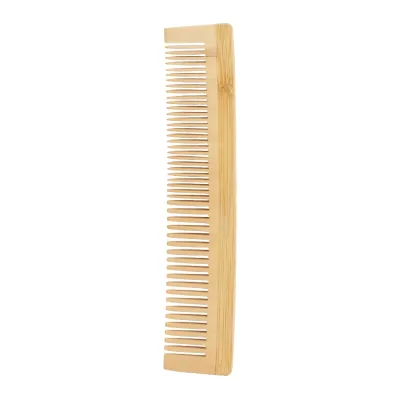
Eco-Friendly Biodegradable Wooden Bamboo Hair Comb for Hotel Home or Travel
$0.01 - $0.15
MOQ: 10000 Pieces


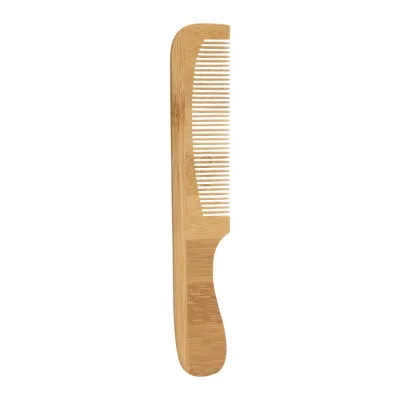
Custom Portable Eco-Friendly Bamboo Hair Comb Biodegradable Hotel Travel Comb
$0.24 - $0.25
MOQ: 5000 Pieces




China Factory Wholesale Small Black Hotel Hair Comb Disposable Hotel Comb
$0.04 - $0.19
MOQ: 5000 Pieces


Comprehensive Sourcing Guide
Strategic Sourcing Guide for Biodegradable Bamboo Hair Combs
Understanding Product Specifications and Material Integrity
When sourcing biodegradable bamboo hair combs, the primary objective is to verify that the product meets the dual requirements of functional durability and environmental sustainability. The core material for these items is identified as natural bamboo, often sourced from regions in Guangdong, China, which is a known hub for bamboo processing. The manufacturing process typically involves transforming the raw bamboo into a finished comb with specific dimensions. Observed product standards indicate lengths ranging from 14 cm to 16 cm, with specific measurements noted as 145 mm and 175 mm. These variations suggest that buyers must define their exact size requirements early in the procurement process, as the product specifications are often based on the specific products chosen by the client.
The physical construction of the comb is critical for its performance. The handle material is frequently described as original bamboo or wood, ensuring a natural feel and grip. Unlike plastic alternatives, these combs are designed to be foldable in certain configurations, though many standard models are sold in an unfolded state. The product is classified as a "Common Comb" with a classic style, suitable for hair beauty care functions. It is important to note that while the material is natural, the final product is often treated to ensure it is biodegradable and eco-friendly. The production capability of suppliers in this sector is substantial, with some facilities reporting an annual productivity of up to 1,000,000 sets, indicating that volume orders can be met without significant strain on supply chains.
Compliance, Certification, and Environmental Standards
For buyers targeting the hospitality and commercial sectors, compliance with environmental and safety standards is non-negotiable. The biodegradable nature of the bamboo comb is a key selling point, but it must be backed by verifiable certifications. High-confidence data indicates that suppliers may hold certifications such as FSC (Forest Stewardship Council), BSCI (Business Social Compliance Initiative), NSF, and Waltek Certification. These credentials serve as evidence that the bamboo is sourced sustainably, the manufacturing process adheres to social responsibility standards, and the final product meets specific safety and quality benchmarks.
However, buyers must exercise caution regarding certification claims. While FSC is a recognized standard for sustainable forestry, and ISO 9001 is a common quality management standard, the presence of these certifications on a product page does not guarantee that every single unit in a shipment is certified. The buyer's responsibility is to request valid, current certificates for the specific batch being ordered. The "Eco-Friendly" and "Biodegradable" attributes are listed as features, but these are observations rather than universal claims for every listed product. Therefore, the procurement strategy must include a verification step where the supplier provides the actual documentation for the FSC and BSCI certifications before a purchase order is finalized. This due diligence ensures that the marketing claims of "Natural healthy" and "Biodegradable" are substantiated by third-party audits.
Cost Drivers and Economic Parameters
The economics of sourcing biodegradable bamboo combs are influenced by several distinct factors, including material costs, customization requirements, and order volume. The observed price range for these items is between $0.01 and $1.20 USD, a wide spectrum that reflects differences in size, finish, and branding. The Minimum Order Quantity (MOQ) is a significant driver in the cost structure, with observed ranges spanning from 120 units to 50,000 units. A specific high-confidence fact notes an MOQ of 5,000 units for certain configurations, which suggests that smaller buyers may face higher per-unit costs or need to consolidate orders to meet supplier thresholds.
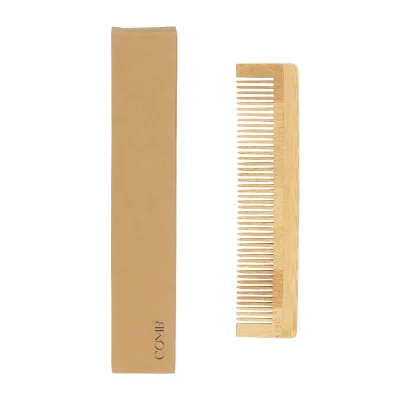
Customization is a major cost variable. The product allows for logo placement ("Put Your Logo on The Products"), and the brand can be customized. While the base product is available, adding a custom logo or altering the packaging from standard to a branded box or carton will increase the unit price. The sample process is also a cost consideration; while samples are often free, the sample time is typically 3-5 days. Buyers should factor in the logistics of receiving these samples to verify quality before committing to a large order. The transportation packing, which can be single packing or packed in cartons, also impacts the final landed cost, as bulkier packaging increases shipping expenses. Understanding these variables allows buyers to negotiate effectively, balancing the desire for customization and branding against the constraints of MOQ and unit pricing.
Typical Applications and Market Segmentation
Biodegradable bamboo hair combs are versatile products designed for a wide array of applications, primarily serving the commercial and hospitality sectors. The product is explicitly categorized for use in hotels, homes, and travel scenarios. In the hotel industry, these combs are often part of a larger amenity set, which may include shampoo, bath gel, conditioner, and body lotion in 30ml containers. The comb is frequently listed alongside other hotel supplies such as bedding sets, towels, winter slippers, and kitchen supplies. This integration into amenity kits makes the comb a critical component of the guest experience, where the shift toward eco-friendly products is increasingly demanded by environmentally conscious travelers.
The target age group for these combs includes both children and adults, making them suitable for a broad demographic. The "Hotel Kitchen Supplies" category also lists the comb, suggesting its utility in various service contexts beyond just personal grooming. The product's application is defined as "For Commercial," indicating that it is manufactured to withstand the rigors of high-volume usage in public or semi-public spaces. Whether used as a standalone item or part of a comprehensive amenity package, the bamboo comb serves as a functional tool for hair beauty care. Its biodegradable nature aligns with the sustainability goals of modern hotels and retail chains looking to reduce their plastic footprint. Buyers should consider how the comb fits into their existing product lines, whether as a standalone SKU or a component of a larger hotel amenity collection.
Supplier Evaluation and Production Capabilities
Evaluating a supplier for biodegradable bamboo combs requires a focus on their production capacity, geographic location, and ability to handle customization. The primary origin for these products is China, specifically the Guangdong province, which is a strategic location for bamboo processing and manufacturing. Suppliers in this region often have established supply chains for raw bamboo and the necessary machinery to produce combs with high precision. The annual productivity of some suppliers reaches 1,000,000 sets, demonstrating the capacity to handle large-scale orders. However, buyers must verify if this capacity is dedicated to their specific order or if it is shared across multiple clients.
Customization capabilities are a key differentiator among suppliers. The product attributes indicate that customization is available, allowing buyers to request specific designs, sizes, and branding. The ability to put a logo on the product is a standard offering, but the quality of the branding application must be verified. Additionally, the packaging options vary, with products being packed in OPP bags, cartons, or boxes. Buyers should assess the supplier's flexibility in adapting their packaging to meet specific logistical or branding needs. The sample time of 3-5 days is a positive indicator of a responsive supply chain, but buyers should also inquire about lead times for mass production to ensure timely delivery. A thorough evaluation should include a review of the supplier's past performance, their adherence to the stated certifications, and their ability to maintain consistent quality across large batches.
Quality Control and Long-Term Procurement Considerations
Maintaining quality in the procurement of biodegradable bamboo combs requires a robust quality control (QC) strategy. The material, being natural bamboo, is subject to variations in grain, texture, and potential defects such as cracks or splinters. The product specifications list a standard length of 14 cm, 15.2 cm, or 16 cm, and buyers must ensure that the finished combs adhere strictly to these dimensions. The "Foldable" attribute suggests that the combs may have moving parts or specific structural designs that require testing for durability. Quality control should focus on the smoothness of the teeth, the integrity of the handle, and the overall finish of the product.
Long-term procurement considerations involve building a sustainable relationship with the supplier. The "Eco-Friendly" and "Biodegradable" features are not just marketing terms but are essential to the product's value proposition. Buyers should ensure that the supplier maintains a consistent supply of high-quality bamboo to avoid fluctuations in product quality. The packaging, whether single packing or in cartons, must protect the combs during transit to prevent damage. Furthermore, the buyer should establish clear communication channels regarding any changes in material sourcing or production processes. Regular audits and quality checks, potentially supported by the mentioned certifications like BSCI and NSF, will help maintain the integrity of the supply chain. By focusing on these long-term factors, buyers can ensure a steady supply of high-quality, biodegradable bamboo combs that meet both functional and environmental standards.
Comparative Analysis of Product Attributes
To assist in decision-making, the following table summarizes the key attributes observed in the sourcing landscape for biodegradable bamboo hair combs. This comparison highlights the variations in specifications, materials, and certifications that buyers must navigate.
| Attribute Category | Observed Specification / Option | Verification Requirement |
|---|---|---|
| Material | Natural Bamboo, Original Bamboo/Wood | Request material origin documentation |
| Dimensions | 14 cm, 145 mm, 15.2 cm, 16 cm, 175 mm | Confirm exact size in purchase order |
| Certifications | FSC, BSCI, NSF, Waltek | Verify current certificate copies |
| Customization | Logo placement, Brand customization | Confirm logo placement method and cost |
| Packaging | OPP Bag, Carton, Box, Single Packing | Define packaging requirements for shipping |
| MOQ | 120 to 50,000 units (e.g., 5,000 specific) | Negotiate MOQ based on order volume |
| Sample Lead Time | 3-5 Days | Confirm sample availability and shipping |
| Application | Hotel, Home, Travel, Commercial | Align product with target market needs |
| Feature | Eco-Friendly, Biodegradable, Foldable | Ensure claims match physical product |
This table serves as a checklist for buyers to ensure all critical aspects of the product are addressed during the sourcing process. By systematically verifying each attribute, buyers can mitigate risks and secure a supply of high-quality biodegradable bamboo hair combs that meet their specific operational and environmental goals.
FAQs
What certifications do these biodegradable bamboo hair combs hold?
High-confidence facts indicate these combs may hold FSC, BSCI, NSF, and Waltek certifications. Buyers must request valid, current certificates for the specific batch ordered to verify that the bamboo is sourced sustainably and the manufacturing process adheres to social responsibility standards before finalizing any purchase.
How long does it take to receive a sample of the comb?
The sample time is typically 3 to 5 days for production. While samples are often provided free of charge, buyers should factor in logistics time to verify quality before committing to a large order, as the sample process is a critical step in the procurement strategy.
What is the minimum order quantity for these bamboo combs?
The observed minimum order quantity ranges from 120 to 50,000 units, with a specific high-confidence fact noting an MOQ of 5,000 units for certain configurations. Smaller buyers may face higher per-unit costs or need to consolidate orders to meet these specific supplier thresholds effectively.
Can I customize the logo on the Biodegradable Bamboo Hair Comb?
Yes, customization is available, allowing buyers to put their logo on the products. Adding a custom logo or altering the packaging from standard to a branded box or carton will increase the unit price, so buyers should negotiate effectively to balance branding desires against cost constraints.
Where are these biodegradable bamboo hair combs manufactured?
The products originate from China, specifically the Guangdong province, which is a known hub for bamboo processing. Suppliers in this region often have established supply chains for raw bamboo and the necessary machinery to produce combs with high precision and substantial annual productivity.
What are the standard dimensions for the Biodegradable Bamboo Hair Comb?
Product standards indicate lengths ranging from 14 cm to 16 cm, with specific measurements noted as 145 mm and 175 mm. Buyers must define their exact size requirements early in the procurement process, as specifications are often based on the specific products chosen by the client.
What materials are used to make the Biodegradable Bamboo Hair Comb?
The core material is identified as natural bamboo, often with an original bamboo or wood handle. While the material is natural, the final product is treated to ensure it is biodegradable and eco-friendly, distinguishing it from plastic alternatives in the commercial and hospitality sectors.