Source Black Iron Wire for Cages, Fences, and Construction
Compare 30 listings for Black Iron Wire suitable for cages, fences, and construction applications. Buyers can evaluate specifications like wire diameter, surface treatment, and packaging options from verified suppliers; compare the available evidence and request quotations based on your requirements.
Updated
Key considerations
Products List

$780.00 - $950.00
MOQ: 20000 Pieces




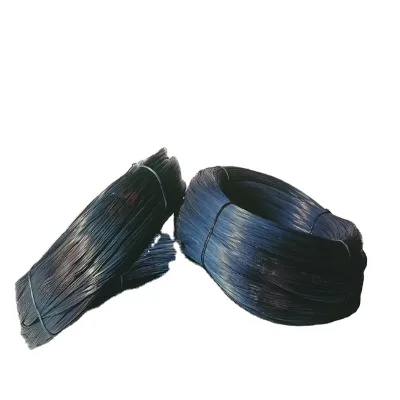
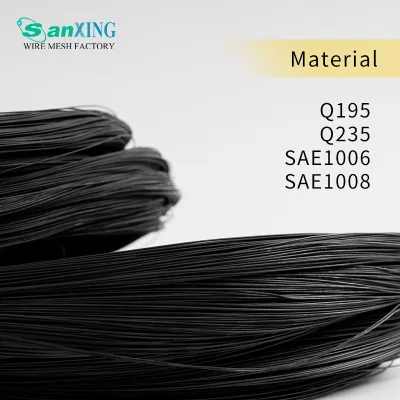
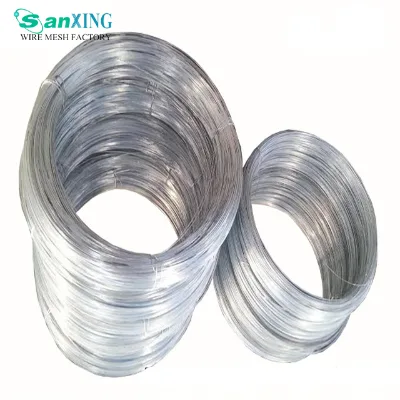
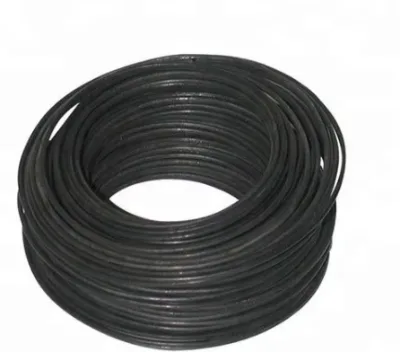
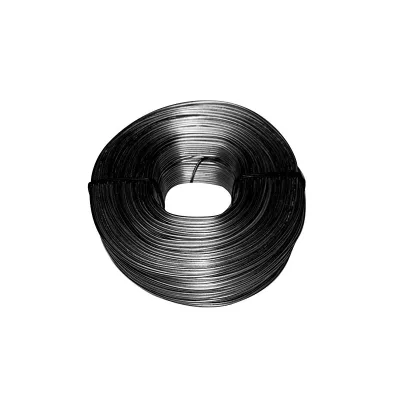

Comprehensive Sourcing Guide
Black Iron Wire Sourcing Guide
Procuring Black Iron Wire requires a disciplined approach to material verification and surface treatment analysis, as the term often encompasses a broad spectrum of steel products with varying mechanical properties. Buyers must distinguish between low-carbon iron wire and higher-grade steel variants, ensuring that the specific alloy composition aligns with the intended end-use application. The supplied data indicates that materials are primarily derived from low-carbon iron wire or low carbon steel wire, which are non-alloy products suitable for general construction and industrial uses. Understanding this distinction is critical because the tensile strength and ductility of the wire will directly impact its performance in tensioning, binding, or mesh formation.
Furthermore, the sourcing process must account for the diverse surface treatments and finishing states available in the market. Observations show that products may be color-coated, galvanized, or left in a black annealed state, each offering different levels of corrosion resistance and aesthetic appeal. The status of the wire, whether in a soft state or drawn to specific gauges, also plays a pivotal role in its workability. Buyers should prioritize suppliers who provide clear documentation on the smelting type, such as iron ore concentrates, and the granularity of the raw materials, as these factors influence the final purity and consistency of the wire product.
Product Scope and Observed Listing Signals
The market for Black Iron Wire presents a wide array of product models and physical configurations, ranging from fine filaments to thick wires with diameters spanning from 0.5mm to 10mm. Listings frequently highlight specific models such as YJD and HLDQ011, indicating that manufacturers offer standardized series alongside custom options. The observed product scope includes loop tie wires and drawn wires with wire gauges typically between 0.7mm and 4mm, catering to both delicate decorative applications and heavy-duty structural requirements. Buyers should note that the width of some mesh-related products can reach up to 1.6 meters, suggesting that the supply chain supports large-scale industrial manufacturing needs.
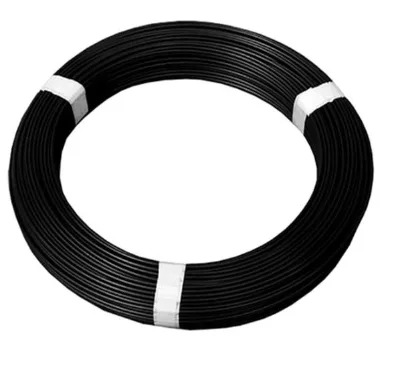
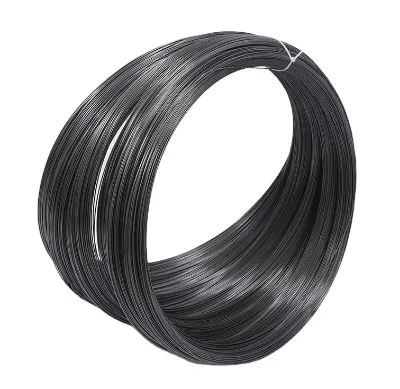
Packaging and presentation vary significantly across suppliers, reflecting different logistical strategies and customer preferences. Common packaging methods include coils wrapped in plastic film and hessian, palletized units, and rolls weighing between 5 and 50 kilograms. Some listings specify packaging in 25kg or 50kg coils, which is essential for inventory management and handling efficiency. The observed minimum order quantities (MOQ) range from 50 tons for certain bulk orders to as low as one unit for smaller trials, providing flexibility for buyers with varying volume requirements. This variability allows procurement teams to scale their orders based on immediate production needs and storage capacity constraints.
Technical Specifications to Verify
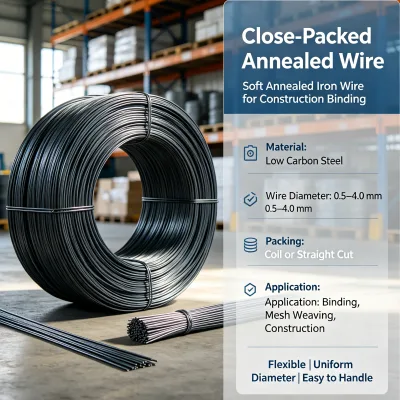
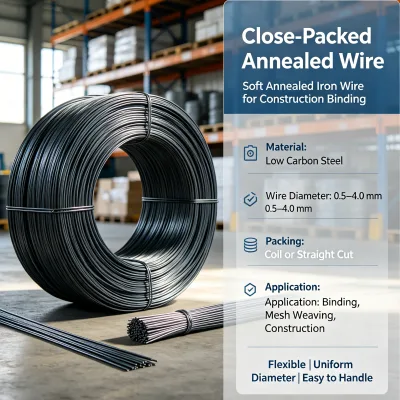
Technical verification must begin with the confirmation of the wire’s cross-sectional shape and dimensional accuracy, as these attributes determine fit and function in assembly processes. The supplied facts confirm that the wire typically features a round cross-section, but buyers must verify the exact diameter tolerances against their engineering drawings. Specifications such as BWG8-22 and BWG5-BWG24 are cited, indicating that gauge standards are a primary method of specification. It is crucial to clarify whether the supplier uses British Wire Gauge (BWG) or metric measurements, as discrepancies can lead to significant fitment issues in downstream manufacturing.
Surface treatment and mechanical properties are equally critical technical parameters that require rigorous validation. The wire may be subjected to cold drawing or hot drawing processes, resulting in a smooth or annealed surface finish. Buyers should request tensile strength data, with observed ranges indicating values between 300-500MPa for certain grades. Additionally, the standard thickness is described as metal filament or thick wire, necessitating precise measurement protocols. Verification of the length specifications, which may range from 1 to 2 meters for specific cut lengths, ensures that the product meets the exact dimensional requirements of the production line without requiring additional cutting or joining operations.
Compliance and Safety Documentation
Compliance documentation serves as the primary evidence of a supplier’s adherence to international quality and safety standards. The observed listings mention certifications such as CE, ISO, and JIS, which indicate that the manufacturer has undergone specific auditing processes for quality management systems and product safety. Buyers must request valid certificates and verify their expiration dates to ensure ongoing compliance. The presence of standards like ASTM, GB, JIS, and BS suggests that the products are manufactured to meet diverse regional regulatory requirements, which is particularly important for exports to markets with strict import regulations.
Safety data sheets (SDS) and material test reports are essential components of the compliance package, providing detailed information on the chemical composition and physical hazards of the wire. Since the material is identified as low-carbon iron or steel, buyers should confirm that the supplier provides documentation regarding the absence of harmful heavy metals or excessive sulfur and phosphorus content. The smelting type, noted as iron ore concentrates, should be backed by mill test certificates that detail the elemental analysis. This documentation not only ensures regulatory compliance but also provides traceability, which is vital for quality assurance and liability management in case of product failure.
Cost Drivers and Commercial Terms
Cost structures for Black Iron Wire are heavily influenced by raw material fluctuations, processing methods, and order volume. The observed price range of 1-950 USD suggests a wide variance based on wire gauge, surface treatment, and quantity. High-volume orders, such as those with an MOQ of 50 tons, likely benefit from economies of scale, reducing the per-unit cost significantly. Buyers should analyze the cost breakdown to understand the proportion attributed to raw iron ore concentrates versus the value added by drawing, annealing, and coating processes. Understanding these drivers helps in negotiating better terms and forecasting budget impacts during periods of raw material price volatility.
Commercial terms, including delivery lead times and payment conditions, also play a significant role in the total cost of ownership. The observed delivery time of 15-20 days after receiving the deposit indicates a standard production cycle that buyers must factor into their supply chain planning. Payment terms typically involve an initial deposit followed by balance payments, which requires careful cash flow management. Additionally, packaging costs, whether in pallets, coils, or rolls, may be included in the unit price or charged separately. Buyers should clarify all incidental costs, such as freight and insurance, to avoid unexpected expenses that can erode the initial price advantage.
Supplier Qualification and Quality Control
Supplier qualification involves a thorough assessment of manufacturing capabilities, quality control systems, and operational reliability. Buyers should verify the supplier’s production capacity and whether they specialize in cold drawing or hot drawing techniques, as these processes affect the wire’s mechanical properties. The observation that products are made from low-carbon iron wire and low carbon steel wire suggests that the supplier has access to consistent raw material sources. It is advisable to conduct on-site audits or request third-party inspection reports to confirm that the manufacturing facilities adhere to the claimed standards and certifications.
Quality control measures must be clearly defined and agreed upon before placing orders. This includes establishing acceptance criteria for surface defects, dimensional tolerances, and tensile strength variations. Buyers should inquire about the supplier’s internal testing protocols, such as routine checks on wire gauge and surface finish. The availability of customization options indicates that the supplier can adapt to specific requirements, but this flexibility must be balanced with strict quality assurance processes. Establishing a clear communication channel for addressing non-conformities and defining remediation steps is essential for maintaining consistent product quality and minimizing production disruptions.
Long-Term Procurement Checks
Long-term procurement success depends on continuous monitoring of supplier performance and market dynamics. Buyers should establish key performance indicators (KPIs) such as on-time delivery rates, defect rates, and responsiveness to quality issues. Regular reviews of these metrics help identify potential risks and drive continuous improvement in the supply chain. Additionally, staying informed about changes in raw material prices and regulatory standards allows buyers to anticipate cost fluctuations and adjust procurement strategies accordingly. Building a diversified supplier base can mitigate risks associated with single-source dependencies and ensure business continuity.
Relationship management and strategic alignment are also critical for long-term partnerships. Engaging in regular technical discussions with suppliers can lead to product improvements and cost-saving innovations. Buyers should encourage suppliers to provide updates on new technologies or materials that could enhance product performance. Furthermore, maintaining open lines of communication regarding future demand forecasts helps suppliers plan their production schedules more effectively, leading to better service levels. By focusing on collaborative growth and mutual benefit, buyers can secure a reliable supply of Black Iron Wire that supports their long-term operational goals.
FAQs
What surface treatments are available for Black Iron Wire?
Black Iron Wire is available with color coated or black surface treatments. Some variants feature a galvanized finish for enhanced corrosion resistance. The wire can also be annealed to achieve a soft state, ensuring flexibility for various applications. These surface options allow buyers to select the appropriate finish based on environmental exposure and specific usage requirements for construction or decorative purposes.
Can Black Iron Wire be customized for specific projects?
Yes, customization is available for Black Iron Wire products. Buyers can specify dimensions such as wire gauge ranging from 0.7mm to 4.0mm or thicknesses like metal filament and thick wire. The material is typically low-carbon iron wire or low carbon steel wire, drawn via cold or hot drawing processes. This flexibility supports diverse industrial needs, including cages, fencing, and filter screens.
What certifications do Black Iron Wire suppliers typically hold?
Suppliers of Black Iron Wire often hold CE and ISO certifications to ensure quality management and safety standards. Some products may also comply with JIS standards. These certifications verify that the manufacturing processes, including smelting from iron ore concentrates and drawing techniques, meet international requirements. Buyers should verify specific certification documents to ensure compliance with their local regulatory frameworks and industry standards.
What is the typical lead time for Black Iron Wire orders?
The typical delivery lead time is 15-20 days after receiving the deposit. This timeframe allows manufacturers to process orders, which may involve cold or hot drawing techniques to achieve the desired wire gauge and tensile strength. Buyers should account for this period when planning production schedules. Expedited options may be available depending on stock availability and specific customization requirements for the ordered wire.
How is Black Iron Wire packaged for shipment?
Black Iron Wire is packaged in coils, often wrapped in plastic film and hessian for protection. Some products are packed on pallets for easier handling and storage. Packaging weights may vary, such as 5-50kg per roll or 25kg/50kg per coil. This secure packaging ensures the wire remains intact during transit, preventing damage to the soft state annealed wire or other specific finishes required by the buyer.
What are the common applications for Black Iron Wire?
Black Iron Wire is widely used for cages, construction wire mesh, decorative mesh, filters, screens, gabion mesh, and fence mesh. It is also suitable for window curtains, barbecue wire mesh, and protecting mesh. The material's versatility, derived from low-carbon iron or steel, allows it to be drawn into various gauges. These applications leverage the wire's strength and flexibility for both industrial and consumer uses.