Source Blind Box TCG Trading Card for Collecting, Gaming, and Sports
Find and compare 30 listings for Blind Box TCG Trading Card products including deck boxes, sleeves, and custom playing cards. Buyers can evaluate materials like paper and PP, closure types, and printing methods from verified suppliers in Zhejiang.
Key considerations
Products List
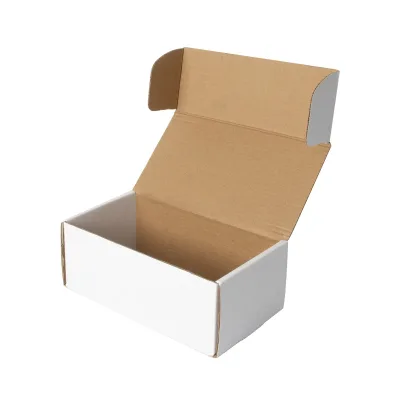
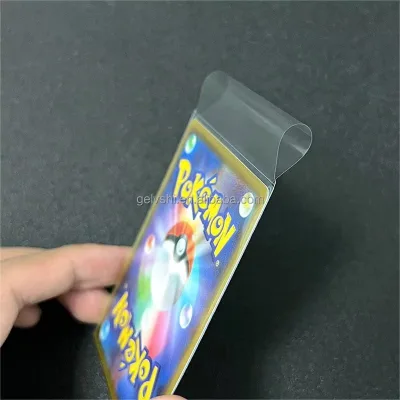
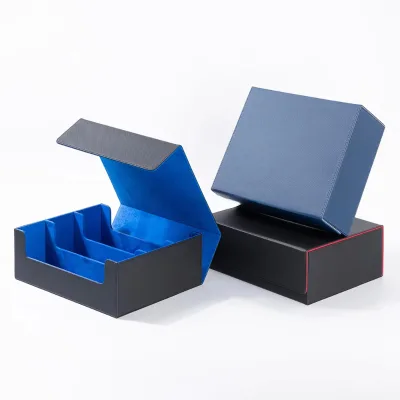
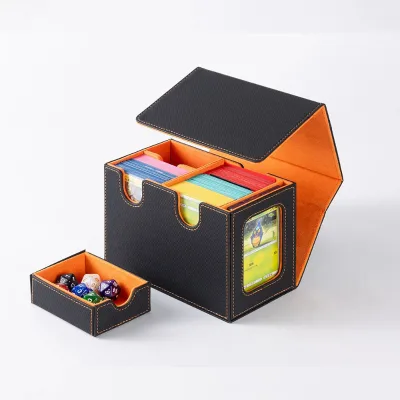
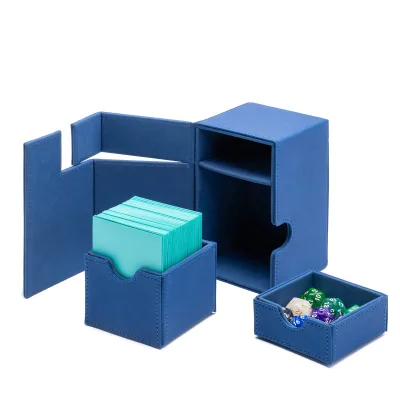


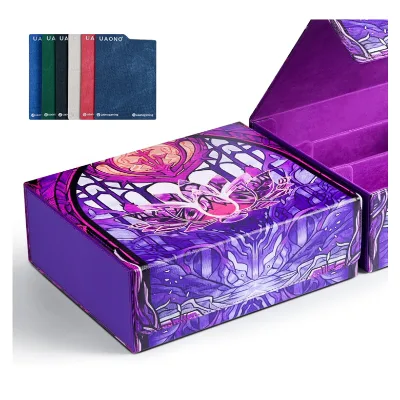
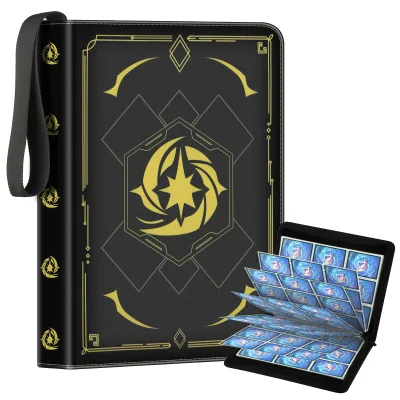
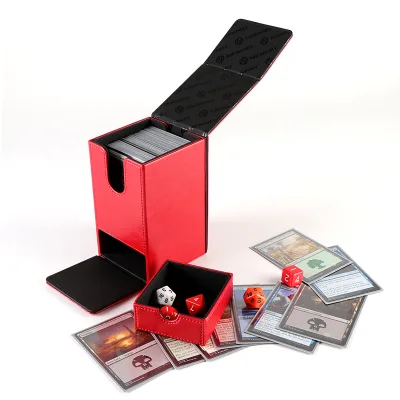
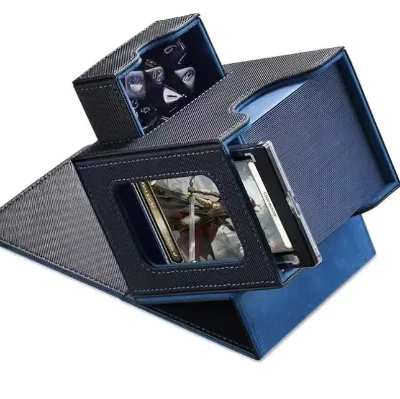
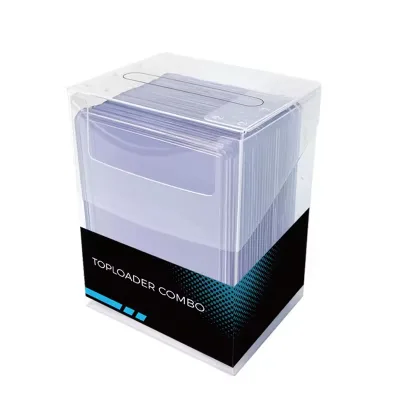
800+ Sleeved Cards Premium Tcg Trading Card Storage Case for Mtg Yu-Gi-Oh Sports Cards
$9.50 - $12.50
MOQ: 200 Pieces


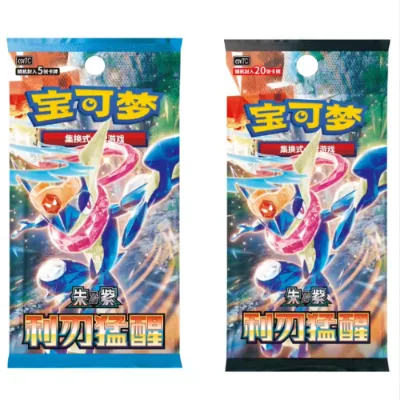
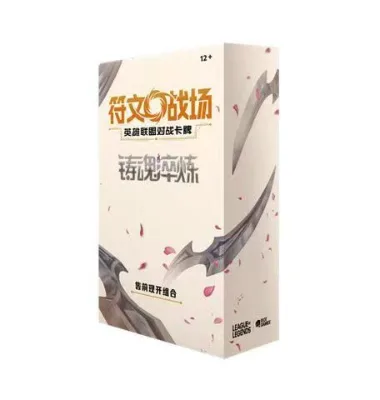
Comprehensive Sourcing Guide
Strategic Sourcing Guide for Blind Box TCG Trading Card Products
Navigating the procurement landscape for blind box TCG (Trading Card Game) trading cards requires a nuanced understanding of the intersection between collectible packaging, card game mechanics, and mass production capabilities. The market for these items is driven by the "surprise" element inherent in blind boxes, which relies heavily on the physical integrity of the card, the durability of the packaging, and the customization potential of the product. Buyers must distinguish between the card stock itself, the protective sleeves, and the outer packaging that constitutes the blind box experience. This guide synthesizes available product attributes and industry standards to provide a disciplined framework for sourcing these specific items.
Technical Specifications and Material Composition
The foundation of any TCG product lies in its material composition and physical dimensions. In the current market, the primary materials observed for card production include paper, PP (polypropylene), PU (polyurethane), and various plastics. The choice of material dictates the card's flexibility, durability, and suitability for specific game mechanics. For instance, paper-based cards, often utilizing art paper or PVC in different thicknesses, are standard for traditional playing cards and trading cards. These are frequently finished with surface treatments such as varnish, lamination, or UV coating to enhance visual appeal and resistance to wear.
Conversely, plastic-based options like PP and PU offer superior durability and water resistance, making them ideal for cards intended for heavy handling or outdoor use. The standard card size is frequently cited as 63*88mm, which aligns with international norms for most trading card games, though customization allows for any other size. The thickness of the card is a critical variable; while specific numerical thicknesses are not universally standardized in the provided data, the material choice (e.g., "Art Paper or PVC in Different Thickness") suggests that buyers must verify the exact gram weight or micron thickness to ensure the cards are not too flimsy or too rigid for the intended blind box mechanism.
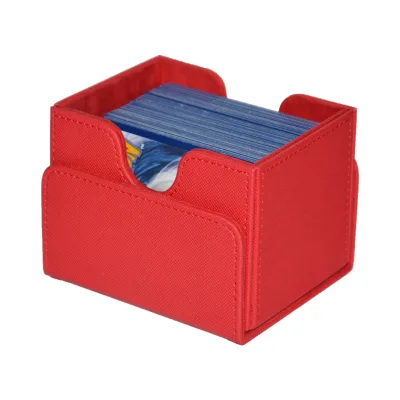
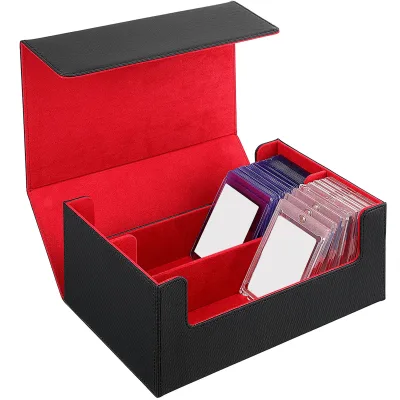
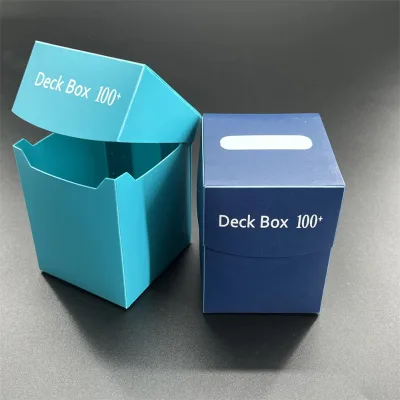
Packaging materials also vary significantly. Deck boxes and card cases are observed in capacities ranging from 100+ to 1800+ cards, constructed from materials like PU or plastic. The closure types for these containers range from "Button" to "No closure," indicating a need for precise specification when sourcing storage solutions that accompany the blind box cards. The color options for these products are extensive, including clear, black, coffee, red, white, purple, and grey, or fully customizable designs.
Compliance, Certification, and Safety Standards
When sourcing TCG products, particularly those that may be handled by younger demographics or sold in blind box formats, compliance with safety and quality standards is paramount. While specific certification bodies are not explicitly listed in the provided product attributes, the presence of standards such as "80+ / 100+ / 130+" and "100+ / 133+ / 160+ / 266+" suggests that manufacturers adhere to specific capacity or grading benchmarks. Buyers must verify that these standards align with local regulations regarding toy safety, particularly concerning small parts if the blind box contains loose components.
The production location is a significant factor in compliance. The observed data indicates that many of these products originate from Zhejiang, China, a major manufacturing hub. Sourcing from this region requires rigorous due diligence regarding the manufacturer's adherence to international safety standards, such as ASTM F963 (US) or EN71 (EU), even if these specific codes are not explicitly printed on every product listing. Buyers should request test reports for flammability, heavy metal content, and mechanical safety, especially if the cards or packaging contain small detachable parts.
Furthermore, the "OEM: Yes" attribute indicates that many suppliers offer Original Equipment Manufacturing services. This implies that the supplier can customize the product to meet specific regulatory requirements of the target market. However, the burden of proof for compliance rests with the buyer. It is essential to confirm that the "Customizable" nature of the product does not compromise the structural integrity or safety of the final item. The "Age: Adult" attribute observed for some applications suggests that certain TCG products are marketed specifically to adult collectors, which may relax certain child-safety requirements but necessitates strict adherence to general product liability standards.
Cost Drivers and Pricing Dynamics
The pricing of blind box TCG trading cards is influenced by a complex array of factors, including material costs, printing complexity, and customization levels. The observed price range in the market spans from $0.1 to $60, a wide variance that reflects the difference between a single card, a basic sleeve, and a premium deck box with extensive customization. The lower end of the spectrum likely corresponds to basic paper cards or simple plastic sleeves, while the higher end encompasses high-quality PU deck boxes, custom-printed cards with advanced finishing, and large capacity storage solutions.
MOQ (Minimum Order Quantity) is another critical cost driver. The observed MOQ range is 1 to 1000 units. For buyers seeking to test the market, suppliers offering an MOQ of 1 or 50 pieces (as noted in the "MOQ: 50 Pieces" attribute) provide a low-risk entry point. However, economies of scale typically kick in at higher volumes. The "Sample: Free Charge Ready Made Samples" attribute suggests that buyers can evaluate quality before committing to large orders, which helps mitigate the risk of cost overruns due to quality issues.
Customization significantly impacts cost. Attributes such as "Logo Printing: With Logo Printing," "Silk Screen Printing," "Laser Printing," and "Heat-Transfer Printing" indicate that the method of branding adds to the unit cost. More complex processes like laser printing or multi-step heat transfer will generally command a higher price per unit compared to standard silk screen printing. Additionally, the "Customization: Available" and "Pattern Type: Customized" attributes imply that bespoke designs require setup fees and longer lead times, which must be factored into the total cost of ownership.
Typical Applications and Use Cases
The versatility of TCG products allows them to serve multiple applications beyond simple gameplay. The observed "Application" attributes include trading cards, game cards, sport cards, playing cards, collectibles, and photo cards. This broad applicability means that a single supplier might offer products suitable for board game enthusiasts, sports memorabilia collectors, or general party favors.
Blind box TCG cards are particularly popular in the "Game Card" and "Collectibles" sectors. The "Function: Protecting/Collector/Display Cards" attribute highlights the dual purpose of these products: they must be playable or usable in a game context while also serving as display items for collectors. Deck boxes with capacities of "1800+" or "550+" are designed for serious collectors who need to store large volumes of cards securely. The "Manner of Packing: 1 Boxes Per Pack" suggests that these are often sold as individual units, which is ideal for retail display or direct-to-consumer shipping.
The "Use: Trading Cards" and "Use: Tcg Card" attributes confirm the primary use case, but the "Application: Home, Chess-and-Card Room" suggests a secondary market for home entertainment. This duality requires buyers to ensure that the product design appeals to both the competitive gamer and the casual home user. The "Color: 400 Count" and "Color: 280+ Single Sleeved Cards Deck Case" attributes indicate that color coding or capacity-based sorting is a common feature, aiding in organization and display.
Supplier Evaluation and Selection Criteria
Selecting the right supplier for blind box TCG products requires a careful evaluation of their capabilities, particularly regarding customization and quality control. The "Brand Name: Simpex" and "Place of Origin: Zhejiang, China" provide a starting point for identifying potential suppliers, but buyers should not limit their search to a single brand. Instead, they should look for suppliers who demonstrate flexibility in their "OEM" and "Customization" offerings.
Key evaluation criteria include the supplier's ability to handle various printing techniques. The presence of "Silk Screen Printing," "Laser Printing," and "Heat-Transfer Printing" in the product attributes suggests that a competent supplier should be equipped to handle multiple finishing methods. Buyers should verify the supplier's equipment and expertise in these areas to ensure that the final product meets design expectations.
The "Member: >Time:0.5-2H" attribute is somewhat ambiguous but may refer to production time or a specific membership tier. Regardless, buyers should clarify lead times and production capacity. A supplier that can provide "Free Charge Ready Made Samples" demonstrates confidence in their quality and allows for a tangible assessment of the product before mass production. Additionally, the "Customizable" nature of the "Logo" and "Pattern" means that the supplier must have a robust design and approval process to ensure that the final output matches the buyer's vision.
Quality Control and Inspection Protocols
Quality control is essential for maintaining the integrity of TCG products, especially when they are sold in blind box formats where the consumer cannot inspect the item before purchase. The "Surface Finishing: Varnish, Lamination, UV Coating" attributes indicate that the visual and tactile quality of the card is a key differentiator. Buyers should implement strict inspection protocols to check for defects in these finishing processes, such as uneven coating, peeling, or misalignment.
For packaging, the "Closure Type" and "Material" must be inspected for durability. A deck box with a "Button" closure must open and close smoothly without breaking, while a "No closure" box must maintain its structural integrity during shipping. The "Standard" attributes, such as "80+ / 100+ / 130+", should be verified against the actual product capacity to ensure that the packaging is not underfilled or overfilled, which could lead to consumer dissatisfaction.
The "Material" consistency is also crucial. Whether the product is made of "Paper," "PP," "PU," or "Plastic," the material must be consistent across the entire batch. Variations in material thickness or color can indicate poor quality control. Buyers should request a "Pre-Production Sample" approval process and conduct "In-Process" and "Final" inspections to catch any deviations early.
Long-Term Procurement Considerations
Sourcing blind box TCG trading cards is not a one-time transaction but a long-term relationship that requires strategic planning. The "Customization: Available" and "Logo: Customizable and Designable" attributes suggest that buyers may want to update their designs periodically to keep the product fresh and engaging. Suppliers who can accommodate frequent design changes and small batch runs will be more valuable in the long run.
The "MOQ: 50 Pieces" and "Selling Units: Single item" attributes indicate that the market supports both small and large orders. Buyers should consider their inventory management strategy and choose a supplier who can scale production up or down based on demand fluctuations. The "Lead Time" and "Production Capacity" are critical factors here; a supplier with a flexible production line can help buyers avoid stockouts or overstock situations.
Finally, the "Application" diversity suggests that buyers should consider the potential for product line expansion. A supplier who can produce both cards and deck boxes, or who can offer different materials like "Art Paper" and "PVC," provides a one-stop solution that simplifies the supply chain. By focusing on suppliers with a broad range of capabilities and a commitment to quality, buyers can build a resilient and adaptable procurement strategy for the blind box TCG market.
FAQs
What materials are used for blind box tcg trading cards?
Materials include paper, PP, PU, and plastic depending on the product type. Paper cards often use art paper with PVC thickness options, while protective sleeves and deck boxes utilize PP or PU for durability and water resistance.
Can I customize the logo and pattern on these cards?
Yes, customization is available for logos and patterns using silk screen, laser, or heat-transfer printing. Buyers can request specific designs, though setup fees and lead times may apply for bespoke orders compared to standard options.
What is the minimum order quantity for these products?
The minimum order quantity ranges from 1 to 1000 units depending on the supplier and product type. Some suppliers offer low-risk entry points with an MOQ of 50 pieces, while others allow single item purchases for sampling.
Which printing methods are available for these trading cards?
Available printing methods include silk screen printing, laser printing, and heat-transfer printing. These techniques allow for various finishes like varnish, lamination, and UV coating to enhance visual appeal and resistance to wear on the cards.
How are the deck boxes for these cards sized and closed?
Deck boxes come in various capacities ranging from 100+ to 1800+ cards with closure types like button or no closure. They are available in colors such as black, clear, red, and purple, or fully customizable designs for specific needs.
Where are these products typically manufactured?
Products are typically manufactured in Zhejiang, China, a major hub for card and packaging production. Buyers should verify that suppliers from this region adhere to international safety standards and provide necessary test reports for compliance.
What is the price range for Blind Box TCG Trading Card products?
The observed price range spans from 0.1 to 60 USD based on material and customization. Lower prices cover basic paper cards or sleeves, while higher costs reflect premium PU deck boxes and complex custom printing services.