Source Block Bottom Putty Powder Bag with Valve for Cement, Fertilizer, and Chemical
Find 29 verified Block Bottom Putty Powder Bag with Valve options from suppliers in Zhejiang and Shandong. Buyers can compare specifications including GSM, dimensions, and customization features for cement, fertilizer, and chemical packaging needs.
Key considerations
Products List

PP Woven Laminated Block Bottom Valve Plastic Bag for Putty Powder Bag
$0.15 - $0.20
MOQ: 10000 Pieces
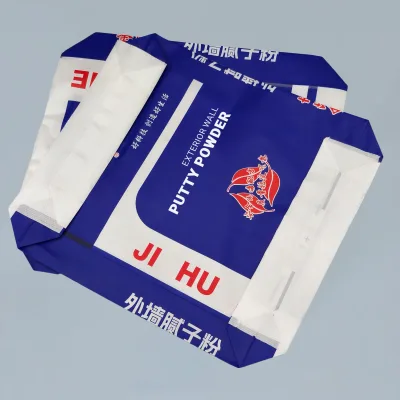


High Quality Plastic White Cement Block Bottom PP Woven Bag with Valve
$0.07 - $0.15
MOQ: 10000 Pieces

25kg 50kg PP Valve Bag with Inner Valve Mouth for Cement and Putty Powder
$0.07 - $0.15
MOQ: 10000 Pieces


25kg Block Bottom PP Woven Sacks Valve Bag for Anti-Crack Putty Powder
$0.15 - $0.26
MOQ: 50000 Pieces


Factory Price 25kg 50kg Putty Powder Bag PP Valve Plastic Packaging Bag
$0.10 - $0.18
MOQ: 5000 Pieces

Hot Sale Paper Valve Sand Lime Powder Bag Paint Putty Powder Cement Packaging Bags
$0.12 - $0.22
MOQ: 10000 Pieces


Comprehensive Sourcing Guide
Strategic Sourcing Guide for Block Bottom Putty Powder Bags with Valve
Procuring specialized packaging for industrial powders like putty powder requires a rigorous approach that balances structural integrity with logistical efficiency. The Block Bottom Putty Powder Bag with Valve represents a specific category of flexible intermediate bulk containers designed to handle high-density, fine-particle materials. Unlike standard flat-bottom bags, these units offer superior stability on conveyor systems and pallets, while the valve mechanism ensures dust-free filling and precise weight control. Buyers entering this market must navigate a landscape of varying material compositions, manufacturing standards, and customization options. This guide outlines the critical technical and operational factors necessary for a successful procurement strategy, grounded in verified product attributes and industry best practices.
Technical Specifications and Structural Integrity
The foundation of a reliable block bottom bag lies in its material composition and geometric design. The core product attributes indicate that these bags are frequently constructed from woven polypropylene (PP) or composite materials, often featuring a GSM (grams per square meter) range between 75 and 120 G/M2. For putty powder applications, which can be abrasive and heavy, the structural strength is paramount. A safety factor of 6:1 is a critical benchmark observed in high-performance units, ensuring the bag can withstand the dynamic stresses of filling, stacking, and transport without rupturing.
The physical dimensions are equally vital. Standard specifications often cite a width range of 45 to 65 cm, with lengths customizable to specific volume requirements. The block bottom configuration, sometimes referred to as a square bottom bag, provides a stable base that prevents tipping during storage. This is distinct from the flat bottom option found in other variants. The valve mechanism, typically a top fill spout, is essential for automated filling lines. It allows for rapid inflation of the bag while minimizing product loss. The internal structure often includes a functional layer of VMPET (Vacuum Metallized Polyethylene Terephthalate) or LDPE heat seal layers to provide moisture proofing and barrier properties. The hardness of the material can vary from soft to rigid depending on the denier count, which typically ranges from 700 to 1500d, influencing the bag's flexibility and resistance to tearing.
Material Composition and Functional Layers
Understanding the layered construction of these bags is essential for verifying their suitability for specific industrial uses. The supply chain data highlights a diversity in material standards, ranging from basic BOPP (Biaxially Oriented Polypropylene) to composite bags. The choice of material directly impacts the bag's resistance to moisture, UV exposure, and chemical interaction. For putty powder, which is sensitive to humidity, the inclusion of a heat-sealed functional layer is non-negotiable. Some specifications indicate a lamination thickness of 25GSM, which adds a protective barrier against environmental factors.
The printing capabilities of these bags also play a role in their functional utility. High-quality units support up to five colors of printing, allowing for detailed branding and safety instructions. The color options are extensive, including white, beige, black, and green, often with custom design availability. The UV treatment mentioned in certain product profiles suggests that bags intended for outdoor storage or long-term transit may require additional stabilization against solar degradation. Buyers must verify whether the specific unit they are sourcing includes this treatment, as it is not universal across all suppliers. The transparency of the bag is typically opaque, which is desirable for containing pigments and dyes that might degrade under light exposure.
Compliance, Certification, and Safety Standards
While specific certification bodies like ISO9100 are sometimes referenced in the broader market, buyers must exercise caution and verify the actual compliance status of any supplier. The provided data does not confirm universal adherence to specific international standards for all listed products. Instead, the focus should be on verifying that the materials used meet the relevant safety and quality requirements for the intended application. The "pp" standard is frequently cited, indicating the use of polypropylene, but the specific grade and purity must be confirmed to ensure the bag does not leach harmful substances into the putty powder.
Safety factors are a quantifiable metric that buyers should prioritize. A 6:1 safety factor is a robust indicator of quality, but it must be validated through third-party testing reports rather than assumed based on product descriptions. Furthermore, the "Basic Level" designation found in some profiles suggests a tiered approach to quality. Buyers should explicitly request documentation confirming that the bag meets the necessary industrial use standards for agriculture, pharmaceuticals, or construction materials. The recyclability of the bag is another compliance factor, with "Moisture Proof" and "Recyclable" listed as key features. Ensuring that the supplier can provide proof of these claims is a critical step in the due diligence process.
Cost Drivers and Economic Considerations
The economics of sourcing block bottom putty powder bags are influenced by several variables, including material costs, customization levels, and order volume. The observed price range in the market spans from $0.05 to $0.45 per unit, a significant variance that reflects differences in GSM, layering, and printing complexity. The Minimum Order Quantity (MOQ) is a substantial cost driver, with ranges observed between 5,000 and 50,000 pieces, and some suppliers requiring a minimum of 10,000 pieces for customized packaging.
Lead times also impact the total cost of ownership. A standard delivery time of 25 days is common, but this can fluctuate based on the complexity of the custom design and the raw material availability. Buyers should factor in the cost of "Bale Packing" versus "Customized Packaging," as the latter often incurs additional handling fees. The location of the manufacturer, such as Wenzhou, Zhejiang, or Shandong, China, can influence logistics costs. Proximity to ports and shipping routes will determine the final landed cost. Additionally, the weight of the bag, typically around 75GSM, affects shipping volume and weight calculations, which are critical for large-scale procurement.
Typical Applications and Industrial Use Cases
The versatility of the Block Bottom Putty Powder Bag with Valve extends beyond a single industry. The product attributes list a wide array of industrial uses, including cement, sand, fertilizer, feed, seed, food, pharmaceuticals, and apparel. For putty powder specifically, the bag's ability to handle fine, abrasive particles is crucial. The square bottom design ensures stability during the filling process, preventing spills that could occur with less stable bag types. The valve system is particularly advantageous in automated filling lines where dust control is a priority, protecting both the product quality and the working environment.
The material's resistance to moisture makes it suitable for agricultural applications where fertilizers and seeds are stored in varying humidity conditions. In the pharmaceutical sector, the opaque nature of the bag protects light-sensitive ingredients. The ability to customize the bag for specific industrial uses allows manufacturers to tailor the packaging to the unique requirements of their supply chain. Whether for transporting pigments, dyes, or putty powder, the bag must maintain its integrity from the point of filling to the final point of use. The "Industrial Use" classification serves as a guide, but buyers must ensure the specific bag selected matches the chemical and physical properties of the product being packaged.
Supplier Evaluation and Quality Control Protocols
Selecting the right supplier requires a comprehensive evaluation of their manufacturing capabilities and quality control systems. The market features suppliers from key manufacturing hubs like Wenzhou and Shandong, each with distinct production strengths. Buyers should verify the supplier's ability to meet the specific GSM, denier, and safety factor requirements. The presence of "Composite Bag" techniques and "Heat Seal" technologies indicates a higher level of manufacturing sophistication.
Quality control should focus on the consistency of the valve mechanism and the integrity of the block bottom seal. Suppliers should be able to provide samples that demonstrate the bag's performance under stress, including stacking tests and drop tests. The "Layered" attribute, whether "Heat Seal" or "Basic Level," must be consistent across the production batch. Buyers should also inquire about the supplier's process for handling custom designs, ensuring that the printing and color matching meet the required specifications. The "Loop Option" being "No" in some profiles suggests a streamlined design, but buyers must confirm if this aligns with their handling requirements.
Long-Term Procurement and Supply Chain Resilience
Sourcing block bottom putty powder bags is not merely a transactional activity but a strategic partnership that impacts long-term operational efficiency. The availability of customization options, such as "Customized Packaging" with a minimum order of 10,000 pieces, allows buyers to build a unique brand identity. However, this flexibility comes with the need for robust supply chain management. Buyers should establish clear communication channels with suppliers to manage lead times, which are typically around 25 days.
The "Product Origin" being listed as Zhejiang or Shandong indicates a concentration of manufacturing capacity in these regions. Diversifying the supplier base can mitigate risks associated with regional disruptions. Furthermore, the "Recyclable" feature of the bags aligns with growing environmental regulations and corporate sustainability goals. Buyers should prioritize suppliers who can demonstrate a commitment to sustainable practices and provide documentation on the recyclability of their materials. By focusing on these long-term considerations, buyers can ensure a stable, cost-effective, and compliant supply of packaging solutions for their putty powder and related industrial products.
Comparative Analysis of Product Attributes
To assist in the decision-making process, the following table summarizes key attributes observed in the market for block bottom putty powder bags with valves. This comparison highlights the variability in specifications that buyers must navigate.
| Attribute | Observed Range / Options | Relevance to Procurement |
|---|---|---|
| Material | Paper, PP, BOPP, Composite | Determines strength and barrier properties. |
| GSM | 75 - 120 G/M2 | Higher GSM generally indicates better durability. |
| Safety Factor | 6:1 (High Confidence) | Critical for load-bearing capacity. |
| Bottom Type | Square Bottom, Flat Bottom | Square bottom offers superior stability. |
| Valve Type | Top Fill Spout, Bag with Valve | Essential for dust-free automated filling. |
| MOQ | 5,000 - 50,000 Pieces | Impacts initial capital outlay and inventory. |
| Lead Time | 25 Days (Typical) | Affects production scheduling and stock levels. |
| Printing | Up to 5 Colors | Allows for branding and safety labeling. |
| Origin | Wenzhou, Zhejiang; Shandong | Influences logistics and shipping costs. |
By carefully analyzing these attributes and aligning them with specific operational needs, buyers can make informed decisions that optimize both cost and performance. The complexity of the product landscape necessitates a methodical approach to sourcing, ensuring that every bag selected meets the rigorous demands of industrial packaging.
FAQs
What material is used for block bottom putty powder bags with valve?
These bags are typically constructed from woven polypropylene or composite materials. Specifications often include a GSM range between 75 and 120 G/M2, with some variants featuring a VMPET functional layer for moisture proofing.
Can I customize the design and printing on these bags?
Yes, customization is available for color and design, often supporting up to five colors of printing. Buyers can request specific dimensions and packaging styles, though a minimum order of 10,000 pieces is usually required for custom options.
How long is the delivery time for these industrial bags?
The standard delivery time is approximately 25 days from order confirmation. This timeline may vary slightly depending on the complexity of the customization and the specific manufacturing location, such as Wenzhou or Shandong.
What is the minimum order quantity for these bags?
The minimum order quantity typically ranges from 5,000 to 50,000 pieces. For customized packaging options, suppliers often require a minimum order of 10,000 pieces to initiate production runs.
Which safety factor ensures structural integrity for heavy loads?
High-performance units often feature a safety factor of 6:1 to withstand dynamic stresses during filling and transport. This metric is critical for ensuring the bag does not rupture when handling dense materials like putty powder.
What are the standard dimensions for these square bottom bags?
Standard specifications often cite a width range of 45 to 65 cm with lengths customizable to volume needs. A common observed size is 45 by 35 by 10 cm, designed to provide a stable base for stacking.