Source Bohemia Tarnish Free Necklace and Bracelet Set for Gifts
Compare 30 listings of Bohemia Tarnish Free Necklace and Bracelet Set options from verified suppliers. Buyers can evaluate materials, certifications, and customization features for wedding, party, and anniversary occasions.
Key considerations
Products List


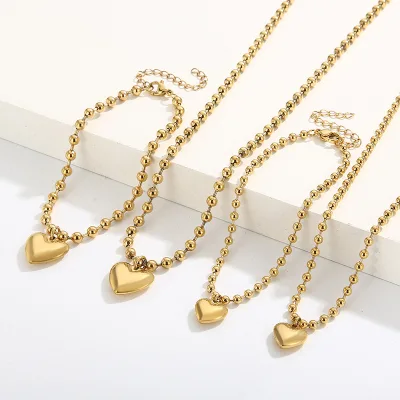
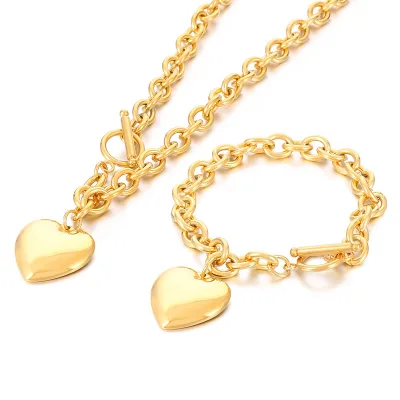


Stainless Steel Charm Necklace Bracelet Gift Heart Circle Pendant Necklace
$3.45 - $4.45
MOQ: 100 Pieces


Stainless Steel Line Jewelry Gift Minimalist Opening Double Layer Bracelets Bangles
$2.62 - $3.19
MOQ: 100 pieces
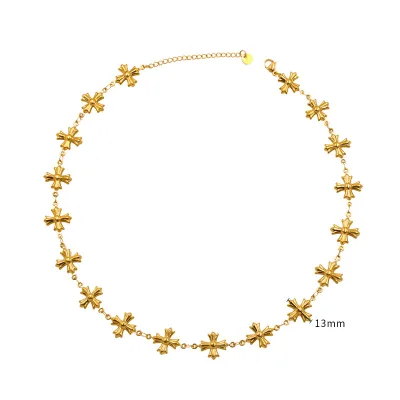

Bohemian Style Golden Beads Pearl 6-Piece Bracelet Set for Fashion Jewelry Accessory
$0.79 - $1.11
MOQ: 100 Pieces


Comprehensive Sourcing Guide
Strategic Sourcing Guide for Bohemia Tarnish-Free Necklace and Bracelet Sets
The global market for fashion jewelry continues to evolve, with a distinct demand for pieces that blend ethnic aesthetics with modern durability. Buyers searching for a "bohemia tarnish-free necklace and bracelet set" are typically looking for products that offer the intricate, layered look of Bohemian style while ensuring the metal components do not degrade over time. In the B2B procurement landscape, this search term implies a specific set of material requirements, finish standards, and compliance checks. This guide provides a disciplined approach to sourcing these items, relying on verified product attributes and industry standards to mitigate risk and ensure quality.
Understanding Material Composition and Tarnish Resistance
The core of the "tarnish-free" claim lies in the material selection and surface treatment. When evaluating potential suppliers, the primary observation is that the base material is often a metal alloy. In many catalog entries, the material is explicitly listed as "Alloy" or "Metal Alloy." However, the term "alloy" alone does not guarantee resistance to tarnishing. To achieve a tarnish-free result, the plating process is critical. The supplied data indicates that "Gold" and "Silver" plating are common attributes for these sets.
Buyers must verify that the plating thickness and quality are sufficient to prevent the underlying alloy from oxidizing. The data also highlights "Stainless Steel" and "Silver" as alternative materials. Stainless steel is inherently more resistant to corrosion than standard alloy, making it a strong candidate for "tarnish-free" claims. However, if the product is an alloy with plating, the buyer must confirm the plating standard. The observed attributes include "Lead Free, Nickle Free, Cadmium Free," which are essential for both safety and longevity. A product that is free of these heavy metals is less likely to cause skin reactions and often correlates with higher-quality plating processes that resist oxidation.
When reviewing product specifications, look for explicit mentions of the plating type. For instance, some listings specify "Plating: Gold" while others note "Plating: Silver." The color options observed include "Silver" and "Gold," which are standard for Bohemian styles. It is crucial to understand that "tarnish-free" is a performance characteristic that depends on the integrity of the plating layer. If the plating is too thin, the alloy beneath will eventually react with air and moisture, leading to discoloration. Therefore, the material specification should be cross-referenced with the plating description to ensure the finish is robust enough for the intended market.
Compliance, Certifications, and Safety Standards
In the B2B sector, compliance is not merely a formality but a prerequisite for market access. The Bohemian style often involves intricate designs that may contain small components, making safety standards regarding heavy metals particularly relevant. The supplied facts confirm that products in this category often carry certifications such as "BSCI," "SGS," "BV," and "Intertek." These organizations provide third-party verification of quality and ethical manufacturing practices.
The "Eco-Friendly" attribute is frequently cited as "Lead Free, Nickle Free, Cadmium Free." This is a critical compliance point, especially for markets in Europe and North America, which have strict regulations regarding heavy metals in jewelry. For example, the European Union's REACH regulation and the US Consumer Product Safety Improvement Act (CPSIA) impose limits on lead and nickel content. When sourcing, buyers should request test reports from the mentioned certification bodies (SGS, BV, Intertek) to verify that the specific batch meets these limits. The presence of these certifications in the product data suggests that the supplier has undergone audits, but the buyer must ensure the certification applies to the specific product model, such as "M10156" or "JYB2021071201."
Furthermore, the "Quality Standard" is noted as "Us Standard" in some listings. This indicates an alignment with American safety and quality benchmarks, which is beneficial for buyers targeting the North American market. However, "Us Standard" is a general descriptor. Buyers should verify the specific test parameters, such as the exact parts per million (ppm) limits for lead and nickel, rather than relying solely on the label. The "Certificate" field often lists "SGS, BV, Intertek," reinforcing the need for documentation. A compliant supplier will provide these reports proactively, demonstrating that their "tarnish-free" claim is backed by chemical analysis, not just marketing.
Cost Drivers and Pricing Dynamics
The pricing for Bohemian jewelry sets is influenced by several factors, including material costs, plating quality, and customization levels. The observed price range in the market data spans from $0.70 to $20.26 USD. This wide variance indicates a significant difference in product quality and complexity. The lower end of the spectrum likely represents basic alloy sets with standard plating, while the higher end may involve stainless steel, thicker plating, or more intricate Bohemian designs.
The Minimum Order Quantity (MOQ) is another critical cost driver. The data shows an MOQ range of 2 to 300 units. A low MOQ of 2 suggests that the supplier is flexible for small retailers or dropshippers, but the unit price at this level may be higher due to the lack of economies of scale. Conversely, an MOQ of 300 allows for better pricing but requires a larger capital outlay. Buyers must balance their inventory needs with their cash flow.
Customization is a significant factor in cost. The attribute "Customization: Available" and "OEM&ODM: Accept" indicate that buyers can request specific designs, packaging, or branding. Customization typically increases the unit cost and may extend the lead time. The "prod_model" numbers, such as "M10152" or "DS150," suggest a catalog of standard items. Moving away from these standard models to a fully custom design will likely push the price toward the upper end of the observed range. Additionally, the weight of the product, observed as 80g or 140g, affects the material cost. Heavier sets generally cost more due to the increased volume of metal used.
Technical Specifications and Product Attributes
When evaluating specific product listings, technical specifications provide a clear picture of what is being purchased. The "Type" of product is often categorized as "Jewelry Set," "Necklace," or "Bracelet." For a Bohemian set, the combination of a necklace and bracelet is standard. The "Shape" is described as "as Picture," which is common in fashion jewelry where designs vary frequently. Buyers should rely on high-resolution images to assess the Bohemian elements, such as layered chains, beads, or ethnic motifs.
Dimensions are crucial for fit and presentation. The "prod_standard" field notes specific measurements, such as "Necklaces 45+5 cm" and "Earrings 4*4 cm." For a set, the necklace length is typically adjustable, often with an extension chain, which is a standard feature in this category. The "Size" is also listed as "Customized" in some entries, offering flexibility for specific customer demographics. The "Weight" varies, with observations of 80g and 140g. This difference is significant for shipping costs and the perceived value of the product. A 140g set feels more substantial and premium than an 80g set, which can justify a higher price point.
Packaging is another technical aspect to consider. The "prod_packing" options include "PE Polybag," "Paper Card," "Gift Box," and "OPP Bag." For a gift-oriented product like a Bohemian set, the packaging plays a vital role in the unboxing experience. The "Application" and "Occasion" fields list "Anniversary," "Gift," "Wedding," "Party," and "Halloween." This confirms that the product is designed for gifting, and the packaging should reflect this. A "Gift Box" is preferable for high-end sets, while a "PE Polybag" might suffice for bulk orders or lower-priced items.
Supplier Evaluation and Operational Capabilities
Selecting the right supplier requires a thorough evaluation of their operational capabilities. The "prod_origin" is consistently listed as "Zhejiang, China" or simply "China." Zhejiang is a major hub for jewelry manufacturing, known for its supply chain efficiency. However, the specific location within China can impact logistics and communication. Buyers should verify the supplier's ability to handle the "Shipment" methods listed, such as "DHL, UPS, TNT." These are reputable courier services that ensure timely delivery, which is essential for meeting market demands.
The "Main Market" for these products is identified as "Europe, North America, Russia." This indicates that the suppliers have experience exporting to these regions and are likely familiar with the regulatory requirements and style preferences of these markets. A supplier with a strong presence in Europe and North America is more likely to have the necessary certifications and quality control processes in place.
Customization capabilities are a key differentiator. The "OEM&ODM: Accept" attribute suggests that suppliers are willing to work with buyers on design and branding. This is valuable for buyers looking to create a unique brand identity. However, buyers should assess the supplier's capacity to handle custom orders without compromising quality. The "Customized" attribute confirms that personalized options are available, but the lead time for these custom orders should be clearly defined.
Quality Control and Long-Term Procurement Considerations
Ensuring long-term success in sourcing Bohemian jewelry sets requires a robust quality control (QC) strategy. The "Quality Standard" is noted as "Us Standard," but this should be interpreted as a baseline. Buyers should implement their own QC checks, focusing on the plating integrity and the security of the clasps and connectors. Since the "Shape" is "as Picture," visual inspection is vital to ensure the product matches the provided images exactly.
Long-term procurement considerations include the stability of the supply chain and the consistency of the product quality. The "prod_model" numbers, such as "M10156" and "JYB2021071201," serve as unique identifiers for tracking. Buyers should maintain a record of these models to ensure consistency across orders. If a supplier changes the material or plating process, the product model number might change, or the specifications should be updated.
The "Eco-Friendly" attributes, such as being "Lead Free, Nickle Free, Cadmium Free," are not just compliance points but also marketing assets. As consumer awareness of sustainability grows, these features can be leveraged to differentiate the product in the marketplace. Buyers should ensure that these claims are backed by valid test reports from recognized bodies like SGS or BV.
Finally, the "Usage" of the product, listed as "Decoration," "Religious," "Gifts," and "Collection," highlights its versatility. This versatility makes the product suitable for a wide range of retail channels, from online marketplaces to brick-and-mortar gift shops. However, buyers should be aware that the "Religious" usage might require specific design elements or cultural sensitivity, which should be discussed with the supplier during the customization phase.
Conclusion
Sourcing a "bohemia tarnish-free necklace and bracelet set" requires a meticulous approach that balances aesthetic appeal with technical durability and regulatory compliance. By focusing on material composition, specifically the alloy base and gold or silver plating, buyers can ensure the "tarnish-free" promise is met. Verification of certifications like SGS, BV, and Intertek is essential to confirm safety standards and heavy metal compliance. Understanding the cost drivers, such as weight, customization, and MOQ, allows buyers to optimize their procurement strategy. With a clear understanding of technical specifications, supplier capabilities, and quality control measures, buyers can confidently navigate the market to secure high-quality Bohemian jewelry sets that meet the demands of their customers.
FAQs
What materials are used for tarnish-free Bohemia jewelry sets?
The sets primarily use metal alloy, stainless steel, or silver. To ensure tarnish resistance, the products feature gold or silver plating and are certified lead-free, nickel-free, and cadmium-free for safety.
Which certifications verify the quality and safety of these sets?
Products often carry BSCI, SGS, BV, and Intertek certifications. These verify compliance with US standards and confirm the eco-friendly attributes required for export to Europe and North America.
How can buyers customize the Bohemia jewelry sets for their brand?
Customization is available with OEM and ODM services accepted. Buyers can request specific models like M10156 or JYB2021071201 with customized packaging such as gift boxes or paper cards.
What is the typical price range and minimum order quantity?
Prices range from 0.70 to 20.26 USD depending on material and design. The minimum order quantity varies from 2 to 300 units, allowing flexibility for small retailers or bulk buyers.
Can these sets be shipped to Europe and North America?
Yes, the main markets include Europe, North America, and Russia. Suppliers use reliable shipping methods like DHL, UPS, and TNT to ensure timely delivery to these target regions.
What are the standard dimensions and weight for these jewelry sets?
Weights observed are 80g or 140g depending on the model. Standard specifications include necklaces of 45+5 cm and earrings of 4*4 cm, with sizes often customizable to fit specific needs.