Source Bookshelf for Classrooms, Offices, and Libraries
Compare 30 Bookshelf options from verified Chinese manufacturers. Buyers can evaluate materials like metal, wood, and plastic, along with customization, certifications, and delivery times for classroom, office, and library applications; compare the available evidence and request quotations based on your requirements.
Key considerations
Products List

$70.00 - $110.00
MOQ: 200 Pieces


Double Sided Library Shelf Library Bookcase Wooden Bookshelf Storage Shelving
$240.00 - $290.00
MOQ: 20 Pieces


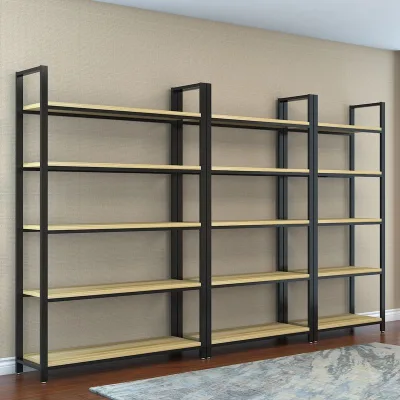

Classic Library Bookshelves Double-Sided Bookshelves Multi-Layered Bookshelf
$100.00 - $120.00
MOQ: 10 Pieces
Comprehensive Sourcing Guide
Bookshelf Sourcing Guide
Product Scope and Observed Listing Signals
The current market for bookshelves presents a diverse array of configurations, ranging from solid wood frames to metal and plastic constructions, catering to both residential and commercial environments. Buyers will encounter listings that specify modern styles with fixed rotary mechanisms and double-sided access, indicating designs optimized for high-traffic areas such as libraries or open-plan offices. The presence of knock-down packing and disassembly features suggests a focus on logistical efficiency, allowing for cost-effective shipping and flexible on-site assembly. This versatility is further highlighted by the availability of customized sizes and colors, including white and yellow finishes, which enable procurement teams to align inventory with specific interior design requirements or brand identities.
Observed listing signals reveal significant variation in product origins, with suppliers located in Jiangxi, Jiangsu, and Guangdong provinces in China, each potentially offering distinct manufacturing capabilities and supply chain efficiencies. The data indicates a wide price range, reflecting differences in material quality, structural complexity, and order volumes, with minimum order quantities spanning from small batches of one unit to larger commercial orders of one thousand pieces. Some listings emphasize factory-standard packing and direct manufacturing types, which may imply better control over production consistency and reduced intermediary markups. Understanding these signals helps buyers identify suppliers who can meet specific volume requirements while maintaining the desired aesthetic and functional standards for their projects.
Technical Specifications to Verify
When evaluating Bookshelf technical specifications, buyers must prioritize structural integrity and dimensional accuracy to ensure long-term durability and spatial compatibility. Key attributes to verify include the inner frame composition, such as high-quality steel with powder coating, which provides robust support against heavy loads, and the surface material, often high-quality MDF with laminated board, which offers a smooth, durable finish resistant to wear and tear. It is essential to confirm whether the unit includes doors or remains open, as this impacts security and dust protection, and to check if the design allows for disassembly or remains fixed, which influences installation logistics and future maintenance accessibility.
Dimensional specifications vary significantly across models, with some units designed to specific bay standards like L900D450H2000, while others offer fully customizable sizes to fit unique architectural constraints. Buyers should verify the exact length, depth, and height measurements, ensuring they align with the intended space and ergonomic requirements, such as the 2700L X 450d X 2200h mm configuration observed in some listings. Additionally, the number of grids or shelves, ranging from medium-sized configurations to more extensive storage solutions, must be assessed to determine if the storage capacity meets the projected inventory needs. Confirming these details prevents costly modifications or inadequate storage solutions post-purchase.
Compliance and Safety Documentation
Compliance and safety documentation are critical for ensuring that bookshelves meet international quality and environmental standards, particularly for commercial installations. Buyers should request verification of certifications such as ISO9001 for quality management, ISO14001 for environmental management, and ISO18001 for occupational health and safety, which indicate a supplier’s commitment to consistent manufacturing processes and responsible operations. Additionally, standards like SGS, TUV, and BV may be referenced to validate product safety and performance, providing assurance that the materials and construction methods adhere to rigorous testing protocols. These certifications are vital for mitigating risk and ensuring that the purchased furniture is suitable for public or workplace environments.
Fire retardant standards and material safety are also paramount, especially when dealing with wood-based products like MDF or solid wood frames. Buyers must verify that the materials used, including laminated boards and coatings, comply with relevant fire safety regulations to prevent the spread of flames and reduce toxic smoke emission in case of an emergency. It is important to confirm that the fire retardant properties are certified and not merely claimed, as this directly impacts insurance requirements and building code compliance. Ensuring that all documentation is up-to-date and verifiable protects the buyer from liability and ensures the safety of end-users in the installed environment.
Cost Drivers and Commercial Terms
Cost drivers for bookshelves are primarily influenced by material selection, customization levels, and order volume, with prices ranging from economical options to premium, highly customized units. The choice between metal, plastic, and wood materials significantly impacts the base cost, as does the inclusion of features like powder-coated steel frames or high-quality laminated surfaces. Buyers should consider the trade-off between initial unit price and long-term durability, as higher-quality materials may offer better resistance to wear and tear, reducing replacement costs over time. Additionally, the complexity of customization, such as specific sizes or colors, can increase production costs and affect the overall budget.
Commercial terms, including minimum order quantities and delivery times, play a crucial role in total cost of ownership. MOQs can vary widely, from small batches suitable for testing to large volumes for bulk procurement, affecting cash flow and inventory management. Delivery times typically range from 15 to 30 days, which must be factored into project timelines to avoid delays. Buyers should also consider the packing method, such as knock-down or carton packing, as this influences shipping costs and handling requirements. Negotiating favorable terms, including warranty periods of up to 10 years, can provide additional value and protection against manufacturing defects, ensuring a more predictable total cost.
Supplier Qualification and Quality Control
Supplier qualification is a foundational step in securing reliable Bookshelf procurement, requiring a thorough assessment of manufacturing capabilities and quality control processes. Buyers should verify the supplier’s production facilities, ensuring they have the necessary equipment to handle materials like steel, MDF, and wood with precision. It is essential to confirm that the supplier adheres to standardized production processes, as indicated by certifications like ISO9001, and that they have robust quality control measures in place to detect and rectify defects before shipment. Visiting the factory or requesting detailed quality assurance reports can provide valuable insights into their operational efficiency and consistency.
Quality control checks should extend to material inspection, dimensional accuracy, and finish quality, ensuring that each unit meets the specified standards. Buyers should establish clear acceptance criteria for surface finishes, structural integrity, and assembly ease, and request samples for evaluation before committing to large orders. The ability to provide samples from the factory allows buyers to physically assess the product quality and identify any potential issues early in the procurement process. Additionally, understanding the supplier’s approach to handling defects and their warranty policies ensures that any post-delivery issues can be resolved efficiently, maintaining the integrity of the procurement project.
Long-Term Procurement Checks
Long-term procurement checks focus on maintaining supplier performance and product quality over extended periods, ensuring that the bookshelves continue to meet operational needs. Buyers should implement regular audits and performance reviews to assess the supplier’s consistency in meeting delivery schedules, quality standards, and customer service expectations. Tracking key performance indicators such as defect rates, on-time delivery percentages, and response times to issues can provide objective data for evaluating supplier reliability. Establishing a feedback loop with end-users can also help identify any emerging issues with durability or functionality that may not have been apparent during initial testing.
Sustainability and lifecycle management are increasingly important considerations for long-term procurement, requiring buyers to evaluate the environmental impact of the bookshelves and the supplier’s practices. This includes assessing the recyclability of materials, the efficiency of the production process, and the supplier’s commitment to reducing waste and emissions. Buyers should also plan for future maintenance and potential upgrades, ensuring that the supplier can provide replacement parts or additional units that match the existing inventory. By proactively managing these aspects, buyers can ensure that their Bookshelf investments remain valuable and compliant with evolving regulatory and environmental standards.
FAQs
What customization options are available for bookshelves?
Customization is available for these bookshelves to meet specific buyer needs. You can request changes to dimensions, colors like white or yellow, and surface materials such as high-quality MDF with laminated board. The products are designed to be customized according to your unique requirements.
Which certifications do the Bookshelf manufacturers hold?
The manufacturers hold ISO9001, ISO14001, and ISO18001 certifications for quality and environmental management. Some listings also reference ISO standards alongside SGS, TUV, and BV certifications. These credentials ensure the products meet international safety and quality benchmarks for commercial use.
How long is the delivery time for these bookshelves?
The standard delivery time ranges from 15 to 30 days after order confirmation. This lead time applies to the factory manufacture process located in regions like Jiangxi and Jiangsu. Buyers should plan their procurement schedule accordingly to ensure timely receipt of the goods.
Can I find bookshelves with a 10-year warranty?
Yes, certain Bookshelf models come with a 10-year warranty coverage. This warranty applies to new condition products made from metal, wood, or plastic materials. It provides long-term protection for your investment in classroom or office storage solutions.
What is the minimum order quantity for these bookshelves?
The minimum order quantity varies between 1 and 1000 pieces depending on the specific supplier and model. Some listings specify an MOQ of 200 pieces or 100 pieces for standard orders. Buyers should verify the exact requirement for their selected product model before placing an order.
Which materials are used to construct these bookshelves?
These bookshelves are constructed from metal, solid wood, plastic, and high-quality MDF with laminated board. The inner frame often features high-quality steel with powder coating for durability. Surface materials are selected to ensure strength and aesthetic appeal for various environments.
How are the bookshelves packed for shipping?
The bookshelves are packed in cartons or in a knocked-down format for efficient shipping. Some suppliers use factory standard packing methods to ensure safety during transit. This packaging design allows for easy disassembly and reassembly at the destination location.