Source Boxing Radish Candy for Kids, Gifts, and Retail
Find 30 Boxing Radish Candy options from Guangdong suppliers. Compare plastic capsule toys with fruit-flavored hard candy, jelly beans, and gummy varieties. Evaluate MOQs, certifications, and packaging specs for bulk sourcing needs.
Key considerations
Products List
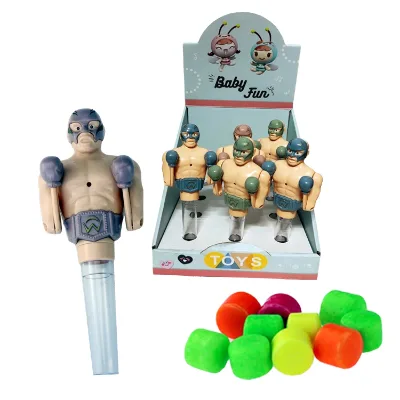


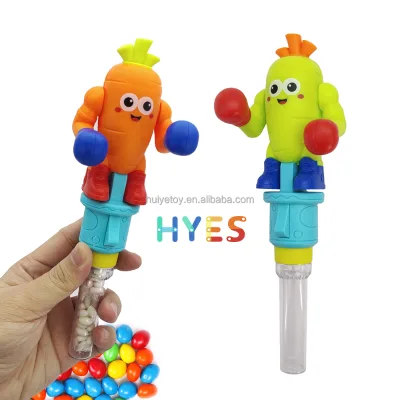


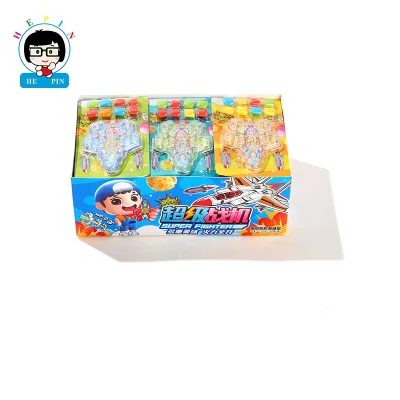
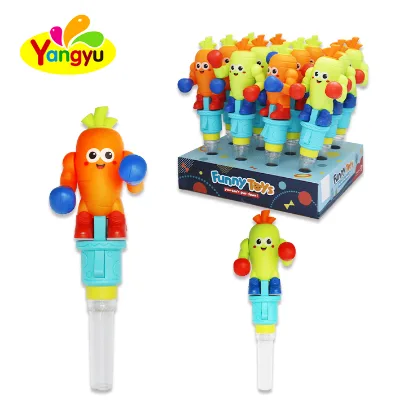
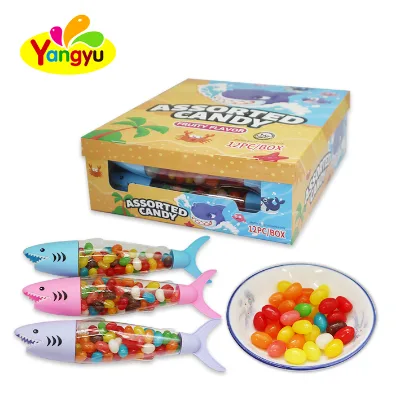
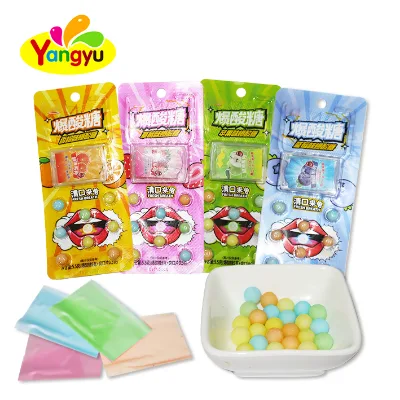
yangyu wholesale multicolor shark shape jelly bean boxing packing 12pcs soft candy
$1.67 - $1.69
MOQ: 500 cartons


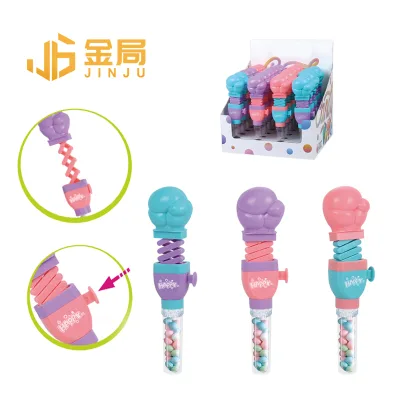
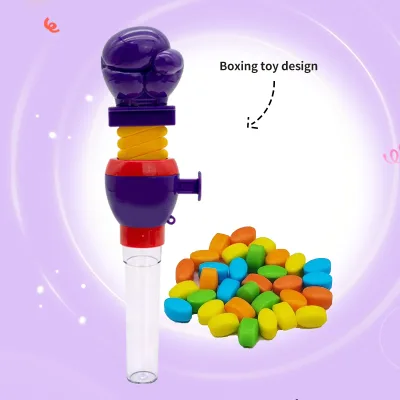
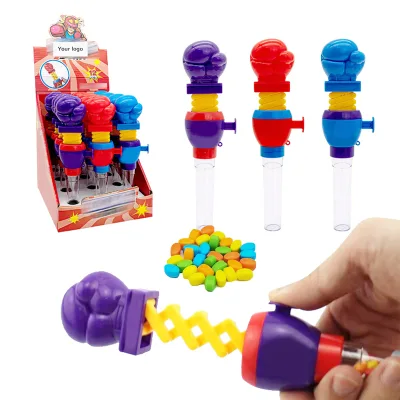




Comprehensive Sourcing Guide
Boxing Radish Candy Sourcing Guide
The "Boxing Radish Candy" category represents a specialized niche within the toy-candy hybrid market, where edible confectionery is packaged with interactive play elements. Based on observed market data, these products typically feature a solid form factor with fruit flavors and are designed for children in the 5 to 13-year age bracket, with some listings extending to teenagers. The core appeal lies in the dual functionality of the item, serving as both a sweet treat and a toy, often styled as capsule toys, cartoon figures, or specific game-themed items like boxer games.
Buyers must recognize that while the product name suggests a specific "radish" character, the actual physical attributes observed in listings vary significantly, including shapes described as "Toy Candy," "Capsule Toys," and "Cartoon Toys." The material composition is predominantly plastic for the toy components, while the edible portion is classified under types such as hard candy, gummy candy, or jelly beans. This duality requires a sourcing strategy that addresses both food safety standards and toy durability, as the product is marketed as a gift item with a shelf life of approximately 18 months.
Product Scope and Observed Listing Signals
The product scope for Boxing Radish Candy encompasses a wide range of variations, from single-item capsule toys to bulk-packaged sets containing multiple units. Observed listings indicate that the "radish" theme is often paired with boxing game mechanics, creating a "Toy with Candy" experience that includes features like light-up capabilities in specific models. The packaging is frequently described as a box or carton, with single package sizes ranging from 15x15x25 cm to 18x15x10 cm, suggesting that the physical footprint of the product can vary based on the specific model number and internal configuration.
Commercial signals in the market show a high degree of customization availability, allowing buyers to tailor the product to specific branding or event needs. The selling units are often listed as single items, yet the bulk packaging data reveals a standard of 240 pieces per carton, indicating that the primary procurement volume is geared toward wholesale distribution rather than individual retail sales. The color profiles are generally multi-colored, and the flavor profiles are consistently fruit-based, which aligns with the broad appeal required for children's products in the 5 to 13-year age group.
Technical Specifications to Verify
When evaluating technical specifications, the first critical verification point is the model number and physical dimensions, as observed data includes models such as Q011, HJ01, and QL363996, each with distinct single package sizes and gross weights. Buyers should confirm the exact weight of the single unit, as observed values range from 1.0 kg to 30.000 kg for gross weight, which significantly impacts shipping logistics and cost calculations. The standard specification of 5g12pcs8boxes suggests a modular packaging approach that must be verified against the actual carton size, which can be as large as 5629.566 cm for bulk shipments.
Material composition and functional attributes require strict verification to ensure the product meets the intended use case. The toy component is explicitly listed as plastic, while the candy component is described as solid, with specific types including hard candy, gummy candy, and jelly beans. Buyers must verify the "Usage" rating, which is observed as 3+ years, and cross-reference this with the age group specifications of 5 to 7 years and 8 to 13 years to ensure the product is safe and appropriate for the target demographic. Additionally, the storage method is noted as "Normal," but the shelf life of 18 months must be confirmed to prevent spoilage during transit and storage.
Compliance and Safety Documentation
Compliance documentation for Boxing Radish Candy is complex because the product straddles two regulatory domains: food safety and toy safety. Observed certifications include HACCP, HALAL, and Health Certificates, which are essential for verifying the edibility and hygiene of the candy component. However, the presence of plastic toy parts necessitates additional verification for toy safety standards, such as choking hazard assessments and material toxicity tests, which are not explicitly listed in the provided data but are industry-standard requirements for this category.
Buyers must ensure that the supplier provides a complete set of documentation that covers both the food and toy aspects of the product. The "Certificate" field in the data lists specific food safety standards, but the "Certification" field also mentions QS, which is a quality standard often required for food production in China. It is critical to verify that the specific model being sourced has been tested for both food contact safety and mechanical safety, as the combination of a hard candy and a plastic toy creates unique risks that require dual compliance verification.
Cost Drivers and Commercial Terms
Cost drivers for Boxing Radish Candy are heavily influenced by the MOQ (Minimum Order Quantity) and the complexity of the packaging. Observed MOQ ranges from 1 to 25,000 units, with specific listings showing an MOQ of 1,200 pieces, indicating that smaller buyers may face higher per-unit costs or limited supplier options. The price range observed in the market is extremely wide, from $0.02 to $2,800, which suggests that the final cost is dependent on the specific model, customization level, and order volume rather than a fixed unit price.
Commercial terms must be negotiated with a clear understanding of the packaging and shipping requirements. The data indicates a "Single package size" and a "Carton Size" that vary by model, meaning that freight costs will fluctuate based on the density and dimensions of the shipment. Buyers should verify the "Selling Units" and "Packaging" details to ensure that the quoted price includes the necessary bulk packaging, such as the 240 pieces per carton standard, and to avoid unexpected costs associated with repackaging or additional labeling for retail distribution.
Supplier Qualification and Quality Control
Supplier qualification for this category requires a focus on manufacturers located in Guangdong, China, which is the primary origin point for the observed products. The presence of brands like DESUN and HY suggests that there are established manufacturers in the region, but buyers should not assume that all suppliers offer the same level of quality or consistency. Verification of the supplier's production capacity is essential, as the wide range of observed MOQs implies that some suppliers may cater to small batches while others are optimized for large-scale production.
Quality control processes must be rigorous, given the dual nature of the product. Buyers should implement a quality control plan that inspects both the candy for flavor consistency and shelf life, and the toy for structural integrity and safety. The "Customization" feature available in the market adds a layer of complexity, as custom molds or packaging designs can introduce new quality risks. It is advisable to request pre-production samples that match the exact specifications of the ordered model to verify that the customization does not compromise the safety or quality of the final product.
Long-Term Procurement Checks
Long-term procurement for Boxing Radish Candy requires a strategy that accounts for the dynamic nature of the toy and candy markets. The observed shelf life of 18 months means that inventory management must be precise to prevent product expiration, especially given the "Normal" storage method which may not offer extended preservation. Buyers should establish a relationship with suppliers that can provide consistent updates on production schedules and lead times to ensure that stock levels are maintained without overstocking perishable goods.
Sustainability and regulatory changes are also critical factors for long-term success. As global regulations on food additives and toy materials evolve, suppliers must be able to adapt their formulations and manufacturing processes accordingly. Buyers should regularly review the supplier's certification status, particularly regarding HACCP and HALAL, to ensure continued compliance with international standards. Additionally, monitoring the "Feature" and "Flavor" trends, such as the shift toward glucose-based or fruit-flavored options, will help buyers stay competitive and responsive to changing consumer preferences in the children's market.
FAQs
What certifications do the Boxing Radish Candy products have?
The products hold QS certification and some variants include HACCP, HALAL, and health certificates. These certifications ensure the candy toys meet specific safety and quality standards for export markets.
Which age groups can safely use these candy toys?
The toys are designed for children aged 5 to 7 years, 8 to 13 years, and some models are suitable for ages 14 and up. Always verify the specific age recommendation on the product packaging before purchase.
Can buyers request customization for the candy toy packaging?
Yes, customization is available for these products. Buyers can work with manufacturers to tailor packaging or product features to meet specific branding or market requirements while maintaining the core candy toy functionality.
What is the typical shelf life for these candy toys?
The standard shelf life for these products is 18 months when stored under normal conditions. Proper storage ensures the candy remains fresh and the toy components stay intact throughout the designated period.
How is the product packaged for bulk shipping?
Products are packed in boxes and cartons, with specific configurations like 5g per piece containing 12 pieces per box and 8 boxes per carton. Bulk orders may also be shipped in bulk packing depending on the supplier.
What is the minimum order quantity for these items?
The minimum order quantity varies by supplier, with observed ranges starting from 1 piece up to 25,000 pieces. Specific listings indicate MOQs such as 1,200 pieces for certain models like the boxing radish man candy.
Where are these candy toys manufactured?
The products originate from Guangdong, China. This location is a known manufacturing hub for plastic toys and confectionery items, ensuring efficient production and logistics for international buyers.