Source Brush Cutter Nylon Trimmer Line for Lawn, Garden, and Farm Use
Find 30 verified listings for Brush Cutter Nylon Trimmer Line with varying diameters, shapes, and certifications. Buyers can compare specifications from Jiangsu and Zhejiang suppliers to select the right replacement spool for electric or gasoline trimmers.
Key considerations
Products List


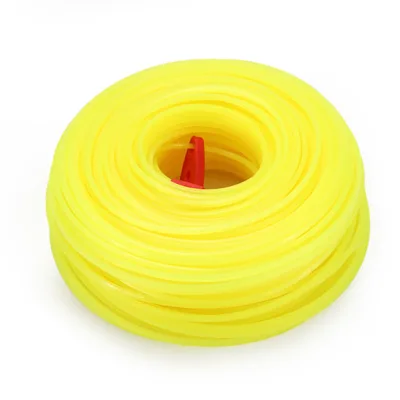


Um Brush Cutter Grass Nylon Garden Trimmer Supplies Round Trimmer Line Spool
$2.20 - $5.00
MOQ: 100 Pieces


$0.10 - $0.90
MOQ: 1000 Pieces




Comprehensive Sourcing Guide
Strategic Sourcing Guide for Brush Cutter Nylon Trimmer Line
Understanding Product Variants and Technical Specifications
The global market for Brush Cutter Nylon Trimmer Line presents a complex landscape where a single core keyword masks significant variations in technical specifications. When sourcing this category, buyers must recognize that "trimmer line" is not a monolithic product but a collection of specialized consumables designed for specific cutting environments. The fundamental material composition is consistently identified as high-grade nylon, with specific references to materials such as Nylon Basf, which suggests a focus on durability and tensile strength. However, the physical geometry of the line varies drastically depending on the intended application.
Buyers should verify the cross-sectional profile of the line, as this dictates cutting efficiency and wear resistance. The observed market data indicates a wide array of shapes, including Round, Square, Star, Hexagon, Heptagon, Sawteeth, and Trigon. Each profile serves a distinct purpose; for instance, round lines are standard for general grass trimming, while saw-tooth or star-shaped profiles are engineered for tougher vegetation like brush and thick weeds. The diameter of the line is another critical specification that must align with the power output of the brush cutter. Available diameter ranges observed in the market span from 1.0mm up to 5.0mm, with specific common increments including 1.3mm, 1.5mm, 1.6mm, 2.0mm, 2.2mm, 2.4mm, 2.5mm, 2.7mm, 3.0mm, 3.3mm, 3.5mm, and 4.0mm. Selecting a line that is too thick for the machine can stall the engine, while a line that is too thin may break prematurely under load.
The length of the line is also a variable that requires attention. While standard lengths are often pre-determined by the spool capacity, custom lengths such as 300mm or other customized dimensions are available to meet specific operational needs. The product models associated with these lines vary widely, ranging from generic designations like "TRIMMER LINE" or "TH" to specific model codes like "THtl01" and "TH-1lb." These model identifiers often correlate with the specific diameter or shape configuration, serving as a primary reference point for procurement teams to ensure compatibility with existing inventory of brush cutters.
Compliance, Certification, and Material Standards
Navigating the regulatory landscape is a critical component of B2B procurement for industrial cutting tools and consumables. While the product itself is a consumable, the manufacturing process and the final product often require adherence to specific safety and environmental standards. The supply chain for brush cutter lines frequently references certifications such as CCC (China Compulsory Certification), ISO (International Organization for Standardization), CE (Conformité Européenne), and RoHS (Restriction of Hazardous Substances). The presence of these certifications suggests that reputable manufacturers are aligning their production with international safety and environmental requirements.
It is essential for buyers to distinguish between certifications that apply to the machinery versus those that apply to the consumable. In the context of trimmer line, certifications like CE and RoHS are particularly relevant for ensuring that the nylon material does not contain restricted hazardous substances, which is a common requirement for export to European markets. The ISO certification typically indicates that the manufacturer operates under a quality management system, ensuring consistency in the production of the nylon line. The CCC certification is specific to the Chinese market, indicating compliance with local safety standards.
When evaluating suppliers, procurement teams should request valid certification documents rather than relying on marketing claims. The material standard is often cited as "100% nylon" or specific diameter ranges like "1.0MM-5.0MM" which serve as quality benchmarks. However, the specific grade of nylon, such as Nylon Basf, implies a specific polymer composition that offers superior abrasion resistance. Buyers must verify that the material standard matches the claimed performance, as the durability of the line is directly tied to the quality of the raw nylon used. Without proper verification, there is a risk of sourcing lines that degrade quickly or fail under high-stress conditions, leading to increased operational costs and downtime.
Cost Drivers and Pricing Dynamics
The pricing structure for Brush Cutter Nylon Trimmer Line is influenced by a combination of material costs, manufacturing complexity, and logistical factors. The observed price range in the market spans from $0.10 to $39.00 USD, a significant variance that reflects differences in product quality, packaging, and order volume. The lower end of this spectrum typically corresponds to basic round lines sold in bulk or smaller packaging units, while the higher end may reflect specialized profiles, custom lengths, or premium materials like Nylon Basf.
A primary cost driver is the Minimum Order Quantity (MOQ). The market data indicates an MOQ range from 5 units to 2000 units. Buyers with smaller operational needs may find suppliers with low MOQs attractive, though the unit price will likely be higher. Conversely, large-scale procurement operations can leverage economies of scale by ordering in bulk, potentially reducing the per-unit cost significantly. The packaging method also plays a role in the final price. Options such as Card/Blister/Hank/Spool, Carton, or Reel packaging affect both the cost and the convenience of storage and distribution. Blister packaging is often used for retail-ready units, while cartons and reels are preferred for industrial bulk distribution.
Customization is another factor that can influence pricing. The availability of customization options, including specific diameters, shapes, and lengths, allows buyers to tailor products to their exact needs but may incur additional setup or tooling costs. The selling units, which can range from single items to bulk packs, further complicate the pricing model. Buyers must analyze their total cost of ownership, considering not just the unit price but also the frequency of replacement and the efficiency of the line in reducing downtime. A slightly more expensive line that lasts twice as long may offer a better value proposition than a cheaper alternative that requires frequent re-spooling.
Typical Applications and Usage Scenarios
The versatility of Brush Cutter Nylon Trimmer Line makes it suitable for a wide range of applications, from residential lawn maintenance to heavy-duty industrial land clearing. The primary usage is identified as "String Trimmer Replacement Spool," indicating its role as a consumable component for various types of string trimmers and brush cutters. The specific application depends heavily on the shape and diameter of the line selected.
Round lines are generally the most common and are ideal for general grass trimming in residential and commercial landscaping. They offer a balance of flexibility and cutting power, making them suitable for soft to medium-density vegetation. Square and star-shaped lines, however, are designed for more demanding tasks. Their angular profiles provide a sharper cutting edge, allowing them to slice through thicker weeds, small brush, and dense foliage more effectively than round lines. This makes them a preferred choice for professional landscapers and utility workers who frequently encounter tough vegetation.
The diameter of the line also dictates its application. Thinner lines (1.0mm to 2.0mm) are typically used for lightweight trimmers and delicate grass areas where precision is key. Thicker lines (3.0mm to 5.0mm) are necessary for heavy-duty brush cutters that require the power to cut through woody stems and thick brush. The choice of line must align with the power source of the equipment, whether it is electric or gasoline-powered. Gasoline-powered brush cutters generally have higher torque and can handle thicker, more robust lines, while electric models may be limited to thinner diameters to prevent motor overload.
Supplier Evaluation and Geographic Considerations
When evaluating potential suppliers for Brush Cutter Nylon Trimmer Line, geographic origin and manufacturing capabilities are key factors. The majority of the observed supply originates from China, with specific hubs identified in Jiangsu, Nantong, Yongkang City (Zhejiang Province), and Ningbo. These regions are known for their robust manufacturing infrastructure and expertise in producing plastic and nylon products. The concentration of suppliers in these areas suggests a mature supply chain with access to raw materials and specialized production equipment.
Buyers should prioritize suppliers who demonstrate transparency regarding their production locations and capabilities. The presence of specific origin details, such as "Jiangsu, China" or "Nantong, Jiangsu, China," indicates a level of supply chain maturity. However, buyers must also consider the logistics of sourcing from these regions, including lead times and shipping costs. The ability to customize products is a significant advantage, as it allows buyers to secure lines that are perfectly matched to their equipment and operational requirements.
Supplier evaluation should also include a review of their quality control processes and certification status. A supplier that holds CCC, ISO, CE, and RoHS certifications is likely to have more rigorous quality control measures in place. Buyers should request samples to test the physical properties of the line, such as tensile strength and abrasion resistance, before committing to a large order. The ability to provide consistent product models, such as the "THtl" or "TH-1lb" series, indicates a stable production process and a commitment to maintaining product standards.
Quality Control and Long-Term Procurement Strategy
Ensuring consistent quality is paramount for maintaining operational efficiency in any landscaping or land management operation. Quality control measures should focus on verifying the material composition, dimensional accuracy, and packaging integrity. The standard "100% nylon" claim should be validated through material testing to ensure that the line meets the required performance standards. Buyers should also verify the diameter consistency, as variations in diameter can lead to uneven feeding and premature breakage.
Long-term procurement strategies should emphasize building relationships with suppliers who offer reliable customization and consistent quality. The availability of OEM colors and sizes allows buyers to brand their products or match specific equipment requirements. A strategic approach involves negotiating volume-based pricing tiers and establishing clear communication channels for addressing quality issues. By focusing on suppliers with proven track records in certifications and material standards, buyers can mitigate the risk of supply chain disruptions and ensure a steady flow of high-quality trimmer line.
| Feature | Observation | Procurement Action |
|---|---|---|
| Material | Nylon Basf, 100% Nylon | Request material test reports |
| Diameter | 1.0mm - 5.0mm | Match to equipment torque specs |
| Shape | Round, Square, Star, Saw | Select based on vegetation density |
| Certification | CCC, ISO, CE, RoHS | Verify current certificates |
| Origin | China (Jiangsu, Zhejiang, Ningbo) | Assess logistics and lead times |
| Packaging | Spool, Carton, Blister, Hank | Optimize for storage and handling |
By adhering to these guidelines and leveraging the detailed specifications available in the market, buyers can make informed decisions that optimize cost, quality, and operational efficiency in their procurement of Brush Cutter Nylon Trimmer Line.
FAQs
What certifications are available for Brush Cutter Nylon Trimmer Line?
Available certifications include CCC, ISO, CE, and RoHS. These marks indicate compliance with safety and environmental standards, ensuring the product meets international requirements for export and local use in specific regions.
Which diameters are offered for Brush Cutter Nylon Trimmer Line?
Diameters range from 1.0mm to 5.0mm, with common sizes like 1.3mm, 1.6mm, 2.0mm, 2.4mm, 2.7mm, 3.0mm, 3.5mm, and 4.0mm. Buyers must select a size compatible with their specific trimmer power source and cutting requirements.
Can I customize the shape and color of the trimmer line?
Customization is available for shapes including round, square, star, hexagon, and sawteeth, as well as colors like green or OEM options. Suppliers can tailor these attributes to meet specific operational needs or branding requirements.
What is the minimum order quantity for Brush Cutter Nylon Trimmer Line?
The minimum order quantity ranges from 5 to 2000 units depending on the supplier and product configuration. Smaller orders may have higher unit costs, while bulk purchases often benefit from economies of scale.
Where are the manufacturers of Brush Cutter Nylon Trimmer Line located?
Manufacturers are primarily located in China, specifically in Jiangsu, Nantong, Yongkang City, and Ningbo. These regions offer established supply chains and manufacturing capabilities for producing high-quality nylon trimmer lines.
What packaging options exist for Brush Cutter Nylon Trimmer Line?
Packaging options include Card, Blister, Hank, Spool, Carton, Iron Spool, and Reel. The choice depends on whether the product is intended for retail display or industrial bulk distribution and storage.