Source Business Coin Bag with Keychain for Gifts, Promos, Daily
Find 30 options for a Business Coin Bag with Keychain suitable for promotional gifts, daily use, and festival occasions. Compare zinc alloy and PU leather styles with customization and logo printing available from China suppliers; compare the available evidence and request quotations based on your requirements.
Key considerations
Products List


Promotion Hot Selling Leather Card Key Holder Bag for Business Gift (K08163)
$1.35 - $1.55
MOQ: 500 Pieces


$0.40 - $10.00
MOQ: 1000 Pieces

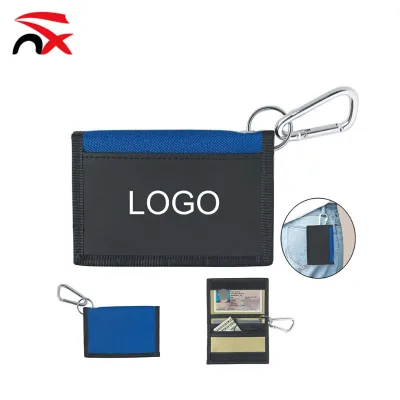

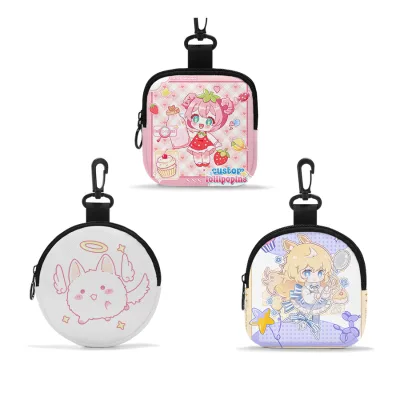


Outdoor Sports Zipper Bags Multifunctional Portable Coin Purse Key Card Case Belt
$0.85 - $1.65
MOQ: 100 Pieces


Leather Key Holder, Leather Key Case for Men, Leather Key Keychain Cover
$2.40 - $2.80
MOQ: 100 Pieces


Comprehensive Sourcing Guide
Business Coin Bag with Keychain Sourcing Guide
A Business Coin Bag with Keychain sits at the intersection of two procurement categories: compact leather goods and promotional gift accessories. Buyers sourcing this product typically use it as a corporate gift, festival giveaway, or branded retail item, and the listings observed in this category reflect that dual character. Most listings describe the product as suitable for universal use, positioned as promotion gifts with a business style, and offered with customization so a corporate logo or brand mark can be applied before shipment.
The market concentrates in Chinese manufacturing regions, with observed origins including Fujian and Guangdong (Guangzhou). Materials split between zinc alloy keychain hardware and leather or PU bag bodies, and stylistic positioning ranges from fashion and novelty to simplicity-focused business designs. Because the product is small, low-value, and ordered in volume, the decisive procurement questions are rarely about the object itself but about specification discipline, packaging presentation, and repeat-order consistency. This guide walks through each stage of that evaluation.
Product Scope and Observed Listing Signals
The listings observed under this keyword share several consistent signals worth treating as baseline expectations rather than differentiators. Customization is listed as available across the category, and multiple listings confirm customized production as a standard operating mode, meaning logo application is not a premium exception but a default capability you should price into every quote. Model identifiers in the observed data range from short codes such as key-1 and xi-11-28-5 to structured codes like K-GS017-006 and K08163, which suggests both commodity lines and more developed product families coexist in the same search results.
Buyers should also note the breadth of style and feature claims. Listings combine attributes such as eco-friendly, novelty, and with-logo features with gender-unisex positioning and all-season applicability, while fashion elements such as contrast color and embroidery techniques appear on leather variants. These attributes are observations from product pages, not verified claims, so treat each one as a prompt for confirmation. Product naming also varies—some listings are filed as key chains, others as keychain bags—so widen keyword coverage when building a supplier longlist to avoid missing relevant SKUs.
Technical Specifications to Verify
Dimensional data is the first technical checkpoint, because observed listings show materially different size conventions. Reported figures include 25224.5 cm, 10.582 cm, and 12.772.7 cm, and at least one listing offers fully customized sizing. These discrepancies indicate the keyword covers products of genuinely different proportions and formats, so confirm whether a quoted item is a coin pouch with attached keychain hardware, a keychain-style bag charm, or a larger carry piece. Request dimensioned drawings before approving samples, and specify which measurement governs acceptance.
Material and construction details require equal rigor. Confirm whether the body is genuine leather or PU, since both appear in the category and carry different cost and durability implications; one listing specifies medium-soft hardness, which is a useful tactile reference point. For decorative work, embroidery appears as a listed technique and offset printing as a listed process, so align your branding method with what the factory actually demonstrates. Also confirm hardware material—zinc alloy is the observed metal type—and whether the product is expected to resist water, since at least one leather listing states it is not waterproof, a limitation worth communicating downstream.
Compliance and Safety Documentation
No certification claims appear in the observed listing data, which means compliance verification falls entirely on the buyer. For leather and PU goods combined with zinc alloy hardware, the typical documentation package to request includes material composition declarations, heavy-metal and restricted-substance test reports appropriate to your destination market, and nickel-release or similar testing for metal components that contact skin. Do not assume a listing marked eco-friendly carries third-party verification; ask the supplier to name the testing laboratory and provide report copies with matching batch or sample references.
Buyers distributing these items as promotional gifts in regulated markets should also confirm labeling obligations, such as material content labeling and country-of-origin marking, before production begins. Because customization is standard, any added inks, dyes, or plating used for logos should be covered by the same documentation, not just the base material. Build these requirements into the purchase contract rather than raising them after shipment, and reserve the right to commission independent pre-shipment testing if the supplied reports are incomplete, expired, or issued by a laboratory the buyer has not vetted.
Cost Drivers and Commercial Terms
Observed pricing spans a wide range from roughly $0.04 to $10, which reflects the genuine spread between simple zinc alloy keychains and finished leather coin bags with gift packaging. Rather than anchoring on the low end, decompose quotes into material, hardware, decoration method, packaging, and freight components so comparisons are like-for-like. Customization is the largest controllable cost lever: logo complexity, color count in printed or embroidered artwork, and packaging upgrades such as a gift box versus an OPP bag will each move unit price.
Commercial terms in the observed listings show a consistent pattern worth negotiating around. Minimum order quantities range from 50 to 1000 units or sets, with several listings stating MOQ 1000, 1000 pieces, or 500 sets, so confirm whether the quoted MOQ applies per color, per design, or in aggregate. Payment structure is commonly 30% deposit with the 70% balance due by T/T before shipment—seen in two listings—so consider whether milestone-based balance terms tied to inspection acceptance can be agreed. Sample lead times are listed at around 7 days, and one listing cites 5–7 days for samples with 10–15 days for production; verify both against your launch calendar.
Supplier Qualification and Quality Control
Given that origins cluster in Fujian and Guangzhou, qualification should focus on capability evidence rather than location alone. Ask prospective suppliers for photographs of previous customized production in the same material category, confirmation of in-house versus outsourced decoration (embroidery and offset printing may be subcontracted), and clarity on who controls packaging. Because observed packing conventions vary widely—individual package, gift box, non-woven bag with box, and OPP-bag master cartons at 100 pieces per bag and 1000 pieces per carton—confirm that your chosen supplier can execute the specific retail-ready format your distribution channel requires.
Quality control should be built around the specification, not around generic inspection. Define an AQL-based inspection plan covering dimensions against the agreed drawing, colorfastness and abrasion for leather or PU surfaces, zip and snap function, keyring and clasp strength, and logo placement accuracy. Conduct the inspection after the balance payment milestone is negotiated but before goods leave the factory, and retain golden samples from the approved pre-production run. For first orders, an on-site or third-party inspection is advisable; for repeat orders, periodic audits keep consistency verifiable without adding cost to every shipment.
Long-Term Procurement Checks
Sustained supply of a small branded accessory depends on repeatability, so treat the first order as the calibration point for a longer relationship. Lock the approved model code (the category uses identifiers such as K-GS017-006 and K08163), material spec, colorway, and packaging format into a written specification sheet, and require any future deviation to be flagged before production. Re-confirm sample lead times and production lead times annually, since the listed 7-day sample and 10–15 day production figures may shift with seasonal factory load.
Finally, plan for continuity of materials and decoration capability. PU and leather grades change across supplier catalogs, zinc alloy hardware finishes can vary between batches, and subcontracted embroidery or printing may move between factories without notice. Schedule periodic re-approval of golden samples, request updated material declarations when a component changes, and maintain a second qualified supplier for the same specification so a single production disruption does not stall a promotional campaign or festival-timed launch. Documented, evidence-based requalification keeps this low-value item dependable at scale.
FAQs
What materials are commonly used for business coin bags with keychains?
Listed products are commonly made from PU or leather, with some styles using zinc alloy metal components. Material choice affects texture, durability, and cost, so buyers should confirm the exact material for each model before ordering. PU and leather versions typically offer a medium soft hardness suited to daily promotional and business gift use.
Can the coin bag with keychain be customized with a company logo?
Yes, customization is available on these products, and logo printing is a listed feature. Some models use offset printing for branding, and embroidery appears on select leather styles. Buyers should confirm the customization method, artwork requirements, and any effect on price or sample lead time before placing an order.
What is the minimum order quantity for a Business Coin Bag with Keychain?
Minimum order quantities vary by model, with listed MOQs ranging from 50 pieces up to 1000 pieces, and some sets quoted at 500 sets. Smaller trial orders may be possible depending on the specific model and customization level. Always confirm the MOQ for your chosen design, size, and packaging before committing to production.
How long do samples and production typically take?
Sample lead times are listed at around 7 days, with some suppliers quoting 5 to 7 days for samples. Production generally runs 10 to 15 days after approval. Times can shift with customization complexity and order volume, so confirm current lead times in writing before finalizing your production schedule.
What payment terms are commonly offered for these products?
The listed payment structure is a 30 percent deposit by T/T with the remaining 70 percent balance paid before shipment. This arrangement is standard for customized promotional goods. Buyers should confirm the exact terms with each supplier, as conditions may vary by order size, customization level, and the buyer's negotiation position.
How are the coin bags packed for shipment?
Packaging options vary by model and include individual packages, gift boxes, OPP bags, and non-woven bags with a box. One listing specifies polybag packing with 100 pieces per OPP bag and 1000 pieces per carton. Confirm the packing method you need, since retail-ready packaging like gift boxes can affect unit cost.
What sizes and shapes are available for these keychain coin bags?
Listed sizes vary by model, including approximately 25 by 22 by 4.5 centimeters, 10.5 by 8 by 2 centimeters, and 12.7 by 7 by 2.7 centimeters, with some models offered in customized sizes. Shapes are generally geometric, and styles range from business and simplicity looks to fashion designs with contrast color elements.
Are these coin bags suitable as promotional gifts?
Yes, promotion gifts are a listed usage, and the products also suit daily use and festival occasions. Features such as logos, eco-friendly materials, and novelty designs support branding goals. Universal suitability and unisex styling make them flexible for corporate giveaways, event gifts, and business promotional campaigns across seasons.