Source Car Fire Blanket for Industrial, Family, and EV Use
Compare 30 Car Fire Blanket options from verified Chinese suppliers. Buyers can evaluate certifications like EN 1869, material types such as fiberglass, and custom sizes for industrial, family, and new energy vehicle applications.
Key considerations
Products List


2*2m Fire Blanket Custom Fiberglass Fireproof 2 M*2 M Fire Blanket Car
$185.00 - $195.00
MOQ: 10 Pieces


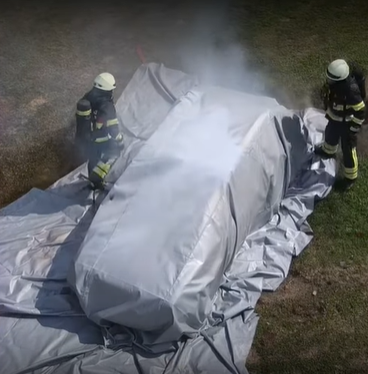
Comprehensive Sourcing Guide
Strategic Sourcing Guide for Industrial and Automotive Fire Blankets
Understanding Product Specifications and Material Composition
When sourcing fire blankets, particularly those designated for automotive applications, the primary focus must be on the material composition and physical dimensions that define the product's efficacy. The supplied data indicates that the core material for these protective devices is fiberglass. This material choice is critical because fiberglass provides the necessary thermal resistance to withstand high temperatures without melting or degrading, which is essential for smothering fires in vehicle engines or electrical compartments. The surface treatment of these blankets varies significantly between suppliers; some products feature a silicon coating, which enhances heat resistance and durability, while others are listed as having no silicon coating. Buyers must verify this attribute during the selection process, as the presence of a silicon coating often correlates with higher performance in extreme heat scenarios.
Physical dimensions are another critical specification that dictates the suitability of the blanket for specific vehicle types. The observed product data reveals a wide range of standard sizes, including 1000mm by 1000mm, 1200mm by 1200mm, and larger industrial variants such as 6 meters by 8 meters or 6 meters by 9 meters. For automotive applications, smaller, more compact sizes like 1x1m or 1.2x1.2m are typically preferred to ensure the blanket can be easily stored in a vehicle's glove compartment or trunk. Thickness is also a variable factor, with observed values ranging from 0.4mm to 1.3mm. A thicker blanket generally implies better insulation properties, but it may also affect the flexibility and ease of deployment. Buyers should cross-reference the thickness and size against the specific fire hazards they intend to mitigate, ensuring the blanket is large enough to cover the fire source completely while remaining manageable for the user.
Compliance and Certification Verification Protocols
Navigating the regulatory landscape for fire safety equipment requires rigorous verification of certifications and standards. The product data highlights several key certifications, including EN 1869, CE, TUV, and GB8624. EN 1869 is a prominent European standard specifically for fire blankets, and its presence in the product descriptions suggests a baseline level of quality and safety testing. However, the data also notes variations in certification claims, such as "EN 1869: Color:Silver Gray" or "EN 1869: CE, TUV, GB8624-DIN." It is imperative for buyers to understand that the presence of a certification label does not automatically guarantee compliance for every specific product variant; rather, it indicates that the manufacturer claims adherence to these standards.
The classification of fire resistance is another area requiring careful scrutiny. The supplied information lists fireproof endurance ratings ranging from "A Grade" to "B3 Grade." In the context of fire safety, "A Grade" typically denotes a higher level of fire resistance compared to "B3 Grade," which may indicate a lower classification or a specific application limit. Buyers must not assume that all listed products meet the highest fire resistance standards. Instead, they should request specific test reports or certification documents that validate the claimed grade for the specific model number, such as RS-CB001 or RS-CB002. Additionally, the standard "EN13501-1" is mentioned in the background context, which relates to the classification of construction products based on their reaction to fire. While not explicitly detailed in the core product facts, buyers should verify if their specific procurement requirements align with this broader classification system, especially for industrial or commercial fleet applications.
Cost Drivers and Pricing Structure Analysis
The pricing structure for fire blankets is influenced by a complex interplay of factors, including material quality, certification status, customization options, and packaging requirements. The observed price range in the market spans from 1 to 500 USD, a significant variance that reflects the diversity of product offerings. At the lower end of this spectrum, buyers may find basic fiberglass blankets with minimal certifications and standard packaging. Conversely, the higher price points likely correspond to products with advanced features, such as silicon coatings, higher fire endurance ratings (A Grade), and comprehensive certifications like TUV and GB8624.
Customization is a major cost driver in this sector. The product data explicitly states that customization is available for various attributes, including size, packaging, and potentially branding. Customized bags, carton boxes, or specific packaging configurations like "Cartons/Plywood Case" add to the production complexity and cost. Furthermore, the Minimum Order Quantity (MOQ) ranges from 1 to 1000 units. Buyers ordering small quantities may face higher per-unit costs due to the setup costs for customization, while bulk orders can leverage economies of scale to reduce the unit price. The origin of the product, primarily from Shandong and Jiangsu in China, also plays a role in the final cost, as logistics and shipping fees will vary based on the destination and the weight of the shipment. The package gross weight, observed at 5.000kg for certain models, is a critical factor for calculating freight costs, which can significantly impact the total landed cost for international buyers.
Typical Applications and Functional Requirements
Fire blankets serve diverse functions across different sectors, and understanding the specific application is vital for selecting the right product. The data identifies two primary application fields: "Industrial" and "Family," with a specific mention of "New Energy Vehicles and Electronic Car" for automotive use. For industrial settings, larger blankets with dimensions like 6x8m or 6x9m are often required to cover large equipment or machinery fires. These industrial-grade blankets must be robust enough to handle high-temperature incidents and may require specific surface treatments like silicon coating for enhanced durability.
In the automotive sector, the requirements shift towards compactness and ease of access. The "Car Fire Blanket" and "Fire Car Blanket" models are designed for use in vehicles, where space is limited. These products are often intended for use by adults and are suitable for extinguishing fires in engine compartments or electrical systems, particularly in the context of new energy vehicles where battery fires present unique challenges. The functional requirement for these blankets is to "Put Out a Fire" and facilitate "Escape," meaning they must be easy to deploy quickly to smother a flame and protect the user from heat. The observed fire extinguishing temperature range of 550 to 1400 degrees Celsius indicates the thermal limits of the product, and buyers must ensure that the blanket's rating exceeds the expected temperature of the fire hazard they intend to manage.
Supplier Evaluation and Origin Considerations
Evaluating suppliers for fire blanket procurement requires a focus on their manufacturing capabilities, geographic location, and ability to meet specific customization needs. The product data indicates that manufacturers are located in key industrial regions of China, specifically Shandong and Jiangsu provinces. These regions are known for their manufacturing infrastructure and supply chain efficiency. When evaluating a potential supplier, buyers should verify the specific origin of the product, as this can influence quality control processes and logistics. For instance, a supplier in Shandong may have different logistical advantages compared to one in Jiangsu, depending on the buyer's location.
Supplier reliability is also tied to their ability to provide consistent product attributes. The data shows that different models, such as RS-CB001 and RS-CB002, may have different specifications and certifications. A reputable supplier should be able to provide clear documentation linking specific model numbers to their respective certifications and performance ratings. Additionally, the availability of customization options, such as branded packaging or specific sizes, is a strong indicator of a supplier's flexibility and commitment to meeting buyer needs. Buyers should assess the supplier's capacity to handle orders within the observed MOQ range of 1 to 1000 units and their ability to maintain quality consistency across different batches.
Quality Control and Long-Term Procurement Strategy
Implementing a robust quality control strategy is essential for ensuring the reliability of fire blankets over time. The product data highlights several quality indicators, including the "Dust Free" nature of the asbestos fire blanket type (though modern blankets are typically asbestos-free, the terminology suggests a focus on cleanliness and safety), and the "Durable and Reusable" features of certain models. Buyers should establish clear quality acceptance criteria based on these attributes. For example, verifying the thickness of the fiberglass and the integrity of the silicon coating through visual inspection or third-party testing can help ensure that the product meets the required performance standards.
Long-term procurement considerations involve building a sustainable relationship with suppliers who can consistently deliver high-quality products. This includes monitoring the supplier's adherence to standards like EN 1869 and GB8624 over time. Buyers should also consider the lifecycle of the product; while some blankets are reusable, others may need replacement after a single use or after a certain period of storage. The packaging, described as "Customized Bag+Carton Box" or "PVC Bag or PVC Box," plays a crucial role in protecting the blanket during storage and transport. Ensuring that the packaging is robust and suitable for the intended storage environment will help maintain the blanket's readiness for emergency use. By focusing on these long-term factors, buyers can secure a reliable supply of fire safety equipment that meets their operational and safety requirements.
Comparative Analysis of Product Variants
To facilitate informed decision-making, the following table summarizes the key differences observed among the various fire blanket models and specifications available in the market. This comparison highlights the diversity in size, material treatment, and certification, which are critical factors for procurement.
| Feature | Model A (Industrial) | Model B (Automotive) | Model C (General Purpose) |
|---|---|---|---|
| Primary Application | Industrial | New Energy Vehicles | Family / General |
| Typical Size | 6m x 8m, 6m x 9m | 1x1m, 1.2x1.2m | 1000mm x 1000mm |
| Material | Fiberglass | Fiberglass | Fiberglass |
| Surface Treatment | Silicon Coated | Without Silicon Coated | Silicon Coated |
| Certification | EN 1869, CE, TUV | EN 1869, CE | EN 1869, GB8624 |
| Fire Rating | A Grade | B3 Grade | A Grade |
| Packaging | Cartons / Plywood Case | PVC Bag / Box | Carton / Customized Bag |
| Origin | Shandong, China | Jiangsu, China | China |
This table illustrates that while the core material remains consistent, the application-specific variations in size, coating, and certification are significant. Buyers should use this framework to align their procurement needs with the specific capabilities of the available product variants, ensuring that the selected fire blanket is optimized for its intended environment.
FAQs
What material is used for car fire blankets?
Car fire blankets are primarily made from fiberglass to withstand high temperatures. Some variants feature a silicon coating for enhanced heat resistance, while others are listed without this treatment.
Which certifications do these fire blankets hold?
Many models carry EN 1869, CE, TUV, and GB8624 certifications. Specific products may also display A Grade or B3 Grade fireproof endurance ratings depending on the manufacturer and model.
How large are the standard Car Fire Blanket sizes?
Standard sizes include 1x1m, 1.2x1.2m, and 1.2x1.8m for automotive use. Larger industrial variants like 6x8m or 6x9m are also available for different application needs.
Can I customize the packaging for these blankets?
Yes, customization is available for packaging options such as bags, boxes, or cartons. Buyers can request specific configurations like PVC bags or plywood cases to meet their requirements.
What is the minimum order quantity for car fire blankets?
The minimum order quantity ranges from 1 to 1000 units depending on the supplier. Smaller orders may incur higher per-unit costs compared to bulk purchases leveraging economies of scale.
Where are these fire blankets manufactured?
Manufacturers are located in key industrial regions of China, specifically Shandong and Jiangsu provinces. The origin affects logistics and shipping costs for international buyers.
What temperature range can these blankets withstand?
The fire extinguishing temperature range spans from 550 to 1400 degrees Celsius. Buyers should verify the specific rating matches the expected thermal limits of their fire hazards.