Source Carbon Fiber Folding Rollator for Hospital Home Rehab
Find 30 verified Carbon Fiber Folding Rollator options from Guangdong suppliers. Compare specifications like weight capacity, seat dimensions, and certifications including CE and ISO13485 for healthcare and home care needs.
Key considerations
Products List
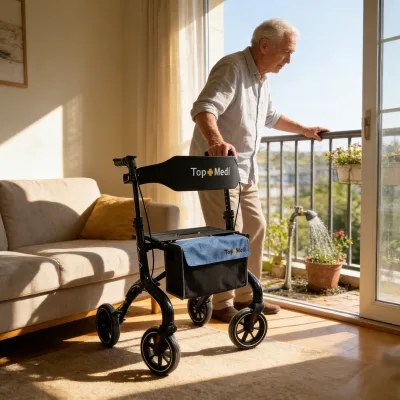

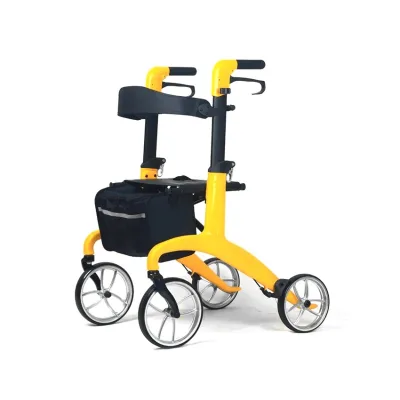
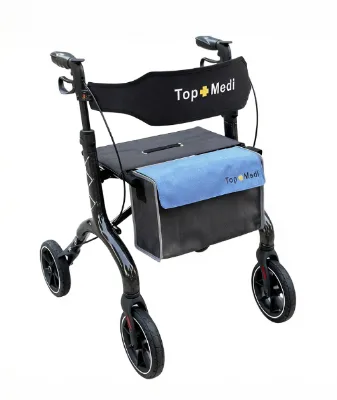


Foldable Carbon Fiber Material with Large Storage Bag Walking Aids Rollator
$150.00 - $155.00
MOQ: 30 Pieces


Hes-0006 Carbon Fiber Mobility Walking Aid Folding Rollator for Elderly People
$155.00 - $165.00
MOQ: 30 Pieces

FDA CE Proved Carbon Fiber Rollator Durable Foldable Super Lightweight
$150.00 - $170.00
MOQ: 50 Pieces


Folding Ultralight 120kg Weight Capacity Walking Aids Carbon Fiber Sturdy Rollator
$182.61 - $228.26
MOQ: 50 Pieces

Carbon Fiber Rollator 4 Wheel Carbon Fiber Material Portable Elderly Assisted Rollator Walker
$297.85 - $349.65
MOQ: 1 Pieces


Carbon Fiber Designed Four Wheels Walking Rollator Easy Carry with Folding Seat
$158.00 - $235.00
MOQ: 1 Pieces



Comprehensive Sourcing Guide
Strategic Sourcing Guide for Carbon Fiber Folding Rollators
The global demand for advanced mobility aids has shifted significantly toward lightweight, durable, and portable solutions, with carbon fiber folding rollators emerging as a premium category within the rehabilitation and home care sectors. For B2B procurement professionals, sourcing these devices requires a nuanced understanding of material science, regulatory compliance, and supply chain logistics. Unlike standard aluminum or steel walkers, carbon fiber models offer distinct advantages in weight reduction and structural integrity, yet they introduce specific verification challenges regarding manufacturing consistency and certification validity. This guide outlines the critical factors buyers must evaluate when sourcing carbon fiber folding rollators, ensuring that procurement decisions are grounded in verified product attributes and industry standards rather than marketing assertions.
Technical Specifications and Material Verification
The defining characteristic of a carbon fiber rollator is its construction material, which directly influences its performance metrics. In the observed market data, specific product attributes consistently identify the material as "Carbon fiber" or simply "carbon," distinguishing these units from traditional metal alloys. The primary technical advantage of this material is the reduction in net weight. Observed data indicates a Net Weight (N.W.) range of approximately 5.6 kg to 6 kg for finished units, a significant reduction compared to heavier alternatives. This lightweight profile is critical for users with limited upper body strength, facilitating easier lifting and transport.
Structural dimensions are equally vital for functional compatibility. Sourcing teams must verify the seat width, which in verified listings is recorded at 44 cm, ensuring adequate comfort for the target demographic. The overall dimensions, including a length of 63 cm and a width of 55 cm, suggest a compact footprint suitable for indoor navigation and storage. Furthermore, the height adjustability is a mandatory feature for ergonomic alignment; observed specifications list an overall height range of 77-92 cm, allowing customization for users of varying statures. The seat height is typically fixed at 55 cm in these models, which must be cross-referenced with the user's leg length to ensure proper knee angle during operation.
The folding mechanism is another technical cornerstone. The product attributes explicitly list "Foldable" and "Folding" as special features, with a single package size often reaching 66x25x85 cm when packed. This compact folded state is essential for logistics, allowing the units to fit into standard vehicle trunks or storage lockers. Buyers should request detailed engineering diagrams to verify the hinge mechanisms and locking systems, ensuring that the "Easy Operation" and "Convenient" claims translate to reliable mechanical performance under repeated use.
Compliance, Certification, and Regulatory Standards
Navigating the regulatory landscape is perhaps the most critical step in sourcing medical mobility aids. Carbon fiber rollators are classified as medical devices, and their classification dictates the rigor of the compliance checks required. The observed data presents a divergence in classification, with some listings identifying the product as "Class II" while others list "Class I." This discrepancy highlights the necessity for buyers to verify the specific regulatory status of the unit intended for their target market. In many jurisdictions, the classification determines the level of clinical evidence and quality management system audits required.
Certification verification must be rigorous. The supplied facts confirm the presence of CE marking and ISO certifications. Specifically, the data references "ISO13485/CE" and "CE, ISO" as quality certifications. ISO 13485 is the international standard for medical device quality management systems, and its presence indicates that the manufacturer adheres to strict processes for design, production, and service. However, buyers must not assume that the presence of a logo on a listing equates to a valid, current certificate. The verification process should include requesting the actual certificate numbers and validating them against the issuing body's database.
Additionally, the product attributes mention a "Shelf Life" of 1 year and a "Warranty" of 1 year. These time-bound metrics are unusual for durable medical equipment and may indicate specific component limitations or a specific regulatory interpretation of the product's lifecycle. Buyers should clarify whether the shelf life applies to the entire unit or specific consumable parts. The "Instrument classification" of Class I or Class II also impacts the import requirements in various countries, so procurement teams must align the supplier's certification with the local regulatory framework of the destination market.
Cost Drivers and Pricing Dynamics
The pricing structure for carbon fiber rollators is influenced by several distinct factors, primarily the cost of raw materials and the complexity of the manufacturing process. The observed price range in the market spans from 2.38 USD to 360 USD. This wide variance suggests a highly fragmented market with significant differences in quality, brand positioning, and component specifications. The lower end of the spectrum may represent basic models or promotional pricing, while the upper end likely reflects premium configurations with advanced features such as specialized braking systems or enhanced ergonomic designs.
The Minimum Order Quantity (MOQ) is another significant cost driver. The observed MOQ range varies from 1 to 300 units, with a specific high-confidence fact noting an MOQ of 100 pcs for certain listings. For buyers seeking to minimize inventory risk, suppliers offering lower MOQs are preferable, though they may carry a higher per-unit cost. Conversely, larger orders typically unlock volume discounts, but the buyer must balance this against storage costs and the risk of obsolescence.
Material costs are a primary driver of the final price. Carbon fiber is inherently more expensive than aluminum or steel, and the layup process requires skilled labor and specialized equipment. Buyers should analyze the price-to-weight ratio to determine value. A unit priced at 360 USD with a weight of 5.6 kg offers a different value proposition than a unit priced at 2.38 USD, which may be a component or a different product entirely. The "Selling Units" attribute indicates that these are often sold as single items, which can complicate bulk pricing negotiations. Procurement teams should request detailed cost breakdowns to understand how much of the price is attributed to the carbon fiber frame versus the wheels, brakes, and seat assembly.
Typical Applications and User Demographics
Understanding the intended application is essential for matching the right product to the right market segment. The product attributes explicitly state the application areas as "Health Care, Home, Hospital, Folding, outdoor homecare hospital, rehab center." This broad scope indicates versatility, but it also implies that the device must perform reliably in diverse environments. The "Supporting daily living" property underscores the device's role in maintaining user independence, making reliability a non-negotiable requirement.
The target demographic is clearly defined as "Handicapped Elderly Paralyzed Disabled People." This group has specific needs regarding stability, ease of use, and comfort. The "Brake Style" is listed as "U-brake," a common and effective mechanism for rollators that provides reliable stopping power. However, for users with limited dexterity, the ease of operation is paramount. The "Feature" list includes "Anti-Slippery" and "Height Adjustable," which are critical for safety and comfort. The "Usage" attribute mentions "Fracture," suggesting the device is suitable for post-injury rehabilitation, where temporary mobility support is required.
The "Application" also includes "Portable" and "Folding," which are essential for users who need to transport the device in vehicles or store it in small living spaces. The "After-sale Service" options, such as "Free Spare Parts" and "Online Technical Support," are vital for long-term usability. Buyers should ensure that the supplier can provide a steady supply of replacement parts, particularly wheels and brake pads, which are subject to wear and tear.
Supplier Evaluation and Quality Control
Evaluating suppliers for carbon fiber rollators requires a multi-faceted approach that goes beyond checking basic credentials. The "Place of Origin" is listed as "Guangdong, China," a region known for its manufacturing capabilities but also for a wide range of quality variations. Buyers must conduct thorough due diligence to ensure the supplier has the technical expertise to handle carbon fiber composites effectively. This includes verifying their manufacturing facilities, quality control processes, and testing capabilities.
Quality control should focus on the structural integrity of the carbon fiber frame. Buyers should request test reports that verify the tensile strength and fatigue resistance of the material. The "Weight Capacity" is listed as 136 KGS or 136 kg, which is a critical safety parameter. Suppliers must provide evidence that the frames can consistently support this load without deformation or failure. The "Single gross weight" of 7.2 kg and "N.W." of 5.6 kg or 6 kg should be verified through random sampling to ensure consistency in production.
The "Brand Name" in the data includes "Boao" and "Topmedi," indicating that multiple brands operate in this space. Buyers should not rely solely on brand reputation but should assess the specific product line's track record. The "Customization" attribute is listed as "Available," which offers opportunities for branding and feature modification. However, customization can introduce quality risks if not managed correctly. Buyers should establish clear specifications and approval processes before proceeding with custom orders.
Long-Term Procurement Considerations
Sourcing carbon fiber rollators is not just a transactional activity but a long-term strategic partnership. The "Warranty" of 1 year and "Shelf Life" of 1 year suggest that the product has a defined lifecycle, and buyers must plan for replacements and maintenance accordingly. The "After-sale Service" of "Free Spare Parts" is a significant advantage, but buyers must clarify the terms of this service, including the duration and the scope of parts covered.
Logistics and packaging are also critical for long-term success. The "Single package size" of 66x25x85 cm and the "G.W." of 7.2 kg must be factored into shipping cost calculations. Buyers should negotiate shipping terms that minimize damage risk, as carbon fiber, while strong, can be susceptible to impact damage if not properly packaged. The "Lead time" is not explicitly provided in the data, but buyers should establish clear timelines to avoid supply chain disruptions.
Finally, the "Feature" list includes "Waterproof," which is a valuable attribute for outdoor use. However, buyers should verify the extent of this protection, as "waterproof" can range from splash resistance to full submersion. Ensuring that the product meets the specific environmental requirements of the target market is essential for customer satisfaction and brand reputation. By focusing on these long-term considerations, procurement professionals can build a resilient supply chain that delivers high-quality mobility aids to those who need them most.
FAQs
What certifications do carbon fiber folding rollators have?
These devices typically hold CE and ISO13485 certifications for quality management. Some listings also specify CE and ISO compliance. Buyers must verify the specific certificate numbers and validity with the supplier before purchase.
How much weight can a carbon fiber rollator support?
The observed weight capacity for these units is 136 kg. This limit ensures safety for handicapped, elderly, and disabled users. Always confirm the specific capacity rating with the manufacturer to match user needs.
What is the minimum order quantity for these rollators?
The minimum order quantity varies, with some listings requiring 100 pieces. Other sources indicate an MOQ range from 1 to 300 units. Buyers should negotiate based on their specific volume requirements and inventory strategy.
Where are carbon fiber rollators manufactured?
The place of origin for these products is Guangdong, China. This region is a known hub for manufacturing mobility aids. Buyers should consider this location when calculating shipping costs and lead times.
Can these rollators be customized for specific needs?
Yes, customization is available for these carbon fiber models. Buyers can request modifications to features or branding. However, clear specifications must be established to ensure quality control during the custom production process.
What is the shelf life of a carbon fiber rollator?
The listed shelf life for these units is 1 year. This duration may apply to specific components or the entire device depending on the manufacturer. Buyers should clarify this term to plan for replacements and maintenance.
How does the folding mechanism work on these rollators?
These rollators feature a foldable design with a single package size of 66x25x85 cm. The mechanism allows for compact storage and portability. Users benefit from easy operation and convenient transport in vehicles.