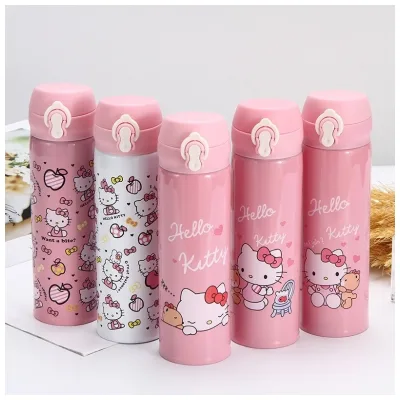
Source Cartoon 430ml Water Bottle with Lid for travel office school
Compare 30 listings for the Cartoon 430ml Water Bottle with Lid, featuring vacuum insulation and customizable logos. Buyers can evaluate options made from 304 stainless steel or Tritan plastic with capacities ranging from 150ml to 550ml for various occasions.
Key considerations
Products List


450ml BPA Free Kids Sport Bottle Portable Cartoon Kids Drink Water Bottle with Handle
$2.33 - $3.76
MOQ: 100 Pieces


Top Quality Cute Cartoon Design Plastic Tritan 550ml Water Bottle with Strap
$1.38 - $1.55
MOQ: 1000 Pieces

450ml Custom BPA Free Sports Cartoon Plastic Kids Drinking Water Bottle for Kids
$1.08 - $1.28
MOQ: 1000 Pieces


Comprehensive Sourcing Guide
Strategic Sourcing Guide for Cartoon 430ml Water Bottles with Lids
Sourcing a cartoon-themed 430ml water bottle with a lid requires a nuanced approach that balances aesthetic appeal with rigorous functional performance. In the B2B marketplace, the term "cartoon" often implies a specific design language targeting younger demographics or brands seeking a playful identity, yet the underlying engineering must meet the same high standards as professional-grade thermosware. The core keyword suggests a product that combines visual distinctiveness with the practical utility of a vacuum-insulated vessel. Buyers must navigate a landscape where product attributes vary significantly between listings, ranging from stainless steel construction to alternative materials like Tritan plastic. This guide provides a structured framework for evaluating suppliers, verifying technical claims, and ensuring that the final procurement aligns with quality expectations and regulatory compliance.
Technical Specifications and Material Composition
The foundation of any successful procurement for insulated drinkware lies in the precise definition of material and structural specifications. For a product described as a "cartoon insulated water bottle," the primary observation from the market data indicates a strong prevalence of 304 Stainless Steel as the core material. This grade of stainless steel is widely recognized for its corrosion resistance and durability, making it suitable for daily use. However, buyers must be vigilant, as some listings in the same category also reference 316 Stainless Steel or even Plastic and Tritan materials. The distinction is critical because 316 offers superior resistance to chlorides and is often preferred for marine or high-salt environments, while Tritan provides a shatter-resistant alternative that may be lighter but lacks the thermal retention properties of metal.
The thermal performance is a defining characteristic of the vacuum flask category. The observed data consistently highlights a thermal insulation performance range of 6 to 12 hours for keeping drinks hot or cold. This claim is supported by the "Double Wall Vacuum Insulation" structure, which is the standard engineering solution for maintaining temperature differentials. The capacity of 430ml falls within the standard single-serve range, often bridging the gap between the 350ml and 500ml sizes observed in the market. The physical dimensions, such as a single package size of approximately 21x11x13 cm, suggest a cylindrical or straight cup shape that is optimized for portability. When evaluating a specific supplier, buyers should request detailed technical sheets that confirm the wall thickness, the vacuum seal integrity, and the specific type of lid mechanism, as these factors directly influence the 6-12 hour performance claim.
Compliance and Certification Verification
In the realm of food-contact products, particularly those intended for children or general consumer use, certification is not merely a marketing advantage but a legal necessity. The market data reveals a cluster of certifications including FDA, CE / EU, LFGB, and EEC. These standards indicate compliance with safety regulations in the United States and the European Union regarding food contact materials. For instance, FDA certification ensures that the materials do not leach harmful substances into beverages, while LFGB is the German standard that is often stricter than general EU requirements.
Buyers must verify that the specific model number, such as KTBWSP or DB-007, is covered under the provided certificates. It is a common pitfall to assume that a supplier's general certification applies to every SKU they produce. The presence of "CIQ" (China Inspection and Quarantine) further suggests that the product has undergone export-quality inspection. However, buyers should not rely on the mere mention of these acronyms. Instead, they should request valid certificate copies that explicitly list the product model and the specific material composition (e.g., 304 Stainless Steel or Tritan). If the product is marketed as "Eco-Friendly," buyers should also inquire about the specific environmental standards met, as the provided data does not confirm FSC certification for the packaging or materials, leaving this as a variable to be negotiated.
Cost Drivers and Pricing Dynamics
Understanding the cost structure of a cartoon 430ml water bottle is essential for budgeting and margin planning. The observed price range in the market spans from $0.30 to $9.50 USD, a wide variance that reflects differences in material quality, customization complexity, and order volume. The lower end of this spectrum likely corresponds to basic plastic models or high-volume orders of stainless steel units with minimal customization. Conversely, the higher end suggests premium stainless steel (potentially 316), complex cartoon printing techniques like screen printing, or smaller order quantities that do not benefit from economies of scale.
The Minimum Order Quantity (MOQ) is another significant cost driver. Data indicates an MOQ range of 2 to 3000 units, with a specific observation of 10 pieces for certain listings. A low MOQ allows for testing the market with limited risk but often results in a higher unit cost. As the order volume increases, the per-unit price typically decreases, but the buyer must consider the total capital outlay. Additionally, the "Custom Packing Acceptable" attribute suggests that packaging costs can be a variable line item. Standard color boxes are mentioned, but custom branding on the packaging will add to the overall cost. Buyers should calculate the total landed cost, including shipping and duties, rather than focusing solely on the ex-works price, as the weight of the product (observed at 2.000 kg gross weight for a single package) can significantly impact freight charges.
Supplier Evaluation and Customization Capabilities
When sourcing a product with a specific "Cartoon" style, the supplier's ability to execute custom designs is paramount. The market data confirms that "Customized Logo" and "Customization" are available attributes, and the "Style" is listed as "Cartoon water bottle" with multiple color styles available. This implies that suppliers offer a range of pre-designed cartoon graphics or the ability to imprint custom artwork. The "Screen Printing" technique mentioned is a standard method for applying these designs to metal surfaces, but buyers should verify the durability of the print, especially if the bottle is intended for frequent washing or rough handling.
Evaluating a supplier requires looking beyond the product listing. Buyers should assess the supplier's production capabilities, specifically their experience with "Vacuum Flasks" and "Production" of such items. The "place of origin" is consistently listed as Guangdong, China, a region known for its robust manufacturing ecosystem for drinkware. However, the presence of multiple model numbers (KTBWSP, DB-007, MLH9160) suggests that suppliers may have diverse product lines. A reliable supplier will demonstrate consistency across their catalog, ensuring that the cartoon style does not compromise the structural integrity of the vacuum seal. Buyers should also check the "applicable people" attribute, which is listed as "Adults," to ensure the design and size are appropriate for the target demographic, even if the cartoon theme suggests a younger audience.
Quality Control and Performance Assurance
Ensuring the quality of the final product involves a multi-stage verification process. The "Features" listed include the ability to keep water hot or cold for 6 to 12 hours, a claim that must be validated through independent testing or rigorous internal quality control protocols. Buyers should establish a clear acceptance criteria based on thermal retention tests. For example, filling the bottle with boiling water and measuring the temperature after 6 and 12 hours should yield results consistent with the supplier's claims.
The "Structure" of the bottle, described as "Double Wall Vacuum Insulation," is critical for preventing condensation and maintaining temperature. Quality control checks should include vacuum integrity tests to ensure there are no leaks or breaches in the seal. Furthermore, the "Cup Mouth Diameter" is noted as "Big Mouth," which facilitates easy filling and cleaning but may require a specific lid design to prevent spills. Buyers should inspect the lid mechanism for durability and leak-proof performance. The "Net Weight" of 143.5g for certain models provides a benchmark for material density; significant deviations from this weight could indicate the use of thinner, lower-quality steel or the inclusion of non-metallic components that affect the thermal performance.
Long-Term Procurement and Market Considerations
For buyers planning long-term partnerships, the scalability and consistency of the supply chain are vital. The "Selling Units" are listed as "Single item," which is standard for retail packaging, but bulk procurement requires clear agreements on packaging consistency. The "Multiple color styles" and "Multiple occasions" attributes suggest that the product has broad market applicability, from office use to outdoor activities. However, trends in cartoon designs can shift rapidly. Buyers should negotiate terms that allow for design updates without incurring excessive tooling costs.
The "Customization" aspect also extends to branding. The availability of "Customizable" logos allows companies to create unique merchandise. However, buyers must ensure that the customization process does not interfere with the product's safety certifications. For instance, adding a custom logo should not introduce lead or other heavy metals into the food-contact zone. Additionally, the "Stocked" feature indicates that some suppliers may hold inventory, which can reduce lead times for urgent orders. Buyers should balance the benefits of stocked inventory against the risk of holding obsolete designs. Ultimately, a successful procurement strategy for a cartoon 430ml water bottle with a lid relies on a deep understanding of the technical specifications, a rigorous verification of certifications, and a clear definition of the customization requirements to ensure the product meets both aesthetic and functional goals.
FAQs
What materials are used for Cartoon 430ml Water Bottle with Lid?
Most units are constructed from 304 Stainless Steel, though some listings specify 316 Stainless Steel or Tritan Plastic. Buyers must verify the specific material grade for each model to ensure durability and safety compliance.
How long does the bottle keep drinks hot or cold?
The vacuum insulation structure maintains temperature for 6 to 12 hours. This performance relies on the double-wall vacuum design observed in the product specifications for this category.
Can I customize the logo on these bottles?
Yes, suppliers offer customizable logos and accept custom packing options. The design is often applied using screen printing techniques on the stainless steel surface.
Which certifications apply to this water bottle product?
Common certifications include FDA, CE / EU, LFGB, and EEC. Buyers should request valid certificate copies that explicitly list the specific model number to ensure compliance.
What is the minimum order quantity for these items?
The minimum order quantity ranges from 2 to 3000 units, with some specific listings requiring 10 pieces. Lower MOQs may result in higher per-unit costs.
Where are these cartoon bottles manufactured?
The place of origin is consistently listed as Guangdong, China. This region is known for its robust manufacturing ecosystem for drinkware and vacuum flasks.