Source Cast Iron Skillet Grill Pan for Bread, BBQ, and Steak
Find and compare 30 Cast Iron Skillet Grill Pan options featuring pre-seasoned and enamel coatings. These square and round pans are suitable for indoor and outdoor cooking, offering customization and various handle materials for diverse culinary needs.
Key considerations
Products List


Home and Kitchen Cast Iron Grill Pan with Cast Iron Handle and off Oil Mouth
$3.39 - $7.99
MOQ: 500 Pieces
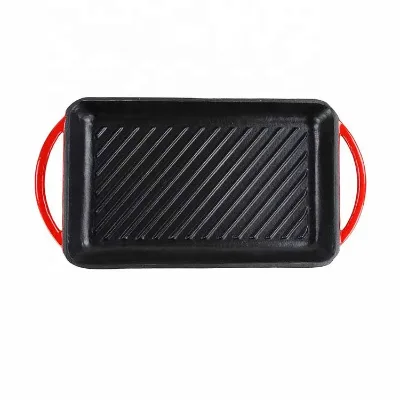


Factory Price Cast Iron Cookware 11'' Square Steak Pan Cast Iron Grill Pan
$3.99 - $8.99
MOQ: 500 Pieces


Non-Stick Grill Pan Cast Iron Skillet Enameled Cast Iron Pan with Ridges
$7.98 - $8.49
MOQ: 500 pieces


Square Non Stick Skillet, Cast Iron Steak Grill Cooking Frying Pan with Handle
$4.00 - $10.00
MOQ: 100 Pieces

Comprehensive Sourcing Guide
Cast Iron Skillet Grill Pan Sourcing Guide
Sourcing cast iron skillet grill pans requires a nuanced understanding of material properties, manufacturing processes, and commercial terms that differ significantly from standard aluminum or stainless steel cookware. These products are defined by their heavy-duty construction, heat retention capabilities, and specific surface treatments that dictate their usability and maintenance requirements. Buyers must navigate a landscape where product variations in size, shape, and coating directly impact both the unit cost and the logistical complexity of shipping. The following guide provides evidence-based procurement strategies for sourcing these items, focusing on verified attributes and industry-standard verification steps to mitigate risk and ensure product quality.
The market for cast iron grill pans is characterized by a wide range of customization options, from OEM branding to specific packaging configurations. Suppliers often offer flexibility in handle materials, cover styles, and surface finishes, allowing buyers to tailor products to specific retail or foodservice needs. However, this flexibility introduces complexity in quality control and specification verification. Procurement teams must establish clear technical requirements early in the sourcing process to avoid discrepancies between samples and bulk production, ensuring that the final product meets both functional expectations and regulatory standards for food contact materials.
Product Scope and Observed Listing Signals
The observed product listings indicate a diverse range of cast iron grill pans, with sizes varying from 18-21cm to 30-33cm, and general sizes often cited as 10-inch or 27cm models. Shapes include both square and circular designs, catering to different cooking styles and presentation needs. The presence of handles and optional glass covers suggests a focus on versatility, allowing these pans to transition from stovetop grilling to oven baking or tableside serving. Buyers should note that while "10-inch" is a common standard reference, actual dimensions may vary, necessitating precise measurement verification during the sampling phase.
Surface treatments and coatings are critical differentiators in this category, with listings highlighting pre-seasoned, enamel-coated, and non-stick options. The material is consistently identified as cast iron, often with a bottom thickness of 4mm, which contributes to heat retention and durability. Some products feature specific design elements such as oil mouths for controlled pouring or stainless steel, cast iron, or bakelite knobs for lids. These features enhance functionality but also introduce potential points of failure or quality variance, requiring careful inspection of component compatibility and finish consistency.
Technical Specifications to Verify
Buyers must verify the exact dimensions and weight of each pan model, as listed sizes like "10 inch" or "27cm" may not reflect the true cooking surface diameter or overall footprint. The bottom thickness, often specified as 4mm, is a key indicator of heat distribution and durability, but this should be confirmed through physical measurement of samples. Additionally, the type of handle attachment and material—whether cast iron, stainless steel, or bakelite—must be assessed for thermal resistance and ergonomic comfort, especially for products marketed for indoor and outdoor use.
Coating integrity and surface smoothness are paramount for both performance and customer satisfaction. Pre-seasoned pans require verification of the seasoning layer's adhesion and uniformity, while enamel-coated models need inspection for chips, cracks, or uneven glazing. The presence of a glass cover should be checked for thermal shock resistance and fit, ensuring it seals properly to retain moisture and heat. Buyers should also confirm the specific type of non-stick or enamel coating used, as this impacts cleaning instructions and long-term durability, particularly for products labeled as oven-safe or suitable for high-heat grilling.
Compliance and Safety Documentation
Food contact safety is the primary compliance concern for cast iron cookware, requiring verification that all materials, including coatings, handles, and lids, meet relevant regional standards for heavy metal leaching and chemical migration. Buyers should request certificates of compliance or test reports from accredited laboratories, specifically for lead, cadmium, and other heavy metals, as well as for any polymer-based components like bakelite handles or non-stick coatings. These documents are essential for market access in regions with strict food safety regulations, such as the EU, US, and China.
Packaging and labeling compliance must also be addressed, particularly for products intended for retail sale. The case pack configuration, often listed as 1 set per box or multiple boxes per carton, should be verified for structural integrity and suitability for the intended shipping method. Labels must include accurate product information, care instructions, and safety warnings, such as "Hand Wash Only" or "Oven Safe" limits, to prevent misuse and potential liability. Buyers should ensure that all labeling meets the language and formatting requirements of the destination market, including barcode standards and country-of-origin markings.
Cost Drivers and Commercial Terms
The cost of cast iron grill pans is influenced by several factors, including the weight of the iron, the complexity of the coating process, and the level of customization required. Heavier pans with thicker bottoms and more intricate designs, such as those with integrated oil mouths or specialized knobs, typically command higher prices. Pre-seasoning and enamel coating add significant value but also increase production time and cost, so buyers should understand the cost breakdown to negotiate effectively and avoid hidden fees for minor specification changes.
Minimum Order Quantities (MOQs) and payment terms are critical commercial considerations, with observed MOQs ranging from 100 to 600 pieces per model. Buyers should assess whether the MOQ aligns with their sales forecast and storage capacity, as cast iron is heavy and bulky, increasing warehousing and shipping costs. Negotiating flexible MOQs for initial orders or mixed models can help reduce risk, while clear payment terms, such as a deposit followed by balance against shipping documents, protect both parties and ensure smooth transaction processing.
Supplier Qualification and Quality Control
Supplier qualification should focus on manufacturing capability, quality management systems, and experience with cast iron production. Buyers should verify the supplier's ability to maintain consistent coating quality and dimensional accuracy across large batches, as these are common pain points in cast iron manufacturing. Requesting references from existing clients, particularly those in similar markets, can provide insight into the supplier's reliability and responsiveness. On-site audits or third-party inspections are recommended to assess factory conditions, equipment maintenance, and worker safety practices.
Quality control protocols must be clearly defined and agreed upon before production begins. This includes establishing acceptable defect rates for cosmetic issues like surface roughness or coating imperfections, as well as functional tests for heat distribution and handle stability. Pre-shipment inspections should be mandatory, covering random sampling from each production batch to verify dimensions, weight, coating integrity, and packaging accuracy. Buyers should also define a clear process for handling non-conforming goods, including replacement or refund policies, to mitigate the financial impact of quality failures.
Long-Term Procurement Checks
Long-term success in sourcing cast iron grill pans depends on continuous monitoring of product performance and supplier relationship management. Buyers should track customer feedback and return rates to identify recurring issues, such as coating peeling or handle loosening, and address these with the supplier through corrective action plans. Regular re-evaluation of supplier performance, including on-time delivery, communication responsiveness, and adherence to quality standards, is essential for maintaining a reliable supply chain.
Market trends and regulatory changes should also be monitored, as consumer preferences for eco-friendly materials and sustainable packaging may evolve. Buyers should stay informed about new coating technologies or design innovations that could offer competitive advantages, such as improved non-stick properties or lighter weight alternatives. Building a strong partnership with the supplier, based on transparency and mutual benefit, can facilitate collaboration on product development and cost optimization, ensuring long-term profitability and market relevance.
FAQs
What sizes are available for cast iron skillet grill pans?
The product line includes multiple size options to suit different cooking needs. Available specifications range from 18-21cm up to 30-33cm, with specific models offered in 10-inch and 27cm dimensions. Buyers can select from square or circular shapes depending on their preference for indoor or outdoor barbecue and steak preparation.
Can I customize the logo and packaging for bulk orders?
Yes, customization is available for both branding and packaging requirements. Buyers can request OEM logos applied via casting, laser, or sticker methods. Packaging options include customized boxes or standard cartons, with case packs varying from one set per box to multiple sets per carton based on specific request.
What coating options are provided for the grill pans?
The grill pans feature either pre-seasoned surfaces or enamel coatings for durability and ease of use. Some models are specifically designed with non-stick properties to facilitate cooking. These coatings ensure good smoothness levels and are suitable for various applications including bread baking, barbecue, and general indoor or outdoor cooking tasks.
What is the minimum order quantity for these products?
The minimum order quantity varies by product model, typically ranging from 100 to 600 pieces. Specific models may have a defined MOQ of 500 pieces. Buyers should verify the exact MOQ for their selected size and coating type to ensure alignment with their procurement volume and budget constraints.
Are these pans suitable for oven use and hand washing?
Yes, the cast iron grill pans are oven safe and designed for hand washing only. This care instruction ensures the longevity of the enamel or pre-seasoned coating. The sturdy construction with handles and glass covers makes them versatile for both stovetop and oven cooking, suitable for preparing steaks, bread, and barbecue items.
What materials and features define the handle and knob options?
The handles are constructed with cast iron or compatible materials, and knobs can be selected from stainless steel, cast iron, or Bakelite. These components are designed to withstand high temperatures during cooking. The pans often include features like an oil mouth and come with or without glass covers depending on the specific model selected.