Source CE Certified Elastic Adhesive Bandage for Sports, Medical, and First Aid
Find 30 verified options for CE Certified Elastic Adhesive Bandage suitable for sports support, medical dressings, and first aid kits. Compare specifications like width, material, and sterilization methods from multiple suppliers to select the right product for your needs.
Key considerations
Products List


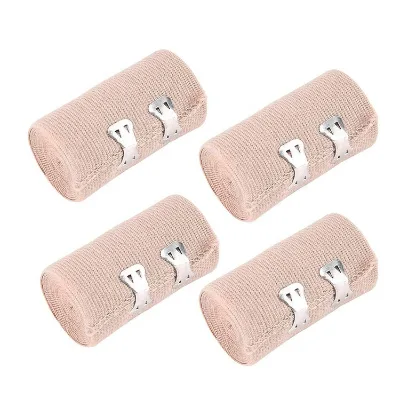
High Quality Medical Self Adhesive Bandage Non Woven Cohesive Elastic Bandage
$0.35 - $0.40
MOQ: 10000 Rolls




Comprehensive Sourcing Guide
Strategic Sourcing Guide for CE Certified Elastic Adhesive Bandages
Understanding Product Specifications and Material Composition
When sourcing elastic adhesive bandages, the primary objective is to identify products that balance structural integrity with user comfort. The core keyword "CE Certified Elastic Adhesive Bandage" implies a medical device intended for wound care, compression, or support, subject to European regulatory oversight. Based on observed market data, these products are predominantly constructed from Non-Woven fabrics, Elastic Fibers, or Polyester Rubber blends. The material composition is critical because it dictates the bandage's breathability, elasticity, and adhesive performance.
Buyers should verify the specific material attributes listed by suppliers. Common observations include Non-Woven materials, which offer a lightweight and breathable profile, often paired with Elastic Fiber or Polyester Rubber to provide the necessary stretch and recovery. The GSM (Grams per Square Meter) is a vital technical metric for assessing material density and durability. Market listings indicate a wide range of GSM values, including 30g, 34g, 78g, 80g, 90g, 100g, and 110g. A higher GSM generally suggests a thicker, more robust bandage suitable for heavy-duty support, while lower GSM values may indicate a product designed for light coverage or sensitive skin.
The physical dimensions of the bandage are equally significant. Standard width specifications observed in the market include 2.5cm, 5cm, 7.5cm, 10cm, 15cm, 20cm, 25mm, 50mm, 75mm, and 10mm. Lengths typically range from 4 meters to 5 meters, with specific configurations such as 4.5m being a frequent standard. The combination of width and length determines the surface area coverage and the total volume of material required for a specific application. Buyers must ensure that the selected model number, such as HG-04-NXBD06, HF F-3, or HF A1, aligns precisely with their clinical or logistical requirements. The "Type" is consistently categorized as Bandage or Medical Dressings, confirming their intended use in healthcare settings.
Compliance Verification and Certification Standards
The term "CE certified" is a central requirement for this product category, signifying conformity with health, safety, and environmental protection standards for products sold within the European Economic Area. While the keyword emphasizes CE certification, the observed data also references ISOCE, FDA, and Ethylene Oxide Sterilization protocols. It is imperative for buyers to treat these certifications as distinct verification points rather than interchangeable terms.
Buyers must request and validate the specific CE certification documentation. The presence of "ISOCE" and "FDA" in product attributes suggests that some manufacturers may hold multiple certifications, but this is not universal across all listed products. The verification process should involve checking the Notified Body number associated with the CE mark, which is a mandatory requirement for Class I medical devices in the EU. Furthermore, the data indicates conflicting information regarding sterilization. Some product attributes list "Ethylene Oxide Sterilization" as available, while others explicitly state "Without Ethylene Oxide Sterilization" or "Without Disinfection."
This discrepancy highlights a critical compliance check: the buyer must determine the required sterility level for their specific application. If the bandage is intended for open wounds, a sterile product with verified Ethylene Oxide Sterilization is mandatory. If the product is for general support or closed wounds, a non-sterile version may suffice. The "Disinfection" attribute further clarifies this, with some listings noting "Without Disinfection." Buyers should not assume that a CE mark automatically implies sterility; the specific sterilization method and status must be explicitly confirmed in the technical file. Additionally, while background knowledge mentions standards like ISO 13485 or EN 13726, these should only be cited as benchmarks for the buyer to request from the supplier, rather than as guaranteed facts for every product in the search results.
Cost Drivers and Pricing Dynamics
The pricing structure for elastic adhesive bandages is influenced by several variable factors, including material composition, customization levels, and order volume. The observed price range in the market spans from $0.01 to $3.00 USD. This wide variance indicates that the unit price is highly dependent on the specific configuration of the order. The lower end of the price spectrum likely corresponds to basic, non-customized, non-sterile bandages with standard dimensions and lower GSM values. Conversely, the higher end of the range may reflect premium materials, custom branding, sterile packaging, or complex specifications.
The Minimum Order Quantity (MOQ) is another significant cost driver. The observed MOQ range is extensive, spanning from 2 units to 50,000 units. This flexibility allows buyers to scale their procurement based on their immediate needs and budget constraints. However, the relationship between price and volume is not always linear. Suppliers may offer tiered pricing structures where the unit cost decreases significantly as the order volume approaches the higher end of the MOQ spectrum. Buyers should be aware that while a low MOQ of 2 units offers flexibility for sampling, it may come with a higher per-unit cost compared to bulk orders.
Customization is a key factor that can impact the final price. The product attributes indicate that "Customization" is available, including options for "OEM" (Original Equipment Manufacturer) branding, custom colors (White, Beige, Skin Color), and specific packing requirements. Custom branding and specialized packaging often incur additional setup fees or higher per-unit costs. Furthermore, the choice of material, such as moving from standard Non-Woven to a blend of Elastic Fiber and Non-Woven, can alter the cost structure. Buyers must balance the desire for customization against the budgetary constraints, ensuring that the added value of customization justifies the potential increase in unit price.
Typical Applications and Functional Requirements
Elastic adhesive bandages serve a diverse range of applications, driven by their functional attributes. The primary functions observed include Hemostasis, Ventilation, and Waterproofing. These functions dictate the suitability of the product for specific medical scenarios. Hemostasis is a critical feature for bandages intended to stop bleeding, making them essential for acute wound care. Ventilation ensures that the wound site remains breathable, reducing the risk of maceration and promoting faster healing. Waterproofing is a valuable feature for patients requiring mobility or those in environments where the bandage might be exposed to moisture.
The target demographic for these products is primarily "Adult," though some listings indicate suitability for "All" groups. This distinction is important for procurement, as pediatric bandages may require different sizing or material safety profiles. The "Group" attribute helps buyers narrow down their search to products that meet the specific needs of their patient population. Additionally, the "Latex Free" attribute is a crucial safety feature for patients with latex allergies, a common concern in medical procurement.
The application of the bandage also depends on the type of adhesive and the backing material. The presence of "Metal Clips or Elastic Band Clips" suggests that some products may include integrated fastening mechanisms, which can simplify application and removal. The "Basic Packing" of individually packed cellophane or "Cartons" indicates that the packaging is designed to maintain hygiene and facilitate easy dispensing in clinical settings. Buyers should evaluate the functional requirements of their specific use case—whether it is for sports injury support, post-surgical care, or general first aid—to ensure the selected bandage possesses the necessary combination of hemostatic, ventilating, and waterproof properties.
Supplier Evaluation and Quality Assurance
Evaluating suppliers for elastic adhesive bandages requires a rigorous approach to quality assurance and operational reliability. The "Quality Guarantee Period" of three years is a notable attribute observed in the market, suggesting that some manufacturers stand behind the durability and performance of their products for an extended period. However, buyers should verify the scope of this guarantee, as it may apply to specific defects or storage conditions rather than general usage.
Supplier evaluation should also focus on the "Delivery Time" and "Lead Time." The observed delivery time of 15-20 days provides a benchmark for supply chain planning. Buyers must confirm whether this timeframe is consistent across different order sizes and customization levels. The "Payment Term" options, such as T/T (Telegraphic Transfer) and L/C (Letter of Credit), indicate the financial flexibility of the supplier. Buyers should negotiate terms that align with their cash flow requirements while mitigating risk.
The "Brand Name" attribute often lists "OEM," indicating that many suppliers operate as contract manufacturers. This is common in the medical device industry, where private labeling is standard. Buyers seeking to build their own brand should verify the supplier's capability to handle OEM requirements, including custom packaging and branding. The "Packing" specifications, such as "1 roll/Poly Bag" or "Cartons," should be confirmed to ensure they meet logistical needs. Additionally, the "prod_packing" attribute noting "Packing According to Your Requirement" highlights the supplier's flexibility, but buyers must provide clear and detailed specifications to avoid errors.
Long-Term Procurement and Inventory Management
Sourcing elastic adhesive bandages is not merely a transactional activity but a strategic process that involves long-term planning and inventory management. The "Standard" specifications, such as 2.5cm/3.8cm/5cm/7.5cm/10*4.5m or custom, suggest that buyers should establish a standardized product list to streamline procurement. Maintaining a consistent set of SKUs can reduce administrative overhead and simplify inventory tracking.
The "Fiber Weight GSM" and "Width" specifications are critical for inventory planning. Buyers should analyze historical usage data to determine the optimal mix of widths and GSM values. Overstocking low-demand items can tie up capital, while understocking high-demand items can lead to supply disruptions. The "Color" options, including White, Beige, and Skin Color, should be aligned with the preferences of the end-users to ensure satisfaction and reduce returns.
Long-term procurement also involves monitoring the supplier's ability to maintain consistent quality over time. The "Ethylene Oxide Sterilization" status and "Disinfection" protocols should be regularly audited to ensure compliance with evolving regulatory standards. Buyers should establish a relationship with suppliers that allows for regular quality audits and performance reviews. The "Location" of the supplier, noted as "China," should be factored into logistics planning, considering potential shipping delays or tariff changes. By focusing on these long-term considerations, buyers can build a resilient supply chain that ensures the continuous availability of high-quality elastic adhesive bandages.
Comparative Analysis of Product Attributes
To facilitate decision-making, the following table summarizes the key product attributes observed in the market, highlighting the variations that buyers must consider during the sourcing process.
| Attribute Category | Observed Variations | Sourcing Consideration |
|---|---|---|
| Material | Non Woven, Elastic Fiber, Polyester Rubber | Verify material composition for comfort and durability. |
| GSM (Weight) | 30g, 34g, 78g, 80g, 90g, 100g, 110g | Select based on required thickness and support level. |
| Width | 2.5cm to 20cm (various mm/cm mixes) | Match width to wound size or body part. |
| Length | 4m, 4.5m, 5m | Ensure sufficient length for the intended application. |
| Sterilization | Ethylene Oxide, Without Sterilization | Confirm sterility requirement for the specific medical use. |
| Certification | CE, ISOCE, FDA | Validate specific certification documents for compliance. |
| Customization | OEM, Custom Color, Custom Packing | Assess cost and lead time for custom requirements. |
| MOQ | 2 to 50,000 units | Align order volume with budget and storage capacity. |
| Delivery Time | 15-20 days | Plan inventory replenishment cycles accordingly. |
This comparative analysis underscores the importance of detailed specification checks. The diversity in attributes means that a "one-size-fits-all" approach is ineffective. Buyers must carefully match the product specifications to their specific operational needs, ensuring that the selected elastic adhesive bandages meet both functional and regulatory requirements. By adhering to these guidelines, buyers can navigate the complex landscape of medical device procurement with confidence and precision.
FAQs
What certifications do these bandages hold?
Products often hold ISOCE and FDA certifications. Some listings also mention CE compliance, but buyers must verify specific documentation for each item.
Can I request custom branding and colors?
Yes, customization is available for OEM branding and colors like white, beige, or skin tone. Buyers should specify requirements clearly for packaging and labeling.
What materials are used for these bandages?
Materials include non-woven fabric, elastic fiber, and polyester rubber blends. The GSM ranges from 30g to 110g depending on the specific model and intended use.
Are the bandages sterile or disinfected?
Sterility varies by product; some have Ethylene Oxide Sterilization while others are without disinfection. Buyers must confirm the specific status for wound care applications.
What is the typical delivery time for orders?
The standard delivery time is 15 to 20 days. This lead time applies to most orders, though customization may affect the final schedule.
How flexible is the minimum order quantity?
MOQs range widely from 2 units up to 50,000 units. This flexibility allows buyers to start with small samples or place large bulk orders.
What payment terms are accepted by suppliers?
Suppliers typically accept T/T and L/C payment terms. These options provide financial flexibility for international transactions and large volume purchases.