Source CE Certified Electric Stretcher for Hospital Ambulance Clinic
Compare 30 CE Certified Electric Stretcher options from verified Chinese suppliers. Buyers can evaluate specifications like load bearing, battery life, and folding mechanisms to find suitable hospital or ambulance equipment.
Key considerations
Products List

Medical Powered Ambulance Electric Automatic Loading Stretcher with CE/ISO
$800.00 - $6000.00
MOQ: 1 Pieces

Motorized Medical First Aid Steel/ Aluminum Alloy Electric Stretcher with CE/ISO
$800.00 - $6000.00
MOQ: 1 Pieces


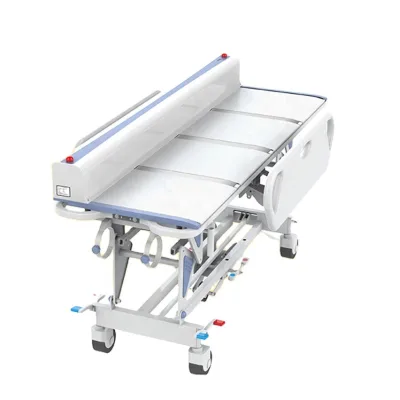


ISO14001 Certified Portable Emergency Medical Stretcher for First Aid
$1600.00 - $2000.00
MOQ: 2 Pieces


Premium Folding Medical Stretcher with Height Adjustment for Transport
$1600.00 - $2000.00
MOQ: 2 Pieces

Hospital Luxurious Electric Multi-Functional Rise and Fall Patient Transfer Stretcher
$1700.00 - $2000.00
MOQ: 1 Pieces


Surgery Transfer Car Emergency Stretcher Adjustable Surgery Connecting Stretcher
$850.00 - $870.00
MOQ: 1 Sets


High Quality Rescue Hydraulic Adjustment Loading Heigth Ambulance Electric Stretcher
$1000.00 - $8000.00
MOQ: 20 Pieces


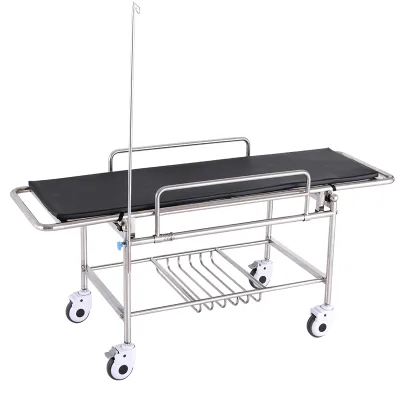
Medical Furniture Multi-function Electric Adjustable Hospital Bed Stretcher Car
$80.00 - $300.00
MOQ: 1 Minimum

Powered Stair Climbing Wheelchair Lightweight Climber Electric Chair Electric Stretcher
$430.00 - $660.00
MOQ: 10 Pieces


Medical Emergency Bed Patient Hydraulic Folding Stretcher Ambulance Emergency Stretcher
$1683.00 - $2525.00
MOQ: 10 Pieces


Professional Hydraulic Stretcher Rescue Wheeled Stretcher Trolley Transfer Bed
$251.00 - $377.00
MOQ: 10 Pieces
Comprehensive Sourcing Guide
Strategic Sourcing Guide for CE Certified Electric Stretcher Procurement
The global demand for advanced medical transport equipment has driven a significant shift toward electrically powered stretchers that combine mobility, patient safety, and operational efficiency. For procurement professionals targeting the core keyword "CE Certified Electric Stretcher," the market presents a diverse array of options ranging from foldaway manual units to fully automated hospital transfer systems. This guide provides a disciplined framework for evaluating suppliers, verifying compliance, and selecting equipment that meets rigorous clinical and logistical standards. The following analysis relies strictly on observed product attributes, confirmed specifications, and established industry practices to ensure accurate, evidence-based decision-making.
Technical Specifications and Functional Architecture
Understanding the technical architecture of an electric stretcher is the first step in defining procurement requirements. The market offers distinct configurations, including foldaway stretchers designed for compact storage and electric transfer stretchers optimized for patient movement between beds and vehicles. A critical observation in the current supply landscape is the variation in load-bearing capacities. While some units are engineered with a robust 300kg load-bearing limit to accommodate bariatric patients, others are specified with a maximum load of 135kg, which is typical for standard adult transfers. Buyers must align these specifications with the demographic profile of their patient population.
The mechanical structure of these devices often incorporates specific features to enhance functionality. For instance, certain models utilize ABS rails for connecting stretchers, ensuring a stable interface during transfers. Height adjustability is a common requirement, with some units offering manual adjustments while others feature gas-powered backrests for rapid repositioning. The wheel assembly is another pivotal component; observed specifications indicate wheel sizes ranging from 150mm (approximately 6 inches) to 5-inch silent wheels. The choice of wheel size directly impacts maneuverability in tight corridors and stability on uneven surfaces. Furthermore, the moving panel dimensions are critical for compatibility with existing hospital beds. Specifications show moving panel widths of 500 (±20) mm and overall sizes ranging from 1930750780 to 1050(±30) mm, highlighting the need for precise dimensional verification before purchase.
Compliance Verification and Certification Standards
For any medical device intended for the European market or international export, CE certification is a non-negotiable baseline. The observed product data confirms that many electric stretchers carry the CE mark, often alongside ISO certifications. Specifically, suppliers frequently list compliance with ISO standards, and some entries explicitly mention ISO/CE or FDA/ISOCE combinations. However, procurement teams must exercise caution; the presence of a certification label does not automatically guarantee that every listed product satisfies the same regulatory depth. Buyers should verify that the CE certification covers the specific model number, such as WT-ETST-01, C1, C2, or CHS-DA01, and that it aligns with the relevant Medical Device Regulation (MDR) or older directives depending on the device's classification.
Instrument classification is another vital compliance metric. Data indicates that some electric stretchers are classified as Class I devices, which generally implies lower risk and less stringent regulatory oversight compared to Class II or III devices. Nevertheless, the "Class I" designation must be validated against the intended use and the specific jurisdiction's requirements. Additionally, while some background knowledge suggests standards like ISO 9001:2015 or ISO 13485:2016, these should not be assumed as inherent facts for every product unless explicitly stated in the supplier's documentation. The primary verification step is to request the specific Declaration of Conformity and the technical file for the exact model being purchased, ensuring the certification is current and applicable to the device's electrical and mechanical safety features.
Cost Drivers and Pricing Dynamics
The pricing for electric stretchers exhibits a wide variance, with observed ranges spanning from $20 to $24,000 USD. This broad spectrum reflects differences in complexity, power systems, and material quality. The lower end of the price range typically corresponds to manual foldaway stretchers or basic models with minimal electronic integration. In contrast, the higher price points are associated with fully electric transfer stretchers featuring advanced battery systems, automated height adjustment, and specialized safety features.
Several factors drive these costs. The power system is a significant contributor; units equipped with dual lithium batteries, such as the (24V, 8.7AH) *2 configuration, command a premium over those with standard charging supplies. The material composition also influences price, with ABS construction offering a balance of durability and weight. Furthermore, the inclusion of features like warning lights, silent wheels, and gas backrests adds to the manufacturing cost. Buyers should note that the "Selling Units" are often listed as single items, but bulk procurement may influence the final unit price. It is essential to distinguish between the base unit cost and additional expenses for customization, such as logo printing or specific mattress configurations, which are listed as available or supported options in many product listings.
Typical Applications and Operational Environments
Electric stretchers are designed for diverse operational environments, with the primary application being hospital settings. The observed "Using Ambient" attribute explicitly identifies the hospital as the intended environment, where these devices facilitate patient transfers between wards, emergency departments, and operating theaters. The specific design features align with these use cases; for example, the "Moving distance of moving panel" is noted as unlimited, suggesting suitability for long-distance transfers within large medical facilities.
The versatility of these devices is further demonstrated by their ability to function as both a transport vehicle and a treatment surface. Models with a "Configuration: Mattress" and "Ethylene Oxide Sterilization: Without Ethylene Oxide Sterilization" indicate that they are designed for immediate use without the need for post-manufacturing sterilization, streamlining the workflow in busy emergency rooms. The "Condition: New" status ensures that buyers receive fully functional units ready for deployment. Additionally, the "After-sale Service: Online Technical Support" highlights the importance of remote assistance in maintaining operational continuity, particularly for complex electric systems that may require troubleshooting or software updates.
Supplier Evaluation and Geographic Considerations
When evaluating suppliers, geographic origin plays a crucial role in logistics and supply chain reliability. The observed data points to several key manufacturing hubs, including Qingdao, Ningbo, Nanjing, and Guangdong in China. These locations are strategic for export, with the "Port of Loading" often listed as Shanghai, Ningbo, Qingdao, or any port in China. Buyers should consider the proximity of the manufacturing site to the port of loading, as this can impact lead times and shipping costs. For instance, a product originating from Qingdao may have a shorter transit time to the Shanghai port compared to one from Nanjing.
Supplier reliability is further assessed through their customization capabilities. The "Customization: Available" or "Support" attributes indicate that suppliers are willing to adapt products to specific buyer needs, such as altering the "Moving height of mobile panel" to 35(±5)mm or adjusting the "Moving panel width." However, customization often introduces variability in lead times and quality control requirements. Buyers must establish clear communication channels to ensure that custom specifications are met without compromising the device's safety or certification status. The "Quality Guarantee Period" of two years is a standard offering, but buyers should verify if this covers both the mechanical structure and the electrical components, particularly the lithium battery systems.
Quality Control and Long-Term Procurement Strategy
Ensuring long-term reliability requires a robust quality control strategy. The "Warranty: 2 Years" and "Quality Guarantee Period: Two Years" provide a baseline for manufacturer accountability, but buyers should also inspect the "Product Packing," which is typically listed as "1 PCS/Carton" or "Carton." Proper packaging is essential to prevent damage during transit, especially for delicate electronic components. The "Material: ABS" construction offers durability, but the quality of the plastic and the assembly process must be verified through pre-shipment inspections.
For long-term procurement, buyers should consider the maintenance requirements of the electric systems. The "Charging power supply" of AC220/110V, 50/60HZ indicates compatibility with various international power grids, but the efficiency of the charging process and the lifespan of the lithium batteries are critical factors. The "Speed: 20±4mm/s" for movement suggests a controlled, safe transfer speed, but buyers should verify that this speed is consistent across different load conditions. Additionally, the "Structure: Warning Light" feature adds a layer of safety, but its functionality must be tested to ensure it operates correctly during low-light conditions.
Comparative Analysis of Key Product Attributes
To facilitate decision-making, the following table summarizes the key attributes observed across the product listings, highlighting the variations that buyers must consider during the selection process.
| Attribute Category | Observed Variation | Procurement Implication |
|---|---|---|
| Load Bearing | 135kg to 300kg | Select based on patient demographics; 300kg for bariatric needs. |
| Wheel Size | 150mm (Dia.) or 5-Inch | Larger wheels offer better stability; silent wheels reduce noise. |
| Power System | Dual Lithium (24V, 8.7AH)*2 or Standard AC | Dual batteries offer longer runtime; verify charging time. |
| Certification | CE, ISO, FDA, ISOCE | Verify specific model certification; ensure MDR compliance. |
| Origin | Qingdao, Ningbo, Nanjing, Guangdong | Impacts lead time and shipping costs to specific ports. |
| Customization | Available / Support | Confirm feasibility of height/width adjustments and branding. |
| Warranty | 2 Years (Standard) | Verify coverage scope for electrical vs. mechanical parts. |
| Speed | 20±4mm/s | Ensure speed is appropriate for patient comfort and safety. |
Conclusion
Sourcing a CE Certified Electric Stretcher requires a meticulous approach that balances technical specifications, regulatory compliance, and logistical considerations. The market offers a wide range of options, from basic foldaway models to advanced electric transfer systems with dual battery configurations. Buyers must carefully verify the load-bearing capacity, wheel specifications, and certification status of each unit, ensuring that the selected product aligns with their specific operational needs. By focusing on verified attributes such as the 300kg load limit, the 2-year warranty, and the specific CE/ISO certifications, procurement professionals can mitigate risks and secure high-quality medical equipment. Ultimately, the success of the procurement process depends on a thorough evaluation of the supplier's capabilities, the clarity of the customization options, and the robustness of the quality control measures in place.
FAQs
What certifications do these electric stretchers hold?
Most units carry CE and ISO certifications, with some models also listing FDA compliance. Buyers must verify that the specific model number matches the certification documentation to ensure regulatory alignment.
How much weight can the stretcher support?
Load-bearing capacities vary significantly, ranging from 135kg for standard models up to 300kg for bariatric units. Procurement teams should select the capacity that matches their specific patient demographic requirements.
Can the product be customized for specific needs?
Customization is available and supported for various features like panel dimensions and branding. Buyers should confirm specific adjustments with the supplier to ensure the final product meets their unique operational standards.
What is the warranty period for the device?
The standard warranty and quality guarantee period is two years for most listed models. This coverage typically applies to the mechanical structure and electrical components, though specific terms should be verified.
Where are the manufacturers located and how are they shipped?
Products originate from cities like Qingdao, Ningbo, Nanjing, and Guangdong, with loading ports in Shanghai or Ningbo. Buyers should consider these locations when calculating lead times and shipping logistics for their orders.
What power system does the electric stretcher use?
Some advanced models utilize dual 24V lithium batteries, while others rely on standard AC charging supplies. The specific power configuration impacts runtime and charging compatibility with different international power grids.